
Artículos relacionados a Patterns and Processes in Forest Landscapes: Multiple...
Sinopsis
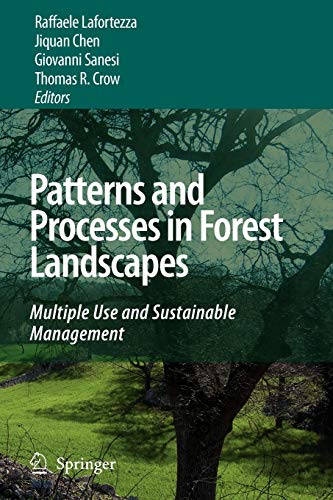
Increasing evidence suggests that the composition and spatial configuration – the pattern – of forest landscapes affect many ecological processes, including the movement and persistence of particular species, the susceptibility and spread of disturbances such as fires or pest outbreaks, and the redistribution of matter and nutrients. Understanding these issues is key to the successful management of complex, multifunctional forest landscapes, and landscape ecology, based on a foundation of island bio-geography and meta-population dynamic theories, provides the rationale to deal with this pattern-to-process interaction at different spatial and temporal scales.
This carefully edited volume represents a stimulating addition to the international literature on landscape ecology and resource management. It provides key insights into some of the applicable landscape ecological theories that underlie forest management, with a specific focus on how forest management can benefit from landscape ecology, and how landscape ecology can be advanced by tackling challenging problems in forest (landscape) management. It also presents a series of case studies from Europe, Asia, North America, Africa and Australia exploring the issues of disturbance, diversity, management, and scale, and with a specific focus on how human intervention affects forest landscapes and, in turn, how landscapes influence humans and their culture.
An important reference for advanced students and researchers in landscape ecology, conservation biology, forest ecology, natural resource management and ecology across multiple scales, the book will also appeal to researchers and practitioners in reserve design, ecological restoration, forest management, landscape planning and landscape architecture.
"Sinopsis" puede pertenecer a otra edición de este libro.
De la contraportada
Increasing evidence suggests that the composition and spatial configuration the pattern of forest landscapes affect many ecological processes, including the movement and persistence of particular species, the susceptibility and spread of disturbances such as fires or pest outbreaks, and the redistribution of matter and nutrients. Understanding these issues is key to the successful management of complex, multifunctional forest landscapes, and landscape ecology, based on a foundation of island bio-geography and meta-population dynamic theories, provides the rationale to deal with this pattern-to-process interaction at different spatial and temporal scales.
This carefully edited volume represents a stimulating addition to the international literature on landscape ecology and resource management. It provides key insights into some of the applicable landscape ecological theories that underlie forest management, with a specific focus on how forest management can benefit from landscape ecology, and how landscape ecology can be advanced by tackling challenging problems in forest (landscape) management. It also presents a series of case studies from Europe, Asia, North America, Africa and Australia exploring the issues of disturbance, diversity, management, and scale, and with a specific focus on how human intervention affects forest landscapes and, in turn, how landscapes influence humans and their culture.
An important reference for advanced students and researchers in landscape ecology, conservation biology, forest ecology, natural resource management and ecology across multiple scales, the book will also appeal to researchers and practitioners in reserve design, ecological restoration, forest management, landscape planning and landscape architecture.
"Sobre este título" puede pertenecer a otra edición de este libro.
Resultados de la búsqueda para Patterns and Processes in Forest Landscapes: Multiple...

Imagen del vendedor
Patterns and Processes in Forest Landscapes
Publicado por
Springer Netherlands, 2010
ISBN 10: 9048178959
ISBN 13: 9789048178957
Nuevo
Tapa blanda
Librería: moluna, Greven, Alemania
Calificación del vendedor: 5 de 5 estrellas

Condición: New. Dieser Artikel ist ein Print on Demand Artikel und wird nach Ihrer Bestellung fuer Sie gedruckt. Provides evidence of critical role of management to achieve an ecological balance between natural disturbances and human-induced changesProvides information usable for expanding the scope of environmental education in upper-level (under)graduate c. Nº de ref. del artículo: 5821730
Comprar nuevo
EUR 180,07
Envío por EUR 48,99
Se envía de Alemania a Estados Unidos de America
Se envía de Alemania a Estados Unidos de America
Cantidad disponible: Más de 20 disponibles
Imagen de archivo
Patterns and Processes in Forest Landscapes : Multiple Use and Sustainable Management
Librería: GreatBookPricesUK, Woodford Green, Reino Unido
Calificación del vendedor: 5 de 5 estrellas
Condición: New. Nº de ref. del artículo: 11985389-n
Comprar nuevo
EUR 216,21
Envío por EUR 17,46
Se envía de Reino Unido a Estados Unidos de America
Se envía de Reino Unido a Estados Unidos de America
Cantidad disponible: 1 disponibles
Imagen del vendedor
Patterns and Processes in Forest Landscapes
Publicado por
Springer Netherlands Okt 2010, 2010
ISBN 10: 9048178959
ISBN 13: 9789048178957
Nuevo
Taschenbuch
Librería: BuchWeltWeit Ludwig Meier e.K., Bergisch Gladbach, Alemania
Calificación del vendedor: 5 de 5 estrellas
Taschenbuch. Condición: Neu. This item is printed on demand - it takes 3-4 days longer - Neuware -Increasing evidence suggests that the composition and spatial configuration - the pattern - of forest landscapes affect many ecological processes, including the movement and persistence of particular species, the susceptibility and spread of disturbances such as fires or pest outbreaks, and the redistribution of matter and nutrients. Understanding these issues is key to the successful management of complex, multifunctional forest landscapes, and landscape ecology, based on a foundation of island bio-geography and meta-population dynamic theories, provides the rationale to deal with this pattern-to-process interaction at different spatial and temporal scales.This carefully edited volume represents a stimulating addition to the international literature on landscape ecology and resource management. It provides key insights into some of the applicable landscape ecological theories that underlie forest management, with a specific focus on how forest management can benefit from landscape ecology, and how landscape ecology can be advanced by tackling challenging problems in forest (landscape) management. It also presents a series of case studies from Europe, Asia, North America, Africa and Australia exploring the issues of disturbance, diversity, management, and scale, and with a specific focus on how human intervention affects forest landscapes and, in turn, how landscapes influence humans and their culture.An important reference for advanced students and researchers in landscape ecology, conservation biology, forest ecology, natural resource management and ecology across multiple scales, the book will also appeal to researchers and practitioners in reserve design, ecological restoration, forest management, landscape planning and landscape architecture. 452 pp. Englisch. Nº de ref. del artículo: 9789048178957
Comprar nuevo
EUR 213,99
Envío por EUR 23,00
Se envía de Alemania a Estados Unidos de America
Se envía de Alemania a Estados Unidos de America
Cantidad disponible: 2 disponibles
Imagen de archivo
Patterns and Processes in Forest Landscapes : Multiple Use and Sustainable Management
Librería: GreatBookPrices, Columbia, MD, Estados Unidos de America
Calificación del vendedor: 5 de 5 estrellas
Condición: New. Nº de ref. del artículo: 11985389-n
Comprar nuevo
EUR 238,98
Envío por EUR 2,30
Se envía dentro de Estados Unidos de America
Se envía dentro de Estados Unidos de America
Cantidad disponible: Más de 20 disponibles
Imagen del vendedor
Patterns and Processes in Forest Landscapes : Multiple Use and Sustainable Management
Librería: GreatBookPrices, Columbia, MD, Estados Unidos de America
Calificación del vendedor: 5 de 5 estrellas
Condición: As New. Unread book in perfect condition. Nº de ref. del artículo: 11985389
Comprar usado
EUR 239,69
Envío por EUR 2,30
Se envía dentro de Estados Unidos de America
Se envía dentro de Estados Unidos de America
Cantidad disponible: Más de 20 disponibles
Imagen de archivo
Patterns and Processes in Forest Landscapes: Multiple Use and Sustainable Management
Librería: Ria Christie Collections, Uxbridge, Reino Unido
Calificación del vendedor: 5 de 5 estrellas
Condición: New. In English. Nº de ref. del artículo: ria9789048178957_new
Comprar nuevo
EUR 240,74
Envío por EUR 13,14
Se envía de Reino Unido a Estados Unidos de America
Se envía de Reino Unido a Estados Unidos de America
Cantidad disponible: Más de 20 disponibles
Imagen del vendedor
Patterns and Processes in Forest Landscapes | Multiple Use and Sustainable Management
Librería: preigu, Osnabrück, Alemania
Calificación del vendedor: 5 de 5 estrellas
Taschenbuch. Condición: Neu. Patterns and Processes in Forest Landscapes | Multiple Use and Sustainable Management | Raffaele Lafortezza (u. a.) | Taschenbuch | xxv | Englisch | 2010 | Springer | EAN 9789048178957 | Verantwortliche Person für die EU: Springer Verlag GmbH, Tiergartenstr. 17, 69121 Heidelberg, juergen[dot]hartmann[at]springer[dot]com | Anbieter: preigu. Nº de ref. del artículo: 107207884
Comprar nuevo
EUR 184,95
Envío por EUR 70,00
Se envía de Alemania a Estados Unidos de America
Se envía de Alemania a Estados Unidos de America
Cantidad disponible: 5 disponibles
Imagen del vendedor
Patterns and Processes in Forest Landscapes : Multiple Use and Sustainable Management
Librería: GreatBookPricesUK, Woodford Green, Reino Unido
Calificación del vendedor: 5 de 5 estrellas
Condición: As New. Unread book in perfect condition. Nº de ref. del artículo: 11985389
Comprar usado
EUR 245,10
Envío por EUR 17,46
Se envía de Reino Unido a Estados Unidos de America
Se envía de Reino Unido a Estados Unidos de America
Cantidad disponible: 1 disponibles
Imagen del vendedor
Patterns and Processes in Forest Landscapes
Publicado por
Springer Netherlands, Springer Okt 2010, 2010
ISBN 10: 9048178959
ISBN 13: 9789048178957
Nuevo
Taschenbuch
Librería: buchversandmimpf2000, Emtmannsberg, BAYE, Alemania
Calificación del vendedor: 5 de 5 estrellas
Taschenbuch. Condición: Neu. This item is printed on demand - Print on Demand Titel. Neuware -Increasing evidence suggests that the composition and spatial configuration ¿ the pattern ¿ of forest landscapes affect many ecological processes, including the movement and persistence of particular species, the susceptibility and spread of disturbances such as fires or pest outbreaks, and the redistribution of matter and nutrients. Understanding these issues is key to the successful management of complex, multifunctional forest landscapes, and landscape ecology, based on a foundation of island bio-geography and meta-population dynamic theories, provides the rationale to deal with this pattern-to-process interaction at different spatial and temporal scales. This carefully edited volume represents a stimulating addition to the international literature on landscape ecology and resource management. It provides key insights into some of the applicable landscape ecological theories that underlie forest management, with a specific focus on how forest management can benefit from landscape ecology, and how landscape ecology can be advanced by tackling challenging problems in forest (landscape) management. It also presents a series of case studies from Europe, Asia, North America, Africa and Australia exploring the issues of disturbance, diversity, management, and scale, and with a specific focus on how human intervention affects forest landscapes and, in turn, how landscapes influence humans and their culture. An important reference for advanced students and researchers in landscape ecology, conservation biology, forest ecology, natural resource management and ecology across multiple scales, the book will also appeal to researchers and practitioners in reserve design, ecological restoration, forest management, landscape planning and landscape architecture.Springer-Verlag GmbH, Tiergartenstr. 17, 69121 Heidelberg 452 pp. Englisch. Nº de ref. del artículo: 9789048178957
Comprar nuevo
EUR 213,99
Envío por EUR 60,00
Se envía de Alemania a Estados Unidos de America
Se envía de Alemania a Estados Unidos de America
Cantidad disponible: 1 disponibles
Imagen de archivo
Patterns and Processes in Forest Landscapes
Librería: Books Puddle, New York, NY, Estados Unidos de America
Calificación del vendedor: 4 de 5 estrellas

Condición: New. pp. 452. Nº de ref. del artículo: 262142864
Comprar nuevo
EUR 313,81
Envío por EUR 3,48
Se envía dentro de Estados Unidos de America
Se envía dentro de Estados Unidos de America
Cantidad disponible: 4 disponibles