
Artículos relacionados a Moving Ourselves, Moving Others: Motion and emotion...
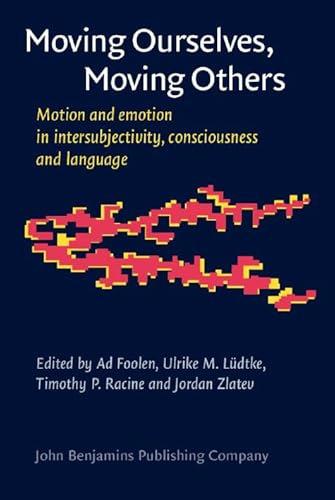
Moving Ourselves, Moving Others: Motion and emotion in intersubjectivity, consciousness and language: 6 (Consciousness & Emotion Book Series) - Tapa dura
Sinopsis
The close relationship between motion (bodily movement) and emotion (feelings) is not an etymological coincidence. While moving ourselves, we move others; in observing others move – we are moved ourselves. The fundamentally interpersonal nature of mind and language has recently received due attention, but the key role of (e)motion in this context has remained something of a blind spot. The present book rectifies this gap by gathering contributions from leading philosophers, psychologists and linguists working in the area. Framed by an introducing prologue and a summarizing epilogue (written by Colwyn Trevarthen, who brought the phenomenological notion of intersubjectivity to a wider audience some 30 years ago) the volume elaborates a dynamical, active view of emotion, along with an affect-laden view of motion – and explores their significance for consciousness, intersubjectivity, and language. As such, it contributes to the emerging interdisciplinary field of mind science, transcending hitherto dominant computationalist and cognitivist approaches.
As of February 2018, this e-book is freely available, thanks to the support of libraries working with Knowledge Unlatched.
"Sinopsis" puede pertenecer a otra edición de este libro.
Reseña del editor
The close relationship between motion (bodily movement) and emotion (feelings) is not an etymological coincidence. While moving ourselves, we move others; in observing others move – we are moved ourselves. The fundamentally interpersonal nature of mind and language has recently received due attention, but the key role of (e)motion in this context has remained something of a blind spot. The present book rectifies this gap by gathering contributions from leading philosophers, psychologists and linguists working in the area. Framed by an introducing prologue and a summarizing epilogue (written by Colwyn Trevarthen, who brought the phenomenological notion of intersubjectivity to a wider audience some 30 years ago) the volume elaborates a dynamical, active view of emotion, along with an affect-laden view of motion – and explores their significance for consciousness, intersubjectivity, and language. As such, it contributes to the emerging interdisciplinary field of mind science, transcending hitherto dominant computationalist and cognitivist approaches.
As of February 2018, this e-book is freely available, thanks to the support of libraries working with Knowledge Unlatched.
"Sobre este título" puede pertenecer a otra edición de este libro.
Resultados de la búsqueda para Moving Ourselves, Moving Others: Motion and emotion...

Imagen de archivo
Moving Ourselves, Moving Others: Motion and Emotion in Intersubjectivity, Consciousness and Language
Publicado por
John Benjamins Publishing Company, Amsterdam/Philadelphia, 2012
ISBN 10: 9027241562
ISBN 13: 9789027241566
Antiguo o usado
Tapa dura
Librería: Downtown Books & News, Asheville, NC, Estados Unidos de America
Calificación del vendedor: 4 de 5 estrellas

Hardcover. Condición: Very Good +. No additional printings indicated. 8vo. 492pp. Blue and illustrated paper-covered boards. Small dent to the head of the upper board. Lightly rubbed covers. Interior clean and unmarked. No dj. as issued. This is volume 6 of the Consciousness and Emotion Book Series. Nº de ref. del artículo: 2317
Comprar usado
EUR 66,44
Envío por EUR 6,88
Se envía dentro de Estados Unidos de America
Se envía dentro de Estados Unidos de America
Cantidad disponible: 1 disponibles
Imagen de archivo
Moving Ourselves Moving Others
Publicado por
John Benjamins Publishing Company, 2012
ISBN 10: 9027241562
ISBN 13: 9789027241566
Antiguo o usado
Tapa dura
Librería: World of Books (was SecondSale), Montgomery, IL, Estados Unidos de America
Calificación del vendedor: 5 de 5 estrellas

Condición: Good. Item in good condition. Textbooks may not include supplemental items i.e. CDs, access codes etc. Nº de ref. del artículo: 00106633456
Comprar usado
EUR 88,82
Gastos de envío gratis
Se envía dentro de Estados Unidos de America
Se envía dentro de Estados Unidos de America
Cantidad disponible: 1 disponibles
Imagen de archivo
Moving Ourselves, Moving Others (Consciousness & Emotion Book Series)
Publicado por
John Benjamins Publishing Company, 2012
ISBN 10: 9027241562
ISBN 13: 9789027241566
Antiguo o usado
Tapa dura
Librería: ThriftBooks-Dallas, Dallas, TX, Estados Unidos de America
Calificación del vendedor: 5 de 5 estrellas
Hardcover. Condición: Good. No Jacket. Pages can have notes/highlighting. Spine may show signs of wear. ~ ThriftBooks: Read More, Spend Less. Nº de ref. del artículo: G9027241562I3N00
Comprar usado
EUR 92,37
Gastos de envío gratis
Se envía dentro de Estados Unidos de America
Se envía dentro de Estados Unidos de America
Cantidad disponible: 1 disponibles
Imagen de archivo
Moving Ourselves, Moving Others: Motion and emotion in intersubjectivity, consciousness and language (Consciousness & Emotion Book Series)
Publicado por
John Benjamins Publishing Compan, 2012
ISBN 10: 9027241562
ISBN 13: 9789027241566
Nuevo
Tapa dura
Librería: Books From California, Simi Valley, CA, Estados Unidos de America
Calificación del vendedor: 4 de 5 estrellas
Hardcover. Condición: New. Sealed in plastic. Nº de ref. del artículo: mon0003487808
Comprar nuevo
EUR 105,40
Envío por EUR 4,29
Se envía dentro de Estados Unidos de America
Se envía dentro de Estados Unidos de America
Cantidad disponible: 1 disponibles
Imagen de archivo
Moving Ourselves, Moving Others: Motion and Emotion in Intersubjectivity, Consciousness and Language
Publicado por
John Benjamins Pub Co, 2012
ISBN 10: 9027241562
ISBN 13: 9789027241566
Nuevo
Tapa dura
Librería: Revaluation Books, Exeter, Reino Unido
Calificación del vendedor: 5 de 5 estrellas
Hardcover. Condición: Brand New. 492 pages. 9.32x6.50x1.50 inches. In Stock. Nº de ref. del artículo: __9027241562
Comprar nuevo
EUR 99,57
Envío por EUR 17,47
Se envía de Reino Unido a Estados Unidos de America
Se envía de Reino Unido a Estados Unidos de America
Cantidad disponible: 1 disponibles
Imagen de archivo
Moving Ourselves, Moving Others (Consciousness & Emotion Book Series)
Publicado por
John Benjamins Publishing Company, 2012
ISBN 10: 9027241562
ISBN 13: 9789027241566
Nuevo
Tapa dura
Librería: Mispah books, Redhill, SURRE, Reino Unido
Calificación del vendedor: 4 de 5 estrellas
hardcover. Condición: New. New .Ships From Multiple Locations. book. Nº de ref. del artículo: ERICA80390272415624
Comprar nuevo
EUR 250,74
Envío por EUR 29,12
Se envía de Reino Unido a Estados Unidos de America
Se envía de Reino Unido a Estados Unidos de America
Cantidad disponible: 1 disponibles