
Artículos relacionados a Colonial Cities: Essays on Urbanism in a Colonial Context:...
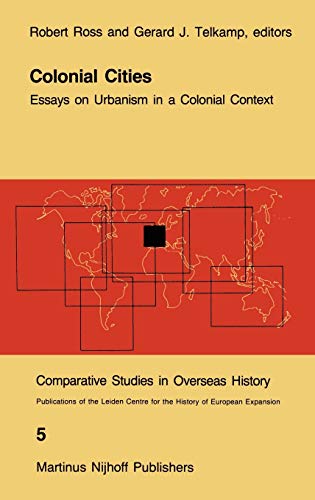
Colonial Cities: Essays on Urbanism in a Colonial Context: 5 (Comparative Studies in Overseas History, 5) - Tapa dura
Sinopsis
by ROBERT ROSS and GERARD J. TELKAMP I In a sense, cities were superfluous to the purposes of colonists. The Europeans who founded empires outside their own continent were primarily concerned with extracting those products which they could not acquire within Europe. These goods were largely agricultural, and grown most often in a climate not found within Europe. Even when, as in India before 1800, the major exports were manufactures, in general they were still made in the countryside rather than in the great cities. It was only on rare occasion when great mineral wealth was discovered that giant metropolises grew up around the site of extraction. Since their location was deter mined by geology, not economics, they might be in the most inaccessible and in convenient areas, but they too would draw labour off from the agricultural pursuits of the colony as a whole. From the point of view of the colonists, the cities were therefore in some respects necessary evils, as they were parasites on the rural producers, competing with the colonists in the process of surplus extraction. Nevertheless, the colonists could not do without cities. The requirements of colonisation demanded many unequivocally urban functions. Pre-eminent among these was of course the need for a port, to allow the export of colonial wares and the import of goods from Europe, or from other parts of the non-European world, in the country-trade as it was known around India.
"Sinopsis" puede pertenecer a otra edición de este libro.
Reseña del editor
by ROBERT ROSS and GERARD J. TELKAMP I In a sense, cities were superfluous to the purposes of colonists. The Europeans who founded empires outside their own continent were primarily concerned with extracting those products which they could not acquire within Europe. These goods were largely agricultural, and grown most often in a climate not found within Europe. Even when, as in India before 1800, the major exports were manufactures, in general they were still made in the countryside rather than in the great cities. It was only on rare occasion when great mineral wealth was discovered that giant metropolises grew up around the site of extraction. Since their location was deter mined by geology, not economics, they might be in the most inaccessible and in convenient areas, but they too would draw labour off from the agricultural pursuits of the colony as a whole. From the point of view of the colonists, the cities were therefore in some respects necessary evils, as they were parasites on the rural producers, competing with the colonists in the process of surplus extraction. Nevertheless, the colonists could not do without cities. The requirements of colonisation demanded many unequivocally urban functions. Pre-eminent among these was of course the need for a port, to allow the export of colonial wares and the import of goods from Europe, or from other parts of the non-European world, in the country-trade as it was known around India.
"Sobre este título" puede pertenecer a otra edición de este libro.
Resultados de la búsqueda para Colonial Cities: Essays on Urbanism in a Colonial Context:...

Imagen del vendedor
Colonial Cities: Essays on Urbanism in a Colonial Context (Comparative Studies in Overseas History, 5)
Librería: -OnTimeBooks-, Phoenix, AZ, Estados Unidos de America
Calificación del vendedor: 5 de 5 estrellas

Condición: good. A copy that has been read, remains in good condition. All pages are intact, and the cover is intact. The spine and cover show signs of wear. Pages can include notes and highlighting and show signs of wear, and the copy can include "From the library of" labels or previous owner inscriptions. 100% GUARANTEE! Shipped with delivery confirmation, if you're not satisfied with purchase please return item! Ships via media mail. Nº de ref. del artículo: OTV.9024729254.G
Comprar usado
EUR 64,99
Gastos de envío gratis
Se envía dentro de Estados Unidos de America
Se envía dentro de Estados Unidos de America
Cantidad disponible: 1 disponibles
Imagen de archivo
Colonial Cities : Essays on Urbanism in a Colonial Context
Publicado por
Springer Netherlands, 1984
ISBN 10: 9024729254
ISBN 13: 9789024729258
Antiguo o usado
Tapa dura
Librería: Better World Books Ltd, Dunfermline, Reino Unido
Calificación del vendedor: 5 de 5 estrellas
Condición: Very Good. Former library copy. Pages intact with possible writing/highlighting. Binding strong with minor wear. Dust jackets/supplements may not be included. Includes library markings. Stock photo provided. Product includes identifying sticker. Better World Books: Buy Books. Do Good. Nº de ref. del artículo: 52919686-20
Comprar usado
EUR 59,96
Envío por EUR 5,83
Se envía de Reino Unido a Estados Unidos de America
Se envía de Reino Unido a Estados Unidos de America
Cantidad disponible: 1 disponibles
Imagen de archivo
Colonial Cities: Essays on Urbanism in a Colonial Context (Comparative Studies in Overseas History, 5)
Librería: Ria Christie Collections, Uxbridge, Reino Unido
Calificación del vendedor: 5 de 5 estrellas
Condición: New. In. Nº de ref. del artículo: ria9789024729258_new
Comprar nuevo
EUR 165,64
Envío por EUR 13,17
Se envía de Reino Unido a Estados Unidos de America
Se envía de Reino Unido a Estados Unidos de America
Cantidad disponible: Más de 20 disponibles
Imagen del vendedor
Colonial Cities
Impresión bajo demandaLibrería: moluna, Greven, Alemania
Calificación del vendedor: 5 de 5 estrellas
Gebunden. Condición: New. Dieser Artikel ist ein Print on Demand Artikel und wird nach Ihrer Bestellung fuer Sie gedruckt. by ROBERT ROSS and GERARD J. TELKAMP I In a sense, cities were superfluous to the purposes of colonists. The Europeans who founded empires outside their own continent were primarily concerned with extracting those products which they could not acquire withi. Nº de ref. del artículo: 5813510
Comprar nuevo
EUR 144,94
Envío por EUR 48,99
Se envía de Alemania a Estados Unidos de America
Se envía de Alemania a Estados Unidos de America
Cantidad disponible: Más de 20 disponibles
Imagen del vendedor
Colonial Cities
Publicado por
Springer Netherlands, Springer Netherlands Dez 1984, 1984
ISBN 10: 9024729254
ISBN 13: 9789024729258
Nuevo
Tapa dura
Librería: BuchWeltWeit Ludwig Meier e.K., Bergisch Gladbach, Alemania
Calificación del vendedor: 5 de 5 estrellas
Buch. Condición: Neu. This item is printed on demand - it takes 3-4 days longer - Neuware -by ROBERT ROSS and GERARD J. TELKAMP I In a sense, cities were superfluous to the purposes of colonists. The Europeans who founded empires outside their own continent were primarily concerned with extracting those products which they could not acquire within Europe. These goods were largely agricultural, and grown most often in a climate not found within Europe. Even when, as in India before 1800, the major exports were manufactures, in general they were still made in the countryside rather than in the great cities. It was only on rare occasion when great mineral wealth was discovered that giant metropolises grew up around the site of extraction. Since their location was deter mined by geology, not economics, they might be in the most inaccessible and in convenient areas, but they too would draw labour off from the agricultural pursuits of the colony as a whole. From the point of view of the colonists, the cities were therefore in some respects necessary evils, as they were parasites on the rural producers, competing with the colonists in the process of surplus extraction. Nevertheless, the colonists could not do without cities. The requirements of colonisation demanded many unequivocally urban functions. Pre-eminent among these was of course the need for a port, to allow the export of colonial wares and the import of goods from Europe, or from other parts of the non-European world, in the country-trade as it was known around India. 262 pp. Englisch. Nº de ref. del artículo: 9789024729258
Comprar nuevo
EUR 171,19
Envío por EUR 23,00
Se envía de Alemania a Estados Unidos de America
Se envía de Alemania a Estados Unidos de America
Cantidad disponible: 2 disponibles
Imagen de archivo
Colonial Cities: Essays on Urbanism in a Colonial Context (Comparative Studies in Overseas History, 5)
Librería: BennettBooksLtd, Los Angeles, CA, Estados Unidos de America
Calificación del vendedor: 5 de 5 estrellas
Hardcover. Condición: New. In shrink wrap. Looks like an interesting title! Nº de ref. del artículo: SL-9024729254
Comprar nuevo
EUR 207,05
Envío por EUR 5,99
Se envía dentro de Estados Unidos de America
Se envía dentro de Estados Unidos de America
Cantidad disponible: 1 disponibles
Imagen del vendedor
Colonial Cities | Essays on Urbanism in a Colonial Context
Impresión bajo demandaLibrería: preigu, Osnabrück, Alemania
Calificación del vendedor: 5 de 5 estrellas
Buch. Condición: Neu. Colonial Cities | Essays on Urbanism in a Colonial Context | Gerard J. Telkamp (u. a.) | Buch | viii | Englisch | 1984 | Springer Netherland | EAN 9789024729258 | Verantwortliche Person für die EU: Springer Verlag GmbH, Tiergartenstr. 17, 69121 Heidelberg, juergen[dot]hartmann[at]springer[dot]com | Anbieter: preigu Print on Demand. Nº de ref. del artículo: 102459583
Comprar nuevo
EUR 150,30
Envío por EUR 70,00
Se envía de Alemania a Estados Unidos de America
Se envía de Alemania a Estados Unidos de America
Cantidad disponible: 5 disponibles
Imagen de archivo
Colonial Cities
Librería: Books Puddle, New York, NY, Estados Unidos de America
Calificación del vendedor: 4 de 5 estrellas

Condición: New. pp. 264. Nº de ref. del artículo: 263095437
Comprar nuevo
EUR 224,35
Envío por EUR 3,44
Se envía dentro de Estados Unidos de America
Se envía dentro de Estados Unidos de America
Cantidad disponible: 4 disponibles
Imagen del vendedor
Colonial Cities
Publicado por
Springer Netherlands, Springer Netherlands Dez 1984, 1984
ISBN 10: 9024729254
ISBN 13: 9789024729258
Nuevo
Tapa dura
Librería: buchversandmimpf2000, Emtmannsberg, BAYE, Alemania
Calificación del vendedor: 5 de 5 estrellas
Buch. Condición: Neu. This item is printed on demand - Print on Demand Titel. Neuware -by ROBERT ROSS and GERARD J. TELKAMP I In a sense, cities were superfluous to the purposes of colonists. The Europeans who founded empires outside their own continent were primarily concerned with extracting those products which they could not acquire within Europe. These goods were largely agricultural, and grown most often in a climate not found within Europe. Even when, as in India before 1800, the major exports were manufactures, in general they were still made in the countryside rather than in the great cities. It was only on rare occasion when great mineral wealth was discovered that giant metropolises grew up around the site of extraction. Since their location was deter mined by geology, not economics, they might be in the most inaccessible and in convenient areas, but they too would draw labour off from the agricultural pursuits of the colony as a whole. From the point of view of the colonists, the cities were therefore in some respects necessary evils, as they were parasites on the rural producers, competing with the colonists in the process of surplus extraction. Nevertheless, the colonists could not do without cities. The requirements of colonisation demanded many unequivocally urban functions. Pre-eminent among these was of course the need for a port, to allow the export of colonial wares and the import of goods from Europe, or from other parts of the non-European world, in the country-trade as it was known around India.Springer Verlag GmbH, Tiergartenstr. 17, 69121 Heidelberg 262 pp. Englisch. Nº de ref. del artículo: 9789024729258
Comprar nuevo
EUR 171,19
Envío por EUR 60,00
Se envía de Alemania a Estados Unidos de America
Se envía de Alemania a Estados Unidos de America
Cantidad disponible: 1 disponibles
Imagen de archivo
Colonial Cities
Impresión bajo demandaLibrería: Majestic Books, Hounslow, Reino Unido
Calificación del vendedor: 4 de 5 estrellas
Condición: New. Print on Demand pp. 264 52:B&W 6.14 x 9.21in or 234 x 156mm (Royal 8vo) Case Laminate on White w/Gloss Lam. Nº de ref. del artículo: 5801042
Comprar nuevo
EUR 232,23
Envío por EUR 7,58
Se envía de Reino Unido a Estados Unidos de America
Se envía de Reino Unido a Estados Unidos de America
Cantidad disponible: 4 disponibles