
Artículos relacionados a 1000 CARAS 0 CARAS 1 ROSTRO (CASTELL/INGLES) (SIN COLECCION)
Sinopsis
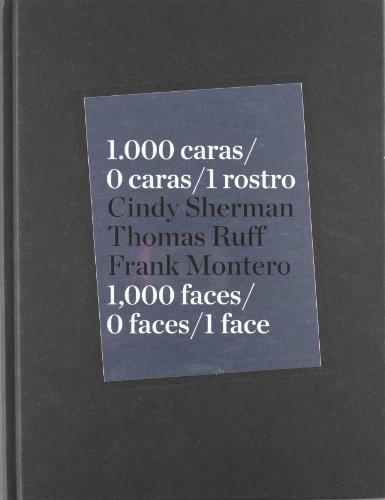
"1000 Faces/0 Faces/One Face" unites two great contemporary artists who have interrogated constructions of identity with an entirely unknown late-nineteenth-century photographer named Frank Montero. Its thesis runs as follows: in Cindy Sherman's manipulations of generic casting we encounter a face that produces all faces; in Thomas Ruff's proliferating but depersonalized portraits, we all encounter all faces reduced to a zero degree; and in Montero, we encounter a face that plays the role of itself, throughout the inscriptions wrought upon it by time. Montero's work, seemingly made without artistic intentions or ambitions, and published here for the first time, provides a sort of Rembrandt-like counterpoint to the identity arguments made by Ruff and Sherman's work, and alongside them makes for the most fascinating panorama of the absolute constructedness of the photographic portrait and the eerie artifice of identity itself.
"Sinopsis" puede pertenecer a otra edición de este libro.
Críticas
Reúne a Cindy Sherman y Thomas Ruff, dos de los referentes más importantes del arte actual, cuya obra gira en torno a la representación del individuo y sus variantes polisémicas, junto con los trabajos de un artista desconocido.
Reseña del editor
"1000 Faces/0 Faces/One Face" unites two great contemporary artists who have interrogated constructions of identity with an entirely unknown late-nineteenth-century photographer named Frank Montero. Its thesis runs as follows: in Cindy Sherman's manipulations of generic casting we encounter a face that produces all faces; in Thomas Ruff's proliferating but depersonalized portraits, we all encounter all faces reduced to a zero degree; and in Montero, we encounter a face that plays the role of itself, throughout the inscriptions wrought upon it by time. Montero's work, seemingly made without artistic intentions or ambitions, and published here for the first time, provides a sort of Rembrandt-like counterpoint to the identity arguments made by Ruff and Sherman's work, and alongside them makes for the most fascinating panorama of the absolute constructedness of the photographic portrait and the eerie artifice of identity itself.
"Sobre este título" puede pertenecer a otra edición de este libro.
Resultados de la búsqueda para 1000 CARAS 0 CARAS 1 ROSTRO (CASTELL/INGLES) (SIN COLECCION)

Imagen de archivo
Cindy Sherman, Thomas Ruff & Frank Montero: 1000 Faces, 0 Faces, One Face
Publicado por
La Fábrica/Fundacià n Telefà nica, 2011
ISBN 10: 8415303157
ISBN 13: 9788415303152
Antiguo o usado
Tapa dura
Librería: Midtown Scholar Bookstore, Harrisburg, PA, Estados Unidos de America
Calificación del vendedor: 5 de 5 estrellas

Hardcover. Condición: Good. Good - Bumped and creased book with tears to the extremities, but not affecting the text block, may have remainder mark or previous owner's name - GOOD Oversized. Nº de ref. del artículo: M8415303157Z3
Comprar usado
EUR 18,80
Envío por EUR 5,17
Se envía dentro de Estados Unidos de America
Se envía dentro de Estados Unidos de America
Cantidad disponible: 1 disponibles
Imagen de archivo
Cindy Sherman, Thomas Ruff & Frank Montero: 1000 Faces, 0 Faces, One Face
Publicado por
La Fábrica/Fundacià n Telefà nica, 2011
ISBN 10: 8415303157
ISBN 13: 9788415303152
Antiguo o usado
Tapa dura
Librería: Midtown Scholar Bookstore, Harrisburg, PA, Estados Unidos de America
Calificación del vendedor: 5 de 5 estrellas
Hardcover. Condición: Very Good. Very Good - Crisp, clean, unread book with some shelfwear/edgewear, may have a remainder mark - NICE Standard-sized. Nº de ref. del artículo: M8415303157Z2
Comprar usado
EUR 18,80
Envío por EUR 5,17
Se envía dentro de Estados Unidos de America
Se envía dentro de Estados Unidos de America
Cantidad disponible: 3 disponibles
Imagen de archivo
Cindy Sherman, Thomas Ruff & Frank Montero: 1000 Faces, 0 Faces, One Face
Publicado por
La Fábrica/Fundación Telefónica, 2011
ISBN 10: 8415303157
ISBN 13: 9788415303152
Antiguo o usado
Tapa dura
Original o primera edición
Librería: Zimnol Arts Books, Middx, Reino Unido
Calificación del vendedor: 5 de 5 estrellas
Hardcover. Condición: As New. 1st Edition. Hardcover catsalogue for Madrid exhibition. Dual Spanish English text. Profusely illustrated. Nº de ref. del artículo: 002946
Comprar usado
EUR 24,02
Envío por EUR 20,00
Se envía de Reino Unido a Estados Unidos de America
Se envía de Reino Unido a Estados Unidos de America
Cantidad disponible: 1 disponibles
Imagen de archivo
1000 CARAS 0 CARAS 1 ROSTRO (CASTELL/INGLES)
Librería: KALAMO BOOKS, Burriana, CS, España
Calificación del vendedor: 5 de 5 estrellas
Tapa blanda. Condición: Nuevo. Nº de ref. del artículo: MAC9788415303152
Comprar nuevo
EUR 34,82
Envío por EUR 19,86
Se envía de España a Estados Unidos de America
Se envía de España a Estados Unidos de America
Cantidad disponible: 1 disponibles
Imagen del vendedor
1000 CARAS/ O CARAS/ 1 ROSTRO. 1000 FACES/ 0 FACES/ 1 FACE.
Publicado por
La Fabrica Editorial., Madrid,, 2011
ISBN 10: 8415303157
ISBN 13: 9788415303152
Antiguo o usado
Tapa dura
Librería: Libreria Lopez de Araujo, RIVAS VACIAMADRID, M, España
Calificación del vendedor: 5 de 5 estrellas
Condición: Very Good. 27 x 20 cm., 139 pag. LEA LAS CONDICIONES DE ENVIO DE LA LIBRERÍA. Tapa dura, buen estado de conservacion. Nº de ref. del artículo: 29100A
Comprar usado
EUR 25,00
Envío por EUR 30,00
Se envía de España a Estados Unidos de America
Se envía de España a Estados Unidos de America
Cantidad disponible: 1 disponibles
Imagen del vendedor
1000 Caras / 0 Caras / 1 Rostro. 1000 Faces / 0 Faces / 1 Face (Catálogo exposición, Madrid 2011, tapa dura)
Publicado por
TF / Fundación Telefónica / La Fábrica, 2011
ISBN 10: 8415303157
ISBN 13: 9788415303152
Antiguo o usado
Tapa dura
Librería: Libros Angulo, Madrid, M, España
Calificación del vendedor: 5 de 5 estrellas
Encuadernación de tapa dura. Condición: Bien. TF / Fundación Telefónica / La Fábrica, 2011. Libro de fotografías. Arte. Fotografía. Texto en español e inglés. 142 pp. 27 x 21. Tela editorial tapa dura con sobrecubierta de editorial ilustrada. Sin subrayados ni anotaciones. Buen estado de conservación. ISBN: 9788415303152. Nº de ref. del artículo: 056683
Comprar usado
EUR 25,00
Envío por EUR 50,00
Se envía de España a Estados Unidos de America
Se envía de España a Estados Unidos de America
Cantidad disponible: 1 disponibles
Imagen de archivo
1000 CARAS/0 CARAS/1 ROSTRO
Publicado por
Fundación telefónica, 2011
ISBN 10: 8415303157
ISBN 13: 9788415303152
Antiguo o usado
Tapa blanda
Librería: Librería Pérez Galdós, Madrid, M, España
Calificación del vendedor: 5 de 5 estrellas
Condición: leido. Cart Ilustr. 140. Nº de ref. del artículo: 02159695
Comprar usado
EUR 45,00
Envío por EUR 45,00
Se envía de España a Estados Unidos de America
Se envía de España a Estados Unidos de America
Cantidad disponible: 1 disponibles
Imagen de archivo
Cindy Sherman, Thomas Ruff, Frank Montero: 1000 Caras, 0 Caras, 1 Rostro/1000 Faces, 0 Faces, 1 Face
Publicado por
La Fabrica (Fábrica) / Fundacion Telefonica (Fundacià n Telefà nica), 2011
ISBN 10: 8415303157
ISBN 13: 9788415303152
Nuevo
Tapa dura
Librería: BWS BKS, Ferndale, NY, Estados Unidos de America
Calificación del vendedor: 2 de 5 estrellas

Hardcover. Condición: New. 1000 Faces/0 Faces/One Face unites two great contemporary artists who have interrogated constructions of identity with an entirely unknown late-nineteenth-century photographer named Frank Montero. Its thesis runs as follows: in Cindy Sherman's manipulations of generic casting we encounter a face that produces all faces; in Thomas Ruff's proliferating but depersonalized portraits, we all encounter all faces reduced to a zero degree; and in Montero, we encounter a face that plays the role of itself, throughout the inscriptions wrought upon it by time. Montero's work, seemingly made without artistic intentions or ambitions, and published here for the first time, provides a sort of Rembrandt-like counterpoint to the identity arguments made by Ruff and Sherman's work, and alongside them makes for the most fascinating panorama of the absolute constructedness of the photographic portrait and the eerie artifice of identity itself. Nº de ref. del artículo: 94650
Comprar nuevo
EUR 1.754,66
Envío por EUR 2,59
Se envía dentro de Estados Unidos de America
Se envía dentro de Estados Unidos de America
Cantidad disponible: 1 disponibles