
Artículos relacionados a Financial Development and Economic Growth in Namibia:...
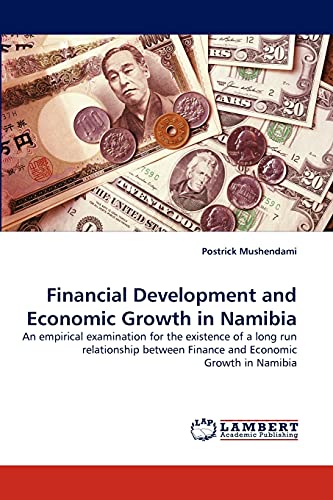
Financial Development and Economic Growth in Namibia: An empirical examination for the existence of a long run relationship between Finance and Economic Growth in Namibia - Tapa blanda
Sinopsis
The financial sector in Namibia is well developed and offers a wide range of services. This assertion can be supported by the ratio of broad money supply (M2) and the private sector credit to gross domestic product (GDP), which stood at 43 and 40 per cent respectively in 2004. Despite the observed level of financial sector development, real economic growth remained low, growing at 3 per cent on average during the past 12 years. This tend to suggest that there might not be a strong long run link between finance and economic output. This book therefore examines whether there is a long run relationship between financial development and economic growth in Namibia and hence determine the direction of causality. The book employs a two step Engle-Granger method of Cointegration; and a Granger Causality Test. Moreover, the book explores the history of banking in Namibia. The book is intended for undergraduate and graduate students of monetary, financial, macroeconomics and practitioners as well.
"Sinopsis" puede pertenecer a otra edición de este libro.
Reseña del editor
The financial sector in Namibia is well developed and offers a wide range of services. This assertion can be supported by the ratio of broad money supply (M2) and the private sector credit to gross domestic product (GDP), which stood at 43 and 40 per cent respectively in 2004. Despite the observed level of financial sector development, real economic growth remained low, growing at 3 per cent on average during the past 12 years. This tend to suggest that there might not be a strong long run link between finance and economic output. This book therefore examines whether there is a long run relationship between financial development and economic growth in Namibia and hence determine the direction of causality. The book employs a two step Engle-Granger method of Cointegration; and a Granger Causality Test. Moreover, the book explores the history of banking in Namibia. The book is intended for undergraduate and graduate students of monetary, financial, macroeconomics and practitioners as well.
Biografía del autor
Postrick Lifa Mushendami is a PhD Economics Student at the University of Durham(UK). He holds a MSc Financial Economics from the University of London(UK); MSc Economics and B.Econ from the University of Namibia. He graduated as a fellow of MEFMI in Monetary Policy Implementation with Distinction. He is a Senior Economist at the Bank of Namibia.
"Sobre este título" puede pertenecer a otra edición de este libro.
Resultados de la búsqueda para Financial Development and Economic Growth in Namibia:...

Imagen del vendedor
Financial Development and Economic Growth in Namibia
Publicado por
LAP LAMBERT Academic Publishing Jul 2010, 2010
ISBN 10: 3838384075
ISBN 13: 9783838384078
Nuevo
Taschenbuch
Librería: BuchWeltWeit Ludwig Meier e.K., Bergisch Gladbach, Alemania
Calificación del vendedor: 5 de 5 estrellas

Taschenbuch. Condición: Neu. This item is printed on demand - it takes 3-4 days longer - Neuware -The financial sector in Namibia is well developed and offers a wide range of services. This assertion can be supported by the ratio of broad money supply (M2) and the private sector credit to gross domestic product (GDP), which stood at 43 and 40 per cent respectively in 2004. Despite the observed level of financial sector development, real economic growth remained low, growing at 3 per cent on average during the past 12 years. This tend to suggest that there might not be a strong long run link between finance and economic output. This book therefore examines whether there is a long run relationship between financial development and economic growth in Namibia and hence determine the direction of causality. The book employs a two step Engle-Granger method of Cointegration; and a Granger Causality Test. Moreover, the book explores the history of banking in Namibia. The book is intended for undergraduate and graduate students of monetary, financial, macroeconomics and practitioners as well. 68 pp. Englisch. Nº de ref. del artículo: 9783838384078
Comprar nuevo
EUR 49,00
Envío por EUR 23,00
Se envía de Alemania a Estados Unidos de America
Se envía de Alemania a Estados Unidos de America
Cantidad disponible: 2 disponibles
Imagen del vendedor
Financial Development and Economic Growth in Namibia : An empirical examination for the existence of a long run relationship between Finance and Economic Growth in Namibia
Publicado por
LAP LAMBERT Academic Publishing, 2010
ISBN 10: 3838384075
ISBN 13: 9783838384078
Nuevo
Taschenbuch
Librería: AHA-BUCH GmbH, Einbeck, Alemania
Calificación del vendedor: 5 de 5 estrellas
Taschenbuch. Condición: Neu. nach der Bestellung gedruckt Neuware - Printed after ordering - The financial sector in Namibia is well developed and offers a wide range of services. This assertion can be supported by the ratio of broad money supply (M2) and the private sector credit to gross domestic product (GDP), which stood at 43 and 40 per cent respectively in 2004. Despite the observed level of financial sector development, real economic growth remained low, growing at 3 per cent on average during the past 12 years. This tend to suggest that there might not be a strong long run link between finance and economic output. This book therefore examines whether there is a long run relationship between financial development and economic growth in Namibia and hence determine the direction of causality. The book employs a two step Engle-Granger method of Cointegration; and a Granger Causality Test. Moreover, the book explores the history of banking in Namibia. The book is intended for undergraduate and graduate students of monetary, financial, macroeconomics and practitioners as well. Nº de ref. del artículo: 9783838384078
Comprar nuevo
EUR 49,59
Envío por EUR 35,00
Se envía de Alemania a Estados Unidos de America
Se envía de Alemania a Estados Unidos de America
Cantidad disponible: 1 disponibles
Imagen del vendedor
Financial Development and Economic Growth in Namibia
Publicado por
LAP LAMBERT Academic Publishing, 2010
ISBN 10: 3838384075
ISBN 13: 9783838384078
Nuevo
Tapa blanda
Librería: moluna, Greven, Alemania
Calificación del vendedor: 5 de 5 estrellas
Condición: New. Dieser Artikel ist ein Print on Demand Artikel und wird nach Ihrer Bestellung fuer Sie gedruckt. Autor/Autorin: Mushendami PostrickPostrick Lifa Mushendami is a PhD Economics Student at the University of Durham(UK). He holds a MSc Financial Economics from the University of London(UK) MSc Economics and B.Econ from the University of Namibia. He. Nº de ref. del artículo: 5418662
Comprar nuevo
EUR 41,05
Envío por EUR 48,99
Se envía de Alemania a Estados Unidos de America
Se envía de Alemania a Estados Unidos de America
Cantidad disponible: Más de 20 disponibles
Imagen del vendedor
Financial Development and Economic Growth in Namibia
Publicado por
LAP LAMBERT Academic Publishing Jul 2010, 2010
ISBN 10: 3838384075
ISBN 13: 9783838384078
Nuevo
Taschenbuch
Librería: buchversandmimpf2000, Emtmannsberg, BAYE, Alemania
Calificación del vendedor: 5 de 5 estrellas
Taschenbuch. Condición: Neu. This item is printed on demand - Print on Demand Titel. Neuware -The financial sector in Namibia is well developed and offers a wide range of services. This assertion can be supported by the ratio of broad money supply (M2) and the private sector credit to gross domestic product (GDP), which stood at 43 and 40 per cent respectively in 2004. Despite the observed level of financial sector development, real economic growth remained low, growing at 3 per cent on average during the past 12 years. This tend to suggest that there might not be a strong long run link between finance and economic output. This book therefore examines whether there is a long run relationship between financial development and economic growth in Namibia and hence determine the direction of causality. The book employs a two step Engle-Granger method of Cointegration; and a Granger Causality Test. Moreover, the book explores the history of banking in Namibia. The book is intended for undergraduate and graduate students of monetary, financial, macroeconomics and practitioners as well.VDM Verlag, Dudweiler Landstraße 99, 66123 Saarbrücken 68 pp. Englisch. Nº de ref. del artículo: 9783838384078
Comprar nuevo
EUR 49,00
Envío por EUR 60,00
Se envía de Alemania a Estados Unidos de America
Se envía de Alemania a Estados Unidos de America
Cantidad disponible: 1 disponibles
Imagen del vendedor
Financial Development and Economic Growth in Namibia | An empirical examination for the existence of a long run relationship between Finance and Economic Growth in Namibia
Publicado por
LAP LAMBERT Academic Publishing, 2010
ISBN 10: 3838384075
ISBN 13: 9783838384078
Nuevo
Taschenbuch
Librería: preigu, Osnabrück, Alemania
Calificación del vendedor: 5 de 5 estrellas
Taschenbuch. Condición: Neu. Financial Development and Economic Growth in Namibia | An empirical examination for the existence of a long run relationship between Finance and Economic Growth in Namibia | Postrick Mushendami | Taschenbuch | 68 S. | Englisch | 2010 | LAP LAMBERT Academic Publishing | EAN 9783838384078 | Verantwortliche Person für die EU: BoD - Books on Demand, In de Tarpen 42, 22848 Norderstedt, info[at]bod[dot]de | Anbieter: preigu. Nº de ref. del artículo: 107455346
Comprar nuevo
EUR 43,40
Envío por EUR 70,00
Se envía de Alemania a Estados Unidos de America
Se envía de Alemania a Estados Unidos de America
Cantidad disponible: 5 disponibles
Imagen de archivo
Financial Development and Economic Growth in Namibia: An empirical examination for the existence of a long run relationship between Finance and Economic Growth in Namibia
Publicado por
LAP LAMBERT Academic Publishing, 2010
ISBN 10: 3838384075
ISBN 13: 9783838384078
Antiguo o usado
Paperback
Librería: Mispah books, Redhill, SURRE, Reino Unido
Calificación del vendedor: 4 de 5 estrellas

Paperback. Condición: Like New. LIKE NEW. SHIPS FROM MULTIPLE LOCATIONS. book. Nº de ref. del artículo: ERICA77338383840755
Comprar usado
EUR 122,59
Envío por EUR 29,46
Se envía de Reino Unido a Estados Unidos de America
Se envía de Reino Unido a Estados Unidos de America
Cantidad disponible: 1 disponibles