
Artículos relacionados a Lost Opportunity yet Seed Bed for Later Discussion...
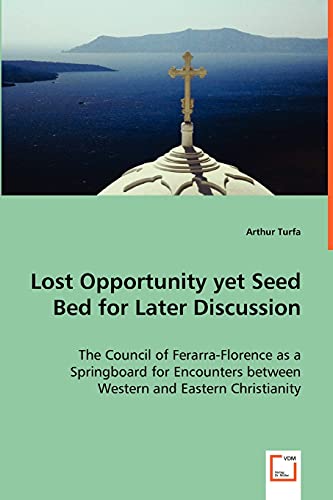
Lost Opportunity yet Seed Bed for Later Discussion - The Council of Ferarra-Florence as a Springboard for Encounters between Western and Eastern Christianity - Tapa blanda
Sinopsis
Christianity¿s East-West split lasts to this day. Both halves of the Church drifted apart prior to the Great Schism of 1054. Poor communication, personality conflicts, few theologians conversant in both Latin and Greek as well as political tensions contributed to the division and thwarted reconciliation attempts. The Filioque, use of azymes, papal supremacy, and purgatory were the most contentious issues. A weak Byzantine Empire struggled and failed to secure Western military assistance. Lutherans saw Orthodoxy as a purer form of Christianity. In the 1570s, Tübingen Lutherans contacted Jeremias II. He sought to establish ties with a non-papal Church in the West. The contacts addressed the four issues inherited from Ferrara-Florence ¿ and more. Modern Lutheran-Orthodox dialogue has had some success. The Evangelical Lutheran Church in America and the Standing Committee of Orthodox Bishops in America adopted the 1998 Lutheran-Orthodox Common Statement on Faith in the Holy Trinity , allowing use of the original Nicene Creed in ecumenical and Lutheran services Convening an ecumenical council is nearly impossible; but the gap between East and West could be narrowed.
"Sinopsis" puede pertenecer a otra edición de este libro.
Reseña del editor
Christianity¿s East-West split lasts to this day. Both halves of the Church drifted apart prior to the Great Schism of 1054. Poor communication, personality conflicts, few theologians conversant in both Latin and Greek as well as political tensions contributed to the division and thwarted reconciliation attempts. The Filioque, use of azymes, papal supremacy, and purgatory were the most contentious issues. A weak Byzantine Empire struggled and failed to secure Western military assistance. Lutherans saw Orthodoxy as a purer form of Christianity. In the 1570s, Tübingen Lutherans contacted Jeremias II. He sought to establish ties with a non-papal Church in the West. The contacts addressed the four issues inherited from Ferrara-Florence ¿ and more. Modern Lutheran-Orthodox dialogue has had some success. The Evangelical Lutheran Church in America and the Standing Committee of Orthodox Bishops in America adopted the 1998 Lutheran-Orthodox Common Statement on Faith in the Holy Trinity , allowing use of the original Nicene Creed in ecumenical and Lutheran services Convening an ecumenical council is nearly impossible; but the gap between East and West could be narrowed.
"Sobre este título" puede pertenecer a otra edición de este libro.
Resultados de la búsqueda para Lost Opportunity yet Seed Bed for Later Discussion...

Imagen de archivo
Lost Opportunity yet Seed Bed for Later Discussion The Council of FerarraFlorence as a Springboard for Encounters between Western and Eastern Christianity
Impresión bajo demandaLibrería: PBShop.store US, Wood Dale, IL, Estados Unidos de America
Calificación del vendedor: 5 de 5 estrellas

PAP. Condición: New. New Book. Shipped from UK. THIS BOOK IS PRINTED ON DEMAND. Established seller since 2000. Nº de ref. del artículo: L0-9783836498777
Comprar nuevo
EUR 81,37
Gastos de envío gratis
Se envía dentro de Estados Unidos de America
Se envía dentro de Estados Unidos de America
Cantidad disponible: Más de 20 disponibles
Imagen de archivo
Lost Opportunity yet Seed Bed for Later Discussion The Council of FerarraFlorence as a Springboard for Encounters between Western and Eastern Christianity
Impresión bajo demandaLibrería: PBShop.store UK, Fairford, GLOS, Reino Unido
Calificación del vendedor: 5 de 5 estrellas
PAP. Condición: New. New Book. Delivered from our UK warehouse in 4 to 14 business days. THIS BOOK IS PRINTED ON DEMAND. Established seller since 2000. Nº de ref. del artículo: L0-9783836498777
Comprar nuevo
EUR 77,74
Envío por EUR 4,88
Se envía de Reino Unido a Estados Unidos de America
Se envía de Reino Unido a Estados Unidos de America
Cantidad disponible: Más de 20 disponibles
Imagen de archivo
Lost Opportunity yet Seed Bed for Later Discussion - The Council of Ferarra-Florence as a Springboard for Encounters between Western and Eastern Christianity
Publicado por
VDM Verlag Dr. Mueller e.K. 2008-07-03, 2008
ISBN 10: 3836498774
ISBN 13: 9783836498777
Nuevo
Paperback
Librería: Chiron Media, Wallingford, Reino Unido
Calificación del vendedor: 5 de 5 estrellas
Paperback. Condición: New. Nº de ref. del artículo: 6666-IUK-9783836498777
Comprar nuevo
EUR 73,32
Envío por EUR 18,17
Se envía de Reino Unido a Estados Unidos de America
Se envía de Reino Unido a Estados Unidos de America
Cantidad disponible: 10 disponibles
Imagen de archivo
Lost Opportunity yet Seed Bed for Later Discussion: The Council of Ferarra-Florence as a Springboard for Encounters between Western and Eastern Christianity
Librería: Ria Christie Collections, Uxbridge, Reino Unido
Calificación del vendedor: 5 de 5 estrellas
Condición: New. In English. Nº de ref. del artículo: ria9783836498777_new
Comprar nuevo
EUR 84,44
Envío por EUR 10,99
Se envía de Reino Unido a Estados Unidos de America
Se envía de Reino Unido a Estados Unidos de America
Cantidad disponible: Más de 20 disponibles
Imagen del vendedor
Lost Opportunity yet Seed Bed for Later Discussion
Publicado por
VDM Verlag Dr. Müller|VDM Verlag Dr. Müller e.K., 2008
ISBN 10: 3836498774
ISBN 13: 9783836498777
Nuevo
Tapa blanda
Librería: moluna, Greven, Alemania
Calificación del vendedor: 5 de 5 estrellas
Condición: New. Christianity s East-West split lasts to this day. Both halves of the Church drifted apart prior to the Great Schism of 1054. Poor communication, personality conflicts, few theologians conversant in both Latin and Greek as well as political tensions contribu. Nº de ref. del artículo: 5390108
Comprar nuevo
EUR 81,83
Envío por EUR 48,99
Se envía de Alemania a Estados Unidos de America
Se envía de Alemania a Estados Unidos de America
Cantidad disponible: Más de 20 disponibles