
Artículos relacionados a Late Gothic Architecture English: Its Evolution, Extinction,...
Late Gothic Architecture English: Its Evolution, Extinction, and Reception: 10 (Architectura Medii Aevi, 10) - Tapa blanda
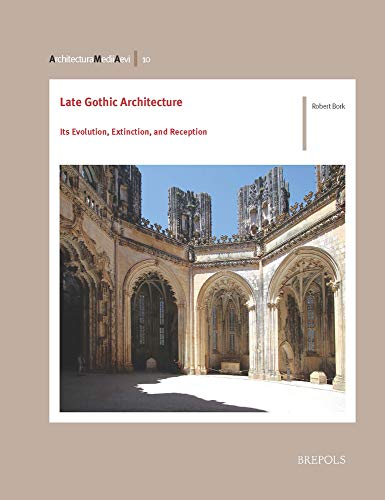
Sinopsis
In this book, Robert Bork offers a sweeping reassessment of late Gothic architecture and its fate in the Renaissance. In a chronologically organized narrative covering the whole of western and central Europe, he demonstrates that the Gothic design tradition remained inherently vital throughout the fourteenth and fifteenth centuries, creating spectacular monuments in a wide variety of national and regional styles. Bork argues that the displacement of this Gothic tradition from its long-standing position of artistic leadership in the years around 1500 reflected the impact of three main external forces: the rise of a rival architectural culture that championed the use of classical forms with a new theoretical sophistication; the appropriation of that architectural language by patrons who wished to associate themselves with papal and imperial Rome; and the chaos of the Reformation, which disrupted the circumstances of church construction on which the Gothic tradition had formerly depended. Bork further argues that art historians have much to gain from considering the character and fate of late Gothic architecture, not only because the monuments in question are intrinsically fascinating, but also because examination of the way their story has been told-and left untold, in many accounts of the Northern Renaissance-can reveal a great deal about schemes of categorization and prioritization that continue to shape the discipline even in the twenty-first century.
"Sinopsis" puede pertenecer a otra edición de este libro.
Reseña del editor
In this book, Robert Bork offers a sweeping reassessment of late Gothic architecture and its fate in the Renaissance. In a chronologically organized narrative covering the whole of western and central Europe, he demonstrates that the Gothic design tradition remained inherently vital throughout the fourteenth and fifteenth centuries, creating spectacular monuments in a wide variety of national and regional styles. Bork argues that the displacement of this Gothic tradition from its long-standing position of artistic leadership in the years around 1500 reflected the impact of three main external forces: the rise of a rival architectural culture that championed the use of classical forms with a new theoretical sophistication; the appropriation of that architectural language by patrons who wished to associate themselves with papal and imperial Rome; and the chaos of the Reformation, which disrupted the circumstances of church construction on which the Gothic tradition had formerly depended. Bork further argues that art historians have much to gain from considering the character and fate of late Gothic architecture, not only because the monuments in question are intrinsically fascinating, but also because examination of the way their story has been told-and left untold, in many accounts of the Northern Renaissance-can reveal a great deal about schemes of categorization and prioritization that continue to shape the discipline even in the twenty-first century.
"Sobre este título" puede pertenecer a otra edición de este libro.
Resultados de la búsqueda para Late Gothic Architecture English: Its Evolution, Extinction,...

Imagen de archivo
Late Gothic Architecture
Publicado por
Brepols Publishers, 2018
ISBN 10: 2503568947
ISBN 13: 9782503568942
Nuevo
paperback
Original o primera edición
Librería: ISD LLC, Bristol, CT, Estados Unidos de America
Calificación del vendedor: 5 de 5 estrellas

paperback. Condición: New. 1st. Nº de ref. del artículo: 964001
Comprar nuevo
EUR 149,89
Gastos de envío gratis
Se envía dentro de Estados Unidos de America
Se envía dentro de Estados Unidos de America
Cantidad disponible: 2 disponibles
Imagen del vendedor
Late Gothic Architecture : Its Evolution, Extinction, and Reception
Publicado por
Brepols Publishers, 2018
ISBN 10: 2503568947
ISBN 13: 9782503568942
Antiguo o usado
Tapa blanda
Librería: GreatBookPrices, Columbia, MD, Estados Unidos de America
Calificación del vendedor: 5 de 5 estrellas
Condición: As New. Unread book in perfect condition. Nº de ref. del artículo: 33127158
Comprar usado
EUR 209,06
Envío por EUR 2,36
Se envía dentro de Estados Unidos de America
Se envía dentro de Estados Unidos de America
Cantidad disponible: 2 disponibles
Imagen de archivo
Late Gothic Architecture: Its Evolution, Extinction, and Reception
Publicado por
Brepols Publishers, 2018
ISBN 10: 2503568947
ISBN 13: 9782503568942
Nuevo
Tapa blanda
Original o primera edición
Librería: Kennys Bookshop and Art Galleries Ltd., Galway, GY, Irlanda
Calificación del vendedor: 5 de 5 estrellas
Condición: New. 2018. 1st Edition. paperback. . . . . . Nº de ref. del artículo: V9782503568942
Comprar nuevo
EUR 219,76
Envío por EUR 9,50
Se envía de Irlanda a Estados Unidos de America
Se envía de Irlanda a Estados Unidos de America
Cantidad disponible: 2 disponibles
Imagen del vendedor
Late Gothic Architecture : Its Evolution, Extinction, and Reception
Librería: GreatBookPrices, Columbia, MD, Estados Unidos de America
Calificación del vendedor: 5 de 5 estrellas
Condición: New. Nº de ref. del artículo: 33127158-n
Comprar nuevo
EUR 239,59
Envío por EUR 2,36
Se envía dentro de Estados Unidos de America
Se envía dentro de Estados Unidos de America
Cantidad disponible: 2 disponibles
Imagen de archivo
Late Gothic Architecture: Its Evolution, Extinction, and Reception
Librería: Kennys Bookstore, Olney, MD, Estados Unidos de America
Calificación del vendedor: 5 de 5 estrellas
Condición: New. 2018. 1st Edition. paperback. . . . . . Books ship from the US and Ireland. Nº de ref. del artículo: V9782503568942
Comprar nuevo
EUR 280,18
Envío por EUR 9,37
Se envía dentro de Estados Unidos de America
Se envía dentro de Estados Unidos de America
Cantidad disponible: 2 disponibles
Imagen del vendedor
Late Gothic Architecture : Its Evolution, Extinction, and Reception
Librería: Joseph Burridge Books, Dagenham, Reino Unido
Calificación del vendedor: 5 de 5 estrellas
Soft cover. Condición: New. X+552 p., 337 b/w ill. + 32 colour ill., 216 x 280 mm. In this book, Robert Bork offers a sweeping reassessment of late Gothic architecture and its fate in the Renaissance. In a chronologically organized narrative covering the whole of western and central Europe, he demonstrates that the Gothic design tradition remained inherently vital throughout the fourteenth and fifteenth centuries, creating spectacular monuments in a wide variety of national and regional styles. Bork argues that the displacement of this Gothic tradition from its long-standing position of artistic leadership in the years around 1500 reflected the impact of three main external forces: the rise of a rival architectural culture that championed the use of classical forms with a new theoretical sophistication; the appropriation of that architectural language by patrons who wished to associate themselves with papal and imperial Rome; and the chaos of the Reformation, which disrupted the circumstances of church construction on which the Gothic tradition had formerly depended. Bork further argues that art historians have much to gain from considering the character and fate of late Gothic architecture, not only because the monuments in question are intrinsically fascinating, but also because examination of the way their story has been toldand left untold, in many accounts of the "Northern Renaissance"can reveal a great deal about schemes of categorization and prioritization that continue to shape the discipline even in the twenty-first century. Nº de ref. del artículo: PGBREPOLS54
Comprar nuevo
EUR 280,39
Envío por EUR 31,96
Se envía de Reino Unido a Estados Unidos de America
Se envía de Reino Unido a Estados Unidos de America
Cantidad disponible: 1 disponibles
Imagen de archivo
Late Gothic Architecture: Its Evolution, Extinction, and Reception (Architectura Medii Aevi)
Librería: Mispah books, Redhill, SURRE, Reino Unido
Calificación del vendedor: 4 de 5 estrellas

paperback. Condición: New. NEW. SHIPS FROM MULTIPLE LOCATIONS. book. Nº de ref. del artículo: ERICA82925035689476
Comprar nuevo
EUR 374,25
Envío por EUR 29,59
Se envía de Reino Unido a Estados Unidos de America
Se envía de Reino Unido a Estados Unidos de America
Cantidad disponible: 1 disponibles
Imagen de archivo
Late Gothic Architecture , Its Evolution, Extinction and Reception Robert Bork
Publicado por
Brepols Publishers, 2018
ISBN 10: 2503568947
ISBN 13: 9782503568942
Antiguo o usado
Tapa blanda
Librería: BUCHSERVICE / ANTIQUARIAT Lars Lutzer, Wahlstedt, Alemania
Calificación del vendedor: 5 de 5 estrellas
Condición: gut. Late Gothic Architecture , Its Evolution, Extinction and Reception In deutscher Sprache. pages. Nº de ref. del artículo: BN383372
Comprar usado
EUR 369,90
Envío por EUR 39,95
Se envía de Alemania a Estados Unidos de America
Se envía de Alemania a Estados Unidos de America
Cantidad disponible: 1 disponibles