
Artículos relacionados a The Medieval Translator. Traduire au Moyen Age: Lost...
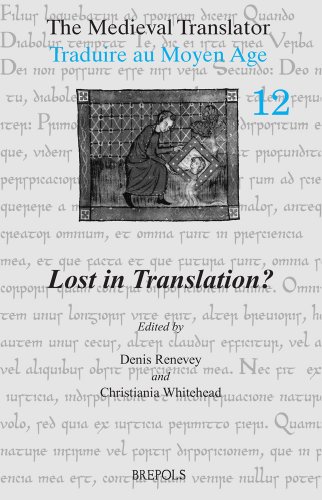
Sinopsis
The contributions to this volume are organised in a way that bear out the vitality of translation activity in the medieval period and the resourcefulness of modern scholarship in addressing the phenomenon of translation at large. No other period relies so heavily on this literary process to construct its cultural identity. Translations from Latin into the vernacular, or from one vernacular into another, or even from a vernacular into the Latin language, are just a few of the many forms medieval translation can take. The codification of the translation process as appropriation, transformation, or accommodation does not sufficiently emphasize the overarching curiosity and interest that motivates any translation activity. Rather, preceding the stages of appropriation and re-interpretation, it is positive inquisitiveness and openness towards linguistic and cultural difference that generate the production of a new text and the transference of culture from one sphere to another. Translation practice creates a dialogic exchange between cultures, it recognises difference and diversity, both linguistic and cultural, yet it also shapes its new product for the use of an audience or readership that is concurrently aware of the reciprocal need to participate in that exchange, in order to improve its own culture. It is that positive inquisitiveness which this volume emphasizes. The volume initially addresses the way in which translators dealt with texts from the early medieval period. It then considers the phenomenon of bilingualism and the privileged relationship that England held with the continent, especially the Italian and French literary traditions. The third part of this volume tackles the problem of fifteenth-century religious translation in England and, to a lesser extent, France, and complicates it by showing its inevitable political implications. Understood more particularly as an act of cultural transfer, translation activity can also be considered beyond the linguistic process. The fourth part of the volume deals with several instances of translations from one genre into another, and from one media into another. The contributions to this volume provide some answers to conundrums in the theory and practice of translation encountered during the medieval period. They also point to new ways of considering this literary process, and by praising diversity and difference, they suggest a less traumatic way of reading Babel than is usually implied.
"Sinopsis" puede pertenecer a otra edición de este libro.
Reseña del editor
The contributions to this volume are organised in a way that bear out the vitality of translation activity in the medieval period and the resourcefulness of modern scholarship in addressing the phenomenon of translation at large. No other period relies so heavily on this literary process to construct its cultural identity. Translations from Latin into the vernacular, or from one vernacular into another, or even from a vernacular into the Latin language, are just a few of the many forms medieval translation can take. The codification of the translation process as appropriation, transformation, or accommodation does not sufficiently emphasize the overarching curiosity and interest that motivates any translation activity. Rather, preceding the stages of appropriation and re-interpretation, it is positive inquisitiveness and openness towards linguistic and cultural difference that generate the production of a new text and the transference of culture from one sphere to another. Translation practice creates a dialogic exchange between cultures, it recognises difference and diversity, both linguistic and cultural, yet it also shapes its new product for the use of an audience or readership that is concurrently aware of the reciprocal need to participate in that exchange, in order to improve its own culture. It is that positive inquisitiveness which this volume emphasizes. The volume initially addresses the way in which translators dealt with texts from the early medieval period. It then considers the phenomenon of bilingualism and the privileged relationship that England held with the continent, especially the Italian and French literary traditions. The third part of this volume tackles the problem of fifteenth-century religious translation in England and, to a lesser extent, France, and complicates it by showing its inevitable political implications. Understood more particularly as an act of cultural transfer, translation activity can also be considered beyond the linguistic process. The fourth part of the volume deals with several instances of translations from one genre into another, and from one media into another. The contributions to this volume provide some answers to conundrums in the theory and practice of translation encountered during the medieval period. They also point to new ways of considering this literary process, and by praising diversity and difference, they suggest a less traumatic way of reading Babel than is usually implied.
"Sobre este título" puede pertenecer a otra edición de este libro.
Resultados de la búsqueda para The Medieval Translator. Traduire au Moyen Age: Lost...

Imagen de archivo
The Medieval Translator: Lost in Translation?
Publicado por
Brepols (distributed), 2009
ISBN 10: 2503531393
ISBN 13: 9782503531397
Antiguo o usado
Paperback
Librería: Books From California, Simi Valley, CA, Estados Unidos de America
Calificación del vendedor: 4 de 5 estrellas

Paperback. Condición: Fine. Still Sealed in Plastic. Never used! Nº de ref. del artículo: mon0002521266
Comprar usado
EUR 16,23
Envío por EUR 4,39
Se envía dentro de Estados Unidos de America
Se envía dentro de Estados Unidos de America
Cantidad disponible: 1 disponibles
Imagen de archivo
The Medieval Translator: Lost in Translation? [Paperback] Renevey, Denis and Whitehead, Christiania
Publicado por
Brepols (distributed), 2009
ISBN 10: 2503531393
ISBN 13: 9782503531397
Antiguo o usado
Paperback
Librería: The Compleat Scholar, Rochester, NY, Estados Unidos de America
Calificación del vendedor: 5 de 5 estrellas

Paperback. Condición: As New. Paperback showing light shelf wear, otherwise as new. Pages are clean and unmarked. No notes or highlighting. Nº de ref. del artículo: 13-0306-073-5428
Comprar usado
EUR 30,80
Envío por EUR 4,79
Se envía dentro de Estados Unidos de America
Se envía dentro de Estados Unidos de America
Cantidad disponible: 1 disponibles
Imagen de archivo
Lost in Translation?
Publicado por
Turnhout: Brepols, 2009
ISBN 10: 2503531393
ISBN 13: 9782503531397
Antiguo o usado
Soft cover
Librería: Anselm Scrivener Books, Chapel Hill, NC, Estados Unidos de America
Calificación del vendedor: 5 de 5 estrellas
Soft cover. Condición: As New. The Medieval Translator / Traduire au Moyen Âge, vol. 12. xix, 382 pp.; 11 b&w photos. Paperback. Unread, as new. New list price: EUR 75.00. Nº de ref. del artículo: J3669
Comprar usado
EUR 47,10
Envío por EUR 6,11
Se envía dentro de Estados Unidos de America
Se envía dentro de Estados Unidos de America
Cantidad disponible: 1 disponibles
Imagen de archivo
Medieval Translator. Traduire au Moyen Age
Publicado por
Brepols Publishers, 2010
ISBN 10: 2503531393
ISBN 13: 9782503531397
Nuevo
paperback
Original o primera edición
Librería: ISD LLC, Bristol, CT, Estados Unidos de America
Calificación del vendedor: 5 de 5 estrellas
paperback. Condición: New. 1st. Nº de ref. del artículo: 96571
Comprar nuevo
EUR 63,41
Gastos de envío gratis
Se envía dentro de Estados Unidos de America
Se envía dentro de Estados Unidos de America
Cantidad disponible: 9 disponibles
Imagen de archivo
The Medieval Translator: Lost in Translation?
Publicado por
Brepols (distributed), 2009
ISBN 10: 2503531393
ISBN 13: 9782503531397
Nuevo
Paperback
Librería: Books From California, Simi Valley, CA, Estados Unidos de America
Calificación del vendedor: 4 de 5 estrellas
Paperback. Condición: New. Nº de ref. del artículo: mon0004191537
Comprar nuevo
EUR 61,23
Envío por EUR 4,39
Se envía dentro de Estados Unidos de America
Se envía dentro de Estados Unidos de America
Cantidad disponible: 1 disponibles
Imagen de archivo
The Medieval Translator/ Traduire au Moyen Age: Lost in Translation?
Librería: Revaluation Books, Exeter, Reino Unido
Calificación del vendedor: 5 de 5 estrellas
Paperback. Condición: Brand New. bilingual edition. 382 pages. French language. 8.75x6.00x1.00 inches. In Stock. Nº de ref. del artículo: __2503531393
Comprar nuevo
EUR 62,36
Envío por EUR 14,57
Se envía de Reino Unido a Estados Unidos de America
Se envía de Reino Unido a Estados Unidos de America
Cantidad disponible: 2 disponibles
Imagen del vendedor
Medieval Translator/ Traduire au Moyen Age : Lost in Translation?
Librería: GreatBookPrices, Columbia, MD, Estados Unidos de America
Calificación del vendedor: 5 de 5 estrellas
Condición: New. Nº de ref. del artículo: 8969851-n
Comprar nuevo
EUR 76,84
Envío por EUR 2,32
Se envía dentro de Estados Unidos de America
Se envía dentro de Estados Unidos de America
Cantidad disponible: 3 disponibles
Imagen del vendedor
Medieval Translator/ Traduire au Moyen Age : Lost in Translation?
Publicado por
Brepols Publishers, 2010
ISBN 10: 2503531393
ISBN 13: 9782503531397
Antiguo o usado
Tapa blanda
Librería: GreatBookPrices, Columbia, MD, Estados Unidos de America
Calificación del vendedor: 5 de 5 estrellas
Condición: As New. Unread book in perfect condition. Nº de ref. del artículo: 8969851
Comprar usado
EUR 76,92
Envío por EUR 2,32
Se envía dentro de Estados Unidos de America
Se envía dentro de Estados Unidos de America
Cantidad disponible: 3 disponibles
Imagen del vendedor
Medieval Translator/ Traduire au Moyen Age : Lost in Translation?
Publicado por
Brepols Publishers, 2010
ISBN 10: 2503531393
ISBN 13: 9782503531397
Antiguo o usado
Tapa blanda
Librería: GreatBookPricesUK, Woodford Green, Reino Unido
Calificación del vendedor: 5 de 5 estrellas
Condición: As New. Unread book in perfect condition. Nº de ref. del artículo: 8969851
Comprar usado
EUR 67,08
Envío por EUR 17,48
Se envía de Reino Unido a Estados Unidos de America
Se envía de Reino Unido a Estados Unidos de America
Cantidad disponible: 3 disponibles
Imagen del vendedor
Medieval Translator/ Traduire au Moyen Age : Lost in Translation?
Librería: GreatBookPricesUK, Woodford Green, Reino Unido
Calificación del vendedor: 5 de 5 estrellas
Condición: New. Nº de ref. del artículo: 8969851-n
Comprar nuevo
EUR 68,33
Envío por EUR 17,48
Se envía de Reino Unido a Estados Unidos de America
Se envía de Reino Unido a Estados Unidos de America
Cantidad disponible: 3 disponibles