
Artículos relacionados a Trade in Good Taste English: Relations in Architecture...
Trade in Good Taste English: Relations in Architecture and Culture between the Dutch Republic and the Baltic World in the Seventeenth Century: 2 (Architectura Moderna, 2) - Tapa blanda
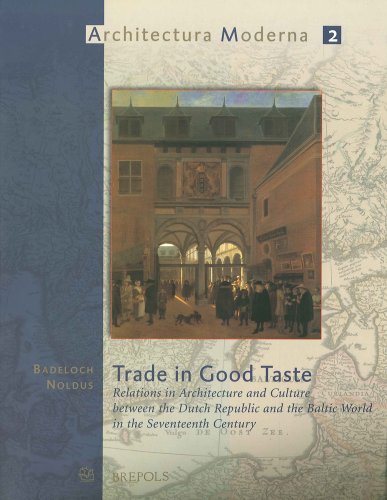
Sinopsis
During the seventeenth century Dutch influence on the Baltic region, both economic and aesthetic, was unrivaled. In the wake of the Dutch monopoly on Baltic trade, cultural contacts between the Dutch Republic and the Baltic world flourished. The Dutch Republic was even to fulfil an exemplary function in the Baltic world (particularly in the Swedish Empire, the dominating power in the region), not solely limited to the commerce of commodities but extending to the domain of architecture and art as well. In this intensive cultural traffic, an important role was set aside for Dutch immigrants, architects, artists, and their agents. Apart from their regular activities as diplomats or news correspondents, agents mediated in cultural affairs for patrons in the North. As such, they occupied a key role in the relations between the Baltic world and the Dutch Republic. The pivotal element in these networks, they negotiated between Baltic commissioners and Dutch architects, artists, and suppliers of luxury items, including sculptures, tapestries, paintings, as well as a wide range of books and prints - all of which were available on the Amsterdam market. These extensive networks mark the Dutch Republic as a major centre of architecture, art, and information, crucial to the cultural development of northern Europe. The history of this lively trade in good taste is told on the basis of rich archival material, including drawings, book and art collection inventories, correspondence, travel journals, and diaries. Badeloch Noldus is a Senior Researcher at Frederiksborg Castle, the Danish Museum of National History. Her interests cover art, agency and art trade in early modern Northern Europe. Recent publications include Your Humble Servant. Agents in Early Modern Europe (2006).
"Sinopsis" puede pertenecer a otra edición de este libro.
Reseña del editor
During the seventeenth century Dutch influence on the Baltic region, both economic and aesthetic, was unrivaled. In the wake of the Dutch monopoly on Baltic trade, cultural contacts between the Dutch Republic and the Baltic world flourished. The Dutch Republic was even to fulfil an exemplary function in the Baltic world (particularly in the Swedish Empire, the dominating power in the region), not solely limited to the commerce of commodities but extending to the domain of architecture and art as well. In this intensive cultural traffic, an important role was set aside for Dutch immigrants, architects, artists, and their agents. Apart from their regular activities as diplomats or news correspondents, agents mediated in cultural affairs for patrons in the North. As such, they occupied a key role in the relations between the Baltic world and the Dutch Republic. The pivotal element in these networks, they negotiated between Baltic commissioners and Dutch architects, artists, and suppliers of luxury items, including sculptures, tapestries, paintings, as well as a wide range of books and prints - all of which were available on the Amsterdam market. These extensive networks mark the Dutch Republic as a major centre of architecture, art, and information, crucial to the cultural development of northern Europe. The history of this lively trade in good taste is told on the basis of rich archival material, including drawings, book and art collection inventories, correspondence, travel journals, and diaries. Badeloch Noldus is a Senior Researcher at Frederiksborg Castle, the Danish Museum of National History. Her interests cover art, agency and art trade in early modern Northern Europe. Recent publications include Your Humble Servant. Agents in Early Modern Europe (2006).
"Sobre este título" puede pertenecer a otra edición de este libro.
Resultados de la búsqueda para Trade in Good Taste English: Relations in Architecture...

Imagen de archivo
Trade in Good Taste
Publicado por
Brepols Publishers, 2005
ISBN 10: 2503514898
ISBN 13: 9782503514895
Nuevo
paperback
Original o primera edición
Librería: ISD LLC, Bristol, CT, Estados Unidos de America
Calificación del vendedor: 5 de 5 estrellas

paperback. Condición: New. 1st. Nº de ref. del artículo: 86691
Comprar nuevo
EUR 51,28
Gastos de envío gratis
Se envía dentro de Estados Unidos de America
Se envía dentro de Estados Unidos de America
Cantidad disponible: 16 disponibles
Imagen de archivo
Trade in Good Taste: Relations in Architecture and Culture Between the Dutch Republic and the Baltic World in the Seventeenth Century (Volume 2)
Publicado por
Brepols N.V., 2004
ISBN 10: 2503514898
ISBN 13: 9782503514895
Antiguo o usado
Tapa blanda
Librería: Anybook.com, Lincoln, Reino Unido
Calificación del vendedor: 5 de 5 estrellas
Condición: Good. Volume 2. This is an ex-library book and may have the usual library/used-book markings inside.This book has soft covers. In good all round condition. Please note the Image in this listing is a stock photo and may not match the covers of the actual item,950grams, ISBN:9782503514895. Nº de ref. del artículo: 3996666
Comprar usado
EUR 72,05
Envío por EUR 15,85
Se envía de Reino Unido a Estados Unidos de America
Se envía de Reino Unido a Estados Unidos de America
Cantidad disponible: 1 disponibles
Imagen de archivo
Trade in Good Taste: Relations in Architecture and Culture Between the Dutch Republic and the Baltic World in the Seventeenth Century
Publicado por
Brepols Publishers, 2005
ISBN 10: 2503514898
ISBN 13: 9782503514895
Nuevo
Tapa blanda
Original o primera edición
Librería: Kennys Bookshop and Art Galleries Ltd., Galway, GY, Irlanda
Calificación del vendedor: 5 de 5 estrellas
Condición: New. 2005. 1st Edition. paperback. . . . . . Nº de ref. del artículo: V9782503514895
Comprar nuevo
EUR 80,60
Envío por EUR 9,50
Se envía de Irlanda a Estados Unidos de America
Se envía de Irlanda a Estados Unidos de America
Cantidad disponible: 16 disponibles
Imagen de archivo
Trade in Good Taste
Librería: Mooney's bookstore, Den Helder, Holanda
Calificación del vendedor: 4 de 5 estrellas

Condición: Very Good. Nº de ref. del artículo: A5374AB8EDD3AC6
Comprar usado
EUR 78,73
Envío por EUR 14,95
Se envía de Holanda a Estados Unidos de America
Se envía de Holanda a Estados Unidos de America
Cantidad disponible: 1 disponibles
Imagen de archivo
Trade in Good Taste: Relations in Architecture and Culture Between the Dutch Republic and the Baltic World in the Seventeenth Century
Librería: Kennys Bookstore, Olney, MD, Estados Unidos de America
Calificación del vendedor: 5 de 5 estrellas
Condición: New. 2005. 1st Edition. paperback. . . . . . Books ship from the US and Ireland. Nº de ref. del artículo: V9782503514895
Comprar nuevo
EUR 101,18
Envío por EUR 9,17
Se envía dentro de Estados Unidos de America
Se envía dentro de Estados Unidos de America
Cantidad disponible: 16 disponibles
Imagen de archivo
Trade in Good Taste. Relations in Architecture and Culture between the Dutch Republic and the Baltic World in the Seventeenth Century B. Noldus
Publicado por
Brepols Publishers, 2005
ISBN 10: 2503514898
ISBN 13: 9782503514895
Antiguo o usado
Tapa blanda
Librería: BUCHSERVICE / ANTIQUARIAT Lars Lutzer, Wahlstedt, Alemania
Calificación del vendedor: 5 de 5 estrellas
Condición: gut. Trade in Good Taste. Relations in Architecture and Culture between the Dutch Republic and the Baltic World in the Seventeenth Century In deutscher Sprache. pages. Nº de ref. del artículo: BN387539
Comprar usado
EUR 179,99
Envío por EUR 39,95
Se envía de Alemania a Estados Unidos de America
Se envía de Alemania a Estados Unidos de America
Cantidad disponible: 1 disponibles