
Artículos relacionados a A View from the Herd: Cattle, Sheep, Goats, and Pigs...
A View from the Herd: Cattle, Sheep, Goats, and Pigs in Pharaonic Egypt: A Primer for Egyptologists and Archaeologists: 5 (Archaeobiology) - Tapa dura
Sinopsis
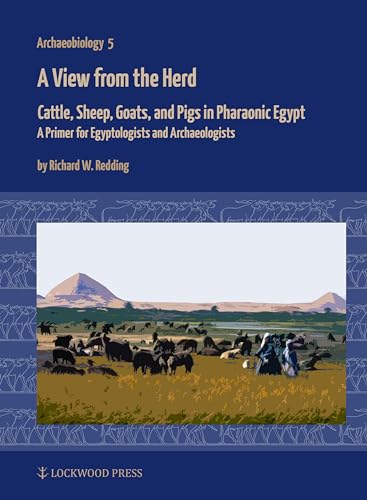
In this book, the late Richard Redding synthesizes his decades-long work on the ancient agricultural economy of Egypt. Drawing on a diverse range of data, including zooarchaeology, ancient texts, and iconographic sources, he explores the role of cattle, sheep, goats and pigs in the economic infrastructure of ancient, mainly Pharaonic, Egypt, along with the complexities of decision-making processes that shaped the use and management of these vital livestock resources. The book integrates zooarchaeological and historical data with information on unimproved breeds of agricultural livestock from Egypt and the broader Middle East as well as considering texts and tomb paintings. Redding argues that understanding the interplay between economic forces, environmental factors and herders' knowledge of animal characteristics is crucial for unravelling the dynamic nature of decision-making. He explores herd growth rates, meat yields, caloric and nutritional benefits, and optimal herd structures. By employing that data and ecological models, including the annual Nile floods, he provides insights into the adaptive strategies employed by ancient Egyptian herders. In this way, Redding examines the economic rationale behind ancient Egyptian herding communities. His models of Pharaonic herding strategies generate expectations tested using zooarchaeological evidence. Redding long advocated the modelling approach that he demonstrates here, understanding zooarchaeological data through a lens of animal biology and environmental context. This work should spark wide interest among archaeologists working in disparate regions.
"Sinopsis" puede pertenecer a otra edición de este libro.
Acerca del autor
Richard Redding was a research scientist at the Kelsey Museum of Archaeology, University of Michigan. He directed the Kom el-Hisn project with Robert Wenke in the 1980s, and later joined the AERA team at Heit el-Ghurab, a settlement at Giza. He is co-author (with Robert Wenke and Anthony Cagle) of Kom El-Hisn (ca. 2500-1900 BC): An Ancient Settlement in the Nile Delta (Lockwood, 2016).
"Sobre este título" puede pertenecer a otra edición de este libro.
Resultados de la búsqueda para A View from the Herd: Cattle, Sheep, Goats, and Pigs...

Imagen de archivo
A View from the Herd: Cattle, Sheep, Goats, and Pigs in Pharaonic Egypt: A Primer for Egyptologists and Archaeologists
Publicado por
Lockwood Press, 2024
ISBN 10: 1957454083
ISBN 13: 9781957454085
Antiguo o usado
Tapa dura
Librería: Books From California, Simi Valley, CA, Estados Unidos de America
Calificación del vendedor: 4 de 5 estrellas

hardcover. Condición: Very Good. Nº de ref. del artículo: mon0003471362
Comprar usado
EUR 33,07
Envío por EUR 4,35
Se envía dentro de Estados Unidos de America
Se envía dentro de Estados Unidos de America
Cantidad disponible: 9 disponibles
Imagen de archivo
A View from the Herd: Cattle, Sheep, Goats, and Pigs in Pharaonic Egypt: A Primer for Egyptologists and Archaeologists
Publicado por
Lockwood Press, 2024
ISBN 10: 1957454083
ISBN 13: 9781957454085
Antiguo o usado
Tapa dura
Librería: Books From California, Simi Valley, CA, Estados Unidos de America
Calificación del vendedor: 4 de 5 estrellas
hardcover. Condición: Fine. Nº de ref. del artículo: mon0003474678
Comprar usado
EUR 45,25
Envío por EUR 4,35
Se envía dentro de Estados Unidos de America
Se envía dentro de Estados Unidos de America
Cantidad disponible: 2 disponibles
Imagen de archivo
View from the Herd
Publicado por
Lockwood Press, 2024
ISBN 10: 1957454083
ISBN 13: 9781957454085
Nuevo
Tapa dura
Original o primera edición
Librería: ISD LLC, Bristol, CT, Estados Unidos de America
Calificación del vendedor: 5 de 5 estrellas

hardcover. Condición: New. 1st. Nº de ref. del artículo: 1707591
Comprar nuevo
EUR 62,79
Gastos de envío gratis
Se envía dentro de Estados Unidos de America
Se envía dentro de Estados Unidos de America
Cantidad disponible: Más de 20 disponibles
Imagen de archivo
A View From The Herd
Librería: GreatBookPrices, Columbia, MD, Estados Unidos de America
Calificación del vendedor: 5 de 5 estrellas
Condición: New. Nº de ref. del artículo: 47508459-n
Comprar nuevo
EUR 68,32
Envío por EUR 2,30
Se envía dentro de Estados Unidos de America
Se envía dentro de Estados Unidos de America
Cantidad disponible: Más de 20 disponibles
Imagen de archivo
A View From The Herd
Publicado por
Lockwood Pr, 2024
ISBN 10: 1957454083
ISBN 13: 9781957454085
Antiguo o usado
Tapa dura
Librería: GreatBookPrices, Columbia, MD, Estados Unidos de America
Calificación del vendedor: 5 de 5 estrellas
Condición: As New. Unread book in perfect condition. Nº de ref. del artículo: 47508459
Comprar usado
EUR 70,33
Envío por EUR 2,30
Se envía dentro de Estados Unidos de America
Se envía dentro de Estados Unidos de America
Cantidad disponible: Más de 20 disponibles
Imagen de archivo
A View from the Herd
Librería: PBShop.store US, Wood Dale, IL, Estados Unidos de America
Calificación del vendedor: 5 de 5 estrellas
HRD. Condición: New. New Book. Shipped from UK. Established seller since 2000. Nº de ref. del artículo: GB-9781957454085
Comprar nuevo
EUR 78,14
Gastos de envío gratis
Se envía dentro de Estados Unidos de America
Se envía dentro de Estados Unidos de America
Cantidad disponible: 2 disponibles
Imagen de archivo
A View from the Herd
Librería: PBShop.store UK, Fairford, GLOS, Reino Unido
Calificación del vendedor: 5 de 5 estrellas
HRD. Condición: New. New Book. Shipped from UK. Established seller since 2000. Nº de ref. del artículo: GB-9781957454085
Comprar nuevo
EUR 72,79
Envío por EUR 6,83
Se envía de Reino Unido a Estados Unidos de America
Se envía de Reino Unido a Estados Unidos de America
Cantidad disponible: 1 disponibles
Imagen de archivo
A View from the Herd: Cattle, Sheep, Goats, and Pigs in Pharaonic Egypt: A Primer for Egyptologists and Archaeologists
Librería: Kennys Bookshop and Art Galleries Ltd., Galway, GY, Irlanda
Calificación del vendedor: 5 de 5 estrellas
Condición: New. Nº de ref. del artículo: V9781957454085
Comprar nuevo
EUR 76,68
Envío por EUR 9,50
Se envía de Irlanda a Estados Unidos de America
Se envía de Irlanda a Estados Unidos de America
Cantidad disponible: Más de 20 disponibles
Imagen de archivo
A View From The Herd
Librería: GreatBookPricesUK, Woodford Green, Reino Unido
Calificación del vendedor: 5 de 5 estrellas
Condición: New. Nº de ref. del artículo: 47508459-n
Comprar nuevo
EUR 72,78
Envío por EUR 17,46
Se envía de Reino Unido a Estados Unidos de America
Se envía de Reino Unido a Estados Unidos de America
Cantidad disponible: 2 disponibles
Imagen de archivo
A View from the Herd: Cattle, Sheep, Goats, and Pigs in Pharaonic Egypt: A Primer for Egyptologists and Archaeologists (Archaeobiology)
Publicado por
Lockwood Press 2024-07-15, 2024
ISBN 10: 1957454083
ISBN 13: 9781957454085
Nuevo
Tapa dura
Librería: Chiron Media, Wallingford, Reino Unido
Calificación del vendedor: 5 de 5 estrellas
Hardcover. Condición: New. Nº de ref. del artículo: 6666-GRD-9781957454085
Comprar nuevo
EUR 73,38
Envío por EUR 18,03
Se envía de Reino Unido a Estados Unidos de America
Se envía de Reino Unido a Estados Unidos de America
Cantidad disponible: 1 disponibles