
Artículos relacionados a An Outline of Occult Science (Aziloth Books)
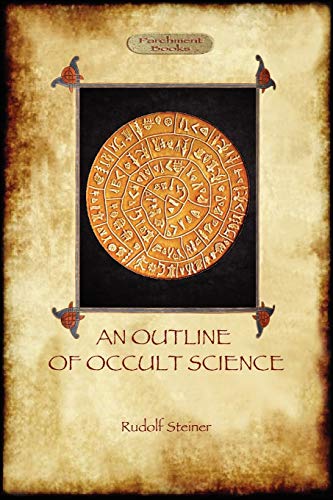
Sinopsis
Occult Science is Rudolf Steiner's term for the ancient Way of Initiation, and in this book he shows that an objective description of the spiritual experience, (one quite as balanced as the findings of external science), is both possible and attainable. Material scientists pour scorn on the idea of other spiritual worlds, but it is unreasonable to expect that instruments of gross matter will ever detect the highly attenuated spiritual dimensions. Occult scientists consider the human body is the best, perhaps the only, instrument capable to reaching these dimensions, and while all such detection must perforce be subjective, it is no means non-objective. Regarded by many as Steiner's masterpiece, 'An Outline of Occult Science' is a book with many levels of meaning, one that will repay re-reading on a regular basis.
"Sinopsis" puede pertenecer a otra edición de este libro.
Reseña del editor
Occult Science is Rudolf Steiner's term for the ancient Way of Initiation, and in this book he shows that an objective description of the spiritual experience, (one quite as balanced as the findings of external science), is both possible and attainable. Material scientists pour scorn on the idea of other spiritual worlds, but it is unreasonable to expect that instruments of gross matter will ever detect the highly attenuated spiritual dimensions. Occult scientists consider the human body is the best, perhaps the only, instrument capable to reaching these dimensions, and while all such detection must perforce be subjective, it is no means non-objective. Regarded by many as Steiner's masterpiece, 'An Outline of Occult Science' is a book with many levels of meaning, one that will repay re-reading on a regular basis.
Biografía del autor
Rudolf Steiner (1861 1925) was born in the small village of Kraljevec, Austro-Hungarian Empire (now in Croatia), where he grew up. As a young man, he lived in Weimar and Berlin, where he became a well-published scientific, literary, and philosophical scholar, known especially for his work with Goethe s scientific writings. At the beginning of the twentieth century, he began to develop his early philosophical principles into an approach to systematic research into psychological and spiritual phenomena. Formally beginning his spiritual teaching career under the auspices of the Theosophical Society, Steiner came to use the term Anthroposophy (and spiritual science) for his philosophy, spiritual research, and findings. The influence of Steiner s multifaceted genius has led to innovative and holistic approaches in medicine, various therapies, philosophy, religious renewal, Waldorf education, education for special needs, threefold economics, biodynamic agriculture, Goethean science, architecture, and the arts of drama, speech, and eurythmy. In 1924, Rudolf Steiner founded the General Anthroposophical Society, which today has branches throughout the world. He died in Dornach, Switzerland.
"Sobre este título" puede pertenecer a otra edición de este libro.
Resultados de la búsqueda para An Outline of Occult Science (Aziloth Books)

Imagen del vendedor
An Outline of Occult Science
Publicado por
Aziloth Books, 2011
ISBN 10: 1908388102
ISBN 13: 9781908388100
Antiguo o usado
Tapa blanda
Librería: GreatBookPrices, Columbia, MD, Estados Unidos de America
Calificación del vendedor: 5 de 5 estrellas

Condición: As New. Unread book in perfect condition. Nº de ref. del artículo: 12472966
Comprar usado
EUR 14,24
Envío por EUR 2,29
Se envía dentro de Estados Unidos de America
Se envía dentro de Estados Unidos de America
Cantidad disponible: Más de 20 disponibles
Imagen del vendedor
An Outline of Occult Science
Librería: GreatBookPrices, Columbia, MD, Estados Unidos de America
Calificación del vendedor: 5 de 5 estrellas
Condición: New. Nº de ref. del artículo: 12472966-n
Comprar nuevo
EUR 15,47
Envío por EUR 2,29
Se envía dentro de Estados Unidos de America
Se envía dentro de Estados Unidos de America
Cantidad disponible: Más de 20 disponibles
Imagen de archivo
An Outline of Occult Science (Aziloth Books)
Librería: California Books, Miami, FL, Estados Unidos de America
Calificación del vendedor: 4 de 5 estrellas

Condición: New. Nº de ref. del artículo: I-9781908388100
Comprar nuevo
EUR 17,84
Gastos de envío gratis
Se envía dentro de Estados Unidos de America
Se envía dentro de Estados Unidos de America
Cantidad disponible: Más de 20 disponibles
Imagen del vendedor
An Outline of Occult Science
Librería: Rarewaves.com USA, London, LONDO, Reino Unido
Calificación del vendedor: 5 de 5 estrellas
Paperback. Condición: New. Nº de ref. del artículo: LU-9781908388100
Comprar nuevo
EUR 18,47
Gastos de envío gratis
Se envía de Reino Unido a Estados Unidos de America
Se envía de Reino Unido a Estados Unidos de America
Cantidad disponible: Más de 20 disponibles
Imagen de archivo
An Outline of Occult Science (Aziloth Books)
Impresión bajo demandaLibrería: PBShop.store US, Wood Dale, IL, Estados Unidos de America
Calificación del vendedor: 5 de 5 estrellas
PAP. Condición: New. New Book. Shipped from UK. THIS BOOK IS PRINTED ON DEMAND. Established seller since 2000. Nº de ref. del artículo: L0-9781908388100
Comprar nuevo
EUR 18,63
Gastos de envío gratis
Se envía dentro de Estados Unidos de America
Se envía dentro de Estados Unidos de America
Cantidad disponible: Más de 20 disponibles
Imagen de archivo
An Outline of Occult Science (Aziloth Books)
Impresión bajo demandaLibrería: PBShop.store UK, Fairford, GLOS, Reino Unido
Calificación del vendedor: 5 de 5 estrellas
PAP. Condición: New. New Book. Delivered from our UK warehouse in 4 to 14 business days. THIS BOOK IS PRINTED ON DEMAND. Established seller since 2000. Nº de ref. del artículo: L0-9781908388100
Comprar nuevo
EUR 16,82
Envío por EUR 4,86
Se envía de Reino Unido a Estados Unidos de America
Se envía de Reino Unido a Estados Unidos de America
Cantidad disponible: Más de 20 disponibles
Imagen de archivo
An Outline of Occult Science (Aziloth Books)
Impresión bajo demandaLibrería: Majestic Books, Hounslow, Reino Unido
Calificación del vendedor: 4 de 5 estrellas
Condición: New. Print on Demand pp. 218 423:B&W 6 x 9 in or 229 x 152 mm Perfect Bound on White w/Matte Lam. Nº de ref. del artículo: 109041778
Comprar nuevo
EUR 18,96
Envío por EUR 7,60
Se envía de Reino Unido a Estados Unidos de America
Se envía de Reino Unido a Estados Unidos de America
Cantidad disponible: 4 disponibles
Imagen de archivo
An Outline of Occult Science (Aziloth Books)
Impresión bajo demandaLibrería: Books Puddle, New York, NY, Estados Unidos de America
Calificación del vendedor: 4 de 5 estrellas
Condición: New. Print on Demand pp. 218. Nº de ref. del artículo: 26101214125
Comprar nuevo
EUR 24,76
Envío por EUR 3,46
Se envía dentro de Estados Unidos de America
Se envía dentro de Estados Unidos de America
Cantidad disponible: 4 disponibles
Imagen de archivo
An Outline of Occult Science (Aziloth Books)
Impresión bajo demandaLibrería: Biblios, Frankfurt am main, HESSE, Alemania
Calificación del vendedor: 4 de 5 estrellas
Condición: New. PRINT ON DEMAND pp. 218. Nº de ref. del artículo: 18101214119
Comprar nuevo
EUR 19,63
Envío por EUR 9,95
Se envía de Alemania a Estados Unidos de America
Se envía de Alemania a Estados Unidos de America
Cantidad disponible: 4 disponibles
Imagen de archivo
An Outline of Occult Science (Aziloth Books)
Librería: Ria Christie Collections, Uxbridge, Reino Unido
Calificación del vendedor: 5 de 5 estrellas
Condición: New. In. Nº de ref. del artículo: ria9781908388100_new
Comprar nuevo
EUR 17,02
Envío por EUR 13,20
Se envía de Reino Unido a Estados Unidos de America
Se envía de Reino Unido a Estados Unidos de America
Cantidad disponible: Más de 20 disponibles