
Artículos relacionados a Shakespeare's Macbeth (The Connell Guide To ...)
Sinopsis
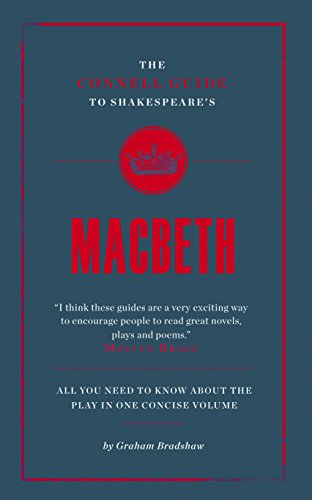
Macbeth may well be the most terrifying play in the English language, but it hasn’t always been seen that way. It has divided critics more deeply than any other Shakespearian tragedy – and the argument, in essence, has been about just how terrifying the play really is and about how we should react, or do react, to Macbeth himself. No Shakespearian tragedy gives as much attention to its hero as Macbeth. With the exception of Lady Macbeth, there is much less emphasis on the figures round the hero than there is in Hamlet or Othello. Unlike King Lear, with its parallel story of Gloucester and his sons, Macbeth has no sub-plot. And its imagery of sharp contrasts – of day and night, light and dark, innocent life and murder – adds to the almost claustrophobic intensity of this most intense of plays. So why are critics so divided about Macbeth? Why is it so disturbing? Why do we feel compelled to admire its hero even as we condemn him? How reassuring is the last scene, when Macbeth is killed and Malcolm becomes king? Do we see this as the intervention of a divine providence, a restoration of goodness after all the evil? Or do we see instead signs that the whole cycle of violence and murder could be about to begin all over again? And what does the play really tell us about good and evil? In this book Graham Bradshaw answers these questions, and shows how it is only in recent years that the extent of Shakespeare’s achievement in Macbeth, and the nature of his vision in the play, has really been grasped.
"Sinopsis" puede pertenecer a otra edición de este libro.
Acerca del autor
Professor Graham Bradshaw is the author of Shakespeare's Scepticism, described by Harold Bloom as "one of the half-dozen or so best modern books about Shakespeare" and numerous other books and essays. But he is also a leading authority on Conrad, who he has studied for almost 50 years. A former Professor of English at Chuo University in Tokyo and before that a Reader at the University of St Andrews, he began his career at Cambridge. He is now an Honorary Professor of English and Fine Arts at the University of Queensland.
"Sobre este título" puede pertenecer a otra edición de este libro.
Resultados de la búsqueda para Shakespeare's Macbeth (The Connell Guide To ...)

Imagen del vendedor
The Connell Guide to Shakespeare's Macbeth
Publicado por
Connell Publishing, 2012
ISBN 10: 1907776044
ISBN 13: 9781907776045
Antiguo o usado
paperback
Librería: WeBuyBooks, Rossendale, LANCS, Reino Unido
Calificación del vendedor: 5 de 5 estrellas

paperback. Condición: Good. Most items will be dispatched the same or the next working day. A copy that has been read but remains in clean condition. All of the pages are intact and the cover is intact and the spine may show signs of wear. The book may have minor markings which are not specifically mentioned. Ex library copy with usual stamps & stickers. Nº de ref. del artículo: rev3470262299
Comprar usado
EUR 3,93
Envío por EUR 5,63
Se envía de Reino Unido a Estados Unidos de America
Se envía de Reino Unido a Estados Unidos de America
Cantidad disponible: 1 disponibles
Imagen de archivo
Shakespeare's Macbeth (The Connell Guide To .)
Publicado por
Connell Publishing, 2018
ISBN 10: 1907776044
ISBN 13: 9781907776045
Antiguo o usado
Paperback
Librería: WorldofBooks, Goring-By-Sea, WS, Reino Unido
Calificación del vendedor: 5 de 5 estrellas
Paperback. Condición: Very Good. The book has been read, but is in excellent condition. Pages are intact and not marred by notes or highlighting. The spine remains undamaged. Nº de ref. del artículo: GOR006238902
Comprar usado
EUR 3,55
Envío por EUR 6,52
Se envía de Reino Unido a Estados Unidos de America
Se envía de Reino Unido a Estados Unidos de America
Cantidad disponible: 12 disponibles
Imagen de archivo
Shakespeare's Macbeth
Publicado por
Connell Publishing, 2018
ISBN 10: 1907776044
ISBN 13: 9781907776045
Antiguo o usado
Paperback
Librería: ThriftBooks-Atlanta, AUSTELL, GA, Estados Unidos de America
Calificación del vendedor: 5 de 5 estrellas
Paperback. Condición: Good. No Jacket. Pages can have notes/highlighting. Spine may show signs of wear. ~ ThriftBooks: Read More, Spend Less. Nº de ref. del artículo: G1907776044I3N00
Comprar usado
EUR 10,38
Gastos de envío gratis
Se envía dentro de Estados Unidos de America
Se envía dentro de Estados Unidos de America
Cantidad disponible: 1 disponibles
Imagen del vendedor
Connell Guide to Shakespeare's Macbeth
Librería: GreatBookPrices, Columbia, MD, Estados Unidos de America
Calificación del vendedor: 5 de 5 estrellas
Condición: New. Nº de ref. del artículo: 18637832-n
Comprar nuevo
EUR 9,48
Envío por EUR 2,28
Se envía dentro de Estados Unidos de America
Se envía dentro de Estados Unidos de America
Cantidad disponible: Más de 20 disponibles
Imagen del vendedor
The Connell Guide To Shakespeare's Macbeth
Publicado por
CONNELL PUBLISHING LTD, GB, 2012
ISBN 10: 1907776044
ISBN 13: 9781907776045
Nuevo
Paperback
Librería: Rarewaves.com USA, London, LONDO, Reino Unido
Calificación del vendedor: 5 de 5 estrellas
Paperback. Condición: New. Nº de ref. del artículo: LU-9781907776045
Comprar nuevo
EUR 11,83
Gastos de envío gratis
Se envía de Reino Unido a Estados Unidos de America
Se envía de Reino Unido a Estados Unidos de America
Cantidad disponible: Más de 20 disponibles
Imagen del vendedor
Connell Guide to Shakespeare's Macbeth
Publicado por
Connell Publishing, 2018
ISBN 10: 1907776044
ISBN 13: 9781907776045
Antiguo o usado
Tapa blanda
Librería: GreatBookPrices, Columbia, MD, Estados Unidos de America
Calificación del vendedor: 5 de 5 estrellas
Condición: As New. Unread book in perfect condition. Nº de ref. del artículo: 18637832
Comprar usado
EUR 10,29
Envío por EUR 2,28
Se envía dentro de Estados Unidos de America
Se envía dentro de Estados Unidos de America
Cantidad disponible: Más de 20 disponibles
Imagen del vendedor
The Connell Guide To Shakespeare's Macbeth
Publicado por
CONNELL PUBLISHING LTD, GB, 2012
ISBN 10: 1907776044
ISBN 13: 9781907776045
Nuevo
Paperback
Librería: Rarewaves USA, HEBRON, KY, Estados Unidos de America
Calificación del vendedor: 5 de 5 estrellas
Paperback. Condición: New. Nº de ref. del artículo: LU-9781907776045
Comprar nuevo
EUR 13,09
Gastos de envío gratis
Se envía dentro de Estados Unidos de America
Se envía dentro de Estados Unidos de America
Cantidad disponible: 1 disponibles
Imagen de archivo
Shakespeare's Macbeth (The Connell Guide To .)
Publicado por
Connell Publishing, 2018
ISBN 10: 1907776044
ISBN 13: 9781907776045
Antiguo o usado
Tapa blanda
Librería: Bulrushed Books, Moscow, ID, Estados Unidos de America
Calificación del vendedor: 4 de 5 estrellas

Condición: Acceptable. SHIPS FAST. RESCUED + REPAIRED. Features a small coffee mishap, plus a reinforced binding, secured cover, and light annotations or highlighting-a durable, fully readable working copy brought back to life at a great value by our Book Sustainability Project. No access codes or CDs. Nº de ref. del artículo: #204A-0090
Comprar usado
EUR 6,22
Envío por EUR 7,75
Se envía dentro de Estados Unidos de America
Se envía dentro de Estados Unidos de America
Cantidad disponible: 1 disponibles
Imagen de archivo
The Connell Guide To Shakespeare's Macbeth (Paperback)
Publicado por
CONNELL PUBLISHING LTD, 2012
ISBN 10: 1907776044
ISBN 13: 9781907776045
Nuevo
Paperback
Librería: Grand Eagle Retail, Bensenville, IL, Estados Unidos de America
Calificación del vendedor: 5 de 5 estrellas
Paperback. Condición: new. Paperback. What is the play really about? Is Macbeth the plaything of a "giant malevolence"? In what sense is Macbeth a Christian play? What happens to the Macbeths' marriage? Is life "a tale told by an idiot/Signifying nothing"? How does Shakespeare create an atmosphere of evil? How sympathetic do we feel to Macbeth? Why is the relatively uneducated Macbeth's language so difficult? Is Duncan a saintly king? How good a man is Banquo? How close is the Macbeths' marriage? Is Macduff this play's real hero? What of the play's final scene? Is or isn't Macbeth triumphal? For much of the 20th century Macbeth was seen by critics as a deeply unsettling play but one in which Good finally overcomes Evil. In this concise, entertaining, easy-to-read guide, Graham Bradshaw puts these arguments in perspective. He shows that the play is much more terrifying than traditionalist critics allow, and, drawing on more than 30 years of studying Shakespeare, offers his own incisive view.This book is essential reading for students, or lovers of the stage and literature, who want to understand the fascinating critical arguments which have long raged about Macbeth, and to know what Shakespeare's great tragedy is really about. For much of the 20th century Macbeth was seen by critics as a deeply unsettling play but one in which Good vanquishes Evil. In this guide Bradshaw puts these arguments in perspective. He shows that the play is much more terrifying than traditional critics allow and, drawing on more than 30 years of studying Shakespeare offers his own incisive view. Shipping may be from multiple locations in the US or from the UK, depending on stock availability. Nº de ref. del artículo: 9781907776045
Comprar nuevo
EUR 14,26
Gastos de envío gratis
Se envía dentro de Estados Unidos de America
Se envía dentro de Estados Unidos de America
Cantidad disponible: 1 disponibles
Imagen de archivo
The Connell Guide To Shakespeare's Macbeth
Librería: PBShop.store UK, Fairford, GLOS, Reino Unido
Calificación del vendedor: 5 de 5 estrellas
PAP. Condición: New. New Book. Shipped from UK. Established seller since 2000. Nº de ref. del artículo: GB-9781907776045
Comprar nuevo
EUR 12,55
Envío por EUR 3,83
Se envía de Reino Unido a Estados Unidos de America
Se envía de Reino Unido a Estados Unidos de America
Cantidad disponible: 2 disponibles