
Artículos relacionados a The Best British Short Stories 2011
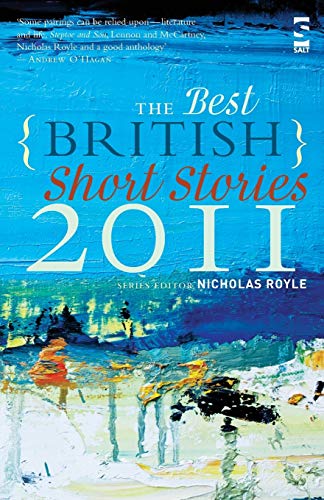
Sinopsis
An exciting new series bringing together the best short stories published by British writers during the last year. This new series aims to reprint the best short stories published in the previous calendar year by British writers, whether based in the UK or elsewhere. The editor's brief is wide ranging, covering anthologies, collections, magazines, newspapers and websites, looking for the best of the bunch to reprint all in one volume. Neither genre nor Granta shall be overlooked in the search for the very best new short fiction.
"Sinopsis" puede pertenecer a otra edición de este libro.
Acerca de los autores
is the author of six short story collections – Mortality, Ornithology, The Dummy and Other Uncanny Stories, London Gothic, Manchester Uncanny and Paris Fantastique – and seven novels, most recently First Novel. He has edited more than two dozen anthologies and is series editor of Best British Short Stories for Salt, who also published his books-about-books, White Spines: Confessions of a Book Collector and Shadow Lines: Searching For the Book Beyond the Shelf. In 2009 he founded Nightjar Press, which continues to publish original short stories in the form of limited-edition chapbooks. He lives in Manchester and London.
Alan Beard has published two story collections, Taking Doreen Out of the Sky (Picador, 1999) and You Don’t Have to Say (Tindal Street Press, 2010). He has had numerous stories in magazines and anthologies, most recently in Digbeth Stories, Litro, Leon, trampset, Outside Left and Best Microfiction 2024. He is a longstanding member of Tindal Street Fiction Group, who celebrated their fortieth anniversary in 2023.
Christopher Burns is the author of six novels – Snakewrist, The Flint Bed, In the Houses of the West, The Condition of Ice, Dust Raising and A Division of the Light – and a short story collection, About the Body. He lives in Whitehaven, West Cumbria.
John Burnside was born in 1955 in Dunfermline, Scotland. He studied English and European Languages at Cambridge College of Arts and Technology. A former computer software engineer, he has been a freelance writer since 1996. His first collection of poetry, The Hoop, was published in 1988 and won a Scottish Arts Council Book Award. Other poetry collections include Common Knowledge (1991), Feast Days (1992), winner of the Geoffrey Faber Memorial Prize, and The Asylum Dance (2000), winner of the Whitbread Poetry Award and shortlisted for both the Forward Poetry Prize (Best Poetry Collection of the Year) and the T. S. Eliot Prize. The Light Trap (2001) was also shortlisted for the T. S. Eliot Prize.
S.J. Butler is a freelance writer and editor living in Sussex. ‘The Swimmer’ is the first short story she has published.
Fragmento. © Reproducción autorizada. Todos los derechos reservados.
Introduction
We may be living through hard times – for the arts, for anyone relying on any kind of subsidy or support, for everybody really – but there have been harder times for the short story. If I had a pound for every time a writer has complained to me that there is nowhere to send their stories, I’d have enough money to start a new magazine. But in fact there are numerous magazines that regularly publish new short fiction, from literary journals such as the London Magazine, Ambit and the Warwick Review to newsstand titles including Prospect, The Liberal and the Sunday Times Magazine.
Admittedly, most major publishers show very little enthusiasm for the form: some grudgingly allow their more established authors to slip in a collection with their new novel when agreeing a deal, but very few, any longer, will entertain the idea of an anthology of stories by various authors. Faber and Faber will still occasionally launch an author, such as Clare Wigfall in 2007, with a short story collection, but they are the exception rather than the rule. Even more exceptional is Manchester-based Comma Press, a short story specialist, which publishes collections and anthologies with imagination, flair and northern grit. Salt, too, the publisher of the present volume, supports short story writers by continuing to publish collections, and Tindal Street Press, which grew out of a regular gathering of short story writers, the Tindal Street Fiction Group, remains true to its roots.
In genre publishing, the short story retains favoured status. Editors and publishers such as Stephen Jones, Constable and Robinson, Ellen Datlow, Maxim Jakubowski, Peter Crowther/PS Publishing, Andy Cox/TTA Press and others work tirelessly to meet a demand for high-quality short horror, crime, fantasy and science fiction.
There are numerous competitions and prizes, so many in fact that an anthology such as this could easily fill its pages by cherry-picking from the shortlists of these prizes, such as the Sunday Times EFG Private Bank Prize, the Manchester Fiction Prize, the BBC National Short Story Award, the Bridport Prize and the VS Pritchett Memorial Prize among others. I made sure to read a number of prize-winning stories while working on the selections for this book. One of them struck me as being very nice, very carefully written, but very English, very restrained and reticent. I kept wanting it to reveal itself, to make a run for it, but it kept holding itself in reserve, saving itself. The reveal, when it came, was so timid, so buttoned up, there was a temptation to think, ‘Why bother?’ All that effort for so little reward.
It’s why short stories so often get short shrift from readers, and, consequently, from publishers. Many have little point to them. Picture a figure – a featureless man or woman – standing on a path in a nondescript landscape, the middle of nowhere. The figure starts walking, continues to walk for a bit and then stops. The story ends. The view has barely changed from the walk’s starting point. I want my walker to get into difficulty, perhaps face a parting of the ways, speed up, slow down, run for a bit, get out of breath, maybe have to get down on all fours to advance. In front of him or her is a forever retreating summit and beyond that a view we can only imagine until we get there. It may be an epiphany, or a change of heart, or pace or tone; a twist, perhaps, a revelation that calls into question everything that came before. It could be anything, but there’s got to be something.
The best stories take you somewhere new, somewhere different, or they take you somewhere you might have been before but by a different route. They help you see the world afresh. They wake you up and make you dream, both at the same time.
I’d rather be left with questions than answers. With a vague feeling of uncertainty rather than one of satisfaction at how neatly everything has been tied up. I’d like the story not to be completely done with in the ten or twenty minutes it takes me to read it. I’d like it to have insinuated itself into my head and taken up residence there for the rest of the day with its questions, its ambiguities. I’d like to find myself remembering it at odd times and wondering whether what I’m remembering is a dream or something that happened before remembering that what I’m remembering is a story.
Having said which, I do want a story to finish, not just to end. Or I want it not just to finish, but to have an ending.
"Sobre este título" puede pertenecer a otra edición de este libro.
Resultados de la búsqueda para The Best British Short Stories 2011

Imagen de archivo
The Best British Short Stories 2011
Publicado por
Salt Publishing, 2011
ISBN 10: 1907773126
ISBN 13: 9781907773129
Antiguo o usado
Tapa blanda
Librería: Better World Books Ltd, Dunfermline, Reino Unido
Calificación del vendedor: 5 de 5 estrellas

Condición: Very Good. Pages intact with possible writing/highlighting. Binding strong with minor wear. Dust jackets/supplements may not be included. Stock photo provided. Product includes identifying sticker. Better World Books: Buy Books. Do Good. Nº de ref. del artículo: 10013753-6
Comprar usado
EUR 5,60
Envío por EUR 5,83
Se envía de Reino Unido a Estados Unidos de America
Se envía de Reino Unido a Estados Unidos de America
Cantidad disponible: 1 disponibles
Imagen de archivo
The Best British Short Stories 2011
Publicado por
Salt Publishing, 2011
ISBN 10: 1907773126
ISBN 13: 9781907773129
Antiguo o usado
Tapa blanda
Librería: Better World Books Ltd, Dunfermline, Reino Unido
Calificación del vendedor: 5 de 5 estrellas
Condición: Good. Former library copy. Pages intact with minimal writing/highlighting. The binding may be loose and creased. Dust jackets/supplements are not included. Includes library markings. Stock photo provided. Product includes identifying sticker. Better World Books: Buy Books. Do Good. Nº de ref. del artículo: GRP69450863
Comprar usado
EUR 5,60
Envío por EUR 5,83
Se envía de Reino Unido a Estados Unidos de America
Se envía de Reino Unido a Estados Unidos de America
Cantidad disponible: 2 disponibles
Imagen del vendedor
Best British Short Stories 2011
Librería: GreatBookPrices, Columbia, MD, Estados Unidos de America
Calificación del vendedor: 5 de 5 estrellas
Condición: New. Nº de ref. del artículo: 11898296-n
Comprar nuevo
EUR 11,94
Envío por EUR 2,27
Se envía dentro de Estados Unidos de America
Se envía dentro de Estados Unidos de America
Cantidad disponible: Más de 20 disponibles
Imagen del vendedor
The Best British Short Stories 2011
Librería: Rarewaves.com USA, London, LONDO, Reino Unido
Calificación del vendedor: 5 de 5 estrellas
Paperback. Condición: New. Best British Short Stories invites you to judge a book by its cover - or more accurately, by its title. This new series aims to reprint the best short stories published in the previous calendar year by British writers, whether based in the UK or elsewhere. The editor's brief is wide ranging, covering anthologies, collections, magazines, newspapers and web sites, looking for the best of the bunch to reprint all in one volume. Neither genre nor Granta shall be overlooked in the search for the very best new short fiction.The first book of the series includes stories published in 2010 by the following authors: David Rose, Hilary Mantel, Lee Rourke, Leone Ross, Claire Massey, Christopher Burns, Adam Marek, SJ Butler, Heather Leach, Alan Beard, Kirsty Logan, Philip Langeskov, Bernie McGill, John Burnside, Robert Edric, Michèle Roberts, Dai Vaughan, Alison Moore and Salley Vickers. Nº de ref. del artículo: LU-9781907773129
Comprar nuevo
EUR 14,28
Gastos de envío gratis
Se envía de Reino Unido a Estados Unidos de America
Se envía de Reino Unido a Estados Unidos de America
Cantidad disponible: 1 disponibles
Imagen del vendedor
Best British Short Stories 2011, The
Publicado por
SALT PUBLISHING, 2011
ISBN 10: 1907773126
ISBN 13: 9781907773129
Antiguo o usado
paperback
Librería: WeBuyBooks, Rossendale, LANCS, Reino Unido
Calificación del vendedor: 5 de 5 estrellas
paperback. Condición: Good. Most items will be dispatched the same or the next working day. A copy that has been read but remains in clean condition. All of the pages are intact and the cover is intact and the spine may show signs of wear. The book may have minor markings which are not specifically mentioned. Ex library copy with usual stamps & stickers. Nº de ref. del artículo: rev4452231256
Comprar usado
EUR 2,36
Envío por EUR 12,00
Se envía de Reino Unido a Estados Unidos de America
Se envía de Reino Unido a Estados Unidos de America
Cantidad disponible: 1 disponibles
Imagen del vendedor
Best British Short Stories 2011, The
Publicado por
SALT PUBLISHING, 2011
ISBN 10: 1907773126
ISBN 13: 9781907773129
Antiguo o usado
paperback
Librería: WeBuyBooks, Rossendale, LANCS, Reino Unido
Calificación del vendedor: 5 de 5 estrellas
paperback. Condición: Very Good. Most items will be dispatched the same or the next working day. A copy that has been read, but is in excellent condition. Pages are intact and not marred by notes or highlighting. The spine remains undamaged. Nº de ref. del artículo: rev9025412675
Comprar usado
EUR 2,36
Envío por EUR 12,00
Se envía de Reino Unido a Estados Unidos de America
Se envía de Reino Unido a Estados Unidos de America
Cantidad disponible: 2 disponibles
Imagen del vendedor
Best British Short Stories 2011
Publicado por
Salt Publishing, 2011
ISBN 10: 1907773126
ISBN 13: 9781907773129
Antiguo o usado
Tapa blanda
Librería: GreatBookPrices, Columbia, MD, Estados Unidos de America
Calificación del vendedor: 5 de 5 estrellas
Condición: As New. Unread book in perfect condition. Nº de ref. del artículo: 11898296
Comprar usado
EUR 12,82
Envío por EUR 2,27
Se envía dentro de Estados Unidos de America
Se envía dentro de Estados Unidos de America
Cantidad disponible: Más de 20 disponibles
Imagen de archivo
The Best British Short Stories 2011
Publicado por
Salt Publishing, 2011
ISBN 10: 1907773126
ISBN 13: 9781907773129
Antiguo o usado
Paperback
Librería: WorldofBooks, Goring-By-Sea, WS, Reino Unido
Calificación del vendedor: 5 de 5 estrellas
Paperback. Condición: Very Good. The book has been read, but is in excellent condition. Pages are intact and not marred by notes or highlighting. The spine remains undamaged. Nº de ref. del artículo: GOR003321732
Comprar usado
EUR 8,59
Envío por EUR 6,52
Se envía de Reino Unido a Estados Unidos de America
Se envía de Reino Unido a Estados Unidos de America
Cantidad disponible: 4 disponibles
Imagen de archivo
Best British Short Stories 2011, The
Publicado por
Salt Publishing, 2011
ISBN 10: 1907773126
ISBN 13: 9781907773129
Antiguo o usado
Paperback
Librería: WorldofBooks, Goring-By-Sea, WS, Reino Unido
Calificación del vendedor: 5 de 5 estrellas
Paperback. Condición: Fair. A readable copy of the book which may include some defects such as highlighting and notes. Cover and pages may be creased and show discolouration. Nº de ref. del artículo: GOR010187324
Comprar usado
EUR 8,59
Envío por EUR 6,52
Se envía de Reino Unido a Estados Unidos de America
Se envía de Reino Unido a Estados Unidos de America
Cantidad disponible: 1 disponibles
Imagen de archivo
The Best British Short Stories 2011
Librería: PBShop.store US, Wood Dale, IL, Estados Unidos de America
Calificación del vendedor: 5 de 5 estrellas
PAP. Condición: New. New Book. Shipped from UK. Established seller since 2000. Nº de ref. del artículo: FV-9781907773129
Comprar nuevo
EUR 15,24
Gastos de envío gratis
Se envía dentro de Estados Unidos de America
Se envía dentro de Estados Unidos de America
Cantidad disponible: 1 disponibles