
Artículos relacionados a SCIENCE OF STRUCTURAL ENGINEERING,THE
Sinopsis
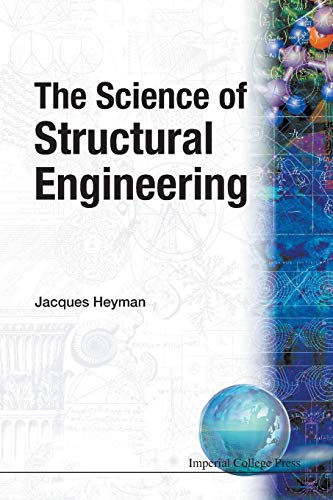
Structures cannot be created without engineering theory, and design rules have existed from the earliest times for building Greek temples, Roman aqueducts and Gothic cathedrals — and later, for steel skyscrapers and the frames for aircraft. This book is, however, not concerned with the description of historical feats, but with the way the structural engineer sets about his business. Galileo, in the seventeenth century, was the first to introduce recognizably modern science into the calculation of structures; he determined the breaking strength of beams. In the eighteenth century engineers moved away from this ‘ultimate load’ approach, and early in the nineteenth century a formal philosophy of design had been established — a structure should remain elastic, with a safety factor on stress built into the analysis. This philosophy held sway for over a century, until the first tests on real structures showed that the stresses confidently calculated by designers could not actually be measured in practice. Structural engineering has taken a completely different path since the middle of the twentieth century; plastic analysis reverts to Galileo's objective of the calculation of ultimate strength, and powerful new theorems now underpin the activities of the structural engineer.This book deals with a technical subject, but the presentation is completely non-mathematical. It makes available to the engineer, the architect and the general reader the principles of structural design.
"Sinopsis" puede pertenecer a otra edición de este libro.
Acerca del autor
Charlotte y Peter Fiell son dos autoridades en historia, teoría y crítica del diseño y han escrito más de sesenta libros sobre la materia, muchos de los cuales se han convertido en éxitos de ventas. También han impartido conferencias y cursos como profesores invitados, han comisariado exposiciones y asesorado a fabricantes, museos, salas de subastas y grandes coleccionistas privados de todo el mundo. Los Fiell han escrito numerosos libros para TASCHEN, entre los que se incluyen 1000 Chairs, Diseño del siglo XX, El diseño industrial de la A a la Z, Scandinavian Design y Diseño del siglo XXI.
"Sobre este título" puede pertenecer a otra edición de este libro.
Resultados de la búsqueda para SCIENCE OF STRUCTURAL ENGINEERING,THE

Imagen de archivo
SCIENCE OF STRUCTURAL ENGINEERING, THE
Publicado por
Imperial College Press, 1999
ISBN 10: 1860941893
ISBN 13: 9781860941894
Antiguo o usado
Paperback
Librería: World of Books (was SecondSale), Montgomery, IL, Estados Unidos de America
Calificación del vendedor: 5 de 5 estrellas

Paperback. Condición: Fair. Structures cannot be created without engineering theory, and design rules have existed from the earliest times for building Greek temples, Roman aqueducts and Gothic cathedrals -- and later, for steel skyscrapers and the frames for aircraft. This book is, however, not concerned with the description of historical feats, but with the way the structural engineer sets about his business. Galileo, in the seventeenth century, was the first to introduce recognizably modern science into the calculation of structures; he determined the breaking strength of beams. In the eighteenth century engineers moved away from this 'ultimate load' approach, and early in the nineteenth century a formal philosophy of design had been established -- a structure should remain elastic, with a safety factor on stress built into the analysis. This philosophy held sway for over a century, until the first tests on real structures showed that the stresses confidently calculated by designers could not actually be measured in practice. Structural engineering has taken a completely different path since the middle of the twentieth century; plastic analysis reverts to Galileo's objective of the calculation of ultimate strength, and powerful new theorems now underpin the activities of the structural engineer.This book deals with a technical subject, but the presentation is completely non-mathematical. It makes available to the engineer, the architect and the general reader the principles of structural design. Nº de ref. del artículo: 00106966420
Comprar usado
EUR 12,35
Gastos de envío gratis
Se envía dentro de Estados Unidos de America
Se envía dentro de Estados Unidos de America
Cantidad disponible: 1 disponibles
Imagen de archivo
SCIENCE OF STRUCTURAL ENGINEERING, THE
Publicado por
Imperial College Press, 1999
ISBN 10: 1860941893
ISBN 13: 9781860941894
Antiguo o usado
paperback
Librería: Your Online Bookstore, Houston, TX, Estados Unidos de America
Calificación del vendedor: 5 de 5 estrellas
paperback. Condición: Fair. Nº de ref. del artículo: 1860941893-4-36679274
Comprar usado
EUR 14,18
Gastos de envío gratis
Se envía dentro de Estados Unidos de America
Se envía dentro de Estados Unidos de America
Cantidad disponible: 1 disponibles
Imagen de archivo
SCIENCE OF STRUCTURAL ENGINEERING, THE
Publicado por
Imperial College Press, 1999
ISBN 10: 1860941893
ISBN 13: 9781860941894
Antiguo o usado
Paperback
Librería: World of Books Inc, Montgomery, IL, Estados Unidos de America
Calificación del vendedor: 4 de 5 estrellas

Paperback. Condición: Fair. Structures cannot be created without engineering theory, and design rules have existed from the earliest times for building Greek temples, Roman aqueducts and Gothic cathedrals -- and later, for steel skyscrapers and the frames for aircraft. This book is, however, not concerned with the description of historical feats, but with the way the structural engineer sets about his business. Galileo, in the seventeenth century, was the first to introduce recognizably modern science into the calculation of structures; he determined the breaking strength of beams. In the eighteenth century engineers moved away from this 'ultimate load' approach, and early in the nineteenth century a formal philosophy of design had been established -- a structure should remain elastic, with a safety factor on stress built into the analysis. This philosophy held sway for over a century, until the first tests on real structures showed that the stresses confidently calculated by designers could not actually be measured in practice. Structural engineering has taken a completely different path since the middle of the twentieth century; plastic analysis reverts to Galileo's objective of the calculation of ultimate strength, and powerful new theorems now underpin the activities of the structural engineer.This book deals with a technical subject, but the presentation is completely non-mathematical. It makes available to the engineer, the architect and the general reader the principles of structural design. Nº de ref. del artículo: CIN1860941893A
Comprar usado
EUR 14,19
Gastos de envío gratis
Se envía dentro de Estados Unidos de America
Se envía dentro de Estados Unidos de America
Cantidad disponible: 1 disponibles
Imagen de archivo
The Science of Structural Engineering
Publicado por
Imperial College Press, 1999
ISBN 10: 1860941893
ISBN 13: 9781860941894
Antiguo o usado
Tapa blanda
Librería: Anybook.com, Lincoln, Reino Unido
Calificación del vendedor: 5 de 5 estrellas
Condición: Good. This is an ex-library book and may have the usual library/used-book markings inside.This book has soft covers. In good all round condition. Please note the Image in this listing is a stock photo and may not match the covers of the actual item,250grams, ISBN:9781860941894. Nº de ref. del artículo: 4937540
Comprar usado
EUR 22,55
Envío por EUR 15,41
Se envía de Reino Unido a Estados Unidos de America
Se envía de Reino Unido a Estados Unidos de America
Cantidad disponible: 1 disponibles
Imagen del vendedor
Science of Structural Engineering
Publicado por
Imperial College Press, 1999
ISBN 10: 1860941893
ISBN 13: 9781860941894
Nuevo
Tapa blanda
Librería: GreatBookPrices, Columbia, MD, Estados Unidos de America
Calificación del vendedor: 5 de 5 estrellas
Condición: New. Nº de ref. del artículo: 896081-n
Comprar nuevo
EUR 51,54
Envío por EUR 2,36
Se envía dentro de Estados Unidos de America
Se envía dentro de Estados Unidos de America
Cantidad disponible: Más de 20 disponibles
Imagen del vendedor
The Science of Structural Engineering (Paperback or Softback)
Publicado por
Imperial College Press 11/23/1999, 1999
ISBN 10: 1860941893
ISBN 13: 9781860941894
Nuevo
Paperback or Softback
Librería: BargainBookStores, Grand Rapids, MI, Estados Unidos de America
Calificación del vendedor: 5 de 5 estrellas
Paperback or Softback. Condición: New. The Science of Structural Engineering. Book. Nº de ref. del artículo: BBS-9781860941894
Comprar nuevo
EUR 53,97
Gastos de envío gratis
Se envía dentro de Estados Unidos de America
Se envía dentro de Estados Unidos de America
Cantidad disponible: 5 disponibles
Imagen del vendedor
Science of Structural Engineering
Publicado por
Imperial College Press, 1999
ISBN 10: 1860941893
ISBN 13: 9781860941894
Antiguo o usado
Tapa blanda
Librería: GreatBookPrices, Columbia, MD, Estados Unidos de America
Calificación del vendedor: 5 de 5 estrellas
Condición: As New. Unread book in perfect condition. Nº de ref. del artículo: 896081
Comprar usado
EUR 55,08
Envío por EUR 2,36
Se envía dentro de Estados Unidos de America
Se envía dentro de Estados Unidos de America
Cantidad disponible: Más de 20 disponibles
Imagen de archivo
The Science of Structural Engineering
Librería: Chiron Media, Wallingford, Reino Unido
Calificación del vendedor: 5 de 5 estrellas
Paperback. Condición: New. Brand new book, sourced directly from publisher. Dispatch time is 6-7 days from our warehouse. Book will be sent in robust, secure packaging to ensure it reaches you securely. Nº de ref. del artículo: 6666-IUK-9781860941894
Comprar nuevo
EUR 52,60
Envío por EUR 5,30
Se envía de Reino Unido a Estados Unidos de America
Se envía de Reino Unido a Estados Unidos de America
Cantidad disponible: Más de 20 disponibles
Imagen de archivo
SCIENCE OF STRUCTURAL ENGINEERING, THE
Publicado por
Imperial College Press, 1999
ISBN 10: 1860941893
ISBN 13: 9781860941894
Nuevo
Tapa blanda
Librería: California Books, Miami, FL, Estados Unidos de America
Calificación del vendedor: 5 de 5 estrellas
Condición: New. Nº de ref. del artículo: I-9781860941894
Comprar nuevo
EUR 59,77
Gastos de envío gratis
Se envía dentro de Estados Unidos de America
Se envía dentro de Estados Unidos de America
Cantidad disponible: Más de 20 disponibles
Imagen del vendedor
Science Of Structural Engineering, The
Publicado por
Imperial College Press, GB, 1999
ISBN 10: 1860941893
ISBN 13: 9781860941894
Nuevo
Paperback
Librería: Rarewaves.com USA, London, LONDO, Reino Unido
Calificación del vendedor: 5 de 5 estrellas
Paperback. Condición: New. Structures cannot be created without engineering theory, and design rules have existed from the earliest times for building Greek temples, Roman aqueducts and Gothic cathedrals - and later, for steel skyscrapers and the frames for aircraft. This book is, however, not concerned with the description of historical feats, but with the way the structural engineer sets about his business. Galileo, in the seventeenth century, was the first to introduce recognizably modern science into the calculation of structures; he determined the breaking strength of beams. In the eighteenth century engineers moved away from this 'ultimate load' approach, and early in the nineteenth century a formal philosophy of design had been established - a structure should remain elastic, with a safety factor on stress built into the analysis. This philosophy held sway for over a century, until the first tests on real structures showed that the stresses confidently calculated by designers could not actually be measured in practice. Structural engineering has taken a completely different path since the middle of the twentieth century; plastic analysis reverts to Galileo's objective of the calculation of ultimate strength, and powerful new theorems now underpin the activities of the structural engineer.This book deals with a technical subject, but the presentation is completely non-mathematical. It makes available to the engineer, the architect and the general reader the principles of structural design.Sample Chapter(s). Nº de ref. del artículo: LU-9781860941894
Comprar nuevo
EUR 60,27
Gastos de envío gratis
Se envía de Reino Unido a Estados Unidos de America
Se envía de Reino Unido a Estados Unidos de America
Cantidad disponible: Más de 20 disponibles