
Artículos relacionados a Genome editing for precision crop breeding: 97 (Burleigh...
Genome editing for precision crop breeding: 97 (Burleigh Dodds Series in Agricultural Science, 97) - Tapa dura
Libro 96 de 98: Burleigh Dodds Series in Agricultural Science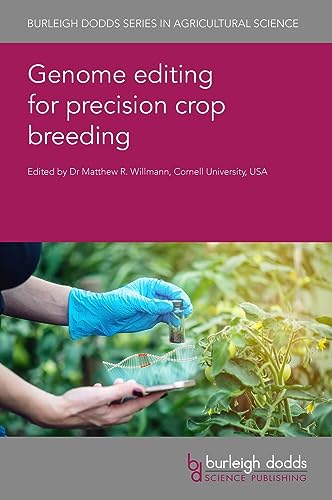
Sinopsis
Part 1 of this volume reviews advances in gene editing techniques such as insertion-based genome edits, base editing, guide RNAs and CRISPR/Cas off targeting. Part 2 surveys applications of gene editing in key cereal and vegetable crops.
"Sinopsis" puede pertenecer a otra edición de este libro.
Acerca de los autores
Dr Matthew R. Willmann was Director of the CALS Plant Transformation Facility (PTF) at Cornell University, USA from 2016-2021. The Facility produces transgenic and CRISPR/Cas9 genome-edited plants, and develops improved transformation and genome editing techniques. With over 25 years of experience in plant science research, Dr Willmann has published widely in such areas as gene editing and is on the editorial boards of The CRISPR Journal and Frontiers in Genome Editing: Genome Editing in Plants, which promote research in this important and growing area. Dr Willmann joined the plant biotech company Pairwise as Delivery Technology Lead in early 2021.
Piero Barone received his PhD from the University of Perugia, Italy in 2002 where he worked on the cytological and molecular characterization of a female sterility trait in alfalfa (M. sativa L.). In 2014 he joined the Monocot Transformation Team at Dow AgroSciences where he worked on multiple trait discovery projects for the evaluation in maize of new mode of action for the below ground product concept. In his role he also managed transformation programs to support various technology development projects using the Zinc Finger gene targeting tool. In 2018 he relocated to Johnston where he joined the Molecular Engineering group at Corteva Agriscience leading the transformation activities for the genome editing technology development in maize.
Dr Andika Gunadi is a Researcher in Plant Genetics and Genetic Regulation at the Boyce Thompson Institute, USA. He's currently working on applying novel transformation and CRISPR approaches in plants.
De la contraportada
Genome editing is rapidly transforming plant research. The technique offers unparalleled precision in breeding without the need to introduce foreign DNA into plants. CRISPR/Cas systems have established themselves as the leading technique in genome editing. This collection takes stock of the wealth of research on these techniques and their potential in crop breeding in improving traits such as yield, disease resistance, drought tolerance and nutrient use efficiency.
Part 1 of this volume reviews advances in techniques such as TALENS and zinc finger nucleases, double-strand break repair techniques, insertion-based genome edits, base editing, guide RNAs, gRNA/Cas9 constructs and CRIST/Cas off targeting. Chapters also discuss advances in screening plants as well as regulatory issues. Part 2 surveys applications of gene editing in key cereal including wheat, barley, maize, rice and sorghum. Other chapters cover crops such brassicas, potato and tomato.
With its distinguished editor and international team of expert authors, Genome editing for precision crop breeding will be a standard reference for university and other researchers involved in crop breeding, government and other agencies involved in regulating advances in crop breeding (such as genetic modification), crop breeding companies and farmers interested in the latest breeding techniques.
Dr Matthew R. Willmann is Director of the CALS Plant Transformation Facility (PTF) at Cornell University, USA. The Facility produces transgenic and CRISPR/Cas9 genome-edited plants such as rice, maize, wheat and apple, as well as researching new genome editing techniques. With 25 years of experience of plant science research, Dr Willmann has published widely in such areas as gene editing and is on the editorial board of The CRISPR Journal which promotes research in this important and growing area.
De la solapa interior
Genome editing is rapidly transforming plant research. The technique offers unparalleled precision in breeding without the need to introduce foreign DNA into plants. CRISPR/Cas systems have established themselves as the leading technique in genome editing. This collection takes stock of the wealth of research on these techniques and their potential in crop breeding in improving traits such as yield, disease resistance, drought tolerance and nutrient use efficiency.
Part 1 of this volume reviews advances in techniques such as TALENS and zinc finger nucleases, double-strand break repair techniques, insertion-based genome edits, base editing, guide RNAs, gRNA/Cas9 constructs and CRIST/Cas off targeting. Chapters also discuss advances in screening plants as well as regulatory issues. Part 2 surveys applications of gene editing in key cereal including wheat, barley, maize, rice and sorghum. Other chapters cover crops such brassicas, potato and tomato.
With its distinguished editor and international team of expert authors, Genome editing for precision crop breeding will be a standard reference for university and other researchers involved in crop breeding, government and other agencies involved in regulating advances in crop breeding (such as genetic modification), crop breeding companies and farmers interested in the latest breeding techniques.
Dr Matthew R. Willmann is Director of the CALS Plant Transformation Facility (PTF) at Cornell University, USA. The Facility produces transgenic and CRISPR/Cas9 genome-edited plants such as rice, maize, wheat and apple, as well as researching new genome editing techniques. With 25 years of experience of plant science research, Dr Willmann has published widely in such areas as gene editing and is on the editorial board of The CRISPR Journal which promotes research in this important and growing area.
"Sobre este título" puede pertenecer a otra edición de este libro.
Resultados de la búsqueda para Genome editing for precision crop breeding: 97 (Burleigh...

Imagen del vendedor
Genome Editing for Precision Crop Breeding
Publicado por
Burleigh Dodds Science Publishing, 2021
ISBN 10: 1786764474
ISBN 13: 9781786764478
Antiguo o usado
Tapa dura
Librería: GreatBookPrices, Columbia, MD, Estados Unidos de America
Calificación del vendedor: 5 de 5 estrellas

Condición: As New. Unread book in perfect condition. Nº de ref. del artículo: 39852385
Comprar usado
EUR 189,18
Envío por EUR 2,35
Se envía dentro de Estados Unidos de America
Se envía dentro de Estados Unidos de America
Cantidad disponible: 1 disponibles
Imagen del vendedor
Genome Editing for Precision Crop Breeding
Publicado por
Burleigh Dodds Science Publishing, 2021
ISBN 10: 1786764474
ISBN 13: 9781786764478
Antiguo o usado
Tapa dura
Librería: GreatBookPricesUK, Woodford Green, Reino Unido
Calificación del vendedor: 5 de 5 estrellas
Condición: As New. Unread book in perfect condition. Nº de ref. del artículo: 39852385
Comprar usado
EUR 188,82
Envío por EUR 17,89
Se envía de Reino Unido a Estados Unidos de America
Se envía de Reino Unido a Estados Unidos de America
Cantidad disponible: 1 disponibles
Imagen del vendedor
Genome Editing for Precision Crop Breeding
Publicado por
Burleigh Dodds Science Publishing, 2021
ISBN 10: 1786764474
ISBN 13: 9781786764478
Nuevo
Tapa dura
Librería: GreatBookPrices, Columbia, MD, Estados Unidos de America
Calificación del vendedor: 5 de 5 estrellas
Condición: New. Nº de ref. del artículo: 39852385-n
Comprar nuevo
EUR 211,07
Envío por EUR 2,35
Se envía dentro de Estados Unidos de America
Se envía dentro de Estados Unidos de America
Cantidad disponible: 1 disponibles
Imagen del vendedor
Genome Editing for Precision Crop Breeding
Publicado por
Burleigh Dodds Science Publishing Limited, GB, 2021
ISBN 10: 1786764474
ISBN 13: 9781786764478
Nuevo
Tapa dura
Librería: Rarewaves USA, HEBRON, KY, Estados Unidos de America
Calificación del vendedor: 5 de 5 estrellas
Hardback. Condición: New. Genome editing is rapidly transforming plant research. The technique offers unparalleled precision in breeding without the need to introduce foreign DNA into plants. CRISPR/Cas systems have established themselves as the leading technique in genome editing. Genome editing for precision crop breeding takes stock of the wealth of research on these techniques and their potential in crop breeding. Chapters in this volume review advances in techniques such as TALENS and zinc finger nucleases, double-strand break repair techniques, insertion-based genome edits, base editing, guide RNAs and gRNA/Cas9 constructs. This collection also surveys applications of gene editing in improving key traits in key cereal crops including barley, maize and sorghum as well as brassicas, tomatoes and perennials.With its distinguished editor and international team of expert authors, Genome editing for precision crop breeding will be a standard reference for university and other researchers involved in crop breeding, government and other agencies involved in regulating advances in crop breeding (such as genetic modification), crop breeding companies and farmers interested in the latest breeding techniques. Nº de ref. del artículo: LU-9781786764478
Comprar nuevo
EUR 213,50
Gastos de envío gratis
Se envía dentro de Estados Unidos de America
Se envía dentro de Estados Unidos de America
Cantidad disponible: Más de 20 disponibles
Imagen de archivo
Genome Editing for Precision Crop Breeding
Publicado por
Burleigh Dodds Science Publishing Limited, 2021
ISBN 10: 1786764474
ISBN 13: 9781786764478
Nuevo
Tapa dura
Librería: PBShop.store UK, Fairford, GLOS, Reino Unido
Calificación del vendedor: 5 de 5 estrellas
HRD. Condición: New. New Book. Shipped from UK. Established seller since 2000. Nº de ref. del artículo: CX-9781786764478
Comprar nuevo
EUR 221,62
Envío por EUR 7,00
Se envía de Reino Unido a Estados Unidos de America
Se envía de Reino Unido a Estados Unidos de America
Cantidad disponible: 15 disponibles
Imagen de archivo
Genome Editing for Precision Crop Breeding
Publicado por
Burleigh Dodds Science Publishing Limited, 2021
ISBN 10: 1786764474
ISBN 13: 9781786764478
Nuevo
Tapa dura
Librería: PBShop.store US, Wood Dale, IL, Estados Unidos de America
Calificación del vendedor: 5 de 5 estrellas
HRD. Condición: New. New Book. Shipped from UK. Established seller since 2000. Nº de ref. del artículo: CX-9781786764478
Comprar nuevo
EUR 230,43
Gastos de envío gratis
Se envía dentro de Estados Unidos de America
Se envía dentro de Estados Unidos de America
Cantidad disponible: 15 disponibles
Imagen del vendedor
Genome Editing for Precision Crop Breeding
Publicado por
Burleigh Dodds Science Publishing, 2021
ISBN 10: 1786764474
ISBN 13: 9781786764478
Nuevo
Tapa dura
Librería: GreatBookPricesUK, Woodford Green, Reino Unido
Calificación del vendedor: 5 de 5 estrellas
Condición: New. Nº de ref. del artículo: 39852385-n
Comprar nuevo
EUR 216,76
Envío por EUR 17,89
Se envía de Reino Unido a Estados Unidos de America
Se envía de Reino Unido a Estados Unidos de America
Cantidad disponible: 1 disponibles
Imagen de archivo
Genome editing for precision crop breeding (Burleigh Dodds Series in Agricultural Science, 97)
Publicado por
Burleigh Dodds Science Publishing, 2021
ISBN 10: 1786764474
ISBN 13: 9781786764478
Nuevo
Tapa dura
Librería: Ria Christie Collections, Uxbridge, Reino Unido
Calificación del vendedor: 5 de 5 estrellas
Condición: New. In English. Nº de ref. del artículo: ria9781786764478_new
Comprar nuevo
EUR 240,21
Envío por EUR 13,46
Se envía de Reino Unido a Estados Unidos de America
Se envía de Reino Unido a Estados Unidos de America
Cantidad disponible: Más de 20 disponibles
Imagen del vendedor
Genome Editing for Precision Crop Breeding
Publicado por
Burleigh Dodds Science Publishing Limited, GB, 2021
ISBN 10: 1786764474
ISBN 13: 9781786764478
Nuevo
Tapa dura
Librería: Rarewaves USA United, HEBRON, KY, Estados Unidos de America
Calificación del vendedor: 5 de 5 estrellas
Hardback. Condición: New. Genome editing is rapidly transforming plant research. The technique offers unparalleled precision in breeding without the need to introduce foreign DNA into plants. CRISPR/Cas systems have established themselves as the leading technique in genome editing. Genome editing for precision crop breeding takes stock of the wealth of research on these techniques and their potential in crop breeding. Chapters in this volume review advances in techniques such as TALENS and zinc finger nucleases, double-strand break repair techniques, insertion-based genome edits, base editing, guide RNAs and gRNA/Cas9 constructs. This collection also surveys applications of gene editing in improving key traits in key cereal crops including barley, maize and sorghum as well as brassicas, tomatoes and perennials.With its distinguished editor and international team of expert authors, Genome editing for precision crop breeding will be a standard reference for university and other researchers involved in crop breeding, government and other agencies involved in regulating advances in crop breeding (such as genetic modification), crop breeding companies and farmers interested in the latest breeding techniques. Nº de ref. del artículo: LU-9781786764478
Comprar nuevo
EUR 216,78
Envío por EUR 44,57
Se envía dentro de Estados Unidos de America
Se envía dentro de Estados Unidos de America
Cantidad disponible: Más de 20 disponibles
Imagen del vendedor
Genome Editing for Precision Crop Breeding
Publicado por
Burleigh Dodds Science Publishing Limited, GB, 2021
ISBN 10: 1786764474
ISBN 13: 9781786764478
Nuevo
Tapa dura
Librería: Rarewaves.com USA, London, LONDO, Reino Unido
Calificación del vendedor: 5 de 5 estrellas
Hardback. Condición: New. Genome editing is rapidly transforming plant research. The technique offers unparalleled precision in breeding without the need to introduce foreign DNA into plants. CRISPR/Cas systems have established themselves as the leading technique in genome editing. Genome editing for precision crop breeding takes stock of the wealth of research on these techniques and their potential in crop breeding. Chapters in this volume review advances in techniques such as TALENS and zinc finger nucleases, double-strand break repair techniques, insertion-based genome edits, base editing, guide RNAs and gRNA/Cas9 constructs. This collection also surveys applications of gene editing in improving key traits in key cereal crops including barley, maize and sorghum as well as brassicas, tomatoes and perennials.With its distinguished editor and international team of expert authors, Genome editing for precision crop breeding will be a standard reference for university and other researchers involved in crop breeding, government and other agencies involved in regulating advances in crop breeding (such as genetic modification), crop breeding companies and farmers interested in the latest breeding techniques. Nº de ref. del artículo: LU-9781786764478
Comprar nuevo
EUR 269,97
Gastos de envío gratis
Se envía de Reino Unido a Estados Unidos de America
Se envía de Reino Unido a Estados Unidos de America
Cantidad disponible: Más de 20 disponibles