
Sinopsis
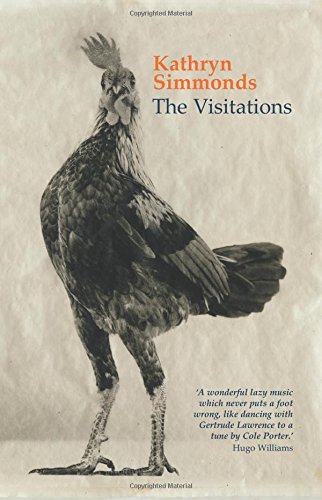
The Visitations is the follow-up to Kathryn Simmonds' Forward Prize-winning debut, Sunday at the Skin Launderette. The poems are entertaining, amusing and accessible, but unafraid to bring in darker themes and worlds unseen. The tone shifts throughout between the elegiac and the sharply satirical, lit up with life's moments of sudden illumination: a life coach finds an old passport, an infant teeters on the brink of speech.
"This playful and knowing first collection is fuelled throughout by a strong sense of lyricism." – The Guardian on Sunday at the Skin Launderette
Kathryn Simmonds' first book of poems, Sunday at the Skin Launderette (Seren, 2008; ISBN 9781854114617), won the Forward Prize for Best First Collection and the Felix Dennis Prize, and was shortlisted for the Costa Poetry Award and longlisted for the Guardian First Book Award. Her pamphlet of poems Snug was a winner in the Poetry Business competition in 2004 and subsequently published by Smith/Doorstop (ISBN 9781902382678). She lives in London and works as a freelance writer, editor and teacher.
"Sinopsis" puede pertenecer a otra edición de este libro.
Acerca del autor
Kathryn Simmonds’ first book of poetry ‘Sunday at the Skin Launderette’ won the Forward Prize for best first collection in 2008. She is a graduate of the Creative Writing MA at the University of East Anglia. Love and Fallout is her first novel and was a finalist in the Lucy Cavendish Fiction Prize before it was published. In 2013-14 she was the first poet-in-residence at the Charles Causley Trust in Launceston, Cornwall.
Fragmento. © Reproducción autorizada. Todos los derechos reservados.
The Visitations
By Kathryn SimmondsPoetry Wales Press Ltd.
Copyright © 2013 Kathryn Simmonds
All rights reserved.
ISBN: 978-1-78172-116-2All rights reserved.
Contents
I,
Sunday Morning,
Oversleeping,
April,
The New Mothers,
The Visitations,
On the Island of San Michele,
The Reluctant Natives,
What I Did in My Summer Holidays,
Self-Portrait with Washing-up Glove,
The Unborn,
Heartsongs,
Madonna of the Pomegranate,
In Service,
Hotel Pool,
When Six O'Clock Comes and Another Day has Passed,
In a Church,
Elegy for the Living,
Experience,
II,
Life Coach Variations,
III,
Apocryphal,
To her Unconscious,
The Daydreams,
Hermits,
Late December,
Love Song in a Bleached Room,
The Grudge,
The Hem,
In the Woods,
Conversation with a Lime Tree,
Lucid,
The Great Divide,
Kitsch,
In Brief,
Forgiveness,
Nocturne,
23,
CHAPTER 1
I
Sunday Morning
Since I've stopped praying
I've got so much more done:
the fridge is cleaner, I read more fiction,
the telephone is less often off the hook.
Since I've done away with God
I've done the bathroom up
and tried a dozen different recipes.
Since I've stopped considering the nature
of the soul, the infinite, all that,
I've found the joy of gardening;
I garden without concern
for the intricate glory of the Hollyhock.
The news is always on, the multitudes
keep dying, and what's one less prayer
circling the stratosphere?
He'll find me, if he chooses,
he'll lift me like a woolly two-year-old,
secure me to the fold. Meanwhile
I'm eating chocolates in bed,
the words of the psalms dissolving like an old dream,
I'm right here with a magazine,
– Shock New Pictures, All Your TV Favourites –
the church bells making a distant din,
the duvet warm and comforting,
the tumble dryer just spinning, and spinning.
Oversleeping
And there are the clothes you dropped, the arms of a green shirt
raised in surrender, the slough of nylon
and a dress of apricot wool.
Sit up and see the sheets fine-wired with pubic hair and eyelashes,
skin cells scattered like flakes of prehistory.
Your clothes have been going out of fashion,
quickly like the turning of a pear, slowly like a bone bleaching.
No matter,
reclaim the leather boots you loved so much,
zip them right up to the knee and walk;
you are Jairus' daughter, passing through
the convalescent house, its shelves of misremembered books,
its shivers of dust.
What else is there to do but open windows, let the outside tumble in
like washing from a glorious machine?
The day is half over, but still blue. Step out and balance
on the ledge. Below a brown bird darts
over the garages
and is gone,
another yanks a worm from its clay bed and flies with it –
fly worm, fly!
The pillow-creases in your cheek smooth to make you young again.
Your leg hair stands to gold attention. Courage now, step out,
feel the plummet, then the catch and you're up,
swimming in cold, eyes streaming.
There is the park where you broke your wrist, there is the church
where you first met God and the playground of children
whose children are running through cities now, as the river
runs, a silver speck, coursing underneath
the disappearing viaduct, running through the valley, past
fields where horses gather, trapped in their nature.
The houses reposition themselves
and there are your arms, the arms that used to be useless,
parting pale belts of cloud.
April
Spring again
But from where no telling
Sweet as the spring
That went before
Same old story
But still compelling
Blossom reminding
What blossom is for
Question the trees
But they're not telling
How they obey
An impossible law
Question the mind
But it's not telling
How it gives back
What was gone for sure
Something stirs
In a blacked-out dwelling
Forces the lock
Of a double-locked door
That face again!
But from where no telling
Sweet as the face
That was lost before
The New Mothers
They have mastered the buggy –
they understand the awkward catch,
what force of pressure makes it give.
They wheel with confidence, more
confidence, they wheel through afternoons
of amnesiac light, through mornings
loud with rain and evenings when
the sky is soothed to pink, thinking of
the secrets recently unshelled, the ones
their mothers kept so long, the bloody
songs of sealed rooms which day by day
grow faint and fainter still.
They pass by women being wheeled,
women sinking in their chairs who once
(can it be true?) sat small and snug
in carriage prams. Swelling women
pass by too, manoeuvring their mounds
they seem as far removed as first-year girls
to sixth-formers. And of course
they pass their kind, in cafes, parks –
half smiles, shy, as if they saw the nipples weep
inside each other's clothes. Another cup of tea;
they pause and redirect their gaze away,
beyond the complicated child they've made,
beyond the blurred pedestrians to girls
in skinny jeans, remembering how (again
impossibly) they were those girls,
the Matryoshka trick that had them
for a minute spotlit, arms raised
to glorify the tiny hours, sweat glittering
their foreheads – white light, noise –
and years away, unreachable through dancefloor mist,
babies with wet mouths feeding in the dark.
The Visitations
Sometimes God comes as a tiger,
And sometimes as a rose –
He opens for you secretly,
Perfuming your nose.
Sometimes he is a telephone,
Sometimes he is a key,
Sometimes he comes with hoola hoops,
Sometimes a dictionary.
Sometimes he comes as creosote
And leaves a nasty stain,
Sometimes he comes as anyone
Whose motives you can't name.
Sometimes he comes as sunlight –
Watch him tick across the wall.
And sometimes as a boxing glove.
And sometimes not at all.
On the Island of San Michele
We never thought to find the dead stacked up
in marble high-rises,
nor these photographs –
a handsome man in his forties
laughing into another year.
Six weeks –
too soon to count you among the living;
one in five is lost, they say,
some say one in four.
September and the sky is freshly painted. Cyprus
scents the air.
Stravinsky and Diaghilev are here, graves strewn
with offerings, not only flowers, but bread rings,
fancy candies melting in the heat.
Ezra Pound eludes us.
A fellow tourist lifts his shades, points out Joseph Brodsky
at whose grave is fixed a letterbox.
Too soon, and yet among the dead we play
the naming game:
Benedicte? Simone?
The hundred-year-old little girls
stare poker-faced beneath their bows.
A lizard drips from a headstone.
My arms begin to burn.
Alicia?
Giving up the search for Pound, I lay my hand
on your plot instead: you buried alive
in your swirl of limbo.
Nobone. Wetstar.
I am waiting to row out on the nausea that must be coming –
like seasickness they say.
From the quayside, Venice is a dot.
We buy unfamiliar chocolate from a snack machine
and I think of Petals
on a wet, black bough,
forming
and falling
and forming. And I ask you to live.
The Reluctant Natives
Fate landed us here by mistake, set us to walk
Welsh hillsides with a plodding heart
or paddle Essex estuaries under duress, our talk
always of somewhere else, (tacked to kitchen walls
a Swedish lake, a mountain range in Switzerland). See us crouch in
living rooms as daylight palls,
an old draft trespassing beneath the door, the trick
of day too quickly turning night, the radio's
relentless classic serial, that Sunday evening tick
of now becoming then. Hear us planning new
retreats, rephrasing sentences it takes
a lifetime to pronounce – How nice to meet you
in Hungarian, or I'm from Hull in faulty Greek –
curtains drawn against the rain, against
the pale countrymen to whom we rarely speak.
What I Did in My Summer Holidays
Never ask for an ice-cream confidently or menacingly or using any other adverb. And if you're in pain, show me where it hurts and how. Love is an abstract noun. Dialogue gives the effect of real speech but with all the boring rubbish taken out. Every thought you've ever had has been thought better and by someone else. Does anyone have any questions? We talked last week about the stanza, you might think of stanzas as little rooms: what are you going to do in yours? Are you going to just lie there watching light reinvent itself? The second line doesn't scan. Yes, flair is better. For homework, sit in a soft chair and describe the exact experience, no, don't do that, write down a conversation you hear on a bus; go out in the rain and open your mouth; make a list of everything in your bathroom cabinet. Try not to break your line on an article. The first person you have to please is yourself, but if nobody else is pleased you have a problem. Fill out the form and give it back to me: te-dum te-dum te-dum te-dum te-dum. Notice that beautiful line where the widow's hands are likened to the wings of a dead bird. Less is more, but sometimes less is less. What do librarians get paid? I've never seen that particular noun used as a verb. But it's too late now to get to grips with the Dewey Decimal System. Did anyone else have a problem with the turnip metaphor?
Self-Portrait with Washing-up Glove
When the man with electrocuted eyes
leans towards me in the street and whispers
Stop trying to kill me,
I'm appalled but unsurprised:
it's what I've been telling my new neighbourhood all day –
its jumpy traffic lights
and muscled staffs, that pub where the end of the world
can't come soon enough. July: someone
in another postcode will be thwacking tennis balls. Here
the gobbed-on paving slabs wobble in the heat
and as evening falls Mister Chicken's
neon tux grows washing powder white. I turn right
into the never-ending street until the giant weed plant
waves to me like fallen royalty.
The hallway hamster smell remains, but some
of the worst is over: that splayed
biro shell has been picked from the sink, the chest
emptied of alien knickers, and gone is the bee on its back
rocking in a drawer by itself, legs crunched up
like a dog begging.
As I remove the freezer shelf, my neighbour
hollers at her child. A scattering of frozen peas
are stuck to something pink.
Oh God, we should amend our lives,
all of us who sleep in rented beds and deafen
at the mention of a pension plan;
all of us who've lived our best days
in the imagination's potting shed.
The oven is black inside
and I snap on a marigold, flexing my fist
like someone who might land a half-decent punch.
The Unborn
mooch about and waste time
starting things they'll never
finish. The next world
is nothing to them but shadows,
some don't have patience
for any of that crap at all –
What, grass, they say, waving
their wobbly arms, You mean
you actually believe in grass?
Heartsongs
The feathery hearts of the ill-at-ease
Murmuring – startled – eager to please
The choux-light hearts of the oh-so-holy
Filled with cream from a distant dairy
The twiggy hearts of the always-left
Breaking stick by stick like nests
The wire grilled hearts of the ne'er-do-well
How to get near them? Who can tell
The battered satin hearts of the sad
Little empty evening bags
The heave-ho hearts of the undeterred –
Rowing, rowing, never a word
Madonna of the Pomegranate
Botticelli c. 1487
Surrounding her, the sorrowing angels
turn in all directions
as if they know and dare not tell.
Once, I spent weeks
following the folds of her gown,
trying for a way to replicate
her curved mouth
and those averted irises,
but even though the sketch was fair
I came no nearer to the figures
bound inside the circle –
that adult-looking Christ child weighing down
his mother's arms,
the sweet fruit it so saddened her to hold.
In Service
Five days in this new position
and my duties so inexpertly
performed. You eye me
with no smile as I pat dry
your auburn hair. Your feet
I've rubbed with olive oil,
offered part-remembered songs,
knelt to nibble short your nails –
they unpeel soft as candle wax.
Attended to, you turn away
and I retire. Night drifts into day.
Your cry again. And so the work
of love is never done;
I gather up my skirts and run.
Hotel Pool
Twelve? Thirteen? She arrives
in advance of her parents,
fat as I was thin, wrapped in a towel,
pattering to safety –
a bench where she sits obscured
before abandoning herself
to the indecency
of a walk towards water.
(Though who's to see? To care?
The retirees? Me with my puckered stomach?)
My eyes meet hers,
hers dart away like fish;
this is not the place to say
You'll be all right,
the body must become itself,
nothing to do but swim out, follow.
When Six O'clock Comes and Another Day has Passed
the baby who can not speak, speaks to me.
When the sun has risen and set over the same dishes
and the predicted weather is white cloud,
the baby steadies her head which is the head of a drunk's
and holds me with her blue eyes,
eyes which have so recently surfed through womb swell,
and all at once we stop half-heartedly row, rowing
our boat and see each other clear
in the television's orange glow. She regards me,
the baby who does not know a television from a table lamp,
the baby, who is so heavy with other people's hopes
she has no body to call her own,
the baby who is forever being shifted, rearranged,
whose hands must be unfurled and wiped with cotton wool,
whose scalp must be combed of cradle cap,
the baby who has exactly no memories
softens her face in the early evening light and says I understand.
In a Church
No, no time for this
the outside clamours to be heard,
the books, you see,
the books.
In here it's dark, the sun
has slid away.
There are necessities.
The cars are travelling at speed, without me, fast;
the days, my days, must be pinned down
accounted for and coloured in,
I need to go,
I need to go my way.
To which the soul said, stay.
Elegy for the Living
We wash up side by side
to find each other
in the speakable world,
and, lulled into sense,
inhabit our landscape;
the curve
of that chair draped
with your shirt;
my glass of water
seeded overnight with air.
After this bed
there'll be another,
so we'll roll
and keep rolling
until one of us
will roll alone and try to roll
the other back – a trick
no one's yet pulled off –
and it'll be
as if I dreamed you, dear,
as if I dreamed this bed,
our touching limbs,
this room, the tree outside alive
with new wet light.
Not now. Not yet.
Experience
The widow will weep for her beau, my dear
While the spring grass continues to grow, my dear
Life's lengthy or short but it ends when it ends
We arrive and we go and that's so, my dear.
The elected must govern, the masses must vote
Every man has his price (quid pro quo, my dear)
But God seldom bargains and never in Lent
For he's too busy fighting the foe, my dear.
The moon eats her heart out again and again
Though the rivers just go with the flow, my dear.
An earthworm divides well, a country does not
And sometimes a yes becomes no, my dear.
Our wishes all fall down the well with a splash
There are decades of echoes but oh, my dear.
Give up what is lost if you can't fish it back
Just keep walking. And that's all I know, my dear.
II
Life Coach Variations
The Life Coach Compiles a CV
Before he coached Life, he coached tennis
while also selling shoes.
He knows the inner game.
He understands the importance of a good fit.
The Life Coach Tends his Herb Garden
Lemon thyme thrives when watered sparingly.
Mint runs free.
But the basil is spindly and turning yellow,
which troubles him;
he has a hunch it will never prosper
but does what he can.
The Life Coach Bumps into his Ex-Wife
She's in a rush, he isn't.
He kisses her continentally
remembering to ask after her partner, Ray,
a thick-legged civil engineer.
In his raincoat pocket he squeezes
the peel from a tangerine.
All afternoon its pith bothers his fingers.
The Life Coach in Florida
Wintering. He snorkels;
sun burns his neck, frazzling
the curled white hairs on his shoulders.
An old friend waits on the beach.
For lunch there'll be fresh tuna,
scorched outside, inside practically raw.
He wonders if this is the life.
The Life Coach Visits a Relic
He queues to examine the saint's ankle
bone because he believes in curiosity.
But when he reaches the front
the bone is inside a box and the box is behind glass.
An elderly woman beside him is grasping a flower.
He leaves her to it. She kneels
and presses her palm flat to the glass,
touching whatever is or is not.
(Continues...)
Excerpted from The Visitations by Kathryn Simmonds. Copyright © 2013 Kathryn Simmonds. Excerpted by permission of Poetry Wales Press Ltd..
All rights reserved. No part of this excerpt may be reproduced or reprinted without permission in writing from the publisher.
Excerpts are provided by Dial-A-Book Inc. solely for the personal use of visitors to this web site.
"Sobre este título" puede pertenecer a otra edición de este libro.
Resultados de la búsqueda para The Visitations

Imagen de archivo
The Visitations
Librería: WorldofBooks, Goring-By-Sea, WS, Reino Unido
Calificación del vendedor: 5 de 5 estrellas

Paperback. Condición: Very Good. The book has been read, but is in excellent condition. Pages are intact and not marred by notes or highlighting. The spine remains undamaged. Nº de ref. del artículo: GOR005420616
Comprar usado
EUR 4,69
Envío por EUR 6,57
Se envía de Reino Unido a Estados Unidos de America
Se envía de Reino Unido a Estados Unidos de America
Cantidad disponible: 1 disponibles
Imagen de archivo
The Visitations
Librería: AwesomeBooks, Wallingford, Reino Unido
Calificación del vendedor: 5 de 5 estrellas
Paperback. Condición: Very Good. The Visitations This book is in very good condition and will be shipped within 24 hours of ordering. The cover may have some limited signs of wear but the pages are clean, intact and the spine remains undamaged. This book has clearly been well maintained and looked after thus far. Money back guarantee if you are not satisfied. See all our books here, order more than 1 book and get discounted shipping. Nº de ref. del artículo: 7719-9781781721162
Comprar usado
EUR 6,61
Envío por EUR 4,84
Se envía de Reino Unido a Estados Unidos de America
Se envía de Reino Unido a Estados Unidos de America
Cantidad disponible: 2 disponibles
Imagen del vendedor
The Visitations
Librería: MusicMagpie, Stockport, Reino Unido
Calificación del vendedor: 5 de 5 estrellas
Condición: Very Good. 1780596934. 6/4/2026 6:15:34 PM. Nº de ref. del artículo: U9781781721162
Comprar usado
EUR 6,29
Envío por EUR 6,44
Se envía de Reino Unido a Estados Unidos de America
Se envía de Reino Unido a Estados Unidos de America
Cantidad disponible: 1 disponibles
Imagen del vendedor
The Visitations
Publicado por
Poetry Wales Press, GB, 2013
ISBN 10: 1781721165
ISBN 13: 9781781721162
Nuevo
Paperback
Librería: Rarewaves.com USA, London, LONDO, Reino Unido
Calificación del vendedor: 5 de 5 estrellas
Paperback. Condición: New. The Visitations is the follow-up to Kathryn Simmonds' Forward Prize-winning debut, Sunday at the Skin Launderette. The poems are entertaining, amusing and accessible, but unafraid to bring in darker themes and worlds unseen. The tone shifts throughout between the elegiac and the sharply satirical, lit up with life's moments of sudden illumination: a life coach finds an old passport, an infant teeters on the brink of speech."This playful and knowing first collection is fuelled throughout by a strong sense of lyricism." - The Guardian on Sunday at the Skin LaunderetteKathryn Simmonds' first book of poems, Sunday at the Skin Launderette (Seren, 2008; ISBN 9781854114617), won the Forward Prize for Best First Collection and the Felix Dennis Prize, and was shortlisted for the Costa Poetry Award and longlisted for the Guardian First Book Award. Her pamphlet of poems Snug was a winner in the Poetry Business competition in 2004 and subsequently published by Smith/Doorstop (ISBN 9781902382678). She lives in London and works as a freelance writer, editor and teacher. Nº de ref. del artículo: LU-9781781721162
Comprar nuevo
EUR 14,50
Gastos de envío gratis
Se envía de Reino Unido a Estados Unidos de America
Se envía de Reino Unido a Estados Unidos de America
Cantidad disponible: 6 disponibles
Imagen de archivo
The Visitations
Librería: PBShop.store US, Wood Dale, IL, Estados Unidos de America
Calificación del vendedor: 5 de 5 estrellas
PAP. Condición: New. New Book. Shipped from UK. Established seller since 2000. Nº de ref. del artículo: BS-9781781721162
Comprar nuevo
EUR 14,51
Gastos de envío gratis
Se envía dentro de Estados Unidos de America
Se envía dentro de Estados Unidos de America
Cantidad disponible: 12 disponibles
Imagen de archivo
The Visitations
Librería: Bahamut Media, Reading, Reino Unido
Calificación del vendedor: 5 de 5 estrellas
Paperback. Condición: Very Good. This book is in very good condition and will be shipped within 24 hours of ordering. The cover may have some limited signs of wear but the pages are clean, intact and the spine remains undamaged. This book has clearly been well maintained and looked after thus far. Money back guarantee if you are not satisfied. See all our books here, order more than 1 book and get discounted shipping. Nº de ref. del artículo: 6545-9781781721162
Comprar usado
EUR 6,71
Envío por EUR 8,19
Se envía de Reino Unido a Estados Unidos de America
Se envía de Reino Unido a Estados Unidos de America
Cantidad disponible: 2 disponibles
Imagen de archivo
The Visitations (Paperback)
Publicado por
Poetry Wales Press, Bridgend, 2013
ISBN 10: 1781721165
ISBN 13: 9781781721162
Nuevo
Paperback
Librería: Grand Eagle Retail, Bensenville, IL, Estados Unidos de America
Calificación del vendedor: 5 de 5 estrellas
Paperback. Condición: new. Paperback. The Visitations is the new book of poems by Kathryn Simmonds, the follow-up to her Forward Prize-winning debut, Sunday at the Skin Launderette. As with her previous collection, an appealing voice prevails, though this simplicity is something of a veil, through which the author, with subtle shifts of language and perspective, manages to imply darker themes and worlds unseen. The tone is often simultaneously satirical and elegiac and the collection abounds with sudden moments of strange illumination: a lime tree strikes up a conversation; a life coach finds an old passport; an infant teeters on the brink of speech. Here are poems where the physical and metaphysical meet, where questions of new motherhood are set against those of faith, and the larger conundrum of how to live. The new collection of poems by Kathryn Simmonds, The Visitations, published by Seren, is the follow-up to her Forward-Prize winning Debut, Sunday at the Skin Launderette. Shipping may be from multiple locations in the US or from the UK, depending on stock availability. Nº de ref. del artículo: 9781781721162
Comprar nuevo
EUR 16,21
Gastos de envío gratis
Se envía dentro de Estados Unidos de America
Se envía dentro de Estados Unidos de America
Cantidad disponible: 1 disponibles
Imagen de archivo
The Visitations
Librería: PBShop.store UK, Fairford, GLOS, Reino Unido
Calificación del vendedor: 5 de 5 estrellas
PAP. Condición: New. New Book. Shipped from UK. Established seller since 2000. Nº de ref. del artículo: BS-9781781721162
Comprar nuevo
EUR 12,39
Envío por EUR 3,86
Se envía de Reino Unido a Estados Unidos de America
Se envía de Reino Unido a Estados Unidos de America
Cantidad disponible: 11 disponibles
Imagen de archivo
The Visitations
Librería: Majestic Books, Hounslow, Reino Unido
Calificación del vendedor: 4 de 5 estrellas

Condición: New. pp. 64. Nº de ref. del artículo: 322547217
Comprar nuevo
EUR 11,82
Envío por EUR 7,63
Se envía de Reino Unido a Estados Unidos de America
Se envía de Reino Unido a Estados Unidos de America
Cantidad disponible: 3 disponibles
Imagen de archivo
The Visitations
Librería: Revaluation Books, Exeter, Reino Unido
Calificación del vendedor: 5 de 5 estrellas
Paperback. Condición: Brand New. 64 pages. 8.50x5.50x0.20 inches. In Stock. Nº de ref. del artículo: __1781721165
Comprar nuevo
EUR 8,17
Envío por EUR 11,74
Se envía de Reino Unido a Estados Unidos de America
Se envía de Reino Unido a Estados Unidos de America
Cantidad disponible: 2 disponibles