
Artículos relacionados a Beforelife: 1 (The Beforelife Stories)
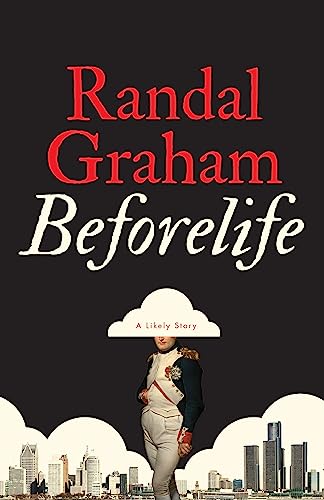
Sinopsis
It’s okay if you don’t believe in the afterlife. The people who live there don’t believe in you, either.
What if you went to heaven and no one there believed in Earth? This is the question at the heart of Beforelife, a satirical novel that follows the post-mortem adventures of widower Ian Brown, a man who dies on the book’s first page and finds himself in an afterlife where no one else believes in “pre-incarnation.” The other residents of the afterlife have mysteriously forgotten their pre-mortem lives and think that anyone who remembers a mortal life is suffering from a mental disorder called the “Beforelife Delusion.”
None of that really matters to Ian. All he wants to do is reunite with Penelope, his wife. Scouring the afterlife for any sign of her, Ian accidentally winds up on a quest to prove that the beforelife is real. This puts him squarely into the crosshairs of some of history’s greatest heroes and villains, all of whom seem unhealthily obsessed with erasing Ian’s memories and preventing him from reminding anyone of their pre-mortem lives. Only by staying a step ahead of his enemies can Ian hope to keep his much-needed marbles, find Penelope, and restore the public’s memories of the beforelife.
"Sinopsis" puede pertenecer a otra edición de este libro.
Acerca del autor
Randal Graham is a law professor at Western University. He lives in London, Ontario, with his wife and their Himalayan kitty.
De la contraportada
It's okay if you don't believe in the afterlife. The people who live there don't believe in you, either.
What if you went to heaven and no one there believed in Earth? This is the question at the heart of Beforelife, a satirical novel that follows the post-mortem adventures of Ian Brown, a man who dies on the book's first page and finds himself in an afterlife where no one else believes in "pre-incarnation." The other residents of the afterlife have mysteriously forgotten their pre-mortem lives and think that anyone who remembers a mortal life is suffering from a mental disorder called the "Beforelife Delusion."
None of that really matters to Ian. All he wants to do is reunite with Penelope, his wife. Scouring the afterlife for any sign of her, Ian accidentally winds up on a quest to prove that the beforelife is real. This puts him squarely into the crosshairs of some of history's greatest heroes and villains, all of whom seem unhealthily obsessed with erasing Ian's memories and preventing him from reminding anyone of their pre-mortem lives. Only by staying a step ahead of his enemies can Ian hope to keep his much-needed marbles, find Penelope, and restore the public's memories of the beforelife.
Fragmento. © Reproducción autorizada. Todos los derechos reservados.
Chapter 1
Ian died at midnight on a Tuesday. Or maybe Wednesday. He couldn’t be sure which, come to think of it, and now that he was dead the point seemed moot.
That’s where the story should have ended. Even Ian would have agreed. Dying was the last thing Ian ever wanted to do, and he’d always assumed it would be. So when he died — either on Tuesday or on Wednesday — Ian thought this was The End.
As you may have already guessed, Ian was wrong about this in almost every respect. This shouldn’t be held against him. Ian had been raised without the mind-broadening benefits of Sunday schools, synagogues, Ouija boards, horoscopes, and other types of metaphysical training, and he lacked the important clue that, in a longish book about the only noteworthy slice of his own life story, he had died right at the top of page one. But Ian did die on page one. All things considered, this was something of a shame.
Ian thought this was a shame.
Or rather, a tiny, flickering slip of consciousness that thought of itself as Ian thought that Ian’s death was a shame. It was also annoyed. Owing to Ian’s t-crossing, i-dotting, nitpicking nature, this tiny, flickering, and decidedly tedious slip of consciousness couldn’t rest until it discovered whether its final spark of life had been snuffed out on Tuesday or Wednesday.
These things might matter, it reflected. What if people in the afterlife care about that sort of thing? There could be consequences. Big ones. Rules that apply to people who die on specific days. Netherwordly tax benefits. Seniority based on expiration dates. Or replacement bodies doled out on a first-come, first-served basis. They might have deathday parties. Or crypt rhymes. Tuesday’s corpse is fair of face; Wednesday’s corpse will rot in place. That sort of thing.
These things might matter.
Ian resolved to puzzle it out. It’s not as though he had anything better to do, what with one thing and another. He’d already noticed death’s obliging way of clearing up a schedule.
Ian started with what he knew. He was certain that he’d died at the stroke of twelve. He’d been standing on Platform Six, saying something-or-other about the midnight train to Union Station. Then he’d turned to watch it arrive. A moment later he had slipped, cried “whoops,” and fallen base-over-apex onto the tracks. That’s when Ian had met the train — or just its underside, really. The meeting had not gone well for Ian. The last sounds he heard had been a clock striking twelve, the screech of the braking train, and the mingled screams and shouts of alarmed commuters.
And “whoops,” Ian reflected.
His last word had been “whoops.”
Typical, thought Ian.
It was remarkably typical. While Ian had no way of knowing this, the 487th edition of Khuufru’s Eternal Almanac ranks the word “whoops” as the fourth most common final utterance of English-speaking humans, hot on the heels of “I’ll bet it’s harmless,” “What happens if I pull this?” and “These oysters seem a bit off.” But however run-of-the-mill his own last word had been, Ian was sure he’d said it at midnight. Twelve o’clock, right on the dot. Night noon. Zero hours, zero minutes, zero seconds.
It’s important not to fall prey to woolly thinking. You might be tempted to think that midnight, what with all of its “witching hour” mythology, is an auspicious time to die. Much more interesting than, say, dying at 8:17 or 9:24. But the problem you’re ignoring — and the thing that was really starting to get on Ian’s nerves, if he still had nerves — is that midnight is ambiguous. You know where you stand with 8:17 or 9:24, but midnight raises questions. Is it part of yesterday, or today? Tonight or tomorrow? Is it the final tick of one day, or the first tock of the next? Tuesday or Wednesday? Last night or this morning?
Is midnight an ending, or a beginning?
This could be embarrassing, thought Ian, who would have furrowed his brow and scratched his head if he’d still had one. What if there are . . . I don’t know . . . immigration forms in the Hereafter? Name: Ian Brown. Place of Birth: Toronto, Canada. Date of Death: June 5 or 6, not sure which. Ian would hate to spend the first day of his afterlife arguing with some Netherworldly Customs Official about an improperly filled-out Form F4-6A (Type T — arrivals by train). Few things could get under Ian’s skin like an improperly filled-out form. The whole idea made Ian queasy.
That is, it would have made Ian queasy if he’d still had a physical form. Disembodied spirits lack the plumbing involved in getting queasy. They do have everything they need to become dispirited, however, and that’s what Ian did next.
What happens now? Ian wondered. And then he knew: I’m still dying.
He was watching the final flickers of his last few sparks of consciousness while the intact bits of his brain fired their final, parting shots. There was nothing for Ian to do but wait for his last remaining grey cells to stop firing, fizzling, pulsing, or doing whatever it is that dying neurons do. Then he could get on with the job of fading into oblivion.
Ian waited.
Ian waited some more.
The more Ian waited the more he didn’t fade into oblivion.
Whether this was a remarkably dull afterlife or a low-budget entry in the Hallucination Sweepstakes, Ian was starting to feel antsy. This presented practical problems, there being few pastimes available to a man who has lost his body. Given this limited range of options, Ian opted for a stroll down memory lane.
Early editions of this book contained a beautifully written account of Ian’s reflections on his past. It was eight pages of elegant, artful prose, easily justifying any number of literary awards. Regrettably, editors of the current edition felt that Ian’s memories couldn’t hold a reader’s attention.
Not to put too fine a point on it, Ian’s life had been downright dull. He had been the middle child in a middle-income family and had (in his middle years) occupied a mid-level government position in a mid-sized Canadian city. Ian was middling in most respects. The only remarkable thing about Ian was how utterly unremarkable he was. He was beige. He was vanilla. He was almost perfectly average. If you added up all the people in the world and then divided them by global population, you’d have Ian. If mediocrity were an Olympic sport, Ian would finish right in the middle of the pack.
Being killed by a train had been the one newsworthy thing that had ever happened to Ian, and now he wouldn’t be around to see the coverage. He could imagine the headlines, though: Man Trips in Front of Train Entering Station: Death by Freudian Slip.
It was at this precise moment — just as Ian had started imagining the text of his own obituary — that whatever homunculus lived in Ian’s mind mashed control-alt-delete on its cognitive keyboard and rebooted Ian’s sense of the physical world.
Ian almost wished it hadn’t. The physical world wasn’t friendly.
It was a maelstrom. It was a crashing, churning, Ian-centred vortex in which Ian was being tossed about like change in a dryer. The next thirty-eight seconds were so uncomfortably crowded with activity that they can’t be recounted with any degree of precision. There was a lot of movement, though — whirling, spinning, pounding, nauseating movement. And there were sounds: thunderous, churning, torrential, watery sounds. It sounded a good deal like the noises Ian remembered from third grade when a bully had forced him face down into a toilet bowl and flushed.
A “swirly,” the bully had called it.
The afterlife was a swirly.
It dawned on Ian — whose speed-of-uptake was impaired by recent events — that he was under water. Discovering this, he struggled for breath. And if he felt the need to breathe, Ian reasoned, he must have lungs, which in turn suggested a body. And if Ian was any judge, that body was not being flushed down a cosmic drainpipe or enduring the Final Swirly, but being swept along by a river that swelled beyond any image captured by the phrase “white water” and fit more comfortably with descriptions like “enraged,” “deadly,” “torrent,” and possibly “uninsurable risk.”
Picture the base of Niagara Falls with extra rocks. Very large, very hard, and very uncomfortable-looking rocks.
Ian gasped and sputtered and ricocheted through the rapids for several desperate minutes until the river rounded a bend and spat him toward a gravelly bank. Ian winced, shut his eyes, contrived to cover his tender bits, and hoped for the best.
A heartbeat later he was lying face up beside the river. His body felt like a stubbed toe. He could hear the rapids behind him. In the distance he could detect the ominous rumbling of a storm. In his immediate vicinity he could hear an unmistakably female voice say “Are you all right?” in an equally unmistakable Indian accent.
(That’s “Indian” as in Gandhi, not Pocahontas.)
Ian risked opening an eye. His left one, if you were curious.
This is what Ian didn’t see: he didn’t see a billowing cloudscape populated by winged babies equipped for archery practice. He didn’t see an everlasting pit of fire. He didn’t see a rainbow bridge, a greeter doling out teams of virgins, or any other popular netherwordly image advertised by mainstream religions. What Ian did see was the most eye-poppingly beautiful woman he’d ever seen. She was dark-skinned, dark-haired, almond-eyed, and wearing a white terry-cloth robe.
She knelt beside him.
Had Ian been asked to describe this woman his description would have depended on two variables, namely (1) Ian’s audience, and (2) Ian’s age. Had a teenaged Ian, for example, been asked to describe this woman to his teammates on the high-school football team, his description would have featured the word “hot” a number of times as well as “sexy,” “gorgeous,” and quite possibly “yum.” This would have been punctuated by grunts and assorted allusions to anatomical features peculiar to the female form.
If, by contrast, a thirty-something Ian had been asked to describe this woman to a police sketch artist, he might have said, “Female, mid-twenties, East Indian, almond eyes, cappuccino complexion, full lips, shoulder-length black hair . . . no, no, the hair is a little wavier than that. And draw the body — you can’t have a proper sketch without the body. She was about five-foot-seven, medium build, hourglass figure. No, she was more . . . what’s the word? More statuesque. Throw in a couple of extra curves. And larger eyes. Make her prettier. Yes, much better. Very nice. Um . . . could I get a copy of that?”
And had an Ian in his mid-forties — say, an Ian roughly the age of the one who presently found himself beside the river — been asked to describe this woman to his wife, he would have stammered something along the lines of “pleasant-looking, I suppose, sort of pretty, not really my type, but I’m sure some men would find her attractive in a conventional sort of way.”
And Penelope, his wife, would have laughed at him out loud.
Penelope.
Ian had been pulverized by a train, suffered an episode of disembodied consciousness, and body-surfed his way through class-six rapids, yet he hadn’t thought about his wife for eight whole pages. Not even once. It was as though there’d been a Penelope-shaped hole in Ian’s mind. That was alarming. And it was remarkably unlike Ian. His mental compass generally pointed due Penny. If you’d ever had the chance to take a peek into Ian’s thoughts, you’d have been sure to spot Penny smiling up at you in the foreground. You certainly wouldn’t have guessed that a train could knock her clean out of Ian’s head, so to speak.
So how could Penny have slipped his mind?
A voice in Ian’s head assured him that Penny wouldn’t hold this temporary bout of spousal amnesia against him, given the circumstances. She had an understanding nature. And she loved Ian: he was certain about that. While anyone else might have described Ian as perfectly, painfully average, Penny had always thought of him as the Golden Mean.
Please don’t get the wrong impression. It’s not as though Penny was some doe-eyed husband worshipper who was blind to her spouse’s flaws. Quite the contrary. She was a razor-witted, independent lioness of a woman and an incisive judge of character. She had to be, in her line of work — but that’s getting ahead of the story. For now, just rest assured that Penny hadn’t failed to notice Ian’s flaws; she simply saw them as integral stitches in the tapestry that was Ian — a tapestry Penny loved as it was, thanks very much, and wouldn’t unravel by picking or pulling at errant threads.
Ian had always felt that Penny was the single splash of colour in his otherwise dreary life. And now she was gone.
Well, Ian was gone, really, but it’s impolite to quibble.
Penny had been standing with Ian while he’d waited for the train. Why hadn’t he thought of that until now? She’d have seen the accident. She’d have watched him die. She’d be distraught.
She’d be a widow.
This depressing bit of reverie was cut short when the Bollywood Bombshell at Ian’s side snapped her fingers and cleared her throat.
“Um, hello?” she said, shaking Ian’s shoulder and scrunching her face in a mother-henning sort of way. “Are you all right?”
She couldn’t help it, poor dear, but her appearance was such that everything she said transmitted a strong “come hither” harmonic.
“I’m married,” said Ian, loyally.
“Hi, Mary,” said the woman, helping Ian to his feet. “My name’s Tonto. I’m your guide.”
Ian opened and closed his mouth a number of times before settling into the vaguely concussed expression you usually see in calculus tutorials. The effect was not assisted by the fact that Ian was soaking wet, stark naked, and sporting a skin tone that hinted at the regular application of SPF 10,000. He looked like a stunned, bipedal cod.
Tonto handed Ian a robe that matched her own. This helpful act drew Ian’s attention to the fact that he was naked and, to his mild embarrassment, suffering from the usual anatomical consequences associated with dips in ice-cold water.
“Tonto?” he said, shrugging hastily into the robe. “You’re an Indian guide? Named Tonto?”
She gave Ian a puzzled look as though she saw nothing at all unusual in this arrangement. Then she bent down, picked up a knapsack that had been lying by her feet, and slung it over her shoulder.
“What do you mean by ‘Indian’?” she asked.
This was no time for quibbling over racial terminology, thought Ian. He was either standing on a riverbank in the afterlife with an Indian guide named Tonto, or experiencing a post-traumatic hallucination that could generate research funding for an army of psychoanalysts. And he was fairly certain, upon reflection, that he’d just been called Mary.
“I’m sorry — but I think you misheard me,” he said, exhibiting admirable decorum for a fellow who, by any standard, was having a Bad Day. “I said ‘I’m married.’ You know, to a woman. Her name is Penelope. Mine’s Ian Brown.”
Tonto bit her perfect lower lip and furrowed her perfect brow in a way that seemed precisely calibrated to unsettle the Brown constitution. She took Ian’s arm, patted him on the shoulder, and began to lead him away from the water.
“You’re confused,” she said, registering compassion. Disconcertingly sultry compassion. Almost steamy compassion, really. “What you’re experiencing is called shared memory,” she added. “It’ll pass. It’s common among the newly manifested.”
At least eleven different questions urgently pressed for Ian’s attention. These bottlenecked in the neighbourhood of his uvula, tripped over each other, and emerged as a sort of polyphonic gurgle. But it was a vaguely interrogative gurgle that ended with a question mark. Tonto appeared to understand.
“Newly manifested,” she repeated. “Like you. Newborns. Freshly formed by the river. You’ve just manifested today, along with the rest of these people.” She turned back toward the river and gestured up the bank. Dotted along the river’s edge were dozens of white-robed guides helping men, women, and children out of the water.
“It’s how we’re born,” Tonto added. “Everyone is formed by the river. My own manifestation was twenty-five years ago today.”
“Er . . . Happy birthday?” said Ian, who felt civility was important.
Tonto flashed a smile that would have taken the pleats from most men’s trousers. “I emerged about twenty yards downstream,” she said. “That’s why I’m here. It’s traditional to come back to your point of emergence to celebrate your manifestival.”
“Your manifestival?” said Ian, still struggling to catch up to current events.
“It’s like a party,” said Tonto. “You come to the river, reflect on your past, make resolutions, that sort of thing. And you help the newly manifested out of the water. You can serve as their guide for a few months, if you’re willing. Help them integrate into —”
“Sorry, uh . . . Tonto,” said Ian, “but I think there’s been a mistake. I wasn’t manufactured by any river —”
“Manifested,” said Tonto.
“Right,” said Ian, “Manifested. I wasn’t. I’m not sure how I ended up in the river at all. I was standing on Platform Six with Penny. It was midnight. We were . . . we were waiting for the train when I —”
Ian stiffened as though he’d been ambushed by the memory. It suddenly struck him that he was unusually fit for someone who, by all rights, ought to have been a reddish-brown smear spread over several yards of track. He patted various parts of his body as though searching for missing keys.
“I’m not even injured!” he announced. Ian still felt like he’d been pounded by a gorilla with a grudge, but all of his parts were still attached and, as far as Ian could tell, up to factory specifications. He goggled around the landscape with the bewilderment of a puppy whose master has faked a throw. “But how did I get here?” he said. “I . . . I was hit by a train and then . . . and then I was under water. But then how . . . I mean why . . . I mean . . . I just . . . where’s Penny? Where are we?”
This was followed by a medium-sized bout of hyperventilation.
“It’s all right,” said Tonto, patting Ian’s arm. “Don’t worry about any of that. Just try to be calm and listen. All those things you think you remember — everything that’s upsetting you — none of it’s real. You’re just experiencing shared memories. They can be confusing. Try to ignore them. Everything’s going to be all right.”
Her voice was remarkably soothing. A bit like Penny’s, really.
“But the train,” said Ian, catching his breath, “and Penny, I’ve got to get back to —”
“Forget all that,” said Tonto. “I’m going to tell you something important, Ian, so listen carefully. The memories you think you have, your memories of the train, your wife, anything else you think you remember — those memories aren’t real. Don’t worry about them. They’re just bits and pieces of other people’s lives; foreign memories that have jumbled up in your brain and made you think they’re part of your past. But you haven’t got a past. You’re brand new. Freshly manifested today. Just try to ignore whatever memories you think you have. They’ll fade in time.”
Ian responded with a bug-eyed expression that was equal parts confusion and disbelief — the sort of face you’d see on a man who had just been mugged by a gang of penguins. He’d heard some far-fetched stories in his time, but this one was a contender for the gold medal. Manifestivals? Shared memories? Complete nonsense, thought Ian, though he was too polite to say so. He was Canadian, after all.
At least, he thought he remembered being Canadian. But if your memories weren’t real, how would you know?
Ian abandoned this particular line of thinking out of loyalty to Penny. Penny was real. Ian knew it. His life with Penny had been real. Penelope had to be real.
By the time Ian’s attention snapped back to more immediate matters he found that Tonto had already led him a stone’s throw away from the river. They now stood on a grassy embankment overlooking their destination.
This particular destination wouldn’t rank highly on the list of things you’d expect to see on The Other Side. It was a parking lot — the sprawling species of parking lot indigenous to the outskirts of amusement parks and suburban shopping centres. It was populated with cars, trucks, and buses of every description, as well as dozens of smiling people chatting amiably and carrying on as though they’d all just enjoyed a day at the beach. Their obvious cheeriness threw Ian’s mood into sharp relief.
The effect wasn’t lost on Tonto.
“Don’t worry,” she said, smiling warmly. “Just trust me. Your confusion will pass. Sometimes it takes time to sort through the memories you absorb in the neural flows.”
“Neural flows?” said Ian.
“The currents that carry memory. Basic knowledge, instinct, that sort of thing. All the things you know when you manifest. It’s how you know how to speak, read, and write. It’s all explained in here,” she added, slipping the knapsack off her shoulder. She unzipped the bag, rummaged through its contents, and withdrew a three-ring binder with the words “Manifestation Field Guide, DDH” on its cover. She thumbed through several pages until she found the relevant passage.
“It’s right here,” she said, indicating a paragraph under the heading “Neural Flows”:
The river carries with it partial copies of the memories, experiences, and rudimentary knowledge of anyone who enters the water for an extended period of time. Officials from the Department of Hygiene ensure that the river is adequately supplied with updated memories at all times, ensuring well-stocked neural flows for the newly manifested.
“That’s you,” Tonto added, beaming at Ian. She turned her attention back to the guide:
The memories in the neural flows nourish the newly manifested as they form in the river’s depths, providing them with knowledge, instinct, and basic skills they’ll need to become productive citizens. In many cases the memories supplied by the neural flows can cause the newly manifested to experience confusion and anxiety. These effects typically pass within several hours of manifestation.
Tonto closed the binder and smiled. “It’s like I said. Your confusion is perfectly normal. Nothing to worry about at all. You’ll be fine within a few hours.”
If you wanted to choose this specific moment to describe Ian as nonplussed, you wouldn’t be wrong. He was utterly nonplussed. Absolutely bereft of plusses. There wasn’t a plus to be seen for miles.
“I’m sorry,” he said, “and I’m sure you’re trying to help . . . but . . . but that’s just crazy.”
Tonto appeared to take this assessment without offence, so Ian continued.
“I mean, all those people,” he said, looking back down the embankment, toward the river. “You’re saying they all share my memories? That they think they lived my life? That’s impossible. That’s —”
“Not exactly,” said Tonto, “but —”
“And look at her,” Ian continued, pointing toward a white-robed guide fishing a baby out of the water. “Look at that baby. You can’t expect me to believe that we have memories in common, or that the river has taught her to read and write or made her believe she’s married, or named Ian, or recovering from a train wreck, or —”
“Don’t be silly,” said Tonto, still beaming. “The river manifests different people at different stages. We don’t know why, but that’s how it happens. Babies have spent less time in the currents, so they’ve absorbed fewer memories. And the specific bits of memory you think you have are unique to you; everyone else has different ones. It’s all explained in the guide.”
She instituted a brief stage wait while thumbing through the binder until she found a helpful blurb:
A newly manifested adult has been exposed to billions of memory streams by the time he or she is fully formed. What the newly manifested perceive as “memories” rarely comprise the actual memories of any particular individual, but are instead recombinant images which the mind constructs from the neural flows absorbed during the manifestation process.
“Take that wife you mentioned,” said Tonto. “She’s probably not even a real person. More of a composite memory; something made up from the memories of hundreds of people who’ve been in the river. What the guidebook calls a ‘construct.’ She’s an image your subconscious mind has constructed from memories it picked up in the neural flows; a way of helping you understand ideas like ‘wife’ and ‘family.’”
Ian gave Tonto a look that could best be described as plaintive, exasperated, exhausted, and disbelieving. It typically takes a practised face to managed a four-adjective look, but Ian did it on his first try.
“But I remember Penelope,” he insisted. “She’s real. We’ve been married for eight years. We live at thirty-nine Chamberlain Street in Linwood, near Toronto. We have a cat. She’s the director of an investment firm — Penny, I mean, not the cat. She has wavy brown hair and a freckle behind her ear. And she always smells like oranges. Her perfume does, I mean, but she always wears it. Fresh oranges. She loves Vivaldi and disco music. She drinks too much coffee. She goes to Pilates class on Fridays. She hosts a book club every second Wednesday. Her favourite book is that one about . . .”
Tonto’s demeanour grew darker as Ian rattled off a litany of Penelope-centred trivia. He’d gotten around to Penny’s favourite meal (salmon steak with dill and asparagus) when Tonto finally interrupted.
“I’m so sorry, Ian,” she said, pausing briefly to bite her lip. “I . . . I hadn’t realized how serious this was. Just hold on.” She dipped back into the knapsack and rummaged through it again.
“What do you mean, serious?” said Ian, trying to peek into Tonto’s bag.
“I’m sure everything will be fine,” said Tonto. “It’s just that your memories shouldn’t be as, well, as detailed as you’re describing them. They’re usually just general impressions, a few scattered images. What you’re describing sounds too . . . well . . . real — it’s as though you’ve imagined a full life before your manifestation.”
“I didn’t imagine it!” said Ian.
“It’s okay,” said Tonto, still rifling through her bag. “It’s in here somewhere. Something they told us about at the training seminar. It’s called ‘BD.’”
A moment later Tonto fished a glossy pamphlet from her bag. It featured a picture of three smiling, attractive people wearing white terry-cloth robes. Its title was “BD and You: Making the Right Choices.” Tonto skimmed it quickly.
“Everything’s going to be all right,” she said, glancing up as she searched for a relevant section. Ian could tell she was doing her best to sound reassuring, but her expression telegraphed concern.
“Here we go,” she said, singling out a passage.
Beforelife Delusion: In some instances, accounting for roughly one manifestation in 6,000, the memories and experiences carried by the neural flows combine in ways that are particularly uncomfortable and confusing for the newly manifested. This may, under certain conditions, result in a Beforelife Delusion. The pre-conscious mind of a BD patient knits shared memories together into what seems, to the newly manifested, to amount to a coherent, fully rendered past life. People exhibiting this disorder perceive their inherited memories as the events of their own lives, rather than as collective knowledge passed along by the neural flows.
She closed the pamphlet and gave it to Ian.
“What it boils down to,” said Tonto, “is that people with BD are born believing in preincarnation. They think that they’ve lived full lives before their manifestation. It’s all a delusion, but it really feels convincing. Try not to focus on that, though. And don’t worry. There are people who can help you sort things out.”
“But I did live a full life,” Ian protested, “forty-three years of one, I mean. It’s not a delusion. It’s my life. It’s all that I —”
“I’m sorry, Ian,” said Tonto, “but . . . well . . . how would you know? How could anyone really tell the difference between a memory and a delusion? But look at it logically. What sounds more likely to you: that you’ve been hit by a train, escaped without any injuries, and magically appeared in a river, or that you’re suffering from a documented mental condition that thousands of people have had before you?”
She had a point there, really, but Ian stuck to his guns.
“I just know it,” he sulked.
He couldn’t explain why he knew that his memories weren’t delusions — he just felt it in his bones. It was as though there was an increasingly persistent voice in Ian’s head shouting that Tonto couldn’t be right. She just couldn’t. Ian had lived in Linwood, married Penelope, wiled away the years as a civil servant, and been killed by the midnight train to Union Station. And then he’d somehow ended up in the river. But if there was a way for Ian to get from Union Station to, well, here, wherever here was, then maybe there was a way for him to get back. To find Penny. Or maybe just send her a message. He had to be able to reach her, somehow. All that Ian had to do was find the way.
But where to begin?
The voice in Ian’s head suggested that, for now, at least, the best thing Ian could do was bide his time, stick with Tonto, and try to figure out where he was. Further support for this particular plan came from the fact that Ian was too exhausted to come up with anything else. So Ian closed his mouth and gazed down the embankment toward the river, staring toward the spot where Tonto claimed he’d been born just moments ago; the river that was supposedly the source of all of his memories, the source of his feelings for Penny, and the cause of his — what had she called it? — his Beforelife Delusion.
Ian watched a number of guides helping the newly manifested out of the water. None of the other new arrivals seemed distressed. Not in the least. Ian was sure he could see a number of them smiling, slipping into their terry-cloth robes and being led contentedly up the embankment.
“I don’t mean to upset you,” said Tonto. “Try to be calm. Let me take you to people who can help.”
Ian stared across the river. He couldn’t see the other side. This had to be one of the widest rivers he’d ever seen. In the distance, where the opposing bank should have been, roiling thunderheads filled the horizon.
Ian surrendered to exhaustion, took Tonto’s hand, and let her lead him away.
They crossed the parking lot and approached a large yellow SUV parked at a lamppost. It wasn’t a make or model that Ian recognized. Come to think of it, Ian couldn’t place the make or model of any of the vehicles he could see.
Tonto unlocked the doors and helped Ian into the back seat. He was about to buckle up when he caught a glimpse of a nearby sign.
Lot 48b, Styx West, Zone 12.
Ian blinked and read it again.
Styx West.
“The river,” he said, trying his best to remain calm. “What’s the name of the river?”
Tonto climbed into the driver’s seat and adjusted her rear-view mirror. “People mainly call it ‘the river,’” she said, glancing back at Ian. “But its proper name is the Styx.”
Ian blinked again and swallowed. He rifled through his mental filing cabinet for the folder labelled Ancient Greek Mythology. And then he found it.
The River Styx.
He sat bolt upright and goggled out the window. “Just hold on,” he said. “You expect me to believe that I’ve died and crossed the Sty
"Sobre este título" puede pertenecer a otra edición de este libro.
Resultados de la búsqueda para Beforelife: 1 (The Beforelife Stories)

Imagen de archivo
Beforelife
Publicado por
ECW Press,Canada, 2017
ISBN 10: 1770413170
ISBN 13: 9781770413177
Antiguo o usado
Paperback
Librería: World of Books (was SecondSale), Montgomery, IL, Estados Unidos de America
Calificación del vendedor: 5 de 5 estrellas

Paperback. Condición: Very Good. In this stunning collection, Franz Wright chronicles the journey back from a place of isolation and wordlessness. After a period when it seemed certain he would never write poetry again, he speaks with bracing clarity about the twilit world that lies between madness and sanity, addiction and recovery. Wright negotiates the precarious transition from illness to health in a state of skeptical rapture, discovering along the way the exhilaration of love--both divine and human--and finding that even the most battered consciousness can be good company. Whether he is writing about his regret for the abortion of a child, describing the mechanics of slander (I can just hear them on the telephone and keening all their kissy little knives), or composing an ironic ode to himself (To a Blossoming Nut Case), Wright's poems are exquisitely precise. Charles Simic has characterized him as a poetic miniaturist, whose secret ambition is to write an epic on the inside of a matchbook cover. Time and again, Wright turns on a dime in a few brief lines, exposing the dark comedy and poignancy of his heightened perception. Here is one of the poems from the collection: Description of Her Eyes Two teaspoonfuls, and my mind goeseveryone can kiss my ass now-- then it's changed, I change my mind. Eyes so sad, and infinitely kind. From the Hardcover edition. Nº de ref. del artículo: CIN1770413170VG
Comprar usado
EUR 4,13
Gastos de envío gratis
Se envía dentro de Estados Unidos de America
Se envía dentro de Estados Unidos de America
Cantidad disponible: 1 disponibles
Imagen del vendedor
Beforelife (1) (The Beforelife Stories)
Publicado por
ECW Press, 2017
ISBN 10: 1770413170
ISBN 13: 9781770413177
Antiguo o usado
Tapa blanda
Librería: Zoom Books East, Glendale Heights, IL, Estados Unidos de America
Calificación del vendedor: 5 de 5 estrellas
Condición: very_good. Book is in very good condition and may include minimal underlining highlighting. The book can also include "From the library of" labels. May not contain miscellaneous items toys, dvds, etc. . We offer 100% money back guarantee and 24 7 customer service. Nº de ref. del artículo: ZEV.1770413170.VG
Comprar usado
EUR 5,48
Gastos de envío gratis
Se envía dentro de Estados Unidos de America
Se envía dentro de Estados Unidos de America
Cantidad disponible: 1 disponibles
Imagen de archivo
Beforelife
Publicado por
ECW Press,Canada, 2017
ISBN 10: 1770413170
ISBN 13: 9781770413177
Antiguo o usado
Paperback
Librería: World of Books Inc, Montgomery, IL, Estados Unidos de America
Calificación del vendedor: 4 de 5 estrellas

Paperback. Condición: Very Good. In this stunning collection, Franz Wright chronicles the journey back from a place of isolation and wordlessness. After a period when it seemed certain he would never write poetry again, he speaks with bracing clarity about the twilit world that lies between madness and sanity, addiction and recovery. Wright negotiates the precarious transition from illness to health in a state of skeptical rapture, discovering along the way the exhilaration of love--both divine and human--and finding that even the most battered consciousness can be good company. Whether he is writing about his regret for the abortion of a child, describing the mechanics of slander (I can just hear them on the telephone and keening all their kissy little knives), or composing an ironic ode to himself (To a Blossoming Nut Case), Wright's poems are exquisitely precise. Charles Simic has characterized him as a poetic miniaturist, whose secret ambition is to write an epic on the inside of a matchbook cover. Time and again, Wright turns on a dime in a few brief lines, exposing the dark comedy and poignancy of his heightened perception. Here is one of the poems from the collection: Description of Her Eyes Two teaspoonfuls, and my mind goeseveryone can kiss my ass now-- then it's changed, I change my mind. Eyes so sad, and infinitely kind. From the Hardcover edition. Nº de ref. del artículo: CIN1770413170VG
Comprar usado
EUR 5,97
Gastos de envío gratis
Se envía dentro de Estados Unidos de America
Se envía dentro de Estados Unidos de America
Cantidad disponible: 1 disponibles
Imagen de archivo
Beforelife (1) (The Beforelife Stories)
Publicado por
ECW Press (edition No), 2017
ISBN 10: 1770413170
ISBN 13: 9781770413177
Antiguo o usado
Paperback
Librería: BooksRun, Philadelphia, PA, Estados Unidos de America
Calificación del vendedor: 5 de 5 estrellas
Paperback. Condición: Fair. No. The item might be beaten up but readable. May contain markings or highlighting, as well as stains, bent corners, or any other major defect, but the text is not obscured in any way. Nº de ref. del artículo: 1770413170-7-1-13
Comprar usado
EUR 6,10
Gastos de envío gratis
Se envía dentro de Estados Unidos de America
Se envía dentro de Estados Unidos de America
Cantidad disponible: 1 disponibles
Imagen de archivo
Beforelife
Publicado por
ECW Press, 2017
ISBN 10: 1770413170
ISBN 13: 9781770413177
Antiguo o usado
Tapa blanda
Librería: Better World Books, Mishawaka, IN, Estados Unidos de America
Calificación del vendedor: 5 de 5 estrellas
Condición: Very Good. Pages intact with possible writing/highlighting. Binding strong with minor wear. Dust jackets/supplements may not be included. Stock photo provided. Product includes identifying sticker. Better World Books: Buy Books. Do Good. Nº de ref. del artículo: 14790420-6
Comprar usado
EUR 6,75
Gastos de envío gratis
Se envía dentro de Estados Unidos de America
Se envía dentro de Estados Unidos de America
Cantidad disponible: 1 disponibles
Imagen de archivo
Beforelife
Publicado por
ECW Press, 2017
ISBN 10: 1770413170
ISBN 13: 9781770413177
Antiguo o usado
Tapa blanda
Librería: Better World Books, Mishawaka, IN, Estados Unidos de America
Calificación del vendedor: 5 de 5 estrellas
Condición: Good. Former library copy. Pages intact with minimal writing/highlighting. The binding may be loose and creased. Dust jackets/supplements are not included. Includes library markings. Stock photo provided. Product includes identifying sticker. Better World Books: Buy Books. Do Good. Nº de ref. del artículo: 18770533-75
Comprar usado
EUR 6,75
Gastos de envío gratis
Se envía dentro de Estados Unidos de America
Se envía dentro de Estados Unidos de America
Cantidad disponible: 1 disponibles
Imagen de archivo
Beforelife
Publicado por
ECW Press, 2017
ISBN 10: 1770413170
ISBN 13: 9781770413177
Antiguo o usado
Tapa blanda
Librería: Better World Books, Mishawaka, IN, Estados Unidos de America
Calificación del vendedor: 5 de 5 estrellas
Condición: Good. Pages intact with minimal writing/highlighting. The binding may be loose and creased. Dust jackets/supplements are not included. Stock photo provided. Product includes identifying sticker. Better World Books: Buy Books. Do Good. Nº de ref. del artículo: 17274716-6
Comprar usado
EUR 6,75
Gastos de envío gratis
Se envía dentro de Estados Unidos de America
Se envía dentro de Estados Unidos de America
Cantidad disponible: 2 disponibles
Imagen de archivo
Beforelife
Librería: ThriftBooks-Atlanta, AUSTELL, GA, Estados Unidos de America
Calificación del vendedor: 5 de 5 estrellas
Paperback. Condición: Very Good. No Jacket. Former library book; May have limited writing in cover pages. Pages are unmarked. ~ ThriftBooks: Read More, Spend Less. Nº de ref. del artículo: G1770413170I4N10
Comprar usado
EUR 7,40
Gastos de envío gratis
Se envía dentro de Estados Unidos de America
Se envía dentro de Estados Unidos de America
Cantidad disponible: 1 disponibles
Imagen de archivo
Beforelife Format: Paperback
Publicado por
Simon and Schuster, 2017
ISBN 10: 1770413170
ISBN 13: 9781770413177
Antiguo o usado
Tapa blanda
Librería: INDOO, Avenel, NJ, Estados Unidos de America
Calificación del vendedor: 5 de 5 estrellas
Condición: As New. Unread copy in mint condition. Nº de ref. del artículo: SS9781770413177
Comprar usado
EUR 15,47
Gastos de envío gratis
Se envía dentro de Estados Unidos de America
Se envía dentro de Estados Unidos de America
Cantidad disponible: Más de 20 disponibles
Imagen de archivo
Beforelife Format: Paperback
Librería: INDOO, Avenel, NJ, Estados Unidos de America
Calificación del vendedor: 5 de 5 estrellas
Condición: New. Brand New. Nº de ref. del artículo: 9781770413177
Comprar nuevo
EUR 15,57
Gastos de envío gratis
Se envía dentro de Estados Unidos de America
Se envía dentro de Estados Unidos de America
Cantidad disponible: Más de 20 disponibles