
Artículos relacionados a The Paradoxes of High Stakes Testing: How They Affect...
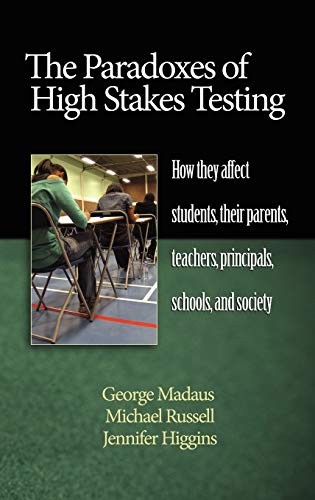
The Paradoxes of High Stakes Testing: How They Affect Students, Their Parents, Teachers, Principals, Schools, and Society (Hc) - Tapa dura
Sinopsis
The book’s goal is to clarify for parents, the public, and policy makers what high stakes testsare and how their use affects our schools, children, and society. It explores the various uses,limitations, and paradoxical consequences of high stakes testing.The present context of testing and the reauthorization of No Child Left Behind make theproposed book timely and important. Current testing programs provide valuable information toteachers, parents, and policy-makers about students, schools, and school systems. Butparadoxically, these programs have unintended yet predictable negative consequences for manystudents, teachers, and schools. It is essential that the public and policy-makers understand the scope and impacts that result from theinherent paradoxical nature of high-stakes testing.Testing is viewed by policy makers across party lines as an "objective" measure of student attainment and has become their toolof choice to drive educational "reform" and hold children, teachers, schools, and districts accountable. Bipartisan support for test-basedaccountability is firm. For example, on January of 2005 President Bush called on Congress to extend NCLB testing in math and scienceto freshmen, sophomores and juniors citing poor performance among high school students as a "warning and a call to action." (NYT 01/13/05) Senator Kennedy, a critic of the President, nonetheless supported the President’s proposed high school testing provisions.
"Sinopsis" puede pertenecer a otra edición de este libro.
Reseña del editor
The book's goal is to clarify for parents, the public, and policy makers what high stakes tests are and how their use affects our schools, children, and society. It explores the various uses, limitations, and paradoxical consequences of high stakes testing. The present context of testing and the reauthorization of No Child Left Behind make the proposed book timely and important. Current testing programs provide valuable information to teachers, parents, and policy-makers about students, schools, and school systems. But paradoxically, these programs have unintended yet predictable negative consequences for many students, teachers, and schools. It is essential that the public and policy-makers understand the scope and impacts that result from the inherent paradoxical nature of high-stakes testing. Testing is viewed by policy makers across party lines as an "objective" measure of student attainment and has become their tool of choice to drive educational "reform" and hold children, teachers, schools, and districts accountable. Bipartisan support for test-based accountability is firm. For example, on January of 2005 President Bush called on Congress to extend NCLB testing in math and science to freshmen, sophomores and juniors citing poor performance among high school students as a "warning and a call to action." (NYT 01/ 13/05) Senator Kennedy, a critic of the President, nonetheless supported the President's proposed high school testing provisions.
Biografía del autor
Michael Russell is Associate Professor of Education at Boston College s Lynch School of Education where he directs the Technology and Assessment Study Collaborative. His research and teaching interests lay at the intersection of assessment and technology. He teaches classroom assessment for pre-service students and courses that focus on issues in testing, assessment, and evaluation to graduate students. He has conducted several studies that focus on the use of computer-based technologies to increase test validity. These research issues include computers and writing, computer-based test accommodations for students with special needs, developing diagnostic tests for teachers to use in the classroom, and improving the instructional utility of large-scale tests. He is author of Technology and Assessment: the Tale of Two Interpretations.
"Sobre este título" puede pertenecer a otra edición de este libro.
Resultados de la búsqueda para The Paradoxes of High Stakes Testing: How They Affect...

Imagen de archivo
The Paradoxes of High Stakes Testing: How They Affect Students, Their Parents, Teachers, Principals, Schools, and Society (eng)
Publicado por
Information Age Publishing, 2009
ISBN 10: 1607520281
ISBN 13: 9781607520283
Nuevo
Tapa dura
Librería: Brook Bookstore On Demand, Napoli, NA, Italia
Calificación del vendedor: 5 de 5 estrellas

Condición: new. Nº de ref. del artículo: b9499e02602094437acea558c635bb00
Comprar nuevo
EUR 107,39
Envío por EUR 6,80
Se envía de Italia a Estados Unidos de America
Se envía de Italia a Estados Unidos de America
Cantidad disponible: Más de 20 disponibles
Imagen del vendedor
Paradoxes of High Stakes Testing : How They Affect Students, Their Parents, Teachers, Principals, Schools, and Society
Publicado por
Information Age Publishing, 2009
ISBN 10: 1607520281
ISBN 13: 9781607520283
Nuevo
Tapa dura
Librería: GreatBookPrices, Columbia, MD, Estados Unidos de America
Calificación del vendedor: 5 de 5 estrellas
Condición: New. Nº de ref. del artículo: 6054710-n
Comprar nuevo
EUR 117,70
Envío por EUR 2,35
Se envía dentro de Estados Unidos de America
Se envía dentro de Estados Unidos de America
Cantidad disponible: Más de 20 disponibles
Imagen del vendedor
Paradoxes of High Stakes Testing : How They Affect Students, Their Parents, Teachers, Principals, Schools, and Society
Publicado por
Information Age Publishing, 2009
ISBN 10: 1607520281
ISBN 13: 9781607520283
Antiguo o usado
Tapa dura
Librería: GreatBookPrices, Columbia, MD, Estados Unidos de America
Calificación del vendedor: 5 de 5 estrellas
Condición: As New. Unread book in perfect condition. Nº de ref. del artículo: 6054710
Comprar usado
EUR 117,89
Envío por EUR 2,35
Se envía dentro de Estados Unidos de America
Se envía dentro de Estados Unidos de America
Cantidad disponible: Más de 20 disponibles
Imagen de archivo
The Paradoxes of High Stakes Testing: How They Affect Students, Their Parents, Teachers, Principals, Schools, and Society
Publicado por
Information Age Publishing, 2009
ISBN 10: 1607520281
ISBN 13: 9781607520283
Nuevo
Tapa dura
Librería: Kennys Bookshop and Art Galleries Ltd., Galway, GY, Irlanda
Calificación del vendedor: 5 de 5 estrellas
Condición: New. 2009. Illustrated. hardcover. . . . . . Nº de ref. del artículo: V9781607520283
Comprar nuevo
EUR 113,70
Envío por EUR 9,50
Se envía de Irlanda a Estados Unidos de America
Se envía de Irlanda a Estados Unidos de America
Cantidad disponible: Más de 20 disponibles
Imagen de archivo
The Paradoxes of High Stakes Testing
Publicado por
Information Age Publishing, Incorporated, 2009
ISBN 10: 1607520281
ISBN 13: 9781607520283
Nuevo
Tapa dura
Librería: Majestic Books, Hounslow, Reino Unido
Calificación del vendedor: 4 de 5 estrellas

Condición: New. pp. 264 52:B&W 6.14 x 9.21in or 234 x 156mm (Royal 8vo) Case Laminate on White w/Gloss Lam. Nº de ref. del artículo: 6556218
Comprar nuevo
EUR 115,58
Envío por EUR 7,79
Se envía de Reino Unido a Estados Unidos de America
Se envía de Reino Unido a Estados Unidos de America
Cantidad disponible: 3 disponibles
Imagen de archivo
The Paradoxes of High Stakes Testing: How They Affect Students, Their Parents, Teachers, Principals, Schools, and Society
Publicado por
Information Age Publishing, 2009
ISBN 10: 1607520281
ISBN 13: 9781607520283
Nuevo
Tapa dura
Librería: Ria Christie Collections, Uxbridge, Reino Unido
Calificación del vendedor: 5 de 5 estrellas
Condición: New. In English. Nº de ref. del artículo: ria9781607520283_new
Comprar nuevo
EUR 110,57
Envío por EUR 13,52
Se envía de Reino Unido a Estados Unidos de America
Se envía de Reino Unido a Estados Unidos de America
Cantidad disponible: Más de 20 disponibles
Imagen de archivo
The Paradoxes of High Stakes Testing
Publicado por
Emerald Publishing Limited, 2009
ISBN 10: 1607520281
ISBN 13: 9781607520283
Nuevo
Tapa dura
Librería: PBShop.store UK, Fairford, GLOS, Reino Unido
Calificación del vendedor: 5 de 5 estrellas
HRD. Condición: New. New Book. Delivered from our UK warehouse in 4 to 14 business days. THIS BOOK IS PRINTED ON DEMAND. Established seller since 2000. Nº de ref. del artículo: L1-9781607520283
Comprar nuevo
EUR 121,41
Envío por EUR 6,01
Se envía de Reino Unido a Estados Unidos de America
Se envía de Reino Unido a Estados Unidos de America
Cantidad disponible: Más de 20 disponibles
Imagen del vendedor
Paradoxes of High Stakes Testing : How They Affect Students, Their Parents, Teachers, Principals, Schools, and Society
Publicado por
Information Age Publishing, 2009
ISBN 10: 1607520281
ISBN 13: 9781607520283
Nuevo
Tapa dura
Librería: GreatBookPricesUK, Woodford Green, Reino Unido
Calificación del vendedor: 5 de 5 estrellas
Condición: New. Nº de ref. del artículo: 6054710-n
Comprar nuevo
EUR 110,56
Envío por EUR 17,97
Se envía de Reino Unido a Estados Unidos de America
Se envía de Reino Unido a Estados Unidos de America
Cantidad disponible: Más de 20 disponibles
Imagen de archivo
The Paradoxes of High Stakes Testing
Publicado por
Information Age Publishing, Incorporated, 2009
ISBN 10: 1607520281
ISBN 13: 9781607520283
Nuevo
Tapa dura
Librería: Books Puddle, Woodside, NY, Estados Unidos de America
Calificación del vendedor: 4 de 5 estrellas
Condición: New. pp. 264. Nº de ref. del artículo: 261291749
Comprar nuevo
EUR 128,96
Envío por EUR 3,56
Se envía dentro de Estados Unidos de America
Se envía dentro de Estados Unidos de America
Cantidad disponible: 3 disponibles
Imagen de archivo
The Paradoxes of High Stakes Testing: How They Affect Students, Their Parents, Teachers, Principals, Schools, and Society
Publicado por
Information Age Publishing, 2009
ISBN 10: 1607520281
ISBN 13: 9781607520283
Nuevo
Tapa dura
Librería: THE SAINT BOOKSTORE, Southport, Reino Unido
Calificación del vendedor: 5 de 5 estrellas
Hardback. Condición: New. New copy - Usually dispatched within 4 working days. Nº de ref. del artículo: B9781607520283
Comprar nuevo
EUR 115,53
Envío por EUR 19,80
Se envía de Reino Unido a Estados Unidos de America
Se envía de Reino Unido a Estados Unidos de America
Cantidad disponible: Más de 20 disponibles