
Artículos relacionados a The Generals
Sinopsis
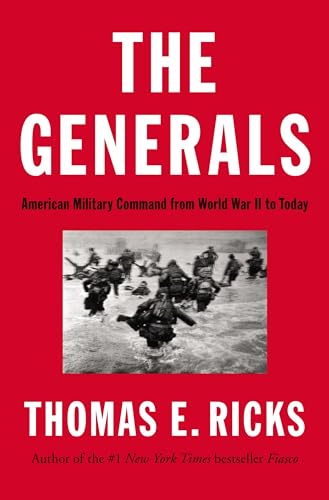
From the #1 bestselling author of Fiasco and The Gamble, an epic history of the decline of American military leadership from World War II to Iraq
History has been kind to the American generals of World War II—Marshall, Eisenhower, Patton, and Bradley—and less kind to the generals of the wars that followed. InThe Generals, Thomas E. Ricks sets out to explain why that is. In part it is the story of a widening gulf between performance and accountability. During the Second World War, scores of American generals were relieved of command simply for not being good enough. Today, as one American colonel said bitterly during the Iraq War, “As matters stand now, a private who loses a rifle suffers far greater consequences than a general who loses a war.”
In The Generals we meet great leaders and suspect ones, generals who rose to the occasion and those who failed themselves and their soldiers. Marshall and Eisenhower cast long shadows over this story, as does the less familiar Marine General O. P. Smith, whose fighting retreat from the Chinese onslaught into Korea in the winter of 1950 snatched a kind of victory from the jaws of annihilation.
But Korea also showed the first signs of an army leadership culture that neither punished mediocrity nor particularly rewarded daring. In the Vietnam War, the problem grew worse until, finally, American military leadership bottomed out. The My Lai massacre, Ricks shows us, is the emblematic event of this dark chapter of our history. In the wake of Vietnam a battle for the soul of the U.S. Army was waged with impressive success. It became a transformed institution, reinvigorated from the bottom up. But if the body was highly toned, its head still suffered from familiar problems, resulting in tactically savvy but strategically obtuse leadership that would win battles but end wars badly from the first Iraq War of 1990 through to the present.
Ricks has made a close study of America’s military leaders for three decades, and in his hands this story resounds with larger meaning: about the transmission of values, about strategic thinking, and about the difference between an organization that learns and one that fails.
"Sinopsis" puede pertenecer a otra edición de este libro.
Acerca del autor
Thomas E. Ricks is an adviser on national security at the New America Foundation, where he participates in its Future of War” project. He was previously a fellow at the Center for a New American Security and is a contributing editor ofForeign Policy magazine, for which he writes the prizewinning blog The Best Defense. Ricks covered the U.S. military forThe Washington Post from 2000 through 2008. Until the end of 1999 he had the same beat atThe Wall Street Journal, where he was a reporter for seventeen years. A member of two Pulitzer Prize-winning teams, he covered U.S. military activities in Somalia, Haiti, Korea, Bosnia, Kosovo, Macedonia, Kuwait, Turkey, Afghanistan, and Iraq. He is the author of several books, including The Gamble, and the number one New York Times bestseller Fiasco, which was a finalist for the Pulitzer Prize.
"Sobre este título" puede pertenecer a otra edición de este libro.
Resultados de la búsqueda para The Generals

Imagen de archivo
The Generals
Publicado por
Penguin Putnam Inc, 2012
ISBN 10: 1594204047
ISBN 13: 9781594204043
Antiguo o usado
Tapa dura
Librería: World of Books (was SecondSale), Montgomery, IL, Estados Unidos de America
Calificación del vendedor: 5 de 5 estrellas

Hardback. Condición: Very Good. From the #1 New York Times bestselling author of Fiasco and The Gamble comes an epic history of the decline of American military leadership from World War II to Iraq. History has been kinder to the American generals of World War II--Marshall, Eisenhower, Patton, and Bradley--than to the generals of the wars that followed. Is this merely nostalgia? In The Generals, Thomas E. Ricks answers the question definitively: No, it is not--in no small part because of a widening gulf between performance and accountability. During the Second World War, scores of American generals were relieved of command simply for not being good enough. Today as one American colonel said bitterly during the Iraq War, As matters stand now, a private who loses a rifle suffers far greater consequences than a general who loses a war. In The Generals we meet great leaders and suspect ones, generals who rose to the occasion and those who failed themselves and their soldiers. Marshall and Eisenhower cast long shadows over this story, but no single figure is more inspiring than Marine General O. P. Smith, whose fighting retreat from the Chinese onslaught into Korea in the winter of 1950 snatched a kind of victory from the jaws of annihilation. But Smith's courage and genius in the face of one of the grimmest scenarios the marines have ever faced only cast the shortcomings of the people who put him there in sharper relief. If Korea showed the first signs of a culture that neither punished mediocrity nor particularly rewarded daring, the Vietnam War saw American military leadership bottom out. The My Lai massacre is held up as the emblematic event of this dark chapter of our history. In the wake of Vietnam, a battle for the soul of the US Army was waged with impressive success. It became a transformed institution, reinvigorated from the bottom up. But if the body was highly toned, its head still suffered from familiar problems, resulting in leadership that, from the first Iraq War through to the present, was tactically savvy but strategically obtuse--one that would win battles but would end wars badly. Thomas E. Ricks has made a close study of America's military leaders for three decades, and in his hands this story resounds with larger meaning: the transmission of values, strategic thinking, the difference between an organization that learns and one that fails. Military history of the highest quality, The Generals is also essential reading for anyone with an interest in the difference between good leaders and bad ones. Nº de ref. del artículo: 00106027655
Comprar usado
EUR 4,04
Gastos de envío gratis
Se envía dentro de Estados Unidos de America
Se envía dentro de Estados Unidos de America
Cantidad disponible: 8 disponibles
Imagen de archivo
The Generals
Publicado por
Penguin Putnam Inc, 2012
ISBN 10: 1594204047
ISBN 13: 9781594204043
Antiguo o usado
Tapa dura
Librería: World of Books (was SecondSale), Montgomery, IL, Estados Unidos de America
Calificación del vendedor: 5 de 5 estrellas
Hardback. Condición: Good. From the #1 New York Times bestselling author of Fiasco and The Gamble comes an epic history of the decline of American military leadership from World War II to Iraq. History has been kinder to the American generals of World War II--Marshall, Eisenhower, Patton, and Bradley--than to the generals of the wars that followed. Is this merely nostalgia? In The Generals, Thomas E. Ricks answers the question definitively: No, it is not--in no small part because of a widening gulf between performance and accountability. During the Second World War, scores of American generals were relieved of command simply for not being good enough. Today as one American colonel said bitterly during the Iraq War, As matters stand now, a private who loses a rifle suffers far greater consequences than a general who loses a war. In The Generals we meet great leaders and suspect ones, generals who rose to the occasion and those who failed themselves and their soldiers. Marshall and Eisenhower cast long shadows over this story, but no single figure is more inspiring than Marine General O. P. Smith, whose fighting retreat from the Chinese onslaught into Korea in the winter of 1950 snatched a kind of victory from the jaws of annihilation. But Smith's courage and genius in the face of one of the grimmest scenarios the marines have ever faced only cast the shortcomings of the people who put him there in sharper relief. If Korea showed the first signs of a culture that neither punished mediocrity nor particularly rewarded daring, the Vietnam War saw American military leadership bottom out. The My Lai massacre is held up as the emblematic event of this dark chapter of our history. In the wake of Vietnam, a battle for the soul of the US Army was waged with impressive success. It became a transformed institution, reinvigorated from the bottom up. But if the body was highly toned, its head still suffered from familiar problems, resulting in leadership that, from the first Iraq War through to the present, was tactically savvy but strategically obtuse--one that would win battles but would end wars badly. Thomas E. Ricks has made a close study of America's military leaders for three decades, and in his hands this story resounds with larger meaning: the transmission of values, strategic thinking, the difference between an organization that learns and one that fails. Military history of the highest quality, The Generals is also essential reading for anyone with an interest in the difference between good leaders and bad ones. Nº de ref. del artículo: 00086388543
Comprar usado
EUR 4,04
Gastos de envío gratis
Se envía dentro de Estados Unidos de America
Se envía dentro de Estados Unidos de America
Cantidad disponible: Más de 20 disponibles
Imagen de archivo
The Generals
Publicado por
Penguin Putnam Inc, 2012
ISBN 10: 1594204047
ISBN 13: 9781594204043
Antiguo o usado
Tapa dura
Librería: World of Books (was SecondSale), Montgomery, IL, Estados Unidos de America
Calificación del vendedor: 5 de 5 estrellas
Hardback. Condición: Fair. From the #1 New York Times bestselling author of Fiasco and The Gamble comes an epic history of the decline of American military leadership from World War II to Iraq. History has been kinder to the American generals of World War II--Marshall, Eisenhower, Patton, and Bradley--than to the generals of the wars that followed. Is this merely nostalgia? In The Generals, Thomas E. Ricks answers the question definitively: No, it is not--in no small part because of a widening gulf between performance and accountability. During the Second World War, scores of American generals were relieved of command simply for not being good enough. Today as one American colonel said bitterly during the Iraq War, As matters stand now, a private who loses a rifle suffers far greater consequences than a general who loses a war. In The Generals we meet great leaders and suspect ones, generals who rose to the occasion and those who failed themselves and their soldiers. Marshall and Eisenhower cast long shadows over this story, but no single figure is more inspiring than Marine General O. P. Smith, whose fighting retreat from the Chinese onslaught into Korea in the winter of 1950 snatched a kind of victory from the jaws of annihilation. But Smith's courage and genius in the face of one of the grimmest scenarios the marines have ever faced only cast the shortcomings of the people who put him there in sharper relief. If Korea showed the first signs of a culture that neither punished mediocrity nor particularly rewarded daring, the Vietnam War saw American military leadership bottom out. The My Lai massacre is held up as the emblematic event of this dark chapter of our history. In the wake of Vietnam, a battle for the soul of the US Army was waged with impressive success. It became a transformed institution, reinvigorated from the bottom up. But if the body was highly toned, its head still suffered from familiar problems, resulting in leadership that, from the first Iraq War through to the present, was tactically savvy but strategically obtuse--one that would win battles but would end wars badly. Thomas E. Ricks has made a close study of America's military leaders for three decades, and in his hands this story resounds with larger meaning: the transmission of values, strategic thinking, the difference between an organization that learns and one that fails. Military history of the highest quality, The Generals is also essential reading for anyone with an interest in the difference between good leaders and bad ones. Nº de ref. del artículo: 00109182349
Comprar usado
EUR 4,04
Gastos de envío gratis
Se envía dentro de Estados Unidos de America
Se envía dentro de Estados Unidos de America
Cantidad disponible: 2 disponibles
Imagen del vendedor
The Generals: American Military Command from World War II to Today
Publicado por
Penguin Press, 2012
ISBN 10: 1594204047
ISBN 13: 9781594204043
Antiguo o usado
Tapa dura
Librería: Zoom Books East, Glendale Heights, IL, Estados Unidos de America
Calificación del vendedor: 5 de 5 estrellas
Condición: good. Book is in good condition and may include underlining highlighting and minimal wear. The book can also include "From the library of" labels. May not contain miscellaneous items toys, dvds, etc. . We offer 100% money back guarantee and 24 7 customer service. Nº de ref. del artículo: ZEV.1594204047.G
Comprar usado
EUR 4,05
Gastos de envío gratis
Se envía dentro de Estados Unidos de America
Se envía dentro de Estados Unidos de America
Cantidad disponible: 1 disponibles
Imagen del vendedor
The Generals: American Military Command from World War II to Today
Publicado por
Penguin Press, 2012
ISBN 10: 1594204047
ISBN 13: 9781594204043
Antiguo o usado
Tapa dura
Librería: Zoom Books Company, Lynden, WA, Estados Unidos de America
Calificación del vendedor: 5 de 5 estrellas
Condición: very_good. Book is in very good condition and may include minimal underlining highlighting. The book can also include "From the library of" labels. May not contain miscellaneous items toys, dvds, etc. . We offer 100% money back guarantee and 24 7 customer service. Nº de ref. del artículo: ZBV.1594204047.VG
Comprar usado
EUR 4,05
Gastos de envío gratis
Se envía dentro de Estados Unidos de America
Se envía dentro de Estados Unidos de America
Cantidad disponible: 6 disponibles
Imagen del vendedor
The Generals: American Military Command from World War II to Today
Publicado por
Penguin Press, 2012
ISBN 10: 1594204047
ISBN 13: 9781594204043
Antiguo o usado
Tapa dura
Librería: 3Brothers Bookstore, Egg harbor township, NJ, Estados Unidos de America
Calificación del vendedor: 5 de 5 estrellas
Condición: acceptable. Books may contain multiple pages with notes and highlighting. Supplements such as Access Codes, Cd's, etc. are not guaranteed with used book purchases. Nº de ref. del artículo: EVV.1594204047.A
Comprar usado
EUR 4,20
Gastos de envío gratis
Se envía dentro de Estados Unidos de America
Se envía dentro de Estados Unidos de America
Cantidad disponible: 1 disponibles
Imagen de archivo
The Generals: American Military Command from World War II to Today
Publicado por
Penguin Press, 2012
ISBN 10: 1594204047
ISBN 13: 9781594204043
Antiguo o usado
Tapa dura
Librería: Your Online Bookstore, Houston, TX, Estados Unidos de America
Calificación del vendedor: 5 de 5 estrellas
Hardcover. Condición: Very Good. Nº de ref. del artículo: 1594204047-2-22387433
Comprar usado
EUR 4,87
Gastos de envío gratis
Se envía dentro de Estados Unidos de America
Se envía dentro de Estados Unidos de America
Cantidad disponible: 1 disponibles
Imagen de archivo
The Generals: American Military Command from World War II to Today
Publicado por
Penguin Press, 2012
ISBN 10: 1594204047
ISBN 13: 9781594204043
Antiguo o usado
Tapa dura
Librería: Orion Tech, Kingwood, TX, Estados Unidos de America
Calificación del vendedor: 5 de 5 estrellas
hardcover. Condición: Fair. Nº de ref. del artículo: 1594204047-4-36198651
Comprar usado
EUR 4,87
Gastos de envío gratis
Se envía dentro de Estados Unidos de America
Se envía dentro de Estados Unidos de America
Cantidad disponible: 1 disponibles
Imagen de archivo
The Generals: American Military Command from World War II to Today
Publicado por
Penguin Press, 2012
ISBN 10: 1594204047
ISBN 13: 9781594204043
Antiguo o usado
Tapa dura
Librería: Orion Tech, Kingwood, TX, Estados Unidos de America
Calificación del vendedor: 5 de 5 estrellas
Hardcover. Condición: Good. Nº de ref. del artículo: 1594204047-3-23768897
Comprar usado
EUR 4,87
Gastos de envío gratis
Se envía dentro de Estados Unidos de America
Se envía dentro de Estados Unidos de America
Cantidad disponible: 1 disponibles
Imagen de archivo
The Generals: American Military Command from World War II to Today
Publicado por
Penguin Press, 2012
ISBN 10: 1594204047
ISBN 13: 9781594204043
Antiguo o usado
Tapa dura
Librería: Gulf Coast Books, Cypress, TX, Estados Unidos de America
Calificación del vendedor: 5 de 5 estrellas
hardcover. Condición: Very Good. Nº de ref. del artículo: 1594204047-2-37494547
Comprar usado
EUR 4,87
Gastos de envío gratis
Se envía dentro de Estados Unidos de America
Se envía dentro de Estados Unidos de America
Cantidad disponible: 1 disponibles