
Artículos relacionados a Rule of Racialization: Class, Identity, Governance...
Sinopsis
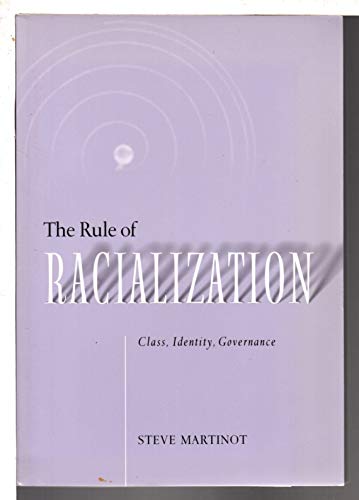
An important history of the way class formed in the US, The Rule of Racialization offers a rich new look at the invention of whiteness and how the inextricable links between race and class were formed in the seventeenth century and consolidated by custom, social relations, and eventually naturalized by the structures that organize our lives and our work. Arguing that, unlike in Europe, where class formed around the nation-state, race deeply informed how class is defined in this country and, conversely, our unique relationship to class in this country helped in some ways to invent race as a distinction in social relations. Martinot begins tracing this development in the slave plantations in 1600s colonial life. He examines how the social structures encoded there lead to a concrete development of racialization. He then takes us up to the present day, where forms of those structures still inhabit our public and economic institutions. Throughout, he engages historical and contemporary thinkers on the nature of race in the US, creating a book that at once synthesizes significant critiques of race while at the same time offers a completely original conception of how race and class have operated in American life throughout the centuries. A uniquely compelling book, The Rule of Racialization offers a rich contribution to the study of class, labor, and American social relations. Author note: Steve Martinot is Instructor at the Center for Interdisciplinary Programs at San Francisco State University. He has edited two previous books, and translated Racism by Albert Memmi.
"Sinopsis" puede pertenecer a otra edición de este libro.
Acerca del autor
Steve Martinot is Instructor at the Center for Interdisciplinary Programs at San Francisco State University. He has edited two previous books, and translated Racism by Albert Memmi.
"Sobre este título" puede pertenecer a otra edición de este libro.
Resultados de la búsqueda para Rule of Racialization: Class, Identity, Governance...

Imagen de archivo
Rule of Racialization: Class, Identity, Governance
Publicado por
Temple University Press,U.S., 2002
ISBN 10: 1566399823
ISBN 13: 9781566399821
Antiguo o usado
Paperback
Librería: World of Books (was SecondSale), Montgomery, IL, Estados Unidos de America
Calificación del vendedor: 5 de 5 estrellas

Paperback. Condición: Fair. An important history of the way class formed in the US, The Rule of Racialization offers a rich new look at the invention of whiteness and how the inextricable links between race and class were formed in the seventeenth century and consolidated by custom, social relations, and eventually naturalized by the structures that organize our lives and our work.Arguing that, unlike in Europe, where class formed around the nation-state, race deeply informed how class is defined in this country and, conversely, our unique relationship to class in this country helped in some ways to invent race as a distinction in social relations. Martinot begins tracing this development in the slave plantations in 1600s colonial life. He examines how the social structures encoded there lead to a concrete development of racialization. He then takes us up to the present day, where forms of those structures still inhabit our public and economic institutions. Throughout, he engages historical and contemporary thinkers on the nature of race in the US, creating a book that at once synthesizes significant critiques of race while at the same time offers a completely original conception of how race and class have operated in American life throughout the centuries.A uniquely compelling book, The Rule of Racialization offers a rich contribution to the study of class, labor, and American social relations. Nº de ref. del artículo: 00105661702
Comprar usado
EUR 5,93
Gastos de envío gratis
Se envía dentro de Estados Unidos de America
Se envía dentro de Estados Unidos de America
Cantidad disponible: 1 disponibles
Imagen de archivo
Rule of Racialization: Class, Identity, Governance
Publicado por
Temple University Press,U.S., 2002
ISBN 10: 1566399823
ISBN 13: 9781566399821
Antiguo o usado
Paperback
Librería: World of Books (was SecondSale), Montgomery, IL, Estados Unidos de America
Calificación del vendedor: 5 de 5 estrellas
Paperback. Condición: Very Good. An important history of the way class formed in the US, The Rule of Racialization offers a rich new look at the invention of whiteness and how the inextricable links between race and class were formed in the seventeenth century and consolidated by custom, social relations, and eventually naturalized by the structures that organize our lives and our work.Arguing that, unlike in Europe, where class formed around the nation-state, race deeply informed how class is defined in this country and, conversely, our unique relationship to class in this country helped in some ways to invent race as a distinction in social relations. Martinot begins tracing this development in the slave plantations in 1600s colonial life. He examines how the social structures encoded there lead to a concrete development of racialization. He then takes us up to the present day, where forms of those structures still inhabit our public and economic institutions. Throughout, he engages historical and contemporary thinkers on the nature of race in the US, creating a book that at once synthesizes significant critiques of race while at the same time offers a completely original conception of how race and class have operated in American life throughout the centuries.A uniquely compelling book, The Rule of Racialization offers a rich contribution to the study of class, labor, and American social relations. Nº de ref. del artículo: 00099538691
Comprar usado
EUR 5,93
Gastos de envío gratis
Se envía dentro de Estados Unidos de America
Se envía dentro de Estados Unidos de America
Cantidad disponible: 1 disponibles
Imagen de archivo
Rule of Racialization: Class, Identity, Governance
Publicado por
Temple University Press, 2002
ISBN 10: 1566399823
ISBN 13: 9781566399821
Antiguo o usado
Paperback
Librería: ThriftBooks-Dallas, Dallas, TX, Estados Unidos de America
Calificación del vendedor: 5 de 5 estrellas
Paperback. Condición: Very Good. No Jacket. May have limited writing in cover pages. Pages are unmarked. ~ ThriftBooks: Read More, Spend Less. Nº de ref. del artículo: G1566399823I4N00
Comprar usado
EUR 5,94
Gastos de envío gratis
Se envía dentro de Estados Unidos de America
Se envía dentro de Estados Unidos de America
Cantidad disponible: 1 disponibles
Imagen de archivo
Rule of Racialization: Class, Identity, Governance
Publicado por
Temple University Press, 2002
ISBN 10: 1566399823
ISBN 13: 9781566399821
Antiguo o usado
Paperback
Librería: ThriftBooks-Atlanta, AUSTELL, GA, Estados Unidos de America
Calificación del vendedor: 5 de 5 estrellas
Paperback. Condición: Good. No Jacket. Former library book; Pages can have notes/highlighting. Spine may show signs of wear. ~ ThriftBooks: Read More, Spend Less. Nº de ref. del artículo: G1566399823I3N10
Comprar usado
EUR 5,94
Gastos de envío gratis
Se envía dentro de Estados Unidos de America
Se envía dentro de Estados Unidos de America
Cantidad disponible: 1 disponibles
Imagen de archivo
Rule of Racialization: Class, Identity, Governance
Publicado por
Temple University Press,U.S., 2002
ISBN 10: 1566399823
ISBN 13: 9781566399821
Antiguo o usado
Paperback
Librería: World of Books Inc, Montgomery, IL, Estados Unidos de America
Calificación del vendedor: 4 de 5 estrellas

Paperback. Condición: Very Good. An important history of the way class formed in the US, The Rule of Racialization offers a rich new look at the invention of whiteness and how the inextricable links between race and class were formed in the seventeenth century and consolidated by custom, social relations, and eventually naturalized by the structures that organize our lives and our work.Arguing that, unlike in Europe, where class formed around the nation-state, race deeply informed how class is defined in this country and, conversely, our unique relationship to class in this country helped in some ways to invent race as a distinction in social relations. Martinot begins tracing this development in the slave plantations in 1600s colonial life. He examines how the social structures encoded there lead to a concrete development of racialization. He then takes us up to the present day, where forms of those structures still inhabit our public and economic institutions. Throughout, he engages historical and contemporary thinkers on the nature of race in the US, creating a book that at once synthesizes significant critiques of race while at the same time offers a completely original conception of how race and class have operated in American life throughout the centuries.A uniquely compelling book, The Rule of Racialization offers a rich contribution to the study of class, labor, and American social relations. Nº de ref. del artículo: CIN1566399823VG
Comprar usado
EUR 7,76
Gastos de envío gratis
Se envía dentro de Estados Unidos de America
Se envía dentro de Estados Unidos de America
Cantidad disponible: 1 disponibles
Imagen de archivo
Rule of Racialization: Class, Identity, Governance
Publicado por
Temple University Press,U.S., 2002
ISBN 10: 1566399823
ISBN 13: 9781566399821
Antiguo o usado
Paperback
Librería: World of Books Inc, Montgomery, IL, Estados Unidos de America
Calificación del vendedor: 4 de 5 estrellas
Paperback. Condición: Fair. An important history of the way class formed in the US, The Rule of Racialization offers a rich new look at the invention of whiteness and how the inextricable links between race and class were formed in the seventeenth century and consolidated by custom, social relations, and eventually naturalized by the structures that organize our lives and our work.Arguing that, unlike in Europe, where class formed around the nation-state, race deeply informed how class is defined in this country and, conversely, our unique relationship to class in this country helped in some ways to invent race as a distinction in social relations. Martinot begins tracing this development in the slave plantations in 1600s colonial life. He examines how the social structures encoded there lead to a concrete development of racialization. He then takes us up to the present day, where forms of those structures still inhabit our public and economic institutions. Throughout, he engages historical and contemporary thinkers on the nature of race in the US, creating a book that at once synthesizes significant critiques of race while at the same time offers a completely original conception of how race and class have operated in American life throughout the centuries.A uniquely compelling book, The Rule of Racialization offers a rich contribution to the study of class, labor, and American social relations. Nº de ref. del artículo: CIN1566399823A
Comprar usado
EUR 7,76
Gastos de envío gratis
Se envía dentro de Estados Unidos de America
Se envía dentro de Estados Unidos de America
Cantidad disponible: 1 disponibles
Imagen de archivo
Rule Of Racialization: Class, Identity, Governance (Labor In Crisis)
Publicado por
Temple University Press, 2002
ISBN 10: 1566399823
ISBN 13: 9781566399821
Antiguo o usado
Paperback
Librería: Midtown Scholar Bookstore, Harrisburg, PA, Estados Unidos de America
Calificación del vendedor: 5 de 5 estrellas
Paperback. Condición: Good. Good - Bumped and creased book with tears to the extremities, but not affecting the text block, may have remainder mark or previous owner's name - GOOD PAPERBACK Standard-sized. Nº de ref. del artículo: M1566399823Z3
Comprar usado
EUR 3,59
Envío por EUR 5,33
Se envía dentro de Estados Unidos de America
Se envía dentro de Estados Unidos de America
Cantidad disponible: 5 disponibles
Imagen de archivo
Rule Of Racialization: Class, Identity, Governance (Labor In Crisis)
Publicado por
Temple University Press, 2002
ISBN 10: 1566399823
ISBN 13: 9781566399821
Antiguo o usado
paperback
Librería: HPB-Ruby, Dallas, TX, Estados Unidos de America
Calificación del vendedor: 5 de 5 estrellas
paperback. Condición: Very Good. Connecting readers with great books since 1972! Used books may not include companion materials, and may have some shelf wear or limited writing. We ship orders daily and Customer Service is our top priority! Nº de ref. del artículo: S_402491650
Comprar usado
EUR 7,79
Envío por EUR 3,33
Se envía dentro de Estados Unidos de America
Se envía dentro de Estados Unidos de America
Cantidad disponible: 1 disponibles
Imagen de archivo
Rule Of Racialization: Class, Identity, Governance (Labor In Crisis)
Publicado por
Temple University Press November 2002, 2002
ISBN 10: 1566399823
ISBN 13: 9781566399821
Antiguo o usado
Trade Paperback
Librería: The Book Garden, Bountiful, UT, Estados Unidos de America
Calificación del vendedor: 5 de 5 estrellas
Trade Paperback. Condición: Very Good - Cash. Minor rubbing and edge wear to cover, with light reader wear to pages. Still great condition. Stock photos may not look exactly like the book. Nº de ref. del artículo: 1069449
Comprar usado
EUR 9,15
Envío por EUR 6,44
Se envía dentro de Estados Unidos de America
Se envía dentro de Estados Unidos de America
Cantidad disponible: 1 disponibles
Imagen de archivo
Rule Of Racialization: Class, Identity, Governance (Labor In Crisis)
Publicado por
Temple University Press, 2002
ISBN 10: 1566399823
ISBN 13: 9781566399821
Antiguo o usado
Paperback
Librería: Book House in Dinkytown, IOBA, Minneapolis, MN, Estados Unidos de America
Calificación del vendedor: 5 de 5 estrellas
Paperback. Condición: Good. Good paperback copy (NOT ex-library). Light shelfwear. Spine is uncreased, binding tight and sturdy. Text has markings. Ships same or next business day from Dinkytown in Minneapolis, Minnesota. Nº de ref. del artículo: 325872
Comprar usado
EUR 12,36
Envío por EUR 5,78
Se envía dentro de Estados Unidos de America
Se envía dentro de Estados Unidos de America
Cantidad disponible: 1 disponibles