
Artículos relacionados a Simulation and Learning: A Model-Centered Approach
Sinopsis
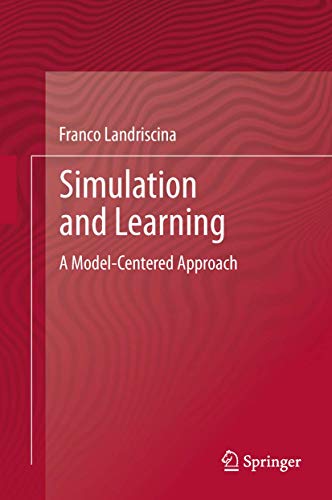
The main idea of this book is that to comprehend the instructional potential of simulation and to design effective simulation-based learning environments, one has to consider both what happens inside the computer and inside the students' minds. The framework adopted to do this is model-centered learning, in which simulation is seen as particularly effective when learning requires a restructuring of the individual mental models of the students, as in conceptual change. Mental models are by themeselves simulations, and thus simulation models can extend our biological capacity to carry out simulative reasoning. For this reason, recent approaches in cognitive science like embodied cognition and the extended mind hypothesis are also considered in the book.. A conceptual model called the “epistemic simulation cycle” is proposed as a blueprint for the comprehension of the cognitive activies involved in simulation-based learning and for instructional design.
"Sinopsis" puede pertenecer a otra edición de este libro.
De la contraportada
This book conveys the incredible instructional potential of simulation as a modality of education and provides guidelines for the design of effective simulation-based learning environments. The framework of the book consists of model-centered learning---learning that requires a restructuring of individual mental models utilized by both students and teachers.
Simulation models extend our biological capacity to carry out simulative reasoning. Recent approaches to mental modeling, such as embodied cognition and the extended mind hypothesis are also considered in the book, which relies heavily on recent advances in cognitive science.
A conceptual model called the “epistemic simulation cycle” is proposed as a blueprint for the comprehension of the cognitive activities involved in simulation-based learning and for instructional design.
"Sobre este título" puede pertenecer a otra edición de este libro.
Resultados de la búsqueda para Simulation and Learning: A Model-Centered Approach

Imagen de archivo
Landriscina:Simulation and Learning (eng)
Impresión bajo demandaLibrería: Brook Bookstore On Demand, Napoli, NA, Italia
Calificación del vendedor: 5 de 5 estrellas

Condición: new. Questo è un articolo print on demand. Nº de ref. del artículo: 8560c29163619511046db0521a027ec1
Comprar nuevo
EUR 86,24
Envío por EUR 6,80
Se envía de Italia a Estados Unidos de America
Se envía de Italia a Estados Unidos de America
Cantidad disponible: Más de 20 disponibles
Imagen de archivo
Simulation and Learning: A Model-Centered Approach
Librería: Ria Christie Collections, Uxbridge, Reino Unido
Calificación del vendedor: 5 de 5 estrellas
Condición: New. In English. Nº de ref. del artículo: ria9781461419532_new
Comprar nuevo
EUR 116,14
Envío por EUR 13,55
Se envía de Reino Unido a Estados Unidos de America
Se envía de Reino Unido a Estados Unidos de America
Cantidad disponible: 1 disponibles
Imagen del vendedor
Simulation and Learning
Publicado por
Springer New York Mrz 2013, 2013
ISBN 10: 1461419530
ISBN 13: 9781461419532
Nuevo
Tapa dura
Librería: BuchWeltWeit Ludwig Meier e.K., Bergisch Gladbach, Alemania
Calificación del vendedor: 5 de 5 estrellas
Buch. Condición: Neu. This item is printed on demand - it takes 3-4 days longer - Neuware -The main idea of this book is that to comprehend the instructional potential of simulation and to design effective simulation-based learning environments, one has to consider both what happens inside the computer and inside the students' minds. The framework adopted to do this is model-centered learning, in which simulation is seen as particularly effective when learning requires a restructuring of the individual mental models of the students, as in conceptual change. Mental models are by themeselves simulations, and thus simulation models can extend our biological capacity to carry out simulative reasoning. For this reason, recent approaches in cognitive science like embodied cognition and the extended mind hypothesis are also considered in the book. A conceptual model called the 'epistemic simulation cycle' is proposed as a blueprint for the comprehension of the cognitive activies involved in simulation-based learning and for instructional design. 256 pp. Englisch, Italienisch. Nº de ref. del artículo: 9781461419532
Comprar nuevo
EUR 106,99
Envío por EUR 23,00
Se envía de Alemania a Estados Unidos de America
Se envía de Alemania a Estados Unidos de America
Cantidad disponible: 2 disponibles
Imagen del vendedor
Simulation and Learning : A Model-Centered Approach
Librería: GreatBookPrices, Columbia, MD, Estados Unidos de America
Calificación del vendedor: 5 de 5 estrellas
Condición: New. Nº de ref. del artículo: 14215356-n
Comprar nuevo
EUR 133,13
Envío por EUR 2,37
Se envía dentro de Estados Unidos de America
Se envía dentro de Estados Unidos de America
Cantidad disponible: 15 disponibles
Imagen de archivo
Simulation and Learning: A Model-Centered Approach (English and Italian Edition)
Impresión bajo demandaLibrería: Revaluation Books, Exeter, Reino Unido
Calificación del vendedor: 5 de 5 estrellas
Hardcover. Condición: Brand New. 1st blg edition. 250 pages. 9.50x6.50x0.50 inches. In Stock. This item is printed on demand. Nº de ref. del artículo: __1461419530
Comprar nuevo
EUR 122,74
Envío por EUR 15,00
Se envía de Reino Unido a Estados Unidos de America
Se envía de Reino Unido a Estados Unidos de America
Cantidad disponible: 1 disponibles
Imagen del vendedor
Simulation and Learning : A Model-Centered Approach
Librería: GreatBookPricesUK, Woodford Green, Reino Unido
Calificación del vendedor: 5 de 5 estrellas
Condición: New. Nº de ref. del artículo: 14215356-n
Comprar nuevo
EUR 124,17
Envío por EUR 18,00
Se envía de Reino Unido a Estados Unidos de America
Se envía de Reino Unido a Estados Unidos de America
Cantidad disponible: Más de 20 disponibles
Imagen de archivo
Simulation and Learning: A Model-Centered Approach
Librería: Chiron Media, Wallingford, Reino Unido
Calificación del vendedor: 5 de 5 estrellas
Hardcover. Condición: New. Brand new book, sourced directly from publisher. Dispatch time is 24-48 hours from our warehouse. Book will be sent in robust, secure packaging to ensure it reaches you securely. Nº de ref. del artículo: 6666-GRD-9781461419532
Comprar nuevo
EUR 142,33
Envío por EUR 7,79
Se envía de Reino Unido a Estados Unidos de America
Se envía de Reino Unido a Estados Unidos de America
Cantidad disponible: 1 disponibles
Imagen del vendedor
Simulation and Learning : A Model-Centered Approach
Librería: AHA-BUCH GmbH, Einbeck, Alemania
Calificación del vendedor: 5 de 5 estrellas
Buch. Condición: Neu. Druck auf Anfrage Neuware - Printed after ordering - The main idea of this book is that to comprehend the instructional potential of simulation and to design effective simulation-based learning environments, one has to consider both what happens inside the computer and inside the students' minds. The framework adopted to do this is model-centered learning, in which simulation is seen as particularly effective when learning requires a restructuring of the individual mental models of the students, as in conceptual change. Mental models are by themeselves simulations, and thus simulation models can extend our biological capacity to carry out simulative reasoning. For this reason, recent approaches in cognitive science like embodied cognition and the extended mind hypothesis are also considered in the book. A conceptual model called the 'epistemic simulation cycle' is proposed as a blueprint for the comprehension of the cognitive activies involved in simulation-based learning and for instructional design. Nº de ref. del artículo: 9781461419532
Comprar nuevo
EUR 119,40
Envío por EUR 35,00
Se envía de Alemania a Estados Unidos de America
Se envía de Alemania a Estados Unidos de America
Cantidad disponible: 1 disponibles
Imagen del vendedor
Simulation and Learning
Librería: moluna, Greven, Alemania
Calificación del vendedor: 5 de 5 estrellas
Gebunden. Condición: New. Emphasizes the connection between simulation and mental process Provides in-depth analysis of the relationships between simulation and mental models Demonstrates ways that simulation can be used support conceptual change Connects sim. Nº de ref. del artículo: 4197293
Comprar nuevo
EUR 106,22
Envío por EUR 48,99
Se envía de Alemania a Estados Unidos de America
Se envía de Alemania a Estados Unidos de America
Cantidad disponible: 1 disponibles
Imagen de archivo
Simulation and Learning
Librería: Books Puddle, Woodside, NY, Estados Unidos de America
Calificación del vendedor: 4 de 5 estrellas

Condición: New. pp. 256. Nº de ref. del artículo: 2651416949
Comprar nuevo
EUR 161,65
Envío por EUR 3,58
Se envía dentro de Estados Unidos de America
Se envía dentro de Estados Unidos de America
Cantidad disponible: 4 disponibles