
Artículos relacionados a Water Resources and Control Processes: Volume 4 (Handbook...
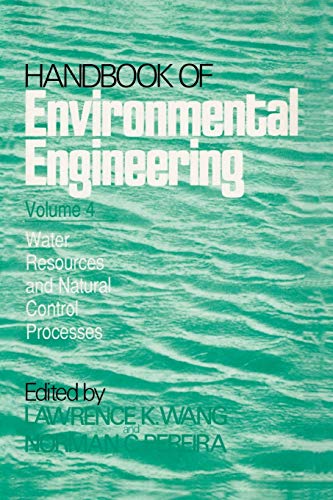
Water Resources and Control Processes: Volume 4 (Handbook of Environmental Engineering) - Tapa blanda
Sinopsis
The past few years have seen the emergence of a growing, widespread desire in this country, and indeed everywhere, that positive actions be taken to restore the quality of our environment, and to protect it from the degrading effects of all forms of pollution-air, noise, solid waste, and water. Since pollution is a direct or indirect consequence of waste, if there is no waste, there can be no pollution, and the seemingly idealistic demand for "zero discharge" can be construed as a demand for zero waste. However, as long as there is waste, we can only attempt to abate the consequent pollution by converting it to a less noxious form. In those instances in which a particular type of pollution has been recognized, three major questions usually arise: (1) How serious is the pollution? (2) Is the technology to abate it available? and (3) Do the costs of abatement justify the degree of abatement achieved? The principal intention of this series of books on environmental engineering is to help the reader formu late useful answers to the second and third of these questions, i. e. , to outline the best currently available engineering solutions, and to examine their costs in the light of the real level of benefits afforded.
"Sinopsis" puede pertenecer a otra edición de este libro.
Reseña del editor
The past few years have seen the emergence of a growing, widespread desire in this country, and indeed everywhere, that positive actions be taken to restore the quality of our environment, and to protect it from the degrading effects of all forms of pollution-air, noise, solid waste, and water. Since pollution is a direct or indirect consequence of waste, if there is no waste, there can be no pollution, and the seemingly idealistic demand for "zero discharge" can be construed as a demand for zero waste. However, as long as there is waste, we can only attempt to abate the consequent pollution by converting it to a less noxious form. In those instances in which a particular type of pollution has been recognized, three major questions usually arise: (1) How serious is the pollution? (2) Is the technology to abate it available? and (3) Do the costs of abatement justify the degree of abatement achieved? The principal intention of this series of books on environmental engineering is to help the reader formu late useful answers to the second and third of these questions, i. e. , to outline the best currently available engineering solutions, and to examine their costs in the light of the real level of benefits afforded.
"Sobre este título" puede pertenecer a otra edición de este libro.
Resultados de la búsqueda para Water Resources and Control Processes: Volume 4 (Handbook...

Imagen de archivo
Water Resources and Control Processes (eng)
Impresión bajo demandaLibrería: Brook Bookstore On Demand, Napoli, NA, Italia
Calificación del vendedor: 5 de 5 estrellas

Condición: new. Questo è un articolo print on demand. Nº de ref. del artículo: ONZXACOJM4
Comprar nuevo
EUR 86,24
Envío por EUR 8,00
Se envía de Italia a Estados Unidos de America
Se envía de Italia a Estados Unidos de America
Cantidad disponible: Más de 20 disponibles
Imagen de archivo
Water Resources and Control Processes: Volume 4 (Handbook of Environmental Engineering)
Librería: California Books, Miami, FL, Estados Unidos de America
Calificación del vendedor: 4 de 5 estrellas

Condición: New. Nº de ref. del artículo: I-9781461291770
Comprar nuevo
EUR 118,55
Gastos de envío gratis
Se envía dentro de Estados Unidos de America
Se envía dentro de Estados Unidos de America
Cantidad disponible: Más de 20 disponibles
Imagen de archivo
Water Resources and Control Processes: Volume 4 (Handbook of Environmental Engineering, 4)
Librería: Ria Christie Collections, Uxbridge, Reino Unido
Calificación del vendedor: 5 de 5 estrellas
Condición: New. In English. Nº de ref. del artículo: ria9781461291770_new
Comprar nuevo
EUR 116,44
Envío por EUR 13,17
Se envía de Reino Unido a Estados Unidos de America
Se envía de Reino Unido a Estados Unidos de America
Cantidad disponible: Más de 20 disponibles
Imagen del vendedor
Water Resources and Control Processes
Publicado por
Humana Press, Humana Press Sep 2011, 2011
ISBN 10: 1461291771
ISBN 13: 9781461291770
Nuevo
Taschenbuch
Librería: BuchWeltWeit Ludwig Meier e.K., Bergisch Gladbach, Alemania
Calificación del vendedor: 5 de 5 estrellas
Taschenbuch. Condición: Neu. This item is printed on demand - it takes 3-4 days longer - Neuware -The past few years have seen the emergence of a growing, widespread desire in this country, and indeed everywhere, that positive actions be taken to restore the quality of our environment, and to protect it from the degrading effects of all forms of pollution-air, noise, solid waste, and water. Since pollution is a direct or indirect consequence of waste, if there is no waste, there can be no pollution, and the seemingly idealistic demand for 'zero discharge' can be construed as a demand for zero waste. However, as long as there is waste, we can only attempt to abate the consequent pollution by converting it to a less noxious form. In those instances in which a particular type of pollution has been recognized, three major questions usually arise: (1) How serious is the pollution (2) Is the technology to abate it available and (3) Do the costs of abatement justify the degree of abatement achieved The principal intention of this series of books on environmental engineering is to help the reader formu late useful answers to the second and third of these questions, i. e. , to outline the best currently available engineering solutions, and to examine their costs in the light of the real level of benefits afforded. 520 pp. Englisch. Nº de ref. del artículo: 9781461291770
Comprar nuevo
EUR 106,99
Envío por EUR 23,00
Se envía de Alemania a Estados Unidos de America
Se envía de Alemania a Estados Unidos de America
Cantidad disponible: 2 disponibles
Imagen de archivo
Water Resources and Control Processes
Librería: Kennys Bookshop and Art Galleries Ltd., Galway, GY, Irlanda
Calificación del vendedor: 5 de 5 estrellas
Condición: New. Editor(s): Wang, Lawrence K.; Pereira, Norman C. Series: Handbook of Environmental Engineering. Num Pages: 496 pages, biography. BIC Classification: TQ. Category: (G) General (US: Trade). Dimension: 235 x 155 x 27. Weight in Grams: 789. . 2011. Softcover reprint of the original 1st ed. 1986. Paperback. . . . . Nº de ref. del artículo: V9781461291770
Comprar nuevo
EUR 131,73
Envío por EUR 9,50
Se envía de Irlanda a Estados Unidos de America
Se envía de Irlanda a Estados Unidos de America
Cantidad disponible: 15 disponibles
Imagen del vendedor
Water Resources and Control Processes
Impresión bajo demandaLibrería: moluna, Greven, Alemania
Calificación del vendedor: 5 de 5 estrellas
Condición: New. Dieser Artikel ist ein Print on Demand Artikel und wird nach Ihrer Bestellung fuer Sie gedruckt. The past few years have seen the emergence of a growing, widespread desire in this country, and indeed everywhere, that positive actions be taken to restore the quality of our environment, and to protect it from the degrading effects of all forms of polluti. Nº de ref. del artículo: 4191706
Comprar nuevo
EUR 92,27
Envío por EUR 48,99
Se envía de Alemania a Estados Unidos de America
Se envía de Alemania a Estados Unidos de America
Cantidad disponible: Más de 20 disponibles
Imagen de archivo
Water Resources and Control Processes
Librería: Books Puddle, New York, NY, Estados Unidos de America
Calificación del vendedor: 4 de 5 estrellas
Condición: New. pp. 520. Nº de ref. del artículo: 2697793974
Comprar nuevo
EUR 150,47
Envío por EUR 3,48
Se envía dentro de Estados Unidos de America
Se envía dentro de Estados Unidos de America
Cantidad disponible: 4 disponibles
Imagen de archivo
Water Resources and Control Processes
Impresión bajo demandaLibrería: Majestic Books, Hounslow, Reino Unido
Calificación del vendedor: 4 de 5 estrellas
Condición: New. Print on Demand pp. 520 49:B&W 6.14 x 9.21 in or 234 x 156 mm (Royal 8vo) Perfect Bound on White w/Gloss Lam. Nº de ref. del artículo: 94603369
Comprar nuevo
EUR 153,93
Envío por EUR 7,58
Se envía de Reino Unido a Estados Unidos de America
Se envía de Reino Unido a Estados Unidos de America
Cantidad disponible: 4 disponibles
Imagen de archivo
Water Resources and Control Processes
Impresión bajo demandaLibrería: Biblios, Frankfurt am main, HESSE, Alemania
Calificación del vendedor: 4 de 5 estrellas
Condición: New. PRINT ON DEMAND pp. 520. Nº de ref. del artículo: 1897793980
Comprar nuevo
EUR 154,45
Envío por EUR 9,95
Se envía de Alemania a Estados Unidos de America
Se envía de Alemania a Estados Unidos de America
Cantidad disponible: 4 disponibles
Imagen del vendedor
Water Resources and Control Processes
Publicado por
Humana Press, Humana Sep 2011, 2011
ISBN 10: 1461291771
ISBN 13: 9781461291770
Nuevo
Taschenbuch
Librería: buchversandmimpf2000, Emtmannsberg, BAYE, Alemania
Calificación del vendedor: 5 de 5 estrellas
Taschenbuch. Condición: Neu. This item is printed on demand - Print on Demand Titel. Neuware -The past few years have seen the emergence of a growing, widespread desire in this country, and indeed everywhere, that positive actions be taken to restore the quality of our environment, and to protect it from the degrading effects of all forms of pollution-air, noise, solid waste, and water. Since pollution is a direct or indirect consequence of waste, if there is no waste, there can be no pollution, and the seemingly idealistic demand for 'zero discharge' can be construed as a demand for zero waste. However, as long as there is waste, we can only attempt to abate the consequent pollution by converting it to a less noxious form. In those instances in which a particular type of pollution has been recognized, three major questions usually arise: (1) How serious is the pollution (2) Is the technology to abate it available and (3) Do the costs of abatement justify the degree of abatement achieved The principal intention of this series of books on environmental engineering is to help the reader formu late useful answers to the second and third of these questions, i. e. , to outline the best currently available engineering solutions, and to examine their costs in the light of the real level of benefits afforded.Springer-Verlag GmbH, Tiergartenstr. 17, 69121 Heidelberg 520 pp. Englisch. Nº de ref. del artículo: 9781461291770
Comprar nuevo
EUR 106,99
Envío por EUR 60,00
Se envía de Alemania a Estados Unidos de America
Se envía de Alemania a Estados Unidos de America
Cantidad disponible: 1 disponibles