
Artículos relacionados a Forensic Applications of High Performance Liquid Chromatogra...
Forensic Applications of High Performance Liquid Chromatography: 1 (Analytical Concepts in Forensic Chemistry) - Tapa blanda
Libro 2 de 2: Analytical Concepts in Forensic Chemistry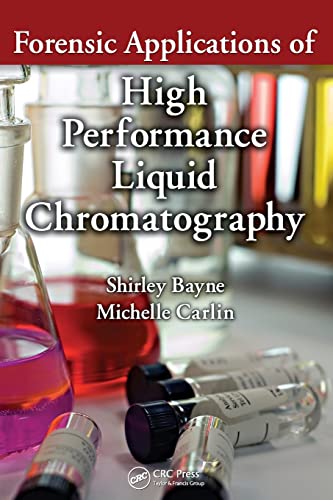
Sinopsis
Chromatography has many roles in forensic science, ranging from toxicology to environmental analysis. In particular, high-performance liquid chromatography (HPLC) is a primary method of analysis in many types of laboratories. Maintaining a balance between practical solutions and the theoretical considerations involved in HPLC analysis, Forensic Applications of High Performance Liquid Chromatography uses real-life examples likely to be found within a forensic science laboratory to explain HPLC from a forensic perspective.
Focusing chiefly on the reverse phase HPLC mode of separation, this volume examines:
- The history of HPLC and the theory behind the separation process
- The requirements for successful analysis and best practice tips
- The modes of separation and detection most appropriate for forensic science applications
- HPLC method development and evaluation
- The quality aspects of laboratory operation
- Troubleshooting HPLC systems and analyses
- Applications of HPLC within the field of forensic science
Designed as a textbook for university students studying analytical chemistry, applied chemistry, forensic chemistry, or other courses with an element of HPLC within the course curriculum, this volume is also an invaluable guide for those in the early stages of their forensic analysis careers.
An instructor’s manual with lecture slides, test bank, objectives, and exercises is available with qualifying course adoption
"Sinopsis" puede pertenecer a otra edición de este libro.
Acerca del autor
Shirley Bayne, Michelle Carlin
De la contraportada
Maintaining a balance between practical solutions and the theoretical considerations involved in HPLC analysis, this volume uses real-life examples likely to be found within a forensic science laboratory to explain HPLC from a forensic science perspective. Focusing on reverse phase HPLC mode of separation, each chapter includes a key point summary, a series of questions (where appropriate) and a list of books and journal articles to give further insight into the topics covered. The text is appropriate for first time users as well as those pursuing post-graduate study or in the early stages of their forensic analysis career.
"Sobre este título" puede pertenecer a otra edición de este libro.
Resultados de la búsqueda para Forensic Applications of High Performance Liquid Chromatogra...

Imagen de archivo
Forensic Applications Of High Performance Liquid Chromatography (Pb 2010)
Librería: Basi6 International, Irving, TX, Estados Unidos de America
Calificación del vendedor: 5 de 5 estrellas

Condición: Brand New. New. US edition. Expediting shipping for all USA and Europe orders excluding PO Box. Excellent Customer Service. Nº de ref. del artículo: ABEOCT25-158601
Comprar nuevo
EUR 71,55
Gastos de envío gratis
Se envía dentro de Estados Unidos de America
Se envía dentro de Estados Unidos de America
Cantidad disponible: 8 disponibles
Imagen de archivo
Forensic Applications of High Performance Liquid Chromatography
Publicado por
Taylor & Francis Group, 2010
ISBN 10: 1420091913
ISBN 13: 9781420091915
Nuevo
Tapa blanda
Librería: Books Puddle, New York, NY, Estados Unidos de America
Calificación del vendedor: 4 de 5 estrellas

Condición: New. pp. 276. Nº de ref. del artículo: 26611299
Comprar nuevo
EUR 74,90
Envío por EUR 3,46
Se envía dentro de Estados Unidos de America
Se envía dentro de Estados Unidos de America
Cantidad disponible: 4 disponibles
Imagen del vendedor
Forensic Applications of High Performance Liquid Chromatography
Librería: GreatBookPrices, Columbia, MD, Estados Unidos de America
Calificación del vendedor: 5 de 5 estrellas
Condición: New. Nº de ref. del artículo: 6751982-n
Comprar nuevo
EUR 76,10
Envío por EUR 2,29
Se envía dentro de Estados Unidos de America
Se envía dentro de Estados Unidos de America
Cantidad disponible: 10 disponibles
Imagen de archivo
Forensic Applications of High Performance Liquid Chromatography
Publicado por
Taylor & Francis Group, 2010
ISBN 10: 1420091913
ISBN 13: 9781420091915
Nuevo
Tapa blanda
Librería: Majestic Books, Hounslow, Reino Unido
Calificación del vendedor: 4 de 5 estrellas
Condición: New. pp. 276 4 page color insert This item is printed on demand. Nº de ref. del artículo: 8318012
Comprar nuevo
EUR 73,39
Envío por EUR 7,59
Se envía de Reino Unido a Estados Unidos de America
Se envía de Reino Unido a Estados Unidos de America
Cantidad disponible: 4 disponibles
Imagen de archivo
Forensic Applications of High Performance Liquid Chromatography
Publicado por
Taylor & Francis Group, 2010
ISBN 10: 1420091913
ISBN 13: 9781420091915
Nuevo
Tapa blanda
Librería: Biblios, Frankfurt am main, HESSE, Alemania
Calificación del vendedor: 4 de 5 estrellas
Condición: New. pp. 276. Nº de ref. del artículo: 18611305
Comprar nuevo
EUR 74,84
Envío por EUR 9,95
Se envía de Alemania a Estados Unidos de America
Se envía de Alemania a Estados Unidos de America
Cantidad disponible: 4 disponibles
Imagen del vendedor
Forensic Applications of High Performance Liquid Chromatography
Librería: GreatBookPricesUK, Woodford Green, Reino Unido
Calificación del vendedor: 5 de 5 estrellas
Condición: New. Nº de ref. del artículo: 6751982-n
Comprar nuevo
EUR 79,43
Envío por EUR 17,51
Se envía de Reino Unido a Estados Unidos de America
Se envía de Reino Unido a Estados Unidos de America
Cantidad disponible: 10 disponibles
Imagen de archivo
Forensic Applications of High Performance Liquid Chromatography
Impresión bajo demandaLibrería: PBShop.store UK, Fairford, GLOS, Reino Unido
Calificación del vendedor: 5 de 5 estrellas
PAP. Condición: New. New Book. Delivered from our UK warehouse in 4 to 14 business days. THIS BOOK IS PRINTED ON DEMAND. Established seller since 2000. Nº de ref. del artículo: IQ-9781420091915
Comprar nuevo
EUR 101,37
Envío por EUR 4,86
Se envía de Reino Unido a Estados Unidos de America
Se envía de Reino Unido a Estados Unidos de America
Cantidad disponible: 15 disponibles
Imagen de archivo
Forensic Applications of High Performance Liquid Chromatography (Analytical Concepts in Forensic Chemistry)
Librería: California Books, Miami, FL, Estados Unidos de America
Calificación del vendedor: 4 de 5 estrellas
Condición: New. Nº de ref. del artículo: I-9781420091915
Comprar nuevo
EUR 108,92
Gastos de envío gratis
Se envía dentro de Estados Unidos de America
Se envía dentro de Estados Unidos de America
Cantidad disponible: Más de 20 disponibles
Imagen de archivo
Forensic Applications of High Performance Liquid Chromatography
Publicado por
Taylor & Francis Inc, 2010
ISBN 10: 1420091913
ISBN 13: 9781420091915
Nuevo
Paperback / softback
Librería: THE SAINT BOOKSTORE, Southport, Reino Unido
Calificación del vendedor: 5 de 5 estrellas
Paperback / softback. Condición: New. This item is printed on demand. New copy - Usually dispatched within 5-9 working days. Nº de ref. del artículo: C9781420091915
Comprar nuevo
EUR 91,12
Envío por EUR 18,39
Se envía de Reino Unido a Estados Unidos de America
Se envía de Reino Unido a Estados Unidos de America
Cantidad disponible: 5 disponibles
Imagen de archivo
Forensic Applications of High Performance Liquid Chromatography
Publicado por
Taylor & Francis Inc, 2010
ISBN 10: 1420091913
ISBN 13: 9781420091915
Nuevo
Paperback / softback
Librería: THE SAINT BOOKSTORE, Southport, Reino Unido
Calificación del vendedor: 5 de 5 estrellas
Paperback / softback. Condición: New. New copy - Usually dispatched within 4 working days. Nº de ref. del artículo: B9781420091915
Comprar nuevo
EUR 91,93
Envío por EUR 17,64
Se envía de Reino Unido a Estados Unidos de America
Se envía de Reino Unido a Estados Unidos de America
Cantidad disponible: 1 disponibles