
Artículos relacionados a The Book Of Men: Eighty of the World's Best Writers...
Sinopsis
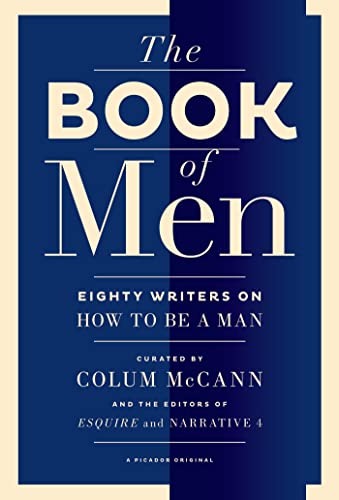
Eighty pieces of short fiction and nonfiction on manhood by some of the world's best writers, presented by Colum McCann, Esquire, and Narrative 4.
To help launch the literary nonprofit Narrative 4, Esquire asked eighty of the world's greatest writers to chip in with a story, all with the title, "How to Be a Man."
The result is The Book of Men, an unflinching investigation into the essence of masculinity.
The Book of Men probes, with the poignant honesty and imagination that only these writers could deliver, the slippery condition of manhood. You will find men striving and searching, learning and failing to learn, triumphing and aspiring; men who are lost and men navigating their way toward redemption. These stories don't just explore what it is to be a man or how to achieve manliness, but ultimately what it is to be a human—with all of its uncertainty, complexity, clumsiness, and beauty.
With contributions from literary luminaries as diverse as the subjects they capture, and curated by the editors of Esquire, National Book Award winner Colum McCann, and Narrative 4, a global nonprofit devoted to using storytelling as a means to empathy, The Book of Men might not teach you how to negotiate a deal or mix a Manhattan, but it does scratch at that most eternal of questions: What is a man?
"Sinopsis" puede pertenecer a otra edición de este libro.
Acerca de los autores
Colum McCann's seven novels and three collections of short stories have been published in over forty languages and received some of the world's most prestigious literary awards and honours, including the National Book Award for his novel Let the Great World Spin in 2009. His novel TransAtlantic was longlisted for the Man Booker Prize in 2013, and his most recent novel, Apeirogon, also longlisted for the Man Booker Prize, is an international bestseller on four continents. colummccann.com
...
Lisa Consiglio is the co-editor of The Book of Men.
Fragmento. © Reproducción autorizada. Todos los derechos reservados.
The Book of Men
Eighty Writers On How To Be A Man
By Colum McCannPicador
Copyright © 2013 Narrative 4
All rights reserved.
ISBN: 978-1-250-04776-2All rights reserved.
Contents
Title Page,
Copyright Notice,
Introduction,
Chimamanda Ngozi Adichie,
Rabih Alameddine,
Kurt Andersen,
Jodi Angel,
Taylor Antrim,
M. C. Armstrong,
Dan Barry,
Gioconda Belli,
John Berger,
Amy Bloom,
Darrell Bourque,
John Boyne,
James Lee Burke,
Gabriel Byrne,
Aifric Campbell,
Ron Carlson,
Bill Cheng,
Scott Cheshire,
Ed Conlon,
Sloane Crosley,
Michael Cunningham,
Roddy Doyle,
Jennifer DuBois,
Geoff Dyer,
Ben Fountain,
Assaf Gavron,
David Gilbert,
Alex Gilvarry,
Philip Gourevitch,
Andrew Sean Greer,
Mohsin Hamid,
Adam Haslett,
Alan Heathcock,
Aleksandar Hemon,
Joe Henry,
Khaled Hosseini,
Bronwen Hruska,
Marlon James,
Bret Anthony Johnston,
Randall Kenan,
Etgar Keret,
William Kittredge,
Nick Laird,
Elinor Lipman,
Vanessa Manko,
Ayana Mathis,
Colum McCann,
Ian McEwan,
Patrick McGrath,
Jon McGregor,
Antonio Monda,
Robert Mooney,
Liz Moore,
Dina Nayeri,
Téa Obreht,
Edna O'Brien,
Joseph O'Connor,
Mary O'Malley,
Michael Parker,
Benjamin Percy,
Jason Porter,
Ron Rash,
Salman Rushdie,
John Burnham Schwartz,
Mona Simpson,
Jessica Soffer,
Rob Spillman,
Matt Sumell,
Manil Suri,
Daniel Torday,
Monique Truong,
Luis Alberto Urrea,
Juan Gabriel Vásquez,
Daniel Wallace,
Jess Walter,
Josh Weil,
Terry Tempest Williams,
John Wray,
Tiphanie Yanique,
Mario Alberto Zambrano,
About the Editors,
About Esquire,
About Narrative 4,
Copyright,
CHAPTER 1
Chimamanda Ngozi Adichie
Our Sundays always tasted like peppers that flared hot in the rice and soups and stews. We sat in the kitchen, knees fresh from pews, and watched our houseboy pounding them in pairs. He held the phallic pestle — thump thump thump — while we coughed and spluttered with watery eyes. Nobody tastes them raw, it wasn't wise. But we did, and then we'd shout and jump to the fridge for ice.
My mom sang an Igbo song about strong women. It wasn't too trite, but it told of places she didn't know, streams, goddesses, women who couldn't read. Women like that would squeeze peppers, I heard, and force them between their daughters' legs —"so they'll stop following boys." But Eros was good for sons. No peppers to curb sons' paths to manhood.
Nigerian author CHIMAMANDA NGOZI ADICHIE, who received a 2008 MacArthur Fellowship, is the author of Purple Hibiscus, Half of a Yellow Sun, and most recently, Americanah.
CHAPTER 2Rabih Alameddine
The beating of your heart kept me awake last night. For months after you died I kept seeing you everywhere, hearing you, your voice, sonorous, throaty, reverberating in my ear. I wasn't crazy, I knew you were dead, I buried you after all, I mean, I burned you, cremation was what they called it. But I kept seeing you, doing dishes in the kitchen with your back to me, I'd call your name as you stacked each plate in our plastic dish rack but you didn't look back and then you were gone in a flash and I was left with nothing, not even an afterimage. I didn't mistake you for anybody, I never saw you in a crowd, thinking someone else was you, no, it was never like that. I would never mistake you. I saw you in the hallway, in our hallway, under the Turkish lamp we brought back from Istanbul when we were there so long ago, must have been 1987, before the virus began to scour us. The disease killed so much within us. While I was alive I loved you while you were alive and I love you now but I forgot for a while. Forgive me, I couldn't go on obsessing about you all the time so you disappeared or hid deep in my lakes, as if I bleached my memory, but you came back, you know, like a fungal infection, remember thrush, the furry white stains that attacked your tongue and we couldn't get rid of them and you hated it and I hated it and you wanted it over. You'd been gone for decades, why now, why infect my dreams now? What flood was this? I was buying groceries yesterday morning where a young Third Worlder mopped the floor, back and forth, back and forth, around a yellow sign that announced PISO MOJADO, the mephitic aroma of disinfectant assaulted my senses, and you jumped the levee of my memory, I thought of you right then. Proust might have had his madeleine, but bleach was all ours, my darling, all ours. The tomatoes didn't look too good and I just went home. I'd been a coward, I was scared, do notice I said scared and not frightened, you taught me the difference, you said, Children get scared, men might feel afraid, might even feel terror, but men don't get scared. I'd been so lonely since you died and left me, you left me roofless in a downpour. You gripped the bedrail when you left and I had to pry your fingers one by one, it took fifty-seven minutes because my hands were shaking so much, did you know that? You sincerely believed that the distance between you and me would one day disappear. You told me I was not my father and you were not him either, but how could we not be, how could we not be? You held out your arms and said, Join me, but I couldn't, and you said, Let me love you, and I couldn't because you wanted so to be so close, and you held out the fireman's net and said, Jump, and I couldn't, I felt the fall was much too great, I chose to go back into the fire because that was what men did. I could hardly bear the beauty of you. You said, I liked it when you doze on my chest, but I said, The hair on your chest irritated my cheeks and made it difficult to sleep. You were gone for so long and I moved along and everyone told me I was alive, but last night, in my bed, each time my ear touched the single pillow I heard the beating of your heart once more. Once more, please. Once more. Once more. Once more. My heart is restless until it rests in thee.
Lebanese writer and painter RABIH ALAMEDDINE is the author of Koolaids; I, the Divine; and most recently, An Unnecessary Woman.
CHAPTER 3Kurt Andersen
More than any other church in Lincoln, St. Mary's was a building people tended to treat as a public space, a general assembly spot for events that weren't christenings, weddings or funerals. That's because it was big and old and downtown, right across K Street from the Nebraska state capitol; because it didn't serve liquor, so you could bring the kids; and because it was Catholic, which in the middle of the twentieth century made it a kind of Switzerland for Protestants — made Lutherans and Methodists and Presbyterians and Baptists more comfortable than they might've been at a Protestant church of a denomination not their own. Thus Lincolnites of all kinds would gather in St. Mary's basement to play bingo, listen to polka bands, watch ventriloquists, whatever.
The day after Thanksgiving in 1952, St. Mary's put on a macaroni buffet dinner and variety show, $1.50 a ticket. It sold out. The main attraction was an actual celebrity, a young guy who'd hosted his own afternoon TV show up in Omaha for a couple of years since graduating from the University of Nebraska.
Kids made up half the audience, including exactly one who'd come all by himself, a wiry little sixteen-year-old radiating eagerness as he rushed to get a chair in the front row. A few months earlier, this boy had won the Best New Performer award at the national magicians' convention in St. Louis. The guy about to appear onstage was pretty much exactly the man he wanted to become. A Nebraskan who'd graduated from college and was plainly on his way to a coast; a funny magician; and a TV star, local TV, but still. Plus — whoa! — the mimeographed program said he'd been a champion boxer in the Navy during the war; the kid, a Lincoln High junior people called Dick, was a gymnastics star.
As he settled in, preparing to take notes, he didn't notice the boy three chairs away in the front row, a Lincoln High freshman on a rare night out with his big family, celebrating his fourteenth birthday. They were up front because poor Charlie, in addition to his bowed legs and funny way of pronouncing S, had terrible nearsightedness.
Charlie glared at the twerp upperclassman he recognized from the school gym, saw his notebook and ballpoint, and thought, Fuckin' Gallant: a popular girl in his class this fall had started calling Charlie Goofus, the bad boy opposite to goody-goody Gallant in the Highlights for Children comic strip. The show began, and when the Omaha TV guy bounced onstage, Charlie sort of hated him, and envied his easy smile, his natural cool, and his fame.
Another kid named Richard, a sixth grader, was in the fourth row with his parents and little brother and sister. His mom had organized the outing: she worked across the street for the state health department and had been a local celebrity herself, before the kids came along, playing on a semi-pro women's championship softball team three years running. Little Dicky, intelligent but literal-minded and suspicious, was frowning as usual: he didn't get the joke the entertainer had just told about Adlai Stevenson losing the presidential election three weeks earlier, or understand why his dad, a federal bureaucrat who'd voted for Stevenson, was laughing out loud.
Laughing even harder were four people sitting together in the sixth row: the former state attorney general, his former–social worker wife, and their twenty-four-year-old lawyer son, Ted, back home from Washington, D.C., for the holiday weekend with his wife. The father, still chuckling, whispered to his son — asked if he'd ever seen Carson perform when they were at the university together, to which Ted answered no, but that he reminded him a little of his new boss, the freshman senator from Massachusetts.
The biggest, squawkiest laugh at the political joke came from near the back of the room, from another recent University of Nebraska graduate, another son of a maverick Nebraska Republican politician, another young up-and-comer who'd spent time on the East Coast trying to make his mark. He worked as a stockbroker for his dad in Omaha, but he'd recently bought a gas station as an investment and had driven down to Lincoln for the night to look at another small business that a college friend, a member of the St. Mary's congregation, wanted him to go in on. He didn't drink, and the prospect of such a cheap night on the town —"Dinner and a show for a buck and a half?"— had been irresistible.
In other words, of the 10,287 males between the ages of six and twentyseven in Lincoln, Nebraska, that night in 1952, thirty-seven were in the basement of St. Mary's Catholic Church, full of macaroni and Jell-O salad, laughing and applauding at jokes and tricks. And six of those thirty-seven became famous men. Which is to say, the magician and comedian/talk-show host Johnny Carson was onstage performing for the magician and future comedian/talk-show host Dick Cavett; Charles Starkweather, the future mass murderer; Dick Cheney, the future vice-president of the United States; Theodore Sorensen, the future special counselor and speechwriter to President Kennedy; and Warren Buffet, the future billionaire.
And the magic show was excellent.
KURT ANDERSEN, the host and co-creator of Studio 360, is the author of Heyday, Turn of the Century, and most recently, True Believers.
CHAPTER 4Jodi Angel
By chance we caught him flat-footed, jumped him in the park. We were drunk as fuck in my father's Chevy; Richie's gap-toothed girlfriend in the backseat bitching that Bobby couldn't steal her dog just because they busted up.
"That's Bobby," she shouted. "With my fucking dog."
Bobby was crying even before I got the bat.
Later, in the backseat, Richie's gap-toothed girlfriend underneath me grinding hard-angled hips, she whispered, "That wasn't my dog."
I covered her mouth with my hand.
JODI ANGEL is the author of the short story collection You Only Get Letters from Jail.
CHAPTER 5Taylor Antrim
The guy came at her with a chef's knife. She shot him in the face. Perfect, I thought, returning the decade-old news clips to her underwear drawer. Because I'm done with nice girls. Because I feel guilty all the time.
I'm not sorry, she likes to say. Which — let me tell you: Makes me want to wrap her up.
She hooks a finger in my belt loop when she wants to get down. She forms plans of her own three nights a week. She has this puppy that she loves so much more than she'll love any human being, ever.
She was drunk on the night in question, but no charges. Self-defense. I'm not sorry. I can't say it the way she does.
I find her watching war coverage. Fallujah. Tal Afar. Casualty reports. Guys my age. I say, Krista. Krista.
I know you know, she tells me over dinner. And because I'm on my third beer and have no way of covering even half the check, I try a stupid joke. I hold up my hands. Don't shoot.
She's cool about it though. Sips her club soda, fixes me with those slate-blue eyes, makes me feel younger and even more broke than I am.
It is just part-time clerical work at a real estate firm, but I commit a filing mistake and try Krista's line on my boss and that's basically that.
Is it her fault? I whisper the question into an empty room. I turn her TV on and it's CNN. Buzz-cut dudes with wraparound shades playing Halo in a desert camp.
I deserve an explanation, I say when she gets home.
She drops her keys on the table. The puppy, who I haven't walked, is leaping into the air.
She takes me seriously, which is more than my bluster deserves.
It was his gun, she says.
The puppy is turning circles by the door. I make a show of being unsatisfied, thinking: There are at least six girls in town I should apologize to. Plus my old teachers, my coach at Westside. My boss. Mom. Dad.
I used to think it made me who I am, this wanting to apologize.
I move out. I get a job running the register at the Quik Mart. The Navy recruitment office is right next door. The posters are like celestial beacons. FIND YOUR MISSION. YOUR PATH STARTS HERE. STEP UP.
I do the unforgivable thing. I take the puppy. I want her to tell me how to act, what to do, how to be. Because the puppy loves me.
No — not me, I realize. She curls and cuddles and methodically licks my hand. She loves the man standing here.
TAYLOR ANTRIM is a senior editor at Vogue and the author of The Headmaster Ritual.
CHAPTER 6M. C. Armstrong
It was the hottest summer on record, the streets of August usually empty for fear of the heat. But as he traveled north on Haifa, Faris saw a mess up ahead on the bridge, a cluster of buses, the scorched faces of beggars and protesters. To his right was the swampy crawl and the dead fish steam of the Tigris River, or what was left of it. Across the bridge was the Palestine Hotel where President Hussein was scheduled to give her speech in an hour.
"Suicide just selling a soda out here," said Donovan Hunt from the backseat.
"Out there, you mean," said Faris.
Hunt tapped at the tinted window with his wedding ring. "Right," he said. "Out there."
Hunt was what you call a cold fish, a forty-year-old businessman with a dark mustache and extremely white teeth, the sort of guy who gave you the impression he wanted you to know that not only was his smile the product of money, but so was everything else, so you'd better get on board if you wanted to keep his valuable attention. Hunt wasn't Faris's favorite client, but he was far from unusual. Hunt worked for the investment firm Mitchell Wesson. His life was driven by money. In other words: a typical American man.
Faris turned right onto the bridge, took a deep frustrated breath, and came to a stop. This is the story of heat. When the weather is hot, most people take to the shade. But still, even that late in the game, one could still see the few who cared, the ones who greet heat with heat, the protesters lining the bridge, the children of the revolution in their tattoos and bandannas, American flags burning like semaphores for the stalled traffic, one woman wearing a black bra and a red hijab with a sign that read:
I AM PALESTINE.
"How do they keep getting a boner for the same old story?"
Twenty years earlier, Faris might have thrown his hands off the wheel and argued his way to the bottom of the Tigris with Donovan Hunt. But that was then. A protester slammed a hand against his door, the contact sending an automatic photo to our database.
Faris radioed in:
"Six eight eleven," he said.
This was a coded message, a request for an alternate route for the drive home. Such requests were encrypted for a simple reason: We did not wish to worry the client.
"Hey," Hunt said. "Let's go to Skyhorse for dinner."
Skyhorse was the most decadent gentlemen's club in Baghdad. There were choose-your-own-adventure game rooms. There were rooms with men, rooms with women.
"Need me a Baghdad massage," Hunt said. "My third leg is killing me."
All of a sudden a young girl with spiked hair and a shredded burka poured fluid all over her body, as if a wet T-shirt for the eyes of Hunt, only it wasn't water that revealed her features.
She lit a match to a dollar.
Rarely do you see these people light their faces first. But maybe for the deeply intentioned, this evasion is not about fear so much as effect, for if the anguish of the face can be preserved, then perhaps the symbolic act can maintain a humanity right until the end. She took the burning bill to the hem of her burka.
"Jesus!" Hunt said.
There are photos of Chou Lin, the photographer, capturing everything, which, to me, is the real picture, these men who take pictures of people dying.
(Continues...)
Excerpted from The Book of Men by Colum McCann. Copyright © 2013 Narrative 4. Excerpted by permission of Picador.
All rights reserved. No part of this excerpt may be reproduced or reprinted without permission in writing from the publisher.
Excerpts are provided by Dial-A-Book Inc. solely for the personal use of visitors to this web site.
"Sobre este título" puede pertenecer a otra edición de este libro.
Resultados de la búsqueda para The Book Of Men: Eighty of the World's Best Writers...

Imagen de archivo
The Book of Men: Eighty Writers on How to Be a Man
Librería: World of Books (was SecondSale), Montgomery, IL, Estados Unidos de America
Calificación del vendedor: 5 de 5 estrellas

Condición: Acceptable. Item in acceptable condition! Textbooks may not include supplemental items i.e. CDs, access codes etc. Nº de ref. del artículo: 00100212341
Comprar usado
EUR 6,28
Gastos de envío gratis
Se envía dentro de Estados Unidos de America
Se envía dentro de Estados Unidos de America
Cantidad disponible: 1 disponibles
Imagen de archivo
The Book of Men: Eighty Writers on How to Be a Man
Librería: World of Books (was SecondSale), Montgomery, IL, Estados Unidos de America
Calificación del vendedor: 5 de 5 estrellas
Condición: Good. Item in good condition. Textbooks may not include supplemental items i.e. CDs, access codes etc. Nº de ref. del artículo: 00106501873
Comprar usado
EUR 6,28
Gastos de envío gratis
Se envía dentro de Estados Unidos de America
Se envía dentro de Estados Unidos de America
Cantidad disponible: 1 disponibles
Imagen de archivo
The Book of Men: Eighty Writers on How to Be a Man
Librería: Hawking Books, Edgewood, TX, Estados Unidos de America
Calificación del vendedor: 4 de 5 estrellas

Condición: Very Good. Very Good Condition. Five star seller - Buy with confidence! Nº de ref. del artículo: X1250047765X2
Comprar usado
EUR 6,29
Gastos de envío gratis
Se envía dentro de Estados Unidos de America
Se envía dentro de Estados Unidos de America
Cantidad disponible: 1 disponibles
Imagen de archivo
Book of Men
Publicado por
Picador USA, 2013
ISBN 10: 1250047765
ISBN 13: 9781250047762
Antiguo o usado
Paperback
Librería: ThriftBooks-Dallas, Dallas, TX, Estados Unidos de America
Calificación del vendedor: 5 de 5 estrellas
Paperback. Condición: Very Good. No Jacket. May have limited writing in cover pages. Pages are unmarked. ~ ThriftBooks: Read More, Spend Less. Nº de ref. del artículo: G1250047765I4N00
Comprar usado
EUR 6,41
Gastos de envío gratis
Se envía dentro de Estados Unidos de America
Se envía dentro de Estados Unidos de America
Cantidad disponible: 1 disponibles
Imagen de archivo
Book of Men
Publicado por
Picador USA, 2013
ISBN 10: 1250047765
ISBN 13: 9781250047762
Antiguo o usado
Paperback
Librería: ThriftBooks-Dallas, Dallas, TX, Estados Unidos de America
Calificación del vendedor: 5 de 5 estrellas
Paperback. Condición: Good. No Jacket. Pages can have notes/highlighting. Spine may show signs of wear. ~ ThriftBooks: Read More, Spend Less. Nº de ref. del artículo: G1250047765I3N00
Comprar usado
EUR 6,41
Gastos de envío gratis
Se envía dentro de Estados Unidos de America
Se envía dentro de Estados Unidos de America
Cantidad disponible: 1 disponibles
Imagen de archivo
The Book of Men: Eighty Writers on How to Be a Man
Librería: Half Price Books Inc., Dallas, TX, Estados Unidos de America
Calificación del vendedor: 5 de 5 estrellas
paperback. Condición: Very Good. Connecting readers with great books since 1972! Used books may not include companion materials, and may have some shelf wear or limited writing. We ship orders daily and Customer Service is our top priority! Nº de ref. del artículo: S_428124183
Comprar usado
EUR 3,55
Envío por EUR 3,23
Se envía dentro de Estados Unidos de America
Se envía dentro de Estados Unidos de America
Cantidad disponible: 1 disponibles
Imagen de archivo
Book of Men
Publicado por
Picador USA, 2013
ISBN 10: 1250047765
ISBN 13: 9781250047762
Antiguo o usado
Paperback
Librería: World of Books Inc, Montgomery, IL, Estados Unidos de America
Calificación del vendedor: 2 de 5 estrellas

Paperback. Condición: Fair. Eighty pieces of short fiction and nonfiction on manhood by some of the world's best writers, presented by Colum McCann, Esquire, and Narrative 4. To help launch the literary nonprofit Narrative 4, Esquire asked eighty of the world's greatest writers to chip in with a story, all with the title, "How to Be a Man." The result is The Book of Men, an unflinching investigation into the essence of masculinity. The Book of Men probes, with the poignant honesty and imagination that only these writers could deliver, the slippery condition of manhood. You will find men striving and searching, learning and failing to learn, triumphing and aspiring; men who are lost and men navigating their way toward redemption. These stories don't just explore what it is to be a man or how to achieve manliness, but ultimately what it is to be a human--with all of its uncertainty, complexity, clumsiness, and beauty. With contributions from literary luminaries as diverse as the subjects they capture, and curated by the editors of Esquire, National Book Award winner Colum McCann, and Narrative 4, a global nonprofit devoted to using storytelling as a means to empathy, The Book of Men might not teach you how to negotiate a deal or mix a Manhattan, but it does scratch at that most eternal of questions: What is a man? Nº de ref. del artículo: CIN1250047765A
Comprar usado
EUR 8,06
Gastos de envío gratis
Se envía dentro de Estados Unidos de America
Se envía dentro de Estados Unidos de America
Cantidad disponible: 1 disponibles
Imagen de archivo
The Book of Men: Eighty Writers on How to Be a Man
Librería: HPB-Ruby, Dallas, TX, Estados Unidos de America
Calificación del vendedor: 5 de 5 estrellas
paperback. Condición: Very Good. Connecting readers with great books since 1972! Used books may not include companion materials, and may have some shelf wear or limited writing. We ship orders daily and Customer Service is our top priority! Nº de ref. del artículo: S_449039423
Comprar usado
EUR 4,89
Envío por EUR 3,23
Se envía dentro de Estados Unidos de America
Se envía dentro de Estados Unidos de America
Cantidad disponible: 1 disponibles
Imagen de archivo
The Book of Men: Eighty Writers on How to Be a Man
Librería: HPB Inc., Dallas, TX, Estados Unidos de America
Calificación del vendedor: 5 de 5 estrellas
paperback. Condición: Very Good. Connecting readers with great books since 1972! Used books may not include companion materials, and may have some shelf wear or limited writing. We ship orders daily and Customer Service is our top priority! Nº de ref. del artículo: S_405059384
Comprar usado
EUR 4,89
Envío por EUR 3,23
Se envía dentro de Estados Unidos de America
Se envía dentro de Estados Unidos de America
Cantidad disponible: 1 disponibles
Imagen de archivo
The Book of Men: Eighty Writers on How to Be a Man
Librería: Marlton Books, Bridgeton, NJ, Estados Unidos de America
Calificación del vendedor: 5 de 5 estrellas
Condición: New. New- Great shape. paperback New 2013. Nº de ref. del artículo: M-20003696
Comprar nuevo
EUR 5,76
Envío por EUR 2,59
Se envía dentro de Estados Unidos de America
Se envía dentro de Estados Unidos de America
Cantidad disponible: 2 disponibles