
Artículos relacionados a Setting Standards for Industry: Comparing the Emerging...
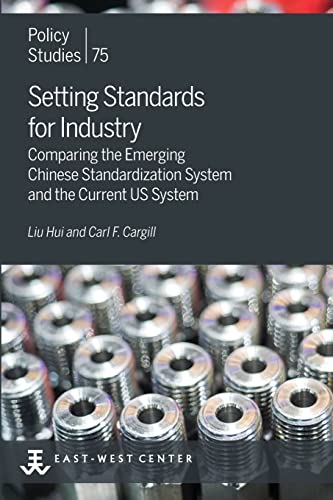
Setting Standards for Industry: Comparing the Emerging Chinese Standardization System and the Current US System: 75 (Policy Studies) - Tapa blanda
Sinopsis
In every country, standardization is a reflection of that nation's level of industrialization. Creating consistent, widely adopted standards helps industries manufacture products in ways that are efficient, safe, repeatable, and of high quality. Standards are essential for translating new ideas, inventions, and discoveries into economic growth and prosperity. Whether standards originate from national governments, professional associations, private enterprises, or other standard-setting entities, they capture the interdependencies among the different sectors. On a broader level, they also embrace a nation's industrial, technical, and social policies. As nations change, standardization principles and practices change with them.
Nowhere is this more true than in China today, where a historic revision of the Chinese standardization regime is taking place. New methods, new ideas, and new strategies for effective standardization are percolating within Chinese government and civil society. One of the new ideas is "association standards," which are set by nonprofit, nongovernmental "social organizations" such as trade and professional associations. Though widespread in the United States, association standards are in the developmental stages in China, with reform efforts now focused on increasing the decision-making autonomy of nongovernmental standard-setting organizations.
This paper compares Chinese and American systems for setting industrial standards. Specifically, the paper compares the US system of voluntary standards, which relies on consensus among parties and market-driven initiatives, with current efforts to reform China's government-directed standardization system.
"Sinopsis" puede pertenecer a otra edición de este libro.
Acerca de los autores
LIU Hui is associate researcher, Sub-Institute of Standardization Theory and Strategy, China National Institute of Standardization (CNIS). He can be contacted at liuhui@cnis.gov.cn
Carl Cargill is principal scientist, Standards, at Adobe Systems. He can be reached at cargill@adobe.com.
"Sobre este título" puede pertenecer a otra edición de este libro.
Resultados de la búsqueda para Setting Standards for Industry: Comparing the Emerging...

Imagen del vendedor
Setting Standards for Industry: Comparing the Emerging Chinese Standardization System and the Current Us System
Librería: GreatBookPrices, Columbia, MD, Estados Unidos de America
Calificación del vendedor: 5 de 5 estrellas

Condición: New. Nº de ref. del artículo: 29824562-n
Comprar nuevo
EUR 8,36
Envío por EUR 2,35
Se envía dentro de Estados Unidos de America
Se envía dentro de Estados Unidos de America
Cantidad disponible: Más de 20 disponibles
Imagen del vendedor
Setting Standards for Industry: Comparing the Emerging Chinese Standardization System and the Current Us System
Publicado por
East-West Center, 2017
ISBN 10: 0866382763
ISBN 13: 9780866382762
Antiguo o usado
Tapa blanda
Librería: GreatBookPrices, Columbia, MD, Estados Unidos de America
Calificación del vendedor: 5 de 5 estrellas
Condición: As New. Unread book in perfect condition. Nº de ref. del artículo: 29824562
Comprar usado
EUR 8,44
Envío por EUR 2,35
Se envía dentro de Estados Unidos de America
Se envía dentro de Estados Unidos de America
Cantidad disponible: Más de 20 disponibles
Imagen del vendedor
Setting Standards for Industry: Comparing the Emerging Chinese Standardization System and the Current US System (Paperback or Softback)
Publicado por
East-West Center 7/1/2017, 2017
ISBN 10: 0866382763
ISBN 13: 9780866382762
Nuevo
Paperback or Softback
Librería: BargainBookStores, Grand Rapids, MI, Estados Unidos de America
Calificación del vendedor: 5 de 5 estrellas
Paperback or Softback. Condición: New. Setting Standards for Industry: Comparing the Emerging Chinese Standardization System and the Current US System. Book. Nº de ref. del artículo: BBS-9780866382762
Comprar nuevo
EUR 10,79
Gastos de envío gratis
Se envía dentro de Estados Unidos de America
Se envía dentro de Estados Unidos de America
Cantidad disponible: 5 disponibles
Imagen de archivo
Setting Standards for Industry: Comparing the Emerging Chinese Standardization System and the Current US System (Policy Studies)
Librería: California Books, Miami, FL, Estados Unidos de America
Calificación del vendedor: 5 de 5 estrellas
Condición: New. Nº de ref. del artículo: I-9780866382762
Comprar nuevo
EUR 12,86
Gastos de envío gratis
Se envía dentro de Estados Unidos de America
Se envía dentro de Estados Unidos de America
Cantidad disponible: Más de 20 disponibles
Imagen de archivo
Setting Standards for Industry: Comparing the Emerging Chinese Standardization System and the Current Us System (Policy Studies)
Librería: Revaluation Books, Exeter, Reino Unido
Calificación del vendedor: 5 de 5 estrellas
Paperback. Condición: Brand New. 64 pages. 9.21x6.14x0.13 inches. In Stock. Nº de ref. del artículo: x-0866382763
Comprar nuevo
EUR 10,50
Envío por EUR 11,87
Se envía de Reino Unido a Estados Unidos de America
Se envía de Reino Unido a Estados Unidos de America
Cantidad disponible: 2 disponibles
Imagen de archivo
Setting Standards for Industry: Comparing the Emerging Chinese Standardization System and the Current US System: 75 (Policy Studies)
Librería: Majestic Books, Hounslow, Reino Unido
Calificación del vendedor: 4 de 5 estrellas

Condición: New. pp. 64. Nº de ref. del artículo: 370648659
Comprar nuevo
EUR 16,69
Envío por EUR 7,71
Se envía de Reino Unido a Estados Unidos de America
Se envía de Reino Unido a Estados Unidos de America
Cantidad disponible: 1 disponibles
Imagen de archivo
Setting Standards for Industry: Comparing the Emerging Chinese Standardization System and the Current US System: 75 (Policy Studies)
Librería: Books Puddle, Woodside, NY, Estados Unidos de America
Calificación del vendedor: 4 de 5 estrellas
Condición: New. pp. 64. Nº de ref. del artículo: 26375396748
Comprar nuevo
EUR 21,26
Envío por EUR 3,56
Se envía dentro de Estados Unidos de America
Se envía dentro de Estados Unidos de America
Cantidad disponible: 1 disponibles
Imagen de archivo
Setting Standards for Industry: Comparing the Emerging Chinese Standardization System and the Current Us System
Impresión bajo demandaLibrería: THE SAINT BOOKSTORE, Southport, Reino Unido
Calificación del vendedor: 5 de 5 estrellas
Paperback. Condición: New. This item is printed on demand. New copy - Usually dispatched within 5-9 working days. Nº de ref. del artículo: C9780866382762
Comprar nuevo
EUR 12,01
Envío por EUR 14,30
Se envía de Reino Unido a Estados Unidos de America
Se envía de Reino Unido a Estados Unidos de America
Cantidad disponible: Más de 20 disponibles
Imagen del vendedor
Setting Standards for Industry: Comparing the Emerging Chinese Standardization System and the Current Us System
Librería: GreatBookPricesUK, Woodford Green, Reino Unido
Calificación del vendedor: 5 de 5 estrellas
Condición: New. Nº de ref. del artículo: 29824562-n
Comprar nuevo
EUR 12,00
Envío por EUR 17,80
Se envía de Reino Unido a Estados Unidos de America
Se envía de Reino Unido a Estados Unidos de America
Cantidad disponible: Más de 20 disponibles
Imagen del vendedor
Setting Standards for Industry: Comparing the Emerging Chinese Standardization System and the Current Us System
Publicado por
East-West Center, 2017
ISBN 10: 0866382763
ISBN 13: 9780866382762
Antiguo o usado
Tapa blanda
Librería: GreatBookPricesUK, Woodford Green, Reino Unido
Calificación del vendedor: 5 de 5 estrellas
Condición: As New. Unread book in perfect condition. Nº de ref. del artículo: 29824562
Comprar usado
EUR 13,54
Envío por EUR 17,80
Se envía de Reino Unido a Estados Unidos de America
Se envía de Reino Unido a Estados Unidos de America
Cantidad disponible: Más de 20 disponibles