
Artículos relacionados a Choosing & Using the Right Milling Machine
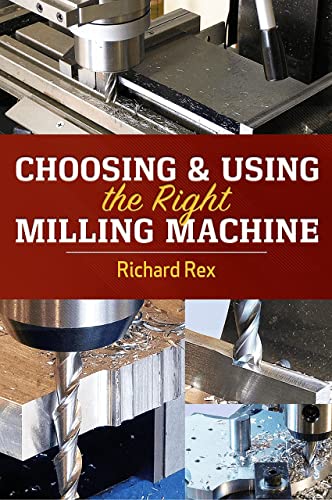
Sinopsis
In most modern metal shops, you’ll find both a lathe and a vertical mill. Both machines function by removing material from a block of metal―the “workpiece.” The key difference between the two is how the workpiece is handled. On a lathe, the workpiece rotates, and is cut away by a knife tool. (Typical products of lathe work are “turned parts” such as spindles, bearings, screws, washers, and circular blanks for gears.)
On a milling machine, it’s the cutter that rotates. The workpiece is clamped to a table that is moved by precise amounts in two axes at right angles. (Typical mill products are flat-surfaced blocks of metal, like a cube, sometimes drilled for spindles or dowel pins, often tapped for screws.) Both the lathe and mill are incredibly flexible machines, but neither is capable of doing useful work right “out of the box.” Both call for a number of accessories for holding the workpiece, as well as a selection of different cutting tools, drills, reamers, etc. Unlike lathe turning, which has not changed fundamentally in the past 100 years, milling in the small shop has been changed radically by the recent introduction of bench-top machines.
There are now so many different milling machines that insider information has become even more important. In this work, Choosing & Using the Right Milling Machine, Richard Rex provides everything needed to choose the right type of mill―knee-type (Bridgeport) or bench-top―and properly install it depending on the type of work you’re doing. With suggestions for finding, installing, and using the essential accessories, including digital readouts, this work is a must-have for model shops around the globe. And it’s the perfect companion work to Choosing & Using the Right Metal Shop Lathe.
Features
- Covers different types of milling cutters, including end mills, drill bits, reamers, and slitting saws.
- Introduces information on the add-ons that get a shop operational with the least delay and expense.
- Instructs on the installation and use of three popular accessories―table power-feed, digital readout (DRO), and rotary table.
"Sinopsis" puede pertenecer a otra edición de este libro.
Acerca del autor
Richard Rex has worked on lathes and milling machines since his teen years in a home shop, and later on a variety of production machines (his current home shop setup has a 12” x 36” lathe and a Bridgeport mill). More recently, he has set up several engineering lab model shops from scratch, with the usual complement of Hardinge lathes and Bridgeport mills.
Richard worked for 10 years in product marketing management with Hewlett Packard and Brown Boveri in the UK. In the US, he has been CEO of several engineering/manufacturing companies. In recent years he has written and illustrated many manuals and tech bulletins for a machine tool distributor in Pittsburgh.
"Sobre este título" puede pertenecer a otra edición de este libro.
Resultados de la búsqueda para Choosing & Using the Right Milling Machine

Imagen del vendedor
Choosing & Using the Right Milling Machine
Publicado por
Industrial Press, Inc., 2022
ISBN 10: 0831136847
ISBN 13: 9780831136840
Antiguo o usado
Tapa blanda
Librería: GreatBookPrices, Columbia, MD, Estados Unidos de America
Calificación del vendedor: 5 de 5 estrellas

Condición: As New. Unread book in perfect condition. Nº de ref. del artículo: 45140616
Comprar usado
EUR 53,26
Envío por EUR 2,30
Se envía dentro de Estados Unidos de America
Se envía dentro de Estados Unidos de America
Cantidad disponible: 7 disponibles
Imagen de archivo
Choosing and Using the Right Milling Machine
Librería: PBShop.store UK, Fairford, GLOS, Reino Unido
Calificación del vendedor: 5 de 5 estrellas
PAP. Condición: New. New Book. Shipped from UK. Established seller since 2000. Nº de ref. del artículo: CW-9780831136840
Comprar nuevo
EUR 50,62
Envío por EUR 5,85
Se envía de Reino Unido a Estados Unidos de America
Se envía de Reino Unido a Estados Unidos de America
Cantidad disponible: 4 disponibles
Imagen del vendedor
Choosing & Using the Right Milling Machine
Publicado por
Industrial Press, Inc., 2022
ISBN 10: 0831136847
ISBN 13: 9780831136840
Nuevo
Tapa blanda
Librería: GreatBookPrices, Columbia, MD, Estados Unidos de America
Calificación del vendedor: 5 de 5 estrellas
Condición: New. Nº de ref. del artículo: 45140616-n
Comprar nuevo
EUR 55,62
Envío por EUR 2,30
Se envía dentro de Estados Unidos de America
Se envía dentro de Estados Unidos de America
Cantidad disponible: 7 disponibles
Imagen de archivo
Choosing & Using the Right Milling Machine
Publicado por
Industrial Press, Inc., 2022
ISBN 10: 0831136847
ISBN 13: 9780831136840
Nuevo
Tapa blanda
Librería: INDOO, Avenel, NJ, Estados Unidos de America
Calificación del vendedor: 5 de 5 estrellas
Condición: New. Nº de ref. del artículo: 9780831136840
Comprar nuevo
EUR 58,61
Gastos de envío gratis
Se envía dentro de Estados Unidos de America
Se envía dentro de Estados Unidos de America
Cantidad disponible: 20 disponibles
Imagen de archivo
Choosing & Using the Right Milling Machine
Publicado por
Industrial Press, Inc., 2022
ISBN 10: 0831136847
ISBN 13: 9780831136840
Nuevo
Tapa blanda
Librería: Ria Christie Collections, Uxbridge, Reino Unido
Calificación del vendedor: 5 de 5 estrellas
Condición: New. In English. Nº de ref. del artículo: ria9780831136840_new
Comprar nuevo
EUR 54,11
Envío por EUR 13,17
Se envía de Reino Unido a Estados Unidos de America
Se envía de Reino Unido a Estados Unidos de America
Cantidad disponible: 7 disponibles
Imagen del vendedor
Choosing & Using the Right Milling Machine
Publicado por
Industrial Press, Inc., 2022
ISBN 10: 0831136847
ISBN 13: 9780831136840
Nuevo
Tapa blanda
Librería: GreatBookPricesUK, Woodford Green, Reino Unido
Calificación del vendedor: 5 de 5 estrellas
Condición: New. Nº de ref. del artículo: 45140616-n
Comprar nuevo
EUR 50,61
Envío por EUR 17,49
Se envía de Reino Unido a Estados Unidos de America
Se envía de Reino Unido a Estados Unidos de America
Cantidad disponible: 7 disponibles
Imagen del vendedor
Choosing & Using the Right Milling Machine
Publicado por
Industrial Press, Inc., 2022
ISBN 10: 0831136847
ISBN 13: 9780831136840
Antiguo o usado
Tapa blanda
Librería: GreatBookPricesUK, Woodford Green, Reino Unido
Calificación del vendedor: 5 de 5 estrellas
Condición: As New. Unread book in perfect condition. Nº de ref. del artículo: 45140616
Comprar usado
EUR 55,63
Envío por EUR 17,49
Se envía de Reino Unido a Estados Unidos de America
Se envía de Reino Unido a Estados Unidos de America
Cantidad disponible: 7 disponibles
Imagen del vendedor
Choosing and Using the Right Milling Machine
Publicado por
Industrial Press Inc.,U.S., US, 2022
ISBN 10: 0831136847
ISBN 13: 9780831136840
Nuevo
Paperback
Librería: Rarewaves USA, HEBRON, KY, Estados Unidos de America
Calificación del vendedor: 5 de 5 estrellas
Paperback. Condición: New. In most modern metal shops, you'll find both a lathe and a vertical mill. Both machines function by removing material from a block of metal-the "workpiece." The key difference between the two is how the workpiece is handled. On a lathe, the workpiece rotates, and is cut away by a knife tool. (Typical products of lathe work are "turned parts" such as spindles, bearings, screws, washers, and circular blanks for gears.) On a milling machine, it's the cutter that rotates. The workpiece is clamped to a table that is moved by precise amounts in two axes at right angles. (Typical mill products are flat-surfaced blocks of metal, like a cube, sometimes drilled for spindles or dowel pins, often tapped for screws.) Both the lathe and mill are incredibly flexible machines, but neither is capable of doing useful work right "out of the box." Both call for a number of accessories for holding the workpiece, as well as a selection of different cutting tools, drills, reamers, etc. Unlike lathe turning, which has not changed fundamentally in the past 100 years, milling in the small shop has been changed radically by the recent introduction of bench-top machines. There are now so many different milling machines that insider information has become even more important. In this work, Choosing and Using the Right Milling Machine, Richard Rex provides everything needed to choose the right type of mill-knee-type (Bridgeport) or bench-top-and properly install it depending on the type of work you're doing. With suggestions for finding, installing, and using the essential accessories, including digital readouts, this work is a must-have for model shops around the globe. And it's the perfect companion work to Choosing and Using the Right Metal Shop Lathe. Features Covers different types of milling cutters, including end mills, drill bits, reamers, and slitting saws.Introduces information on the add-ons that get a shop operational with the least delay and expense.Instructs on the installation and use of three popular accessories-table power-feed, digital readout (DRO), and rotary table.Provides a workpiece tutorial that demonstrates many of the commonplace milling routines-ideal for first-time users. Nº de ref. del artículo: LU-9780831136840
Comprar nuevo
EUR 81,56
Gastos de envío gratis
Se envía dentro de Estados Unidos de America
Se envía dentro de Estados Unidos de America
Cantidad disponible: Más de 20 disponibles
Imagen del vendedor
Choosing & Using the Right Milling Machine
Publicado por
Industrial Press Sep 2022, 2022
ISBN 10: 0831136847
ISBN 13: 9780831136840
Nuevo
Taschenbuch
Librería: AHA-BUCH GmbH, Einbeck, Alemania
Calificación del vendedor: 5 de 5 estrellas
Taschenbuch. Condición: Neu. Neuware - In most modern metal shops, you'll find both a lathe and a vertical mill. Both machines function by removing material from a block of metalthe "workpiece." The key difference between the two is how the workpiece is handled. On a lathe, the workpiece rotates, and is cut away by a knife tool. (Typical products of lathe work are "turned parts" such as spindles, bearings, screws, washers, and circular blanks for gears.)On a milling machine, it's the cutter that rotates. The workpiece is clamped to a table that is moved by precise amounts in two axes at right angles. (Typical mill products are flat-surfaced blocks of metal, like a cube, sometimes drilled for spindles or dowel pins, often tapped for screws.)Both the lathe and mill are incredibly flexible machines, but neither is capable of doing useful work right "out of the box." Both call for a number of accessories for holding the workpiece, as well as a selection of different cutting tools, drills, reamers, etc. Unlike lathe turning, which has not changed fundamentally in the past 100 years, milling in the small shop has been changed radically by the recent introduction of bench-top machines.There are now so many different milling machines that insider information has become even more important. In this work, Choosing & Using the Right Milling Machine, Richard Rex provides everything needed to choose the right type of millknee-type (Bridgeport) or bench-topand properly install it depending on the type of work you're doing. With suggestions for finding, installing, and using the essential accessories, including digital readouts, this work is a must-have for model shops around the globe. And it's the perfect companion work to Choosing & Using the Right Metal Shop Lathe.Features- Covers different types of milling cutters, including end mills, drill bits, reamers, and slitting saws.- Introduces information on the add-ons that get a shop operational with the least delay and expense.- Instructs on the installation and use of three popular accessoriestable power-feed, digital readout (DRO), and rotary table.Provides a workpiece tutorial that demonstrates many of the commonplace milling routinesideal for first-time users. Nº de ref. del artículo: 9780831136840
Comprar nuevo
EUR 74,06
Envío por EUR 30,50
Se envía de Alemania a Estados Unidos de America
Se envía de Alemania a Estados Unidos de America
Cantidad disponible: 1 disponibles
Imagen del vendedor
Choosing & Using the Right Milling Machine
Librería: moluna, Greven, Alemania
Calificación del vendedor: 5 de 5 estrellas
Condición: New. Über den Autor       Richard Rex has worked on lathes and milling machines since his teen years in a home shop, and later on a variety of production machines (his current home shop setup has a 12 x 36 la. Nº de ref. del artículo: 699369112
Comprar nuevo
EUR 57,88
Envío por EUR 48,99
Se envía de Alemania a Estados Unidos de America
Se envía de Alemania a Estados Unidos de America
Cantidad disponible: 5 disponibles