
Artículos relacionados a Mutant Neoliberalism: Market Rule and Political Rupture
Sinopsis
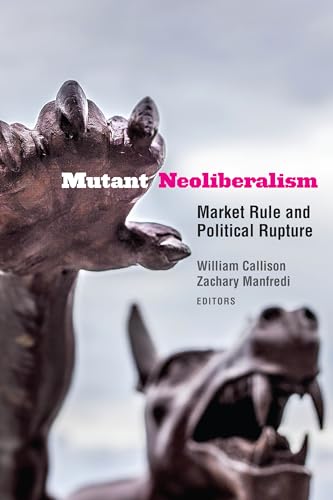
This interdisciplinary collection, featuring some of today’s most prominent political theorists, sociologists, philosophers, and historians, challenges narratives of neoliberalism’s demise. The book queries whether contemporary political ruptures-including the rise of far-right forces-will challenge, support, or extend the reach of market rule around the globe.
"Sinopsis" puede pertenecer a otra edición de este libro.
Acerca de los autores
William Callison is Visiting Assistant Professor of Government and Law at Lafayette College. He is co-editor of “Rethinking Sovereignty and Capitalism” (Qui Parle) and of “Europe at a Crossroads” (Near Futures Online, Zone Books).
Zachary Manfredi is an Equal Justice Works Fellow at the Asylum Seeker Advocacy Project. His recent work has appeared or is forthcoming in Humanity, The New York University Law Review, The Texas Journal of International Law, and Critical Times.
Étienne Balibar is Professor Emeritus of Moral and Political Philosophy at the Université de Paris X Nanterre; Professor Emeritus of Humanities at the University of California, Irvine; and Anniversary Chair in Modern European Philosophy at Kingston University, London. His research in the fields of political, moral, and Marxist philosophy focuses on emancipation, citizenship, and on what he terms “equaliberty.” The breadth of his thought can be gauged from his published works, from Reading Capital, released in 1965 and coauthored with his mentor Louis Althusser, to the more recent We, the People of Europe? Reflections on Transnational Citizenship (2003), Equaliberty (2014), Violence and Civility: On the Limits of Political Philosophy (2015), Citizen Subject: Foundations for Philosophical Anthropology (2017), and Secularism and Cosmopolitanism (2018).
Sören Brandes is a research fellow at the International Max Planck Research School (IMPRS) for Moral Economies of Modern Societies at the Max Planck Institute for Human Development in Berlin and a Ph.D. candidate at the Free University Berlin. He is coeditor of a special issue on “Practices of Capitalism” in Mittelweg 36 and has published on the history of neoliberalism and mass media in the United States and the United Kingdom.
Wendy Brown is Class of 1936 First Professor of Political Science at the University of California, Berkeley, where she is also affiliated with the Program in Critical Theory. Among her many book titles are Regulating Aversion: Tolerance in the Age of Empire and Identity (Princeton University Press, 2006), Walled States, Waning Sovereignty (Zone Books, 2010), Undoing the Demos: Neoliberalism’s Stealth Revolution (Zone Books, 2015), and In the Ruins of Neoliberalism: The Rise of Anti-Democratic Politics in the West (Columbia University Press, 2019).
De la contraportada
“Neoliberalism has frequently been pronounced dead in the wake of the 2008 financial crisis, but the beast lives on. This collection is a strong addition to recent studies of the topic, exploring neoliberalism’s relationships with the EU, the far right, populism, and gender.”—Doug Henwood, Producer of Behind the News
“This is the book we need today: the authors refuse to debate about what liberalism ‘is’ and instead take us into the thicket of its fracturing and multiple futures in the wake of the great financial crisis.”—Elizabeth Povinelli, Columbia University
Tales of neoliberalism’s death are serially overstated. Following the financial crisis of 2008, neoliberalism was proclaimed a “zombie,” a disgraced ideology that staggered on like an undead monster. After the political ruptures of 2016, commentators were quick to announce “the end” of neoliberalism yet again, pointing to both the global rise of far-right forces and the reinvigoration of democratic socialist politics. But do new political forces sound neoliberalism’s death knell or will they instead catalyze new mutations in its dynamic development?
Mutant Neoliberalism brings together leading scholars of neoliberalism to rethink transformations in market rule and their relation to ongoing political ruptures. The chapters show how years of neoliberal governance, policy, and depoliticization created the conditions for thriving reactionary forces, while also reflecting on whether recent trends will challenge, reconfigure, or extend neoliberalism’s reach. The contributors reconsider neoliberalism’s relationship with its assumed adversaries and map mutations in financialized capitalism and governance from Europe and the United States to China and India. Taken together, the volume recasts the stakes of contemporary debate and reorients critique and resistance within a rapidly changing landscape.
Contributors: Étienne Balibar, Sören Brandes, Wendy Brown, Melinda Cooper, Julia Elyachar, Michel Feher, Megan Moodie, Christopher Newfield, Dieter Plehwe, Lisa Rofel, Leslie Salzinger, Quinn Slobodian
William Callison is Visiting Assistant Professor of Government and Law at Lafayette College.
Zachary Manfredi is an Equal Justice Works Fellow at the Asylum Seeker Advocacy Project.
"Sobre este título" puede pertenecer a otra edición de este libro.
Resultados de la búsqueda para Mutant Neoliberalism: Market Rule and Political Rupture

Imagen de archivo
Mutant Neoliberalism: Market Rule and Political Rupture
Publicado por
Fordham University Press, 2019
ISBN 10: 0823285707
ISBN 13: 9780823285709
Antiguo o usado
Paperback
Librería: WorldofBooks, Goring-By-Sea, WS, Reino Unido
Calificación del vendedor: 5 de 5 estrellas

Paperback. Condición: Very Good. The book has been read, but is in excellent condition. Pages are intact and not marred by notes or highlighting. The spine remains undamaged. Nº de ref. del artículo: GOR011869737
Comprar usado
EUR 31,66
Envío por EUR 6,68
Se envía de Reino Unido a Estados Unidos de America
Se envía de Reino Unido a Estados Unidos de America
Cantidad disponible: 1 disponibles
Imagen de archivo
Mutant Neoliberalism
Publicado por
ME - Fordham University Press, 2019
ISBN 10: 0823285707
ISBN 13: 9780823285709
Nuevo
PAP
Librería: PBShop.store UK, Fairford, GLOS, Reino Unido
Calificación del vendedor: 5 de 5 estrellas
PAP. Condición: New. New Book. Shipped from UK. Established seller since 2000. Nº de ref. del artículo: FW-9780823285709
Comprar nuevo
EUR 36,08
Envío por EUR 5,99
Se envía de Reino Unido a Estados Unidos de America
Se envía de Reino Unido a Estados Unidos de America
Cantidad disponible: 15 disponibles
Imagen del vendedor
Mutant Neoliberalism : Market Rule and Political Rupture
Publicado por
Fordham University Press, 2019
ISBN 10: 0823285707
ISBN 13: 9780823285709
Nuevo
Tapa blanda
Librería: GreatBookPrices, Columbia, MD, Estados Unidos de America
Calificación del vendedor: 5 de 5 estrellas
Condición: New. Nº de ref. del artículo: 37575211-n
Comprar nuevo
EUR 40,89
Envío por EUR 2,35
Se envía dentro de Estados Unidos de America
Se envía dentro de Estados Unidos de America
Cantidad disponible: Más de 20 disponibles
Imagen de archivo
Mutant Neoliberalism
Publicado por
Fordham University Press 2019-11-05, 2019
ISBN 10: 0823285707
ISBN 13: 9780823285709
Nuevo
Paperback
Librería: Chiron Media, Wallingford, Reino Unido
Calificación del vendedor: 5 de 5 estrellas
Paperback. Condición: New. Brand new book, sourced directly from publisher. Dispatch time is 24-48 hours from our warehouse. Book will be sent in robust, secure packaging to ensure it reaches you securely. Nº de ref. del artículo: 6666-GRD-9780823285709
Comprar nuevo
EUR 38,88
Envío por EUR 5,95
Se envía de Reino Unido a Estados Unidos de America
Se envía de Reino Unido a Estados Unidos de America
Cantidad disponible: 1 disponibles
Imagen del vendedor
Mutant Neoliberalism : Market Rule and Political Rupture
Publicado por
Fordham University Press, 2019
ISBN 10: 0823285707
ISBN 13: 9780823285709
Antiguo o usado
Tapa blanda
Librería: GreatBookPrices, Columbia, MD, Estados Unidos de America
Calificación del vendedor: 5 de 5 estrellas
Condición: As New. Unread book in perfect condition. Nº de ref. del artículo: 37575211
Comprar usado
EUR 43,52
Envío por EUR 2,35
Se envía dentro de Estados Unidos de America
Se envía dentro de Estados Unidos de America
Cantidad disponible: Más de 20 disponibles
Imagen de archivo
MUTANT NEOLIBERALISM (English)
Publicado por
Fordham University Press, 2019
ISBN 10: 0823285707
ISBN 13: 9780823285709
Nuevo
Tapa blanda
Librería: Brook Bookstore On Demand, Napoli, NA, Italia
Calificación del vendedor: 5 de 5 estrellas
Condición: new. Nº de ref. del artículo: d1afa8ff5d12798be242480a8c7bb091
Comprar nuevo
EUR 41,03
Envío por EUR 5,50
Se envía de Italia a Estados Unidos de America
Se envía de Italia a Estados Unidos de America
Cantidad disponible: Más de 20 disponibles
Imagen del vendedor
Mutant Neoliberalism
Publicado por
Fordham University Press, US, 2019
ISBN 10: 0823285707
ISBN 13: 9780823285709
Nuevo
Paperback
Librería: Rarewaves.com USA, London, LONDO, Reino Unido
Calificación del vendedor: 5 de 5 estrellas
Paperback. Condición: New. Tales of neoliberalism's death are serially overstated. Following the financial crisis of 2008, neoliberalism was proclaimed a "zombie," a disgraced ideology that staggered on like an undead monster. After the political ruptures of 2016, commentators were quick to announce "the end" of neoliberalism yet again, pointing to both the global rise of far-right forces and the reinvigoration of democratic socialist politics. But do new political forces sound neoliberalism's death knell or will they instead catalyze new mutations in its dynamic development? Mutant Neoliberalism brings together leading scholars of neoliberalism-political theorists, historians, philosophers, anthropologists and sociologists-to rethink transformations in market rule and their relation to ongoing political ruptures. The chapters show how years of neoliberal governance, policy, and depoliticization created the conditions for thriving reactionary forces, while also reflecting on whether recent trends will challenge, reconfigure, or extend neoliberalism's reach. The contributors reconsider neoliberalism's relationship with its assumed adversaries and map mutations in financialized capitalism and governance across time and space-from Europe and the United States to China and India. Taken together, the volume recasts the stakes of contemporary debate and reorients critique and resistance within a rapidly changing landscape. Contributors: Étienne Balibar, Sören Brandes, Wendy Brown, Melinda Cooper, Julia Elyachar, Michel Feher, Megan Moodie, Christopher Newfield, Dieter Plehwe, Lisa Rofel, Leslie Salzinger, Quinn Slobodian. Nº de ref. del artículo: LU-9780823285709
Comprar nuevo
EUR 49,17
Gastos de envío gratis
Se envía de Reino Unido a Estados Unidos de America
Se envía de Reino Unido a Estados Unidos de America
Cantidad disponible: 1 disponibles
Imagen del vendedor
Mutant Neoliberalism: Market Rule and Political Rupture (Paperback or Softback)
Publicado por
Fordham University Press 11/5/2019, 2019
ISBN 10: 0823285707
ISBN 13: 9780823285709
Nuevo
Paperback or Softback
Librería: BargainBookStores, Grand Rapids, MI, Estados Unidos de America
Calificación del vendedor: 5 de 5 estrellas
Paperback or Softback. Condición: New. Mutant Neoliberalism: Market Rule and Political Rupture. Book. Nº de ref. del artículo: BBS-9780823285709
Comprar nuevo
EUR 50,49
Gastos de envío gratis
Se envía dentro de Estados Unidos de America
Se envía dentro de Estados Unidos de America
Cantidad disponible: 5 disponibles
Imagen del vendedor
Mutant Neoliberalism
Publicado por
Fordham University Press, US, 2019
ISBN 10: 0823285707
ISBN 13: 9780823285709
Nuevo
Paperback
Librería: Rarewaves USA, HEBRON, KY, Estados Unidos de America
Calificación del vendedor: 5 de 5 estrellas
Paperback. Condición: New. Tales of neoliberalism's death are serially overstated. Following the financial crisis of 2008, neoliberalism was proclaimed a "zombie," a disgraced ideology that staggered on like an undead monster. After the political ruptures of 2016, commentators were quick to announce "the end" of neoliberalism yet again, pointing to both the global rise of far-right forces and the reinvigoration of democratic socialist politics. But do new political forces sound neoliberalism's death knell or will they instead catalyze new mutations in its dynamic development? Mutant Neoliberalism brings together leading scholars of neoliberalism-political theorists, historians, philosophers, anthropologists and sociologists-to rethink transformations in market rule and their relation to ongoing political ruptures. The chapters show how years of neoliberal governance, policy, and depoliticization created the conditions for thriving reactionary forces, while also reflecting on whether recent trends will challenge, reconfigure, or extend neoliberalism's reach. The contributors reconsider neoliberalism's relationship with its assumed adversaries and map mutations in financialized capitalism and governance across time and space-from Europe and the United States to China and India. Taken together, the volume recasts the stakes of contemporary debate and reorients critique and resistance within a rapidly changing landscape. Contributors: Étienne Balibar, Sören Brandes, Wendy Brown, Melinda Cooper, Julia Elyachar, Michel Feher, Megan Moodie, Christopher Newfield, Dieter Plehwe, Lisa Rofel, Leslie Salzinger, Quinn Slobodian. Nº de ref. del artículo: LU-9780823285709
Comprar nuevo
EUR 50,49
Gastos de envío gratis
Se envía dentro de Estados Unidos de America
Se envía dentro de Estados Unidos de America
Cantidad disponible: Más de 20 disponibles
Imagen de archivo
Mutant Neoliberalism: Market Rule and Political Rupture
Publicado por
Fordham University Press, 2019
ISBN 10: 0823285707
ISBN 13: 9780823285709
Nuevo
Tapa blanda
Original o primera edición
Librería: Kennys Bookshop and Art Galleries Ltd., Galway, GY, Irlanda
Calificación del vendedor: 5 de 5 estrellas
Condición: New. 2019. 1st Edition. Paperback. . . . . . Nº de ref. del artículo: V9780823285709
Comprar nuevo
EUR 41,75
Envío por EUR 9,50
Se envía de Irlanda a Estados Unidos de America
Se envía de Irlanda a Estados Unidos de America
Cantidad disponible: Más de 20 disponibles