
Artículos relacionados a Levels of Organic Life and the Human: An Introduction...
Levels of Organic Life and the Human: An Introduction to Philosophical Anthropology (Forms of Living) - Tapa dura
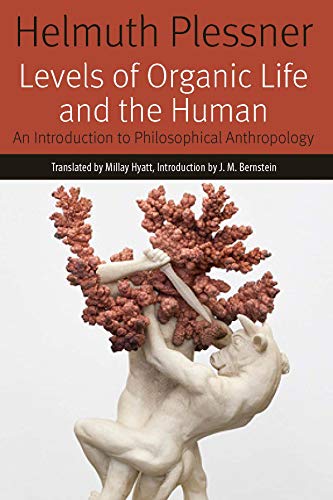
Sinopsis
The most important work by a key figure in German thought, Helmuth Plessner's Levels of Organic Life and the Human, originally published in 1928, appears here for the first time in English, accompanied by a substantial Introduction by J. M. Bernstein, after having served for decades as an influence on thinkers as diverse as Merleau-Ponty, Peter Berger, Habermas, and the new naturalists.
The Levels, as it has long been known, draws on phenomenological, biological, and social scientific sources as part of a systematic account of nature, life, and human existence. The book considers non-living nature, plants, non-human animals, and human beings in turn as a sequence of increasingly complex modes of boundary dynamics―simply put, interactions between a thing's insides and surrounding world. On Plessner's unique account, living things are classed and analyzed by their "positionality," or orientation to and within an environment. "Life" is thereby phenomenologically defined, and its universal yet internally variable features such as metabolism, reproduction, and death are explained.
The approach provides a foundation not only for philosophical biology but philosophical anthropology as well. According to Plessner's radical view, the human form of life is excentric―that is, the relation between body and environment is something to which humans themselves are positioned and can take a position. This "excentric positionality" enables human beings to take a stand outside the boundaries of their own body, a possibility with significant implications for knowledge, culture, religion, and technology.
Plessner studied zoology and philosophy with Hans Driesch in the 1910s before embarking on a highly productive philosophical career. His work was initially obscured by the superficially similar views of Max Scheler and Martin Heidegger and by his forced exile during World War II. Only in recent decades, as scholarship has moved more squarely into engagement with issues like animality, embodiment, human dignity, social theory, the philosophy of technology, and the philosophy of nature, has the originality and depth of Plessner's vision been appreciated.
A powerful and sophisticated account of embodiment, the Levels shows, with reference both to science and to philosophy, how life can be seen on its own terms to establish its own boundaries, and how, from the standpoint of life, the human establishes itself in relation to the nonhuman. As such, the book is not merely a historical monument but a source for invigorating a range of vital current conversations around the animal, posthumanism, the material turn, and the biology and sociology of cognition.
This modern philosophical classic, long-awaited in English translation, is a key book both historically and for today's interest in understanding philosophy and social theory together with science, without reducing the former to the latter.
"Sinopsis" puede pertenecer a otra edición de este libro.
Acerca de los autores
Helmuth Plessner (1892–1985) was a German philosopher and sociologist. From 1953-59, he was president of the German Sociological Association. Three of his many books have appeared in English, Political Anthropology (Northwestern, 2018), The Limits of Community (Humanity Books, 1999) and Laughing and Crying (Northwestern, 1970).
Millay Hyatt is a writer and translator based in Berlin. Her dissertation, “No-Where and Now-Here: Utopia and Politics from Hegel to Deleuze,” received the University of Southern California's doctoral research prize.
J. M. Bernstein is University Distinguished Professor of Philosophy at the New School for Social Research. His writings include The Fate of Art: Aesthetic Alienation from Kant to Derrida and Adorno (1992), Recovering Ethical Life: Jürgen Habermas and the Future of Critical Theory (1995), Adorno: Disenchantment and Ethics (2002), and Against Voluptuous Bodies: Late Modernism and the Meaning of Painting (2006). His most recent book is Torture and Dignity: An Essay on Moral Injury (2015). He is working on a manuscript with the tentative title Human Rights: On the Foundations of Ecological Socialism, from which the essay in this volume is drawn.
"Sobre este título" puede pertenecer a otra edición de este libro.
Resultados de la búsqueda para Levels of Organic Life and the Human: An Introduction...

Imagen de archivo
Levels of Organic Life and the Human: An Introduction to Philosophical Anthropology (Forms of Living)
Publicado por
Fordham University Press, 2019
ISBN 10: 0823283992
ISBN 13: 9780823283996
Antiguo o usado
Tapa dura
Librería: BookstoYou, Hay-on-Wye, HEREF, Reino Unido
Calificación del vendedor: 5 de 5 estrellas

Hardcover. Condición: Fine. Unread. Like new. No dust cover. Plain grey cover with gilt titles on spine. Nº de ref. del artículo: mon0000003322
Comprar usado
EUR 101,16
Envío por EUR 19,10
Se envía de Reino Unido a Estados Unidos de America
Se envía de Reino Unido a Estados Unidos de America
Cantidad disponible: 1 disponibles
Imagen de archivo
Levels of Organic Life and the Human An Introduction to Philosophical Anthropology (Forms of Living) [] Plessner, Helmuth Hyatt, Millay and Bernstein, J. M.
Publicado por
Fordham University Press, 2019
ISBN 10: 0823283992
ISBN 13: 9780823283996
Antiguo o usado
Tapa dura
Librería: College Campus, Sturgeon Lake, MN, Estados Unidos de America
Calificación del vendedor: 4 de 5 estrellas

Condición: Good. Used Item. Does not include New Access Codes , Cd's or one time use items that come when New. This item is Used. Nº de ref. del artículo: 082328398413122-KEPA-201264
Comprar usado
EUR 138,28
Gastos de envío gratis
Se envía dentro de Estados Unidos de America
Se envía dentro de Estados Unidos de America
Cantidad disponible: 1 disponibles
Imagen de archivo
Levels of Organic Life and the Human
Publicado por
ME - Fordham University Press, 2019
ISBN 10: 0823283992
ISBN 13: 9780823283996
Nuevo
Tapa dura
Librería: PBShop.store UK, Fairford, GLOS, Reino Unido
Calificación del vendedor: 5 de 5 estrellas
HRD. Condición: New. New Book. Shipped from UK. Established seller since 2000. Nº de ref. del artículo: FW-9780823283996
Comprar nuevo
EUR 150,73
Envío por EUR 7,01
Se envía de Reino Unido a Estados Unidos de America
Se envía de Reino Unido a Estados Unidos de America
Cantidad disponible: 1 disponibles
Imagen del vendedor
Levels of Organic Life and the Human
Publicado por
Fordham University Press, US, 2019
ISBN 10: 0823283992
ISBN 13: 9780823283996
Nuevo
Tapa dura
Librería: Rarewaves USA, HEBRON, KY, Estados Unidos de America
Calificación del vendedor: 5 de 5 estrellas
Hardback. Condición: New. The most important work by a key figure in German thought, Helmuth Plessner's Levels of Organic Life and the Human, originally published in 1928, appears here for the first time in English, accompanied by a substantial Introduction by J. M. Bernstein, after having served for decades as an influence on thinkers as diverse as Merleau-Ponty, Peter Berger, Habermas, and the new naturalists. The Levels, as it has long been known, draws on phenomenological, biological, and social scientific sources as part of a systematic account of nature, life, and human existence. The book considers non-living nature, plants, non-human animals, and human beings in turn as a sequence of increasingly complex modes of boundary dynamics-simply put, interactions between a thing's insides and surrounding world. On Plessner's unique account, living things are classed and analyzed by their "positionality," or orientation to and within an environment. "Life" is thereby phenomenologically defined, and its universal yet internally variable features such as metabolism, reproduction, and death are explained. The approach provides a foundation not only for philosophical biology but philosophical anthropology as well. According to Plessner's radical view, the human form of life is excentric-that is, the relation between body and environment is something to which humans themselves are positioned and can take a position. This "excentric positionality" enables human beings to take a stand outside the boundaries of their own body, a possibility with significant implications for knowledge, culture, religion, and technology. Plessner studied zoology and philosophy with Hans Driesch in the 1910s before embarking on a highly productive philosophical career. His work was initially obscured by the superficially similar views of Max Scheler and Martin Heidegger and by his forced exile during World War II. Only in recent decades, as scholarship has moved more squarely into engagement with issues like animality, embodiment, human dignity, social theory, the philosophy of technology, and the philosophy of nature, has the originality and depth of Plessner's vision been appreciated. A powerful and sophisticated account of embodiment, the Levels shows, with reference both to science and to philosophy, how life can be seen on its own terms to establish its own boundaries, and how, from the standpoint of life, the human establishes itself in relation to the nonhuman. As such, the book is not merely a historical monument but a source for invigorating a range of vital current conversations around the animal, posthumanism, the material turn, and the biology and sociology of cognition. This modern philosophical classic, long-awaited in English translation, is a key book both historically and for today's interest in understanding philosophy and social theory together with science, without reducing the former to the latter. Nº de ref. del artículo: LU-9780823283996
Comprar nuevo
EUR 163,40
Gastos de envío gratis
Se envía dentro de Estados Unidos de America
Se envía dentro de Estados Unidos de America
Cantidad disponible: Más de 20 disponibles
Imagen de archivo
Levels of Organic Life and the Human: An Introduction to Philosophical Anthropology
Publicado por
Fordham University Press, 2019
ISBN 10: 0823283992
ISBN 13: 9780823283996
Nuevo
Tapa dura
Librería: Kennys Bookshop and Art Galleries Ltd., Galway, GY, Irlanda
Calificación del vendedor: 5 de 5 estrellas
Condición: New. 2019. Hardcover. . . . . . Nº de ref. del artículo: V9780823283996
Comprar nuevo
EUR 161,45
Envío por EUR 9,50
Se envía de Irlanda a Estados Unidos de America
Se envía de Irlanda a Estados Unidos de America
Cantidad disponible: 1 disponibles
Imagen de archivo
Levels of Organic Life and the Human: An Introduction to Philosophical Anthropology
Publicado por
Fordham University Press, 2019
ISBN 10: 0823283992
ISBN 13: 9780823283996
Nuevo
Tapa dura
Librería: THE SAINT BOOKSTORE, Southport, Reino Unido
Calificación del vendedor: 5 de 5 estrellas
Hardback. Condición: New. New copy - Usually dispatched within 4 working days. Nº de ref. del artículo: B9780823283996
Comprar nuevo
EUR 150,76
Envío por EUR 21,92
Se envía de Reino Unido a Estados Unidos de America
Se envía de Reino Unido a Estados Unidos de America
Cantidad disponible: 1 disponibles
Imagen del vendedor
Levels of Organic Life and the Human: An Introduction to Philosophical Anthropology
Impresión bajo demandaLibrería: moluna, Greven, Alemania
Calificación del vendedor: 5 de 5 estrellas
Condición: New. Dieser Artikel ist ein Print on Demand Artikel und wird nach Ihrer Bestellung fuer Sie gedruckt. Über den AutorHelmuth Plessner (Author) Helmuth Plessner (1892-1985) was a German philosopher and sociologist. From 1953-59, he was president of the German Sociological Association. Three of his many books have . Nº de ref. del artículo: 257158708
Comprar nuevo
EUR 135,88
Envío por EUR 48,99
Se envía de Alemania a Estados Unidos de America
Se envía de Alemania a Estados Unidos de America
Cantidad disponible: Más de 20 disponibles
Imagen de archivo
Levels of Organic Life and the Human: An Introduction to Philosophical Anthropology (Forms of Living)
Publicado por
Fordham University Press, 2019
ISBN 10: 0823283992
ISBN 13: 9780823283996
Nuevo
Tapa dura
Librería: Ria Christie Collections, Uxbridge, Reino Unido
Calificación del vendedor: 5 de 5 estrellas
Condición: New. In English. Nº de ref. del artículo: ria9780823283996_new
Comprar nuevo
EUR 172,87
Envío por EUR 13,48
Se envía de Reino Unido a Estados Unidos de America
Se envía de Reino Unido a Estados Unidos de America
Cantidad disponible: 1 disponibles
Imagen de archivo
Levels of Organic Life and the Human: An Introduction to Philosophical Anthropology (Forms of Living)
Publicado por
Fordham University Press, 2019
ISBN 10: 0823283992
ISBN 13: 9780823283996
Nuevo
Tapa dura
Librería: Books Puddle, Woodside, NY, Estados Unidos de America
Calificación del vendedor: 4 de 5 estrellas
Condición: New. Print on Demand. Nº de ref. del artículo: 26383560343
Comprar nuevo
EUR 195,45
Envío por EUR 3,56
Se envía dentro de Estados Unidos de America
Se envía dentro de Estados Unidos de America
Cantidad disponible: 4 disponibles
Imagen de archivo
Levels of Organic Life and the Human An Introduction to Philosophical Anthropology
Impresión bajo demandaLibrería: Revaluation Books, Exeter, Reino Unido
Calificación del vendedor: 5 de 5 estrellas
Hardcover. Condición: Brand New. 448 pages. 9.25x6.25x1.50 inches. In Stock. This item is printed on demand. Nº de ref. del artículo: __0823283992
Comprar nuevo
EUR 186,06
Envío por EUR 14,93
Se envía de Reino Unido a Estados Unidos de America
Se envía de Reino Unido a Estados Unidos de America
Cantidad disponible: 1 disponibles