
Artículos relacionados a Sewing Success?: Employment and Wages Following the...
Sewing Success?: Employment and Wages Following the End of the Multi-fibre Arrangement (Directions in Development: Poverty) - Tapa blanda
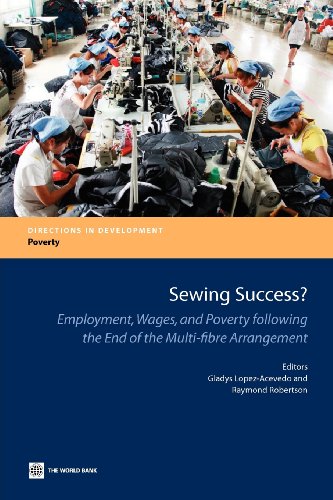
Sinopsis
Sewing Success? Employment, Wages, and Poverty following the End of the Multi-Fibre Arrangement (MFA) analyzes the impact of the 2004 MFA phaseout on key social indicators in major apparel-exporting developing countries. This study provides important policy insights on how to maximize the poverty-reduction potential of the apparel industry in a post-MFA environment: The significant post-MFA reallocation of production across countries did not necessarily match predictions. Wage differences explain some of the production shifts, but domestic policies targeting the apparel industry, ownership type, and functional upgrading of the industry also played important roles. Using exports as a metric of success in terms of reducing poverty is insufficient. Falling exports usually meant a loss of opportunities for low-income workers, but rising exports did not always benefit poor workers. Rising global competition may induce a shift toward higher-value production and services that are often less labor- and female-intensive. Post-MFA apparel workers experienced changes in both short- and long-run wage components as well as employment. It is important to understand these different determinants of poverty. Countries that actively promoted industry upgrading or established a niche position experienced larger increases in exports. Since upgrading does not always correspond to increases in employment or wages, it is also crucial to develop worker skills and improve working conditions. In short, export and economic growth alone are not enough; the composition of growth also matters. Poverty falls if employment or wages increase for the people at the lower end of the income distribution, and countries that experience growth in labor-intensive sectors are more likely to reduce poverty. This book will be of interest to academics, policy makers, and decision makers in nongovernmental organizations who work in the areas of international trade, development, and poverty.
"Sinopsis" puede pertenecer a otra edición de este libro.
Reseña del editor
The end of the MFA was followed by rising apparel exports, falling prices, and a reallocation of production and employment between countries. There were also significant changes within countries. The first main finding of this report is that export and employment patterns after the MFA/ATC did not necessarily match predictions. While many predicted that production would shift to low-wage countries, this book shows that only 13 percent of variation in export changes post-MFA can be explained by the differences in wage levels. Second, changes in exports are usually, but not always, good indicators of what happens to wages and employment within countries. This is especially important for policy because it shows that simply using exports as a metric of 'success' in terms of helping the poor is not sufficient. Third, the Book identifies the specific ways that changes in the global apparel market affected earnings. The Book shows that wage premiums change in predictable ways: rising (in most cases) in countries that were proactive in adapting to the MFA phase-out and expanded their market shares, and falling in countries that failed to respond in a timely fashion to the changing environment. The Book shows that promoting 'upgrading' (defined as shifting to higher-value goods, shifting up the value chain, or 'modernizing' production techniques) seems to be necessary for sustainable competitiveness in the apparel sector but does not necessarily help the poor.
"Sobre este título" puede pertenecer a otra edición de este libro.
Resultados de la búsqueda para Sewing Success?: Employment and Wages Following the...

Imagen de archivo
Sewing Success?
Publicado por
MP-WBK World Bank Group Publ, 2012
ISBN 10: 0821387782
ISBN 13: 9780821387788
Nuevo
PAP
Librería: PBShop.store UK, Fairford, GLOS, Reino Unido
Calificación del vendedor: 5 de 5 estrellas

PAP. Condición: New. New Book. Shipped from UK. Established seller since 2000. Nº de ref. del artículo: FW-9780821387788
Comprar nuevo
EUR 33,74
Envío por EUR 6,84
Se envía de Reino Unido a Estados Unidos de America
Se envía de Reino Unido a Estados Unidos de America
Cantidad disponible: 1 disponibles
Imagen del vendedor
Sewing Success? : Employment, Wages, and Poverty Following the End of the Multi-fibre Arrangement
Librería: GreatBookPrices, Columbia, MD, Estados Unidos de America
Calificación del vendedor: 5 de 5 estrellas
Condición: New. Nº de ref. del artículo: 15826575-n
Comprar nuevo
EUR 39,47
Envío por EUR 2,27
Se envía dentro de Estados Unidos de America
Se envía dentro de Estados Unidos de America
Cantidad disponible: 1 disponibles
Imagen del vendedor
Sewing Success?: Employment, Wages, and Poverty Following the End of the Multi-Fibre Arrangement (Paperback or Softback)
Publicado por
World Bank Publications 3/15/2012, 2012
ISBN 10: 0821387782
ISBN 13: 9780821387788
Nuevo
Paperback or Softback
Librería: BargainBookStores, Grand Rapids, MI, Estados Unidos de America
Calificación del vendedor: 5 de 5 estrellas
Paperback or Softback. Condición: New. Sewing Success?: Employment, Wages, and Poverty Following the End of the Multi-Fibre Arrangement. Book. Nº de ref. del artículo: BBS-9780821387788
Comprar nuevo
EUR 42,45
Gastos de envío gratis
Se envía dentro de Estados Unidos de America
Se envía dentro de Estados Unidos de America
Cantidad disponible: 5 disponibles
Imagen de archivo
Sewing Success?: Employment, Wages, and Poverty following the End of the Multi-Fibre Arrangement (Directions in Development)
Publicado por
World Bank Publications, 2012
ISBN 10: 0821387782
ISBN 13: 9780821387788
Nuevo
Tapa blanda
Librería: Kennys Bookshop and Art Galleries Ltd., Galway, GY, Irlanda
Calificación del vendedor: 5 de 5 estrellas
Condición: New. Editor(s): Lopez-Acevedo, Gladys; Robertson, Raymond; Robertson, Raymond. Series: Directions in Development - Human Development. Num Pages: 532 pages, 1, black & white illustrations. BIC Classification: KCF; KND. Category: (G) General (US: Trade). Dimension: 229 x 152 x 27. Weight in Grams: 699. . 2012. Paperback. . . . . Nº de ref. del artículo: V9780821387788
Comprar nuevo
EUR 37,07
Envío por EUR 9,50
Se envía de Irlanda a Estados Unidos de America
Se envía de Irlanda a Estados Unidos de America
Cantidad disponible: 1 disponibles
Imagen del vendedor
Sewing Success? : Employment, Wages, and Poverty Following the End of the Multi-fibre Arrangement
Publicado por
World Bank, 2012
ISBN 10: 0821387782
ISBN 13: 9780821387788
Antiguo o usado
Tapa blanda
Librería: GreatBookPrices, Columbia, MD, Estados Unidos de America
Calificación del vendedor: 5 de 5 estrellas
Condición: As New. Unread book in perfect condition. Nº de ref. del artículo: 15826575
Comprar usado
EUR 44,71
Envío por EUR 2,27
Se envía dentro de Estados Unidos de America
Se envía dentro de Estados Unidos de America
Cantidad disponible: 1 disponibles
Imagen de archivo
Sewing Success?: Employment, Wages, and Poverty Following the End of the Multi-fibre Arrangement
Impresión bajo demandaLibrería: Revaluation Books, Exeter, Reino Unido
Calificación del vendedor: 5 de 5 estrellas
Paperback. Condición: Brand New. 497 pages. 8.75x5.75x1.00 inches. In Stock. This item is printed on demand. Nº de ref. del artículo: __0821387782
Comprar nuevo
EUR 32,61
Envío por EUR 14,56
Se envía de Reino Unido a Estados Unidos de America
Se envía de Reino Unido a Estados Unidos de America
Cantidad disponible: 1 disponibles
Imagen del vendedor
Sewing Success?
Publicado por
World Bank Publications, US, 2012
ISBN 10: 0821387782
ISBN 13: 9780821387788
Nuevo
Paperback
Librería: Rarewaves.com USA, London, LONDO, Reino Unido
Calificación del vendedor: 5 de 5 estrellas
Paperback. Condición: New. Sewing Success? Employment, Wages, and Poverty following the End of the Multi-Fibre Arrangement (MFA) analyzes the impact of the 2004 MFA phaseout on key social indicators in major apparel-exporting developing countries. This study provides important policy insights on how to maximize the poverty-reduction potential of the apparel industry in a post-MFA environment:The significant post-MFA reallocation of production across countries did not necessarily match predictions. Wage differences explain some of the production shifts, but domestic policies targeting the apparel industry, ownership type, and functional upgrading of the industry also played important roles.Using exports as a metric of success in terms of reducing poverty is insufficient. Falling exports usually meant a loss of opportunities for low-income workers, but rising exports did not always benefit poor workers. Rising global competition may induce a shift toward higher-value production and services that are often less labor- and female-intensive.Post-MFA apparel workers experienced changes in both short- and long-run wage components as well as employment. It is important to understand these different determinants of poverty.Countries that actively promoted industry upgrading or established a niche position experienced larger increases in exports. Since upgrading does not always correspond to increases in employment or wages, it is also crucial to develop worker skills and improve working conditions.In short, export and economic growth alone are not enough; the composition of growth also matters. Poverty falls if employment or wages increase for the people at the lower end of the income distribution, and countries that experience growth in labor-intensive sectors are more likely to reduce poverty.This book will be of interest to academics, policy makers, and decision makers in nongovernmental organizations who work in the areas of international trade, development, and poverty. Nº de ref. del artículo: LU-9780821387788
Comprar nuevo
EUR 51,87
Gastos de envío gratis
Se envía de Reino Unido a Estados Unidos de America
Se envía de Reino Unido a Estados Unidos de America
Cantidad disponible: Más de 20 disponibles
Imagen de archivo
Sewing Success?: Employment, Wages, and Poverty following the End of the Multi-Fibre Arrangement (Directions in Development)
Publicado por
World Bank Publications, 2012
ISBN 10: 0821387782
ISBN 13: 9780821387788
Nuevo
Tapa blanda
Librería: Kennys Bookstore, Olney, MD, Estados Unidos de America
Calificación del vendedor: 5 de 5 estrellas
Condición: New. Editor(s): Lopez-Acevedo, Gladys; Robertson, Raymond; Robertson, Raymond. Series: Directions in Development - Human Development. Num Pages: 532 pages, 1, black & white illustrations. BIC Classification: KCF; KND. Category: (G) General (US: Trade). Dimension: 229 x 152 x 27. Weight in Grams: 699. . 2012. Paperback. . . . . Books ship from the US and Ireland. Nº de ref. del artículo: V9780821387788
Comprar nuevo
EUR 45,13
Envío por EUR 9,03
Se envía dentro de Estados Unidos de America
Se envía dentro de Estados Unidos de America
Cantidad disponible: 1 disponibles
Imagen del vendedor
Sewing Success? : Employment, Wages, and Poverty Following the End of the Multi-fibre Arrangement
Librería: GreatBookPricesUK, Woodford Green, Reino Unido
Calificación del vendedor: 5 de 5 estrellas
Condición: New. Nº de ref. del artículo: 15826575-n
Comprar nuevo
EUR 38,57
Envío por EUR 17,47
Se envía de Reino Unido a Estados Unidos de America
Se envía de Reino Unido a Estados Unidos de America
Cantidad disponible: 1 disponibles
Imagen de archivo
Sewing Success?: Employment, Wages, and Poverty Following the End of the Multi-fibre Arrangement (Directions in Development: Poverty)
Librería: Ria Christie Collections, Uxbridge, Reino Unido
Calificación del vendedor: 5 de 5 estrellas
Condición: New. In English. Nº de ref. del artículo: ria9780821387788_new
Comprar nuevo
EUR 44,35
Envío por EUR 13,15
Se envía de Reino Unido a Estados Unidos de America
Se envía de Reino Unido a Estados Unidos de America
Cantidad disponible: Más de 20 disponibles