
Artículos relacionados a Digital Memory and the Archive: Volume 39 (Electronic...
Digital Memory and the Archive: Volume 39 (Electronic Mediations) - Tapa blanda
Libro 28 de 50: Electronic Mediations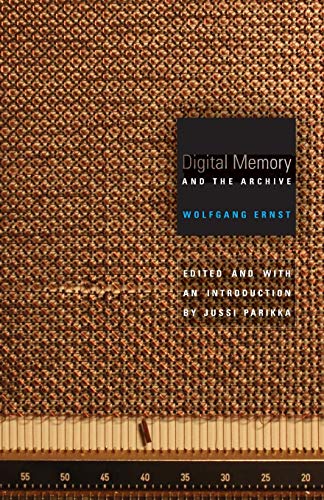
Sinopsis
In the popular imagination, archives are remote, largely obsolete institutions: either antiquated, inevitably dusty libraries or sinister repositories of personal secrets maintained by police states. Yet the archive is now a ubiquitous feature of digital life. Rather than being deleted, e-mails and other computer files are archived. Media software and cloud storage allow for the instantaneous cataloging and preservation of data, from music, photographs, and videos to personal information gathered by social media sites.
In this digital landscape, the archival-oriented media theories of Wolfgang Ernst are particularly relevant. Digital Memory and the Archive, the first English-language collection of the German media theorist’s work, brings together essays that present Ernst’s controversial materialist approach to media theory and history. His insights are central to the emerging field of media archaeology, which uncovers the role of specific technologies and mechanisms, rather than content, in shaping contemporary culture and society.
Ernst’s interrelated ideas on the archive, machine time and microtemporality, and the new regimes of memory offer a new perspective on both current digital culture and the infrastructure of media historical knowledge. For Ernst, different forms of media systems-from library catalogs to sound recordings-have influenced the content and understanding of the archive and other institutions of memory. At the same time, digital archiving has become a contested site that is highly resistant to curation, thus complicating the creation and preservation of cultural memory and history.
"Sinopsis" puede pertenecer a otra edición de este libro.
Acerca del autor
Wolfgang Ernst is professor and chair at the Institute for Musicology and Media Studies at Humboldt University, Berlin. He is the author of several books, including M.edium F.oucault, Das Rumoren der Archive, and Das Gesetz des GedÄchtnisses. His writings have appeared in English in several journals and publications.
Jussi Parikka is reader in media and design at the Winchester School of Art (UK) and adjunct professor at the University of Turku in Finland. His books include Insect Media (Minnesota, 2010) and What Is Media Archaeology?
"Sobre este título" puede pertenecer a otra edición de este libro.
Resultados de la búsqueda para Digital Memory and the Archive: Volume 39 (Electronic...

Imagen de archivo
Digital Memory and the Archive (Volume 39) (Electronic Mediations)
Publicado por
Univ Of Minnesota Press, 2012
ISBN 10: 0816677670
ISBN 13: 9780816677672
Antiguo o usado
paperback
Librería: Evergreen Goodwill, Seattle, WA, Estados Unidos de America
Calificación del vendedor: 5 de 5 estrellas

paperback. Condición: Good. Nº de ref. del artículo: mon0000808807
Comprar usado
EUR 17,80
Envío por EUR 3,47
Se envía dentro de Estados Unidos de America
Se envía dentro de Estados Unidos de America
Cantidad disponible: 1 disponibles
Imagen de archivo
Digital Memory and the Archive (Volume 39) (Electronic Mediations)
Publicado por
Univ Of Minnesota Press, 2012
ISBN 10: 0816677670
ISBN 13: 9780816677672
Antiguo o usado
Tapa blanda
Librería: World of Books (was SecondSale), Montgomery, IL, Estados Unidos de America
Calificación del vendedor: 5 de 5 estrellas
Condición: Very Good. Item in very good condition! Textbooks may not include supplemental items i.e. CDs, access codes etc. Nº de ref. del artículo: 00103284318
Comprar usado
EUR 21,37
Gastos de envío gratis
Se envía dentro de Estados Unidos de America
Se envía dentro de Estados Unidos de America
Cantidad disponible: 1 disponibles
Imagen de archivo
Digital Memory and the Archive
Publicado por
University of Minnesota Press, 2012
ISBN 10: 0816677670
ISBN 13: 9780816677672
Antiguo o usado
Paperback
Librería: World of Books Inc, Montgomery, IL, Estados Unidos de America
Calificación del vendedor: 4 de 5 estrellas

Paperback. Condición: Very Good. The archival-oriented media theories of Wolfgang Ernst are particularly relevant. Digital Memory and the Archive. Nº de ref. del artículo: CIN0816677670VG
Comprar usado
EUR 23,16
Gastos de envío gratis
Se envía dentro de Estados Unidos de America
Se envía dentro de Estados Unidos de America
Cantidad disponible: 1 disponibles
Imagen de archivo
Digital Memory and the Archive Format: Paperback
Publicado por
University of Chicago press, 2012
ISBN 10: 0816677670
ISBN 13: 9780816677672
Nuevo
Tapa blanda
Librería: INDOO, Avenel, NJ, Estados Unidos de America
Calificación del vendedor: 5 de 5 estrellas
Condición: New. Brand New. Nº de ref. del artículo: 9780816677672
Comprar nuevo
EUR 24,23
Gastos de envío gratis
Se envía dentro de Estados Unidos de America
Se envía dentro de Estados Unidos de America
Cantidad disponible: Más de 20 disponibles
Imagen del vendedor
Digital Memory and the Archive
Publicado por
Univ Of Minnesota Press, 2012
ISBN 10: 0816677670
ISBN 13: 9780816677672
Nuevo
Tapa blanda
Librería: GreatBookPrices, Columbia, MD, Estados Unidos de America
Calificación del vendedor: 5 de 5 estrellas
Condición: New. Nº de ref. del artículo: 18646686-n
Comprar nuevo
EUR 25,92
Envío por EUR 2,30
Se envía dentro de Estados Unidos de America
Se envía dentro de Estados Unidos de America
Cantidad disponible: Más de 20 disponibles
Imagen del vendedor
Digital Memory and the Archive
Publicado por
University of Minnesota Press, US, 2012
ISBN 10: 0816677670
ISBN 13: 9780816677672
Nuevo
Paperback
Librería: Rarewaves.com USA, London, LONDO, Reino Unido
Calificación del vendedor: 5 de 5 estrellas
Paperback. Condición: New. In the popular imagination, archives are remote, largely obsolete institutions: either antiquated, inevitably dusty libraries or sinister repositories of personal secrets maintained by police states. Yet the archive is now a ubiquitous feature of digital life. Rather than being deleted, e-mails and other computer files are archived. Media software and cloud storage allow for the instantaneous cataloging and preservation of data, from music, photographs, and videos to personal information gathered by social media sites.In this digital landscape, the archival-oriented media theories of Wolfgang Ernst are particularly relevant. Digital Memory and the Archive, the first English-language collection of the German media theorist's work, brings together essays that present Ernst's controversial materialist approach to media theory and history. His insights are central to the emerging field of media archaeology, which uncovers the role of specific technologies and mechanisms, rather than content, in shaping contemporary culture and society.Ernst's interrelated ideas on the archive, machine time and microtemporality, and the new regimes of memory offer a new perspective on both current digital culture and the infrastructure of media historical knowledge. For Ernst, different forms of media systems-from library catalogs to sound recordings-have influenced the content and understanding of the archive and other institutions of memory. At the same time, digital archiving has become a contested site that is highly resistant to curation, thus complicating the creation and preservation of cultural memory and history. Nº de ref. del artículo: LU-9780816677672
Comprar nuevo
EUR 28,30
Gastos de envío gratis
Se envía de Reino Unido a Estados Unidos de America
Se envía de Reino Unido a Estados Unidos de America
Cantidad disponible: 1 disponibles
Imagen del vendedor
Digital Memory and the Archive
Publicado por
Univ Of Minnesota Press, 2012
ISBN 10: 0816677670
ISBN 13: 9780816677672
Antiguo o usado
Tapa blanda
Librería: GreatBookPrices, Columbia, MD, Estados Unidos de America
Calificación del vendedor: 5 de 5 estrellas
Condición: As New. Unread book in perfect condition. Nº de ref. del artículo: 18646686
Comprar usado
EUR 27,17
Envío por EUR 2,30
Se envía dentro de Estados Unidos de America
Se envía dentro de Estados Unidos de America
Cantidad disponible: Más de 20 disponibles
Imagen del vendedor
Digital Memory and the Archive (Paperback or Softback)
Publicado por
University of Minnesota Press 12/21/2012, 2012
ISBN 10: 0816677670
ISBN 13: 9780816677672
Nuevo
Paperback or Softback
Librería: BargainBookStores, Grand Rapids, MI, Estados Unidos de America
Calificación del vendedor: 5 de 5 estrellas
Paperback or Softback. Condición: New. Digital Memory and the Archive. Book. Nº de ref. del artículo: BBS-9780816677672
Comprar nuevo
EUR 34,88
Gastos de envío gratis
Se envía dentro de Estados Unidos de America
Se envía dentro de Estados Unidos de America
Cantidad disponible: 5 disponibles
Imagen del vendedor
Digital Memory and the Archive
Publicado por
University of Minnesota Press, US, 2012
ISBN 10: 0816677670
ISBN 13: 9780816677672
Nuevo
Paperback
Librería: Rarewaves USA, HEBRON, KY, Estados Unidos de America
Calificación del vendedor: 5 de 5 estrellas
Paperback. Condición: New. In the popular imagination, archives are remote, largely obsolete institutions: either antiquated, inevitably dusty libraries or sinister repositories of personal secrets maintained by police states. Yet the archive is now a ubiquitous feature of digital life. Rather than being deleted, e-mails and other computer files are archived. Media software and cloud storage allow for the instantaneous cataloging and preservation of data, from music, photographs, and videos to personal information gathered by social media sites.In this digital landscape, the archival-oriented media theories of Wolfgang Ernst are particularly relevant. Digital Memory and the Archive, the first English-language collection of the German media theorist's work, brings together essays that present Ernst's controversial materialist approach to media theory and history. His insights are central to the emerging field of media archaeology, which uncovers the role of specific technologies and mechanisms, rather than content, in shaping contemporary culture and society.Ernst's interrelated ideas on the archive, machine time and microtemporality, and the new regimes of memory offer a new perspective on both current digital culture and the infrastructure of media historical knowledge. For Ernst, different forms of media systems-from library catalogs to sound recordings-have influenced the content and understanding of the archive and other institutions of memory. At the same time, digital archiving has become a contested site that is highly resistant to curation, thus complicating the creation and preservation of cultural memory and history. Nº de ref. del artículo: LU-9780816677672
Comprar nuevo
EUR 38,30
Gastos de envío gratis
Se envía dentro de Estados Unidos de America
Se envía dentro de Estados Unidos de America
Cantidad disponible: Más de 20 disponibles
Imagen de archivo
Digital Memory and the Archive
Impresión bajo demandaLibrería: Revaluation Books, Exeter, Reino Unido
Calificación del vendedor: 5 de 5 estrellas
Paperback. Condición: Brand New. 256 pages. 8.50x5.50x1.50 inches. In Stock. This item is printed on demand. Nº de ref. del artículo: __0816677670
Comprar nuevo
EUR 27,01
Envío por EUR 11,66
Se envía de Reino Unido a Estados Unidos de America
Se envía de Reino Unido a Estados Unidos de America
Cantidad disponible: 2 disponibles