
Artículos relacionados a Sensory Design
Sinopsis
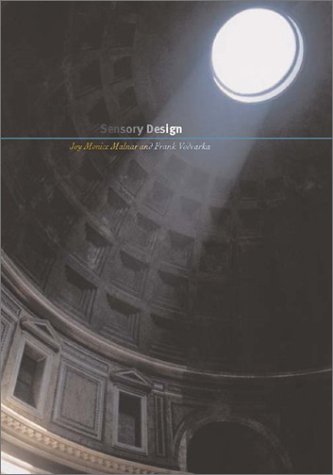
What if we designed for all of our senses? Suppose for a moment that sound, touch, and odor were treated as the equals of sight, and emotion considered as important as cognition. What would our built environment be like if sensory response, sentiment, and memory were critical design factors, the equals of structure and program? In Sensory Design, Joy Monice Malnar and Frank Vodvarka explore the nature of our responses to spatial constructs―from various sorts of buildings to gardens and outdoor spaces, to constructions of fantasy. To the degree that this response can be calculated, it can serve as a typology for the design of significant spaces, one that would sharply contrast with the Cartesian model that dominates architecture today.In developing this typology, the authors consult the environmental sciences, anthropology, psychology, and architectural theory, as well as the spatial analysis found in literary depiction. Finally, they examine the opportunities that CAVE™ and other immersive virtual reality technologies present in furthering a new, sensory-oriented design paradigm. The result is a new philosophy of design that both celebrates our sensuous occupation of the built environment and creates more humane design.Joy Monice Malnar, AIA, is associate professor of architecture at the University of Illinois, Urbana-Champaign. Frank Vodvarka is associate professor of fine arts at Loyola University Chicago. They are coauthors of The Interior Dimension: A Theoretical Approach to Enclosed Space (1992).
"Sinopsis" puede pertenecer a otra edición de este libro.
Acerca del autor
Charlotte y Peter Fiell son dos autoridades en historia, teoría y crítica del diseño y han escrito más de sesenta libros sobre la materia, muchos de los cuales se han convertido en éxitos de ventas. También han impartido conferencias y cursos como profesores invitados, han comisariado exposiciones y asesorado a fabricantes, museos, salas de subastas y grandes coleccionistas privados de todo el mundo. Los Fiell han escrito numerosos libros para TASCHEN, entre los que se incluyen 1000 Chairs, Diseño del siglo XX, El diseño industrial de la A a la Z, Scandinavian Design y Diseño del siglo XXI.
"Sobre este título" puede pertenecer a otra edición de este libro.
Resultados de la búsqueda para Sensory Design

Imagen de archivo
Sensory Design
Publicado por
Univ Of Minnesota Press, 2004
ISBN 10: 0816639604
ISBN 13: 9780816639601
Antiguo o usado
Paperback
Librería: HPB-Emerald, Dallas, TX, Estados Unidos de America
Calificación del vendedor: 5 de 5 estrellas

Paperback. Condición: Very Good. Connecting readers with great books since 1972! Used books may not include companion materials, and may have some shelf wear or limited writing. We ship orders daily and Customer Service is our top priority! Nº de ref. del artículo: S_480682429
Comprar usado
EUR 14,48
Envío por EUR 3,30
Se envía dentro de Estados Unidos de America
Se envía dentro de Estados Unidos de America
Cantidad disponible: 1 disponibles
Imagen de archivo
Sensory Design
Publicado por
Univ Of Minnesota Press, 2004
ISBN 10: 0816639604
ISBN 13: 9780816639601
Antiguo o usado
paperback
Librería: Three Hegemons Books, Brooklyn, NY, Estados Unidos de America
Calificación del vendedor: 5 de 5 estrellas
paperback. Condición: Very Good. Minor wear. No marks in text. Nº de ref. del artículo: 13-2026072302
Comprar usado
EUR 15,98
Envío por EUR 2,64
Se envía dentro de Estados Unidos de America
Se envía dentro de Estados Unidos de America
Cantidad disponible: 1 disponibles
Imagen de archivo
Sensory Design
Publicado por
Univ Of Minnesota Press, 2004
ISBN 10: 0816639604
ISBN 13: 9780816639601
Antiguo o usado
paperback
Librería: HPB-Ruby, Dallas, TX, Estados Unidos de America
Calificación del vendedor: 5 de 5 estrellas
paperback. Condición: Very Good. Connecting readers with great books since 1972! Used books may not include companion materials, and may have some shelf wear or limited writing. We ship orders daily and Customer Service is our top priority! Nº de ref. del artículo: S_484849628
Comprar usado
EUR 15,38
Envío por EUR 3,30
Se envía dentro de Estados Unidos de America
Se envía dentro de Estados Unidos de America
Cantidad disponible: 1 disponibles
Imagen de archivo
Sensory Design
Publicado por
Univ Of Minnesota Press, 2004
ISBN 10: 0816639604
ISBN 13: 9780816639601
Antiguo o usado
Paperback
Librería: Books From California, Simi Valley, CA, Estados Unidos de America
Calificación del vendedor: 4 de 5 estrellas

Paperback. Condición: Fine. Nº de ref. del artículo: mon0004064255
Comprar usado
EUR 15,68
Envío por EUR 4,39
Se envía dentro de Estados Unidos de America
Se envía dentro de Estados Unidos de America
Cantidad disponible: 1 disponibles
Imagen de archivo
Sensory Design
Publicado por
University of Minnesota Press, 2004
ISBN 10: 0816639604
ISBN 13: 9780816639601
Antiguo o usado
Tapa blanda
Librería: Better World Books, Mishawaka, IN, Estados Unidos de America
Calificación del vendedor: 5 de 5 estrellas
Condición: Good. Pages intact with minimal writing/highlighting. The binding may be loose and creased. Dust jackets/supplements are not included. Stock photo provided. Product includes identifying sticker. Better World Books: Buy Books. Do Good. Nº de ref. del artículo: GRP95785423
Comprar usado
EUR 21,01
Gastos de envío gratis
Se envía dentro de Estados Unidos de America
Se envía dentro de Estados Unidos de America
Cantidad disponible: 1 disponibles
Imagen de archivo
Sensory Design Format: Paperback
Publicado por
University of Chicago press, 2004
ISBN 10: 0816639604
ISBN 13: 9780816639601
Nuevo
Tapa blanda
Librería: INDOO, Avenel, NJ, Estados Unidos de America
Calificación del vendedor: 5 de 5 estrellas
Condición: New. Brand New. Nº de ref. del artículo: 9780816639601
Comprar nuevo
EUR 27,84
Gastos de envío gratis
Se envía dentro de Estados Unidos de America
Se envía dentro de Estados Unidos de America
Cantidad disponible: Más de 20 disponibles
Imagen de archivo
Sensory Design
Publicado por
MP - University Of Minnesota Press, 2004
ISBN 10: 0816639604
ISBN 13: 9780816639601
Nuevo
PAP
Librería: PBShop.store UK, Fairford, GLOS, Reino Unido
Calificación del vendedor: 5 de 5 estrellas
PAP. Condición: New. New Book. Shipped from UK. Established seller since 2000. Nº de ref. del artículo: FW-9780816639601
Comprar nuevo
EUR 27,34
Envío por EUR 5,83
Se envía de Reino Unido a Estados Unidos de America
Se envía de Reino Unido a Estados Unidos de America
Cantidad disponible: 5 disponibles
Imagen del vendedor
Sensory Design
Publicado por
University of Minnesota Press, US, 2004
ISBN 10: 0816639604
ISBN 13: 9780816639601
Nuevo
Paperback
Librería: Rarewaves.com USA, London, LONDO, Reino Unido
Calificación del vendedor: 5 de 5 estrellas
Paperback. Condición: New. What if we designed for all of our senses? Suppose for a moment that sound, touch, and odor were treated as the equals of sight, and emotion considered as important as cognition. What would our built environment be like if sensory response, sentiment, and memory were critical design factors, the equals of structure and program? In Sensory Design, Joy Monice Malnar and Frank Vodvarka explore the nature of our responses to spatial constructs-from various sorts of buildings to gardens and outdoor spaces, to constructions of fantasy. To the degree that this response can be calculated, it can serve as a typology for the design of significant spaces, one that would sharply contrast with the Cartesian model that dominates architecture today.In developing this typology, the authors consult the environmental sciences, anthropology, psychology, and architectural theory, as well as the spatial analysis found in literary depiction. Finally, they examine the opportunities that CAVET and other immersive virtual reality technologies present in furthering a new, sensory-oriented design paradigm. The result is a new philosophy of design that both celebrates our sensuous occupation of the built environment and creates more humane design.Joy Monice Malnar, AIA, is associate professor of architecture at the University of Illinois, Urbana-Champaign. Frank Vodvarka is associate professor of fine arts at Loyola University Chicago. They are coauthors of The Interior Dimension: A Theoretical Approach to Enclosed Space (1992). Nº de ref. del artículo: LU-9780816639601
Comprar nuevo
EUR 35,63
Gastos de envío gratis
Se envía de Reino Unido a Estados Unidos de America
Se envía de Reino Unido a Estados Unidos de America
Cantidad disponible: 3 disponibles
Imagen de archivo
Sensory Design (eng)
Publicado por
Univ Of Minnesota Press, 2004
ISBN 10: 0816639604
ISBN 13: 9780816639601
Nuevo
Tapa blanda
Librería: Brook Bookstore On Demand, Napoli, NA, Italia
Calificación del vendedor: 5 de 5 estrellas
Condición: new. Nº de ref. del artículo: ba1988799f2611a8f1ba08e36bba18f5
Comprar nuevo
EUR 32,27
Envío por EUR 6,80
Se envía de Italia a Estados Unidos de America
Se envía de Italia a Estados Unidos de America
Cantidad disponible: 5 disponibles
Imagen de archivo
Sensory Design
Publicado por
Univ Of Minnesota Press, 2004
ISBN 10: 0816639604
ISBN 13: 9780816639601
Antiguo o usado
Soft cover
Original o primera edición
Librería: Herons' Nest Books, Kings Langley, Reino Unido
Calificación del vendedor: 5 de 5 estrellas
Soft cover. Condición: Very Good. 1st Edition. Nº de ref. del artículo: 6519
Comprar usado
EUR 16,74
Envío por EUR 23,23
Se envía de Reino Unido a Estados Unidos de America
Se envía de Reino Unido a Estados Unidos de America
Cantidad disponible: 1 disponibles