
Artículos relacionados a Pawn Structure Chess (McKay Chess Library)
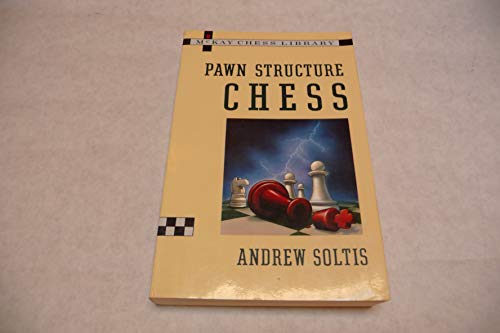
Sinopsis
Some 250 years ago, the great Philidor wrote, "The pawns are the soul of chess." Although that statement is perhaps the most common cliche in the literature of the game, it is too often misunderstood.
Pawns are usually considered weak because of their limited range of movement. But the pawns' restricted mobility is precisely what makes them so important strategically: they form a semi-permanent structure -- often called a "pawn skeleton" -- that establishes the territorial lines of the coming battle and thus the nature of the battle itself. Understanding how pawns affect strategy is the subject of this important book. In it you will learn:
-- how to handle the characteristic pawn structure of each opening "family" and each major variation
-- how to recognize the strengths and weaknesses of pawn chains
-- when to exchange pawns in the center -- and when not to
-- how to cramp your opponent's position and what to do if your opponent cramps yours
-- how to create and exploit pawn "holes"...and much, much more, all copiously illustrated by complete games from actual play.
"Sinopsis" puede pertenecer a otra edición de este libro.
Acerca del autor
Andrew Soltis is a grandmaster and a chess columnist for New York Post and Chess Life. In 1988, he was named chess journalist of the year by the Chess Journalists of America.
De la solapa interior
rs ago, the great Philidor wrote, "The pawns are the soul of chess." Although that statement is perhaps the most common cliche in the literature of the game, it is too often misunderstood.<br><br>Pawns are usually considered weak because of their limited range of movement. But the pawns' restricted mobility is precisely what makes them so important strategically: they form a semi-permanent structure -- often called a "pawn skeleton" -- that establishes the territorial lines of the coming battle and thus the nature of the battle itself. Understanding how pawns affect strategy is the subject of this important book. In it you will learn:<br>-- how to handle the characteristic pawn structure of each opening "family" and each major variation<br>-- how to recognize the strengths and weaknesses of pawn chains<br>-- when to exchange pawns in the center -- and when not to<br>-- how to cramp your opponent's position and what to do if your opponent cramps yours<
"Sobre este título" puede pertenecer a otra edición de este libro.
Resultados de la búsqueda para Pawn Structure Chess (McKay Chess Library)

Imagen del vendedor
Pawn Structure Chess
Publicado por
Random House Puzzles & Games, 1995
ISBN 10: 0812925297
ISBN 13: 9780812925296
Antiguo o usado
Tapa blanda
Librería: ICTBooks, Wichita, KS, Estados Unidos de America
Calificación del vendedor: 5 de 5 estrellas

Condición: good. Book shows wear from use but remains a usable copy. May include writing highlighting underlining library markings. LISTING USES STOCK PHOTOS AND COVER MAY VARY. Ships via USPS and typically arrives within 10-12 business days. Nº de ref. del artículo: ICV.0812925297.G
Comprar usado
EUR 31,21
Gastos de envío gratis
Se envía dentro de Estados Unidos de America
Se envía dentro de Estados Unidos de America
Cantidad disponible: 1 disponibles
Imagen de archivo
Pawn Structure Chess
Publicado por
Random House Puzzles & Games, 1995
ISBN 10: 0812925297
ISBN 13: 9780812925296
Antiguo o usado
Paperback
Librería: Affordable Collectibles, Columbia, MO, Estados Unidos de America
Calificación del vendedor: 5 de 5 estrellas
Paperback. Condición: Very Good. No marks. Minimal use. Later, 4th printing number line. Nº de ref. del artículo: 26070316
Comprar usado
EUR 43,66
Envío por EUR 3,46
Se envía dentro de Estados Unidos de America
Se envía dentro de Estados Unidos de America
Cantidad disponible: 1 disponibles
Imagen del vendedor
Pawn Structure Chess
Publicado por
Random House Puzzles & Games, 1995
ISBN 10: 0812925297
ISBN 13: 9780812925296
Nuevo
Tapa blanda
Librería: Cycle Books LA, South el monte, CA, Estados Unidos de America
Calificación del vendedor: 5 de 5 estrellas
Condición: new. Nº de ref. del artículo: AMTV.0812925297.N
Comprar nuevo
EUR 45,44
Envío por EUR 2,59
Se envía dentro de Estados Unidos de America
Se envía dentro de Estados Unidos de America
Cantidad disponible: 1 disponibles
Imagen de archivo
Pawn Structure Chess
Publicado por
Random House Puzzles & Games, 1995
ISBN 10: 0812925297
ISBN 13: 9780812925296
Nuevo
Paperback
Librería: GoldBooks, Denver, CO, Estados Unidos de America
Calificación del vendedor: 5 de 5 estrellas
Paperback. Condición: new. New Copy. Customer Service Guaranteed. Nº de ref. del artículo: 49U29_47_0812925297
Comprar nuevo
EUR 69,99
Envío por EUR 4,76
Se envía dentro de Estados Unidos de America
Se envía dentro de Estados Unidos de America
Cantidad disponible: 1 disponibles
Imagen de archivo
Pawn Structure Chess
Publicado por
Random House Puzzles & Games, 1995
ISBN 10: 0812925297
ISBN 13: 9780812925296
Nuevo
paperback
Librería: BennettBooksLtd, Los Angeles, CA, Estados Unidos de America
Calificación del vendedor: 5 de 5 estrellas
paperback. Condición: New. In shrink wrap. Looks like an interesting title! Nº de ref. del artículo: Q-0812925297
Comprar nuevo
EUR 140,90
Envío por EUR 6,02
Se envía dentro de Estados Unidos de America
Se envía dentro de Estados Unidos de America
Cantidad disponible: 1 disponibles
Imagen de archivo
Pawn Structure Chess
Publicado por
Random House Puzzles & Games, 1995
ISBN 10: 0812925297
ISBN 13: 9780812925296
Nuevo
Tapa blanda
Librería: SHIMEDIA, Brooklyn, NY, Estados Unidos de America
Calificación del vendedor: 4 de 5 estrellas

Condición: New. Satisfaction Guaranteed or your money back. Nº de ref. del artículo: 0812925297
Comprar nuevo
EUR 178,37
Gastos de envío gratis
Se envía dentro de Estados Unidos de America
Se envía dentro de Estados Unidos de America
Cantidad disponible: 1 disponibles