
Artículos relacionados a The Reality of Illusion: Ecological Approach to Cognitive...
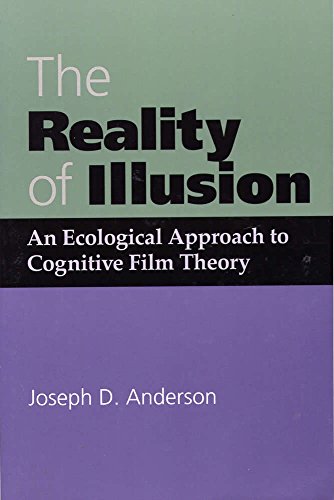
Sinopsis
The Reality of Illusion deals with the problems - psychology and spectatorship - that are central to the field of cinema studies. The author joins a small group of theorists who are sounding a call to increase the emphasis on experimental method as the primary tool for research on film viewing. He regards cognitive theory, which treats the mind as an information processor and a computer as an inspiration, as the research paradigm of choice for film theorists. The film viewer is ""a standard biological audio/visual processor"". Thus, Anderson has organized this book according to areas of film theory that can be studied from a cognitive perspective - human perception, perception of images and sounds in the film medium, problems of continuity and narrativity, and character recognition and attribution.
"Sinopsis" puede pertenecer a otra edición de este libro.
Acerca de los autores
Joseph D. Anderson heads the Institute for Cognitive Studies in Film and Video at the University of Kansas
Joseph D. Anderson heads the Institute for Cognitive Studies in Film and Video at the University of Kansas
De la contraportada
Anderson's primary argument is that motion picture viewers mentally process the projected images and sounds of a movie according to the same perceptual rules used in response to visual and aural stimuli in the world outside the theater. To process everyday events in the world, the human mind is equipped with capacities developed through millions of years of evolution. In this context, Anderson builds a metatheory influenced by the writings of J. J. and Eleanor Gibson and employs it to explore motion picture comprehension as a subset of general human comprehension and perception, focusing his ecological approach to film on the analysis of cinema's true substance: illusion. Anderson investigates how viewers, with their mental capacities designed for survival, respond to particular aspects of filmic structure - continuity, diegesis, character development, and narrative - and examines the ways in which rules of visual and aural processing are recognized and exploited by filmmakers. He uses Orson Welles's Citizen Kane to disassemble and redefine the contemporary concept of character identification; he addresses continuity in a shot-by-shot analysis of images from Casablanca; and he uses a wide range of research studies, such as Harry F. Harlow's work with infant rhesus monkeys, to describe how motion pictures become a substitute or surrogate reality for an audience. By examining the human capacity for play and the inherent potential for illusion, Anderson considers the reasons viewers find movies so enthralling, so emotionally powerful, and so remarkably real.
"Sobre este título" puede pertenecer a otra edición de este libro.
Resultados de la búsqueda para The Reality of Illusion: Ecological Approach to Cognitive...

Imagen de archivo
The Reality of Illusion: An Ecological Approach to Cognitive Film Theory
Publicado por
Southern Illinois University Press, 1998
ISBN 10: 0809321963
ISBN 13: 9780809321964
Antiguo o usado
Tapa blanda
Librería: Greenworld Books, Arlington, TX, Estados Unidos de America
Calificación del vendedor: 5 de 5 estrellas

Condición: very_good. Fast Free Shipping â" Very Good condition book with a firm cover and clean pages. Shows normal use and some light wear or limited notes markings. A solid, nice copy to enjoy. Nº de ref. del artículo: GWV.0809321963.VG
Comprar usado
EUR 5,19
Gastos de envío gratis
Se envía dentro de Estados Unidos de America
Se envía dentro de Estados Unidos de America
Cantidad disponible: 1 disponibles
Imagen de archivo
The Reality of Illusion An Eco
Publicado por
Southern Illinois University Press, 1998
ISBN 10: 0809321963
ISBN 13: 9780809321964
Antiguo o usado
Tapa blanda
Librería: World of Books (was SecondSale), Montgomery, IL, Estados Unidos de America
Calificación del vendedor: 5 de 5 estrellas
Condición: Good. Item in good condition. Textbooks may not include supplemental items i.e. CDs, access codes etc. Nº de ref. del artículo: 00109182968
Comprar usado
EUR 5,50
Gastos de envío gratis
Se envía dentro de Estados Unidos de America
Se envía dentro de Estados Unidos de America
Cantidad disponible: 1 disponibles
Imagen de archivo
The Reality of Illusion: An Ecological Approach to Cognitive Film Theory
Publicado por
Southern Illinois University Press, 1998
ISBN 10: 0809321963
ISBN 13: 9780809321964
Antiguo o usado
Paperback
Librería: ThriftBooks-Dallas, Dallas, TX, Estados Unidos de America
Calificación del vendedor: 5 de 5 estrellas
Paperback. Condición: Fair. No Jacket. Readable copy. Pages may have considerable notes/highlighting. ~ ThriftBooks: Read More, Spend Less. Nº de ref. del artículo: G0809321963I5N00
Comprar usado
EUR 6,12
Gastos de envío gratis
Se envía dentro de Estados Unidos de America
Se envía dentro de Estados Unidos de America
Cantidad disponible: 1 disponibles
Imagen de archivo
The Reality of Illusion: An Ecological Approach to Cognitive Film Theory
Publicado por
Southern Illinois University Press, 1998
ISBN 10: 0809321963
ISBN 13: 9780809321964
Antiguo o usado
Paperback
Librería: ThriftBooks-Atlanta, AUSTELL, GA, Estados Unidos de America
Calificación del vendedor: 5 de 5 estrellas
Paperback. Condición: Very Good. No Jacket. May have limited writing in cover pages. Pages are unmarked. ~ ThriftBooks: Read More, Spend Less. Nº de ref. del artículo: G0809321963I4N00
Comprar usado
EUR 6,12
Gastos de envío gratis
Se envía dentro de Estados Unidos de America
Se envía dentro de Estados Unidos de America
Cantidad disponible: 1 disponibles
Imagen de archivo
The Reality of Illusion: An Ecological Approach to Cognitive Film Theory
Publicado por
Southern Illinois University Press, 1998
ISBN 10: 0809321963
ISBN 13: 9780809321964
Antiguo o usado
Paperback
Librería: ThriftBooks-Atlanta, AUSTELL, GA, Estados Unidos de America
Calificación del vendedor: 5 de 5 estrellas
Paperback. Condición: Fair. No Jacket. Readable copy. Pages may have considerable notes/highlighting. ~ ThriftBooks: Read More, Spend Less. Nº de ref. del artículo: G0809321963I5N00
Comprar usado
EUR 6,12
Gastos de envío gratis
Se envía dentro de Estados Unidos de America
Se envía dentro de Estados Unidos de America
Cantidad disponible: 1 disponibles
Imagen de archivo
The Reality of Illusion: An Ecological Approach to Cognitive Film Theory
Publicado por
Southern Illinois University Pre, 1998
ISBN 10: 0809321963
ISBN 13: 9780809321964
Antiguo o usado
paperback
Librería: A Team Books, Conway, AR, Estados Unidos de America
Calificación del vendedor: 5 de 5 estrellas
paperback. Condición: Acceptable. Used books may not include access codes or one time use codes. Proven Seller with Excellent Customer Service. Choose expedited shipping and get it FAST. Nº de ref. del artículo: sun0000001975
Comprar usado
EUR 4,58
Envío por EUR 2,67
Se envía dentro de Estados Unidos de America
Se envía dentro de Estados Unidos de America
Cantidad disponible: 2 disponibles
Imagen de archivo
The Reality of Illusion: Ecological Approach to Cognitive Film Theory
Publicado por
Southern Illinois University Press, 1998
ISBN 10: 0809321963
ISBN 13: 9780809321964
Antiguo o usado
Paperback
Librería: World of Books Inc, Montgomery, IL, Estados Unidos de America
Calificación del vendedor: 4 de 5 estrellas

Paperback. Condición: Good. Deals with problems - psychology and spectatorship - central to cinema studies. The book is organized by areas that can be studied from a cognitive perspective - human perception, perception of images and sounds, continuity and narrativity, and character recognition and attribution. Nº de ref. del artículo: CIN0809321963G
Comprar usado
EUR 7,33
Gastos de envío gratis
Se envía dentro de Estados Unidos de America
Se envía dentro de Estados Unidos de America
Cantidad disponible: 1 disponibles
Imagen de archivo
The Reality of Illusion: An Ecological Approach to Cognitive Film Theory
Publicado por
Southern Illinois University Pre, 1998
ISBN 10: 0809321963
ISBN 13: 9780809321964
Antiguo o usado
paperback
Librería: Midtown Scholar Bookstore, Harrisburg, PA, Estados Unidos de America
Calificación del vendedor: 5 de 5 estrellas
paperback. Condición: Good. Good - Bumped and creased book with tears to the extremities, but not affecting the text block, may have remainder mark or previous owner's name - GOOD PAPERBACK Standard-sized. Nº de ref. del artículo: M0809321963Z3
Comprar usado
EUR 2,24
Envío por EUR 5,34
Se envía dentro de Estados Unidos de America
Se envía dentro de Estados Unidos de America
Cantidad disponible: 4 disponibles
Imagen de archivo
The Reality of Illusion: An Ecological Approach to Cognitive Film Theory
Publicado por
Southern Illinois University Pre, 1998
ISBN 10: 0809321963
ISBN 13: 9780809321964
Antiguo o usado
paperback
Librería: HPB Inc., Dallas, TX, Estados Unidos de America
Calificación del vendedor: 5 de 5 estrellas
paperback. Condición: Very Good. Connecting readers with great books since 1972! Used books may not include companion materials, and may have some shelf wear or limited writing. We ship orders daily and Customer Service is our top priority! Nº de ref. del artículo: S_451527214
Comprar usado
EUR 7,34
Envío por EUR 3,34
Se envía dentro de Estados Unidos de America
Se envía dentro de Estados Unidos de America
Cantidad disponible: 1 disponibles
Imagen de archivo
The Reality of Illusion: An Ecological Approach to Cognitive Film Theory
Publicado por
Southern Illinois University Press, 1998
ISBN 10: 0809321963
ISBN 13: 9780809321964
Antiguo o usado
Paperback
Librería: Textbook Bookie, Little Rock, AR, Estados Unidos de America
Calificación del vendedor: 5 de 5 estrellas
Paperback. Condición: Good. Book in Good condition. Nº de ref. del artículo: 9780809321964-good
Comprar usado
EUR 9,17
Envío por EUR 3,79
Se envía dentro de Estados Unidos de America
Se envía dentro de Estados Unidos de America
Cantidad disponible: 1 disponibles