
Artículos relacionados a Models: The Third Dimension of Science (Writing Science)
Sinopsis
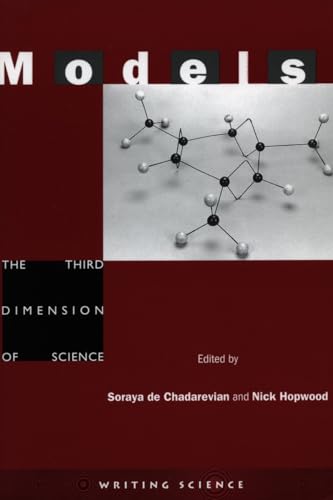
Now that '3-D models' are so often digital displays on flat screens, it is timely to look back at the solid models that were once the third dimension of science. This book is about wooden ships and plastic molecules, wax bodies and a perspex economy, monuments in cork and mathematics in plaster, casts of diseases, habitat dioramas, and extinct monsters rebuilt in bricks and mortar. These remarkable artefacts were fixtures of laboratories and lecture halls, studios and workshops, dockyards and museums. Considering such objects together for the first time, this interdisciplinary volume demonstrates how, in research as well as in teaching, 3-D models played major roles in making knowledge. Accessible and original chapters by leading scholars highlight the special properties of models, explore the interplay between representation in two dimensions and three, and investigate the shift to modelling with computers. The book is fascinating reading for anyone interested in the sciences, medicine, and technology, and in collections and museums.
"Sinopsis" puede pertenecer a otra edición de este libro.
Acerca del autor
Soraya de Chadarevian is Senior Research Associate in the Department of History and Philosophy of Science, University of Cambridge. She is the author, most recently, of Designs for Life: Molecular Biology after World War II (2002). Nick Hopwood is Lecturer in the Department of History and Philosophy of Science, University of Cambridge. His publications include Embryos in Wax: Models from the Ziegler Studio (2002).
De la contraportada
“This finely focused theme and the historical specificity of each author’s contribution sustain and propel the reader through this rich, provocative collection,”—Science Magazine
“ . . . [T]he wide-ranging chapters suggest intriguing aproaches to the investigation of objects which readers may wish to emulate.”—Rittenhouse: Journal of the Scientific Instrument Enterprise
“ . . . [T]he wide-ranging chapters suggest intriguing aproaches to the investigation of objects which readers may wish to emulate.”—Rittenhouse: Journal of the Scientific Instrument Enterprise
De la solapa interior
Now that 3-D models are so often digital displays on flat screens, it is timely to look back at the solid models that were once the third dimension of science. This book is about wooden ships and plastic molecules, wax bodies and a perspex economy, monuments in cork and mathematics in plaster, casts of diseases, habitat dioramas, and extinct monsters rebuilt in bricks and mortar. These remarkable artefacts were fixtures of laboratories and lecture halls, studios and workshops, dockyards and museums. Considering such objects together for the first time, this interdisciplinary volume demonstrates how, in research as well as in teaching, 3-D models played major roles in making knowledge. Accessible and original chapters by leading scholars highlight the special properties of models, explore the interplay between representation in two dimensions and three, and investigate the shift to modelling with computers. The book is fascinating reading for anyone interested in the sciences, medicine, and technology, and in collections and museums.
"Sobre este título" puede pertenecer a otra edición de este libro.
Resultados de la búsqueda para Models: The Third Dimension of Science (Writing Science)

Imagen del vendedor
Models: The Third Dimension of Science (Writing Science)
Publicado por
Stanford University Press, 2004
ISBN 10: 0804739722
ISBN 13: 9780804739726
Antiguo o usado
Tapa blanda
Librería: Bay State Book Company, North Smithfield, RI, Estados Unidos de America
Calificación del vendedor: 5 de 5 estrellas

Condición: very_good. Nº de ref. del artículo: BSM.1CTZT
Comprar usado
EUR 16,96
Gastos de envío gratis
Se envía dentro de Estados Unidos de America
Se envía dentro de Estados Unidos de America
Cantidad disponible: 1 disponibles
Imagen del vendedor
Models: The Third Dimension of Science (Writing Science)
Publicado por
Stanford University Press, 2004
ISBN 10: 0804739722
ISBN 13: 9780804739726
Antiguo o usado
Tapa blanda
Librería: Bay State Book Company, North Smithfield, RI, Estados Unidos de America
Calificación del vendedor: 5 de 5 estrellas
Condición: very_good. Nº de ref. del artículo: BSM.1CXOS
Comprar usado
EUR 16,96
Gastos de envío gratis
Se envía dentro de Estados Unidos de America
Se envía dentro de Estados Unidos de America
Cantidad disponible: 1 disponibles
Imagen de archivo
Models : The Third Dimension of Science
Publicado por
Stanford University Press, 2004
ISBN 10: 0804739722
ISBN 13: 9780804739726
Antiguo o usado
Tapa blanda
Librería: Better World Books, Mishawaka, IN, Estados Unidos de America
Calificación del vendedor: 5 de 5 estrellas
Condición: Good. Former library copy. Pages intact with minimal writing/highlighting. The binding may be loose and creased. Dust jackets/supplements are not included. Includes library markings. Stock photo provided. Product includes identifying sticker. Better World Books: Buy Books. Do Good. Nº de ref. del artículo: 17179280-6
Comprar usado
EUR 17,05
Gastos de envío gratis
Se envía dentro de Estados Unidos de America
Se envía dentro de Estados Unidos de America
Cantidad disponible: 1 disponibles
Imagen de archivo
Models: The Third Dimension of Science (Writing Science)
Publicado por
Stanford University Press, 2004
ISBN 10: 0804739722
ISBN 13: 9780804739726
Antiguo o usado
paperback
Librería: HPB-Red, Dallas, TX, Estados Unidos de America
Calificación del vendedor: 5 de 5 estrellas
paperback. Condición: Good. Connecting readers with great books since 1972! Used textbooks may not include companion materials such as access codes, etc. May have some wear or writing/highlighting. We ship orders daily and Customer Service is our top priority! Nº de ref. del artículo: S_446193694
Comprar usado
EUR 14,95
Envío por EUR 3,33
Se envía dentro de Estados Unidos de America
Se envía dentro de Estados Unidos de America
Cantidad disponible: 1 disponibles
Imagen de archivo
Models: The Third Dimension of Science (Writing Science)
Publicado por
Stanford University Press, 2004
ISBN 10: 0804739722
ISBN 13: 9780804739726
Antiguo o usado
paperback
Original o primera edición
Librería: The Maryland Book Bank, Baltimore, MD, Estados Unidos de America
Calificación del vendedor: 5 de 5 estrellas
paperback. Condición: Good. 1st Edition. Corners are slightly bent. Used - Good. Nº de ref. del artículo: 6-Z-1-0326
Comprar usado
EUR 14,95
Envío por EUR 4,17
Se envía dentro de Estados Unidos de America
Se envía dentro de Estados Unidos de America
Cantidad disponible: 1 disponibles
Imagen de archivo
Models: The Third Dimension of Science (Writing Science)
Publicado por
Stanford University Press, 2004
ISBN 10: 0804739722
ISBN 13: 9780804739726
Antiguo o usado
paperback
Librería: Oblivion Books, Seattle, WA, Estados Unidos de America
Calificación del vendedor: 4 de 5 estrellas

paperback. Condición: Very Good. Softcover. Clean text - NO writing, NO highlighting. Touch of wear to cover. Very good- reading copy. Oversized. Clean text -- NO writing, NO highlighting to text.ÂPLEASE NOTE: Domestic US media (standard) US orders ONLY. NO international orders. Nº de ref. del artículo: mon0000228064
Comprar usado
EUR 16,44
Envío por EUR 4,89
Se envía dentro de Estados Unidos de America
Se envía dentro de Estados Unidos de America
Cantidad disponible: 1 disponibles
Imagen del vendedor
Models : The Third Dimension of Science
Publicado por
Stanford University Press, 2004
ISBN 10: 0804739722
ISBN 13: 9780804739726
Antiguo o usado
Tapa blanda
Librería: GreatBookPrices, Columbia, MD, Estados Unidos de America
Calificación del vendedor: 5 de 5 estrellas
Condición: As New. Unread book in perfect condition. Nº de ref. del artículo: 2570798
Comprar usado
EUR 33,19
Envío por EUR 2,35
Se envía dentro de Estados Unidos de America
Se envía dentro de Estados Unidos de America
Cantidad disponible: Más de 20 disponibles
Imagen de archivo
Models : The Third Dimension of Science
Publicado por
Stanford University Press, 2004
ISBN 10: 0804739722
ISBN 13: 9780804739726
Nuevo
Tapa blanda
Librería: GreatBookPrices, Columbia, MD, Estados Unidos de America
Calificación del vendedor: 5 de 5 estrellas
Condición: New. Nº de ref. del artículo: 2570798-n
Comprar nuevo
EUR 33,27
Envío por EUR 2,35
Se envía dentro de Estados Unidos de America
Se envía dentro de Estados Unidos de America
Cantidad disponible: Más de 20 disponibles
Imagen de archivo
Models: The Third Dimension of Science (Writing Science)
Publicado por
Stanford University Press, 2004
ISBN 10: 0804739722
ISBN 13: 9780804739726
Nuevo
Tapa blanda
Librería: California Books, Miami, FL, Estados Unidos de America
Calificación del vendedor: 5 de 5 estrellas
Condición: New. Nº de ref. del artículo: I-9780804739726
Comprar nuevo
EUR 35,70
Gastos de envío gratis
Se envía dentro de Estados Unidos de America
Se envía dentro de Estados Unidos de America
Cantidad disponible: Más de 20 disponibles
Imagen de archivo
Models: The Third Dimension of Science (Writing Science)
Publicado por
Stanford University Press, 2004
ISBN 10: 0804739722
ISBN 13: 9780804739726
Antiguo o usado
Tapa blanda
Librería: Phatpocket Limited, Waltham Abbey, HERTS, Reino Unido
Calificación del vendedor: 5 de 5 estrellas
Condición: Good. Your purchase helps support Sri Lankan Children's Charity 'The Rainbow Centre'. Ex-library, so some stamps and wear, but in good overall condition. Our donations to The Rainbow Centre have helped provide an education and a safe haven to hundreds of children who live in appalling conditions. Nº de ref. del artículo: Z1-Q-038-03276
Comprar usado
EUR 24,30
Envío por EUR 12,52
Se envía de Reino Unido a Estados Unidos de America
Se envía de Reino Unido a Estados Unidos de America
Cantidad disponible: 1 disponibles