
Artículos relacionados a Practical Reason: On the Theory of Action
Sinopsis
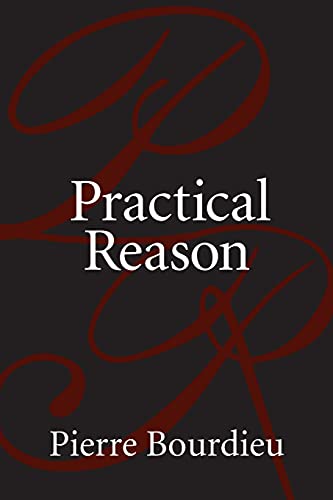
Do social classes really exist? Is disinterested action really possible? What do the family, the church, and the intellectual world have in common? Can morality be founded on hypocrisy? What is the "subject" of action? In this new volume, one of France's foremost social thinkers of our time responds to these major questions and to others, thus tracing the outlines of a work that could be called "Pierre Bourdieu by himself."
In these texts, the author tries to go to the essential, that is, the most elementary and fundamental, questions. He thereby explains the philosophical principles that have led to his social science research and the idea of the human that guides his choices there. With the lucidity allowed by retrospect, Bourdieu brings out the fundamental theories of his greatest books, notably Outline of a Theory of Practice and The Logic of Practice (Stanford, 1990), and, with an eye to the future, presents the first results of his most recent work on the state, the anthropological moorings of the economy, and male domination.
Bourdieu's theory is both a philosophy of science dedicated to revealing the objective relations that shape and underpin social life, and a philosophy of action that takes account of agents' dispositions as well as the structured situations in which they act. This philosophy of action is condensed in a small number of key concepts―habitus, field, capital―and it is defined by the two-way relationship between the objective structures of social fields and the incorporated structures of the habitus.
All in all, this book should be an indispensable introduction to Bourdieu's work, not only to students and scholars in sociology, anthropology, political science, and philosophy, but throughout the social sciences and humanities generally.
"Sinopsis" puede pertenecer a otra edición de este libro.
Acerca del autor
Pierre Bourdieu is Professor of Sociology at the Collège de France. Stanford University Press has published nine other books by Bourdieu, most recently The Rules of Art: Genesis and Structure of the Literary Field (1996).
De la contraportada
Do social classes really exist? Is disinterested action really possible? What do the family, the church, and the intellectual world have in common? Can morality be founded on hypocrisy? What is the “subject” of action? In this new volume, one of France’s foremost social thinkers of our time responds to these major questions and to others, thus tracing the outlines of a work that could be called “Pierre Bourdieu by himself.”
In these texts, the author tries to go to the essential, that is, the most elementary and fundamental, questions. He thereby explains the philosophical principles that have led to his social science research and the idea of the human that guides his choices there. With the lucidity allowed by retrospect, Bourdieu brings out the fundamental theories of his greatest books, notably Outline of a Theory of Practice and The Logic of Practice (Stanford, 1990), and, with an eye to the future, presents the first results of his most recent work on the state, the anthropological moorings of the economy, and male domination.
Bourdieu’s theory is both a philosophy of science dedicated to revealing the objective relations that shape and underpin social life, and a philosophy of action that takes account of agents’ dispositions as well as the structured situations in which they act. This philosophy of action is condensed in a small number of key concepts—habitus, field, capital—and it is defined by the two-way relationship between the objective structures of social fields and the incorporated structures of the habitus.
All in all, this book should be an indispensable introduction to Bourdieu’s work, not only to students and scholars in sociology, anthropology, political science, and philosophy, but throughout the social sciences and humanities generally.
In these texts, the author tries to go to the essential, that is, the most elementary and fundamental, questions. He thereby explains the philosophical principles that have led to his social science research and the idea of the human that guides his choices there. With the lucidity allowed by retrospect, Bourdieu brings out the fundamental theories of his greatest books, notably Outline of a Theory of Practice and The Logic of Practice (Stanford, 1990), and, with an eye to the future, presents the first results of his most recent work on the state, the anthropological moorings of the economy, and male domination.
Bourdieu’s theory is both a philosophy of science dedicated to revealing the objective relations that shape and underpin social life, and a philosophy of action that takes account of agents’ dispositions as well as the structured situations in which they act. This philosophy of action is condensed in a small number of key concepts—habitus, field, capital—and it is defined by the two-way relationship between the objective structures of social fields and the incorporated structures of the habitus.
All in all, this book should be an indispensable introduction to Bourdieu’s work, not only to students and scholars in sociology, anthropology, political science, and philosophy, but throughout the social sciences and humanities generally.
De la solapa interior
Do social classes really exist? Is disinterested action really possible? What do the family, the church, and the intellectual world have in common? Can morality be founded on hypocrisy? What is the subject of action? In this new volume, one of France s foremost social thinkers of our time responds to these major questions and to others, thus tracing the outlines of a work that could be called Pierre Bourdieu by himself.
In these texts, the author tries to go to the essential, that is, the most elementary and fundamental, questions. He thereby explains the philosophical principles that have led to his social science research and the idea of the human that guides his choices there. With the lucidity allowed by retrospect, Bourdieu brings out the fundamental theories of his greatest books, notably Outline of a Theory of Practice and The Logic of Practice (Stanford, 1990), and, with an eye to the future, presents the first results of his most recent work on the state, the anthropological moorings of the economy, and male domination.
Bourdieu s theory is both a philosophy of science dedicated to revealing the objective relations that shape and underpin social life, and a philosophy of action that takes account of agents dispositions as well as the structured situations in which they act. This philosophy of action is condensed in a small number of key concepts habitus, field, capital and it is defined by the two-way relationship between the objective structures of social fields and the incorporated structures of the habitus.
All in all, this book should be an indispensable introduction to Bourdieu s work, not only to students and scholars in sociology, anthropology, political science, and philosophy, but throughout the social sciences and humanities generally.
In these texts, the author tries to go to the essential, that is, the most elementary and fundamental, questions. He thereby explains the philosophical principles that have led to his social science research and the idea of the human that guides his choices there. With the lucidity allowed by retrospect, Bourdieu brings out the fundamental theories of his greatest books, notably Outline of a Theory of Practice and The Logic of Practice (Stanford, 1990), and, with an eye to the future, presents the first results of his most recent work on the state, the anthropological moorings of the economy, and male domination.
Bourdieu s theory is both a philosophy of science dedicated to revealing the objective relations that shape and underpin social life, and a philosophy of action that takes account of agents dispositions as well as the structured situations in which they act. This philosophy of action is condensed in a small number of key concepts habitus, field, capital and it is defined by the two-way relationship between the objective structures of social fields and the incorporated structures of the habitus.
All in all, this book should be an indispensable introduction to Bourdieu s work, not only to students and scholars in sociology, anthropology, political science, and philosophy, but throughout the social sciences and humanities generally.
"Sobre este título" puede pertenecer a otra edición de este libro.
Resultados de la búsqueda para Practical Reason: On the Theory of Action

Imagen de archivo
Practical Reason: On the Theory of Action
Publicado por
Stanford University Press, 1998
ISBN 10: 0804733635
ISBN 13: 9780804733632
Antiguo o usado
Paperback
Librería: World of Books (was SecondSale), Montgomery, IL, Estados Unidos de America
Calificación del vendedor: 5 de 5 estrellas

Paperback. Condición: Very Good. Do social classes really exist? Is disinterested action really possible? What do the family, the church, and the intellectual world have in common? Can morality be founded on hypocrisy? What is the "subject" of action? In this new volume, one of France's foremost social thinkers of our time responds to these major questions and to others, thus tracing the outlines of a work that could be called "Pierre Bourdieu by himself." In these texts, the author tries to go to the essential, that is, the most elementary and fundamental, questions. He thereby explains the philosophical principles that have led to his social science research and the idea of the human that guides his choices there. With the lucidity allowed by retrospect, Bourdieu brings out the fundamental theories of his greatest books, notably Outline of a Theory of Practice and The Logic of Practice (Stanford, 1990), and, with an eye to the future, presents the first results of his most recent work on the state, the anthropological moorings of the economy, and male domination. Bourdieu's theory is both a philosophy of science dedicated to revealing the objective relations that shape and underpin social life, and a philosophy of action that takes account of agents' dispositions as well as the structured situations in which they act. This philosophy of action is condensed in a small number of key concepts?habitus, field, capital?and it is defined by the two-way relationship between the objective structures of social fields and the incorporated structures of the habitus. All in all, this book should be an indispensable introduction to Bourdieu's work, not only to students and scholars in sociology, anthropology, political science, and philosophy, but throughout the social sciences and humanities generally. Nº de ref. del artículo: 00108278234
Comprar usado
EUR 3,46
Gastos de envío gratis
Se envía dentro de Estados Unidos de America
Se envía dentro de Estados Unidos de America
Cantidad disponible: 1 disponibles
Imagen de archivo
Practical Reason: On the Theory of Action
Publicado por
Stanford University Press, 1998
ISBN 10: 0804733635
ISBN 13: 9780804733632
Antiguo o usado
Paperback
Librería: Open Books, Chicago, IL, Estados Unidos de America
Calificación del vendedor: 5 de 5 estrellas
Paperback. Condición: Very Good. Open Books is a nonprofit social venture that provides literacy experiences for thousands of readers each year through inspiring programs and creative capitalization of books. Nº de ref. del artículo: mon0000522507
Comprar usado
EUR 2,69
Envío por EUR 3,55
Se envía dentro de Estados Unidos de America
Se envía dentro de Estados Unidos de America
Cantidad disponible: 1 disponibles
Imagen de archivo
Practical Reason: On the Theory of Action
Publicado por
Stanford University Press, 1998
ISBN 10: 0804733635
ISBN 13: 9780804733632
Antiguo o usado
Paperback
Librería: ThriftBooks-Reno, Reno, NV, Estados Unidos de America
Calificación del vendedor: 5 de 5 estrellas
Paperback. Condición: As New. No Jacket. Pages are clean and are not marred by notes or folds of any kind. ~ ThriftBooks: Read More, Spend Less. Nº de ref. del artículo: G0804733635I2N00
Comprar usado
EUR 6,25
Gastos de envío gratis
Se envía dentro de Estados Unidos de America
Se envía dentro de Estados Unidos de America
Cantidad disponible: 1 disponibles
Imagen de archivo
Practical Reason: On the Theory of Action
Publicado por
Stanford University Press, 1998
ISBN 10: 0804733635
ISBN 13: 9780804733632
Antiguo o usado
Paperback
Librería: ThriftBooks-Phoenix, Phoenix, AZ, Estados Unidos de America
Calificación del vendedor: 5 de 5 estrellas
Paperback. Condición: As New. No Jacket. Pages are clean and are not marred by notes or folds of any kind. ~ ThriftBooks: Read More, Spend Less. Nº de ref. del artículo: G0804733635I2N00
Comprar usado
EUR 6,25
Gastos de envío gratis
Se envía dentro de Estados Unidos de America
Se envía dentro de Estados Unidos de America
Cantidad disponible: 1 disponibles
Imagen de archivo
Practical Reason: On the Theory of Action
Publicado por
Stanford University Press, 1998
ISBN 10: 0804733635
ISBN 13: 9780804733632
Antiguo o usado
Paperback
Librería: ThriftBooks-Atlanta, AUSTELL, GA, Estados Unidos de America
Calificación del vendedor: 5 de 5 estrellas
Paperback. Condición: As New. No Jacket. Pages are clean and are not marred by notes or folds of any kind. ~ ThriftBooks: Read More, Spend Less. Nº de ref. del artículo: G0804733635I2N00
Comprar usado
EUR 6,28
Gastos de envío gratis
Se envía dentro de Estados Unidos de America
Se envía dentro de Estados Unidos de America
Cantidad disponible: 1 disponibles
Imagen de archivo
Practical Reason: On the Theory of Action
Publicado por
Stanford University Press, 1998
ISBN 10: 0804733635
ISBN 13: 9780804733632
Antiguo o usado
Paperback
Librería: ThriftBooks-Dallas, Dallas, TX, Estados Unidos de America
Calificación del vendedor: 5 de 5 estrellas
Paperback. Condición: As New. No Jacket. Pages are clean and are not marred by notes or folds of any kind. ~ ThriftBooks: Read More, Spend Less. Nº de ref. del artículo: G0804733635I2N00
Comprar usado
EUR 6,28
Gastos de envío gratis
Se envía dentro de Estados Unidos de America
Se envía dentro de Estados Unidos de America
Cantidad disponible: 1 disponibles
Imagen de archivo
Practical Reason : On the Theory of Action
Publicado por
Stanford University Press, 1998
ISBN 10: 0804733635
ISBN 13: 9780804733632
Antiguo o usado
Tapa blanda
Librería: Better World Books, Mishawaka, IN, Estados Unidos de America
Calificación del vendedor: 5 de 5 estrellas
Condición: Good. Pages intact with minimal writing/highlighting. The binding may be loose and creased. Dust jackets/supplements are not included. Stock photo provided. Product includes identifying sticker. Better World Books: Buy Books. Do Good. Nº de ref. del artículo: 6007028-6
Comprar usado
EUR 10,07
Gastos de envío gratis
Se envía dentro de Estados Unidos de America
Se envía dentro de Estados Unidos de America
Cantidad disponible: 1 disponibles
Imagen de archivo
Practical Reason: On the Theory of Action
Publicado por
Stanford University Press, 1998
ISBN 10: 0804733635
ISBN 13: 9780804733632
Antiguo o usado
Paperback
Librería: Half Price Books Inc., Dallas, TX, Estados Unidos de America
Calificación del vendedor: 5 de 5 estrellas
Paperback. Condición: Very Good. Connecting readers with great books since 1972! Used books may not include companion materials, and may have some shelf wear or limited writing. We ship orders daily and Customer Service is our top priority! Nº de ref. del artículo: S_484712458
Comprar usado
EUR 9,14
Envío por EUR 3,33
Se envía dentro de Estados Unidos de America
Se envía dentro de Estados Unidos de America
Cantidad disponible: 1 disponibles
Imagen de archivo
Practical Reason: On the Theory of Action
Publicado por
Stanford University Press, 1998
ISBN 10: 0804733635
ISBN 13: 9780804733632
Antiguo o usado
Paperback
Librería: HPB-Emerald, Dallas, TX, Estados Unidos de America
Calificación del vendedor: 5 de 5 estrellas
Paperback. Condición: Very Good. Connecting readers with great books since 1972! Used books may not include companion materials, and may have some shelf wear or limited writing. We ship orders daily and Customer Service is our top priority! Nº de ref. del artículo: S_484954712
Comprar usado
EUR 9,14
Envío por EUR 3,33
Se envía dentro de Estados Unidos de America
Se envía dentro de Estados Unidos de America
Cantidad disponible: 1 disponibles
Imagen de archivo
Practical Reason: On the Theory of Action
Publicado por
Stanford University Press, 1998
ISBN 10: 0804733635
ISBN 13: 9780804733632
Antiguo o usado
paperback
Librería: Midtown Scholar Bookstore, Harrisburg, PA, Estados Unidos de America
Calificación del vendedor: 5 de 5 estrellas
paperback. Condición: Good. Good paperback, bumped/creased with shelfwear; may have previous owner's name inside. Standard-sized. Nº de ref. del artículo: mon0000329936
Comprar usado
EUR 16,48
Envío por EUR 5,33
Se envía dentro de Estados Unidos de America
Se envía dentro de Estados Unidos de America
Cantidad disponible: 1 disponibles