
Artículos relacionados a Why Intelligence Fails: Lessons from the Iranian Revolution...
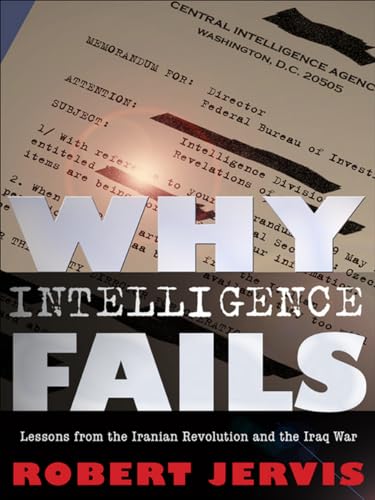
Why Intelligence Fails: Lessons from the Iranian Revolution and the Iraq War (Cornell Studies in Security Affairs) - Tapa blanda
Sinopsis
The U.S. government spends enormous resources each year on the gathering and analysis of intelligence, yet the history of American foreign policy is littered with missteps and misunderstandings that have resulted from intelligence failures.
In Why Intelligence Fails, Robert Jervis examines the politics and psychology of two of the more spectacular intelligence failures in recent memory: the mistaken belief that the regime of the Shah in Iran was secure and stable in 1978, and the claim that Iraq had active WMD programs in 2002.
The Iran case is based on a recently declassified report Jervis was commissioned to undertake by CIA thirty years ago and includes memoranda written by CIA officials in response to Jervis's findings. The Iraq case, also grounded in a review of the intelligence community's performance, is based on close readings of both classified and declassified documents, though Jervis's conclusions are entirely supported by evidence that has been declassified.
In both cases, Jervis finds not only that intelligence was badly flawed but also that later explanations-analysts were bowing to political pressure and telling the White House what it wanted to hear or were willfully blind-were also incorrect. Proponents of these explanations claimed that initial errors were compounded by groupthink, lack of coordination within the government, and failure to share information. Policy prescriptions, including the recent establishment of a Director of National Intelligence, were supposed to remedy the situation.
In Jervis's estimation, neither the explanations nor the prescriptions are adequate. The inferences that intelligence drew were actually quite plausible given the information available. Errors arose, he concludes, from insufficient attention to the ways in which information should be gathered and interpreted, a lack of self-awareness about the factors that led to the judgments, and an organizational culture that failed to probe for weaknesses and explore alternatives. Evaluating the inherent tensions between the methods and aims of intelligence personnel and policymakers from a unique insider's perspective, Jervis forcefully criticizes recent proposals for improving the performance of the intelligence community and discusses ways in which future analysis can be improved.
"Sinopsis" puede pertenecer a otra edición de este libro.
Acerca del autor
Robert Jervis is Adlai E. Stevenson Professor of International Politics at Columbia University. He is the author of many books, including The Meaning of the Nuclear Revolution, also from Cornell, and, most recently, American Foreign Policy in a New Era.
"Sobre este título" puede pertenecer a otra edición de este libro.
Resultados de la búsqueda para Why Intelligence Fails: Lessons from the Iranian Revolution...

Imagen del vendedor
Why Intelligence Fails: Lessons from the Iranian Revolution and the Iraq War (Cornell Studies in Security Affairs)
Publicado por
Cornell University Press, 2011
ISBN 10: 0801478065
ISBN 13: 9780801478062
Antiguo o usado
Tapa blanda
Librería: Dream Books Co., Denver, CO, Estados Unidos de America
Calificación del vendedor: 5 de 5 estrellas

Condición: acceptable. This copy has clearly been enjoyedâ"expect noticeable shelf wear and some minor creases to the cover. Binding is strong, and all pages are legible. May contain previous library markings or stamps. Nº de ref. del artículo: DBV.0801478065.A
Comprar usado
EUR 6,45
Gastos de envío gratis
Se envía dentro de Estados Unidos de America
Se envía dentro de Estados Unidos de America
Cantidad disponible: 1 disponibles
Imagen del vendedor
Why Intelligence Fails: Lessons from the Iranian Revolution and the Iraq War (Cornell Studies in Security Affairs)
Publicado por
Cornell University Press, 2011
ISBN 10: 0801478065
ISBN 13: 9780801478062
Antiguo o usado
Tapa blanda
Librería: Greenworld Books, Arlington, TX, Estados Unidos de America
Calificación del vendedor: 5 de 5 estrellas
Condición: very_good. Fast Free Shipping â" Very Good condition book with a firm cover and clean pages. Shows normal use and some light wear or limited notes markings. A solid, nice copy to enjoy. Nº de ref. del artículo: GWV.0801478065.VG
Comprar usado
EUR 8,37
Gastos de envío gratis
Se envía dentro de Estados Unidos de America
Se envía dentro de Estados Unidos de America
Cantidad disponible: 1 disponibles
Imagen de archivo
Why Intelligence Fails: Lessons from the Iranian Revolution and the Iraq War (Cornell Studies in Security Affairs)
Publicado por
Cornell University Press, 2011
ISBN 10: 0801478065
ISBN 13: 9780801478062
Antiguo o usado
Paperback
Librería: Midtown Scholar Bookstore, Harrisburg, PA, Estados Unidos de America
Calificación del vendedor: 5 de 5 estrellas
Paperback. Condición: Acceptable. Acceptable - This is a significantly damaged book. It should be considered a reading copy only. Please order this book only if you are interested in the content and not the condition. May be ex-library. PAPERBACK Standard-sized. Nº de ref. del artículo: M0801478065Z4
Comprar usado
EUR 3,64
Envío por EUR 5,34
Se envía dentro de Estados Unidos de America
Se envía dentro de Estados Unidos de America
Cantidad disponible: 2 disponibles
Imagen del vendedor
Why Intelligence Fails: Lessons from the Iranian Revolution and the Iraq War (Cornell Studies in Security Affairs)
Publicado por
Cornell University Press, 2011
ISBN 10: 0801478065
ISBN 13: 9780801478062
Antiguo o usado
Tapa blanda
Librería: MERS Goodwill, Saint Louis, MO, Estados Unidos de America
Calificación del vendedor: 5 de 5 estrellas
Condición: acceptable. Used - Acceptable: All pages and the cover are intact, but shrink wrap, dust covers, or boxed set case may be missing. Pages may include limited notes, highlighting, or minor water damage but the text is readable. Pages may include limited notes and highlighting, but the text cannot be obscured or unreadable. Any access codes or passwords originally included with the book may be expired, used or no longer valid. Image is stock photo and cover art edition may be different than pictured. Nº de ref. del artículo: MERV.0801478065.A
Comprar usado
EUR 7,26
Envío por EUR 3,56
Se envía dentro de Estados Unidos de America
Se envía dentro de Estados Unidos de America
Cantidad disponible: 1 disponibles
Imagen de archivo
Why Intelligence Fails: Lessons from the Iranian Revolution and the Iraq War (Cornell Studies in Security Affairs)
Publicado por
Cornell University Press, 2011
ISBN 10: 0801478065
ISBN 13: 9780801478062
Antiguo o usado
Paperback
Librería: Books From California, Simi Valley, CA, Estados Unidos de America
Calificación del vendedor: 4 de 5 estrellas

Paperback. Condición: Fine. Nº de ref. del artículo: mon0003847539
Comprar usado
EUR 9,84
Envío por EUR 4,44
Se envía dentro de Estados Unidos de America
Se envía dentro de Estados Unidos de America
Cantidad disponible: 2 disponibles
Imagen de archivo
Why Intelligence Fails: Lessons from the Iranian Revolution and the Iraq War (Cornell Studies in Security Affairs)
Publicado por
Cornell University Press, 2011
ISBN 10: 0801478065
ISBN 13: 9780801478062
Antiguo o usado
Paperback
Librería: Books From California, Simi Valley, CA, Estados Unidos de America
Calificación del vendedor: 4 de 5 estrellas
Paperback. Condición: Very Good. Nº de ref. del artículo: mon0003865334
Comprar usado
EUR 9,84
Envío por EUR 4,44
Se envía dentro de Estados Unidos de America
Se envía dentro de Estados Unidos de America
Cantidad disponible: 1 disponibles
Imagen del vendedor
Why Intelligence Fails: Lessons from the Iranian Revolution and the Iraq War (Cornell Studies in Security Affairs)
Publicado por
Cornell University Press, 2011
ISBN 10: 0801478065
ISBN 13: 9780801478062
Antiguo o usado
paperback
Librería: Santa Fe Used Books, Santa Fe, NM, Estados Unidos de America
Calificación del vendedor: 5 de 5 estrellas
paperback. Condición: Very Good. Owner donation sticker to front end page. All else is clean and unmarked. Binding strong. Light wear. Nº de ref. del artículo: BB187
Comprar usado
EUR 9,17
Envío por EUR 5,34
Se envía dentro de Estados Unidos de America
Se envía dentro de Estados Unidos de America
Cantidad disponible: 1 disponibles
Imagen de archivo
Why Intelligence Fails: Lessons from the Iranian Revolution and the Iraq War (Cornell Studies in Security Affairs)
Publicado por
Cornell University Press, 2011
ISBN 10: 0801478065
ISBN 13: 9780801478062
Antiguo o usado
Soft cover
Original o primera edición
Librería: Antheil Booksellers, No. Bellmore, NY, Estados Unidos de America
Calificación del vendedor: 3 de 5 estrellas

Soft cover. Condición: As New. 1st Edition. 238pp. Nº de ref. del artículo: ABE-1773945713166
Comprar usado
EUR 11,47
Envío por EUR 3,55
Se envía dentro de Estados Unidos de America
Se envía dentro de Estados Unidos de America
Cantidad disponible: 1 disponibles
Imagen de archivo
Why Intelligence Fails: Lessons from the Iranian Revolution and the Iraq War (Cornell Studies in Security Affairs)
Publicado por
Cornell University Press, 2011
ISBN 10: 0801478065
ISBN 13: 9780801478062
Antiguo o usado
Paperback
Original o primera edición
Librería: 3rd St. Books, Lees Summit, MO, Estados Unidos de America
Calificación del vendedor: 5 de 5 estrellas
Paperback. Condición: Good. 1st Edition. Good, clean, tight condition. Text has marks and highlighting. Professional book dealer since 1999. All orders are processed promptly and carefully packaged with tracking. Nº de ref. del artículo: 064097
Comprar usado
EUR 9,17
Envío por EUR 6,22
Se envía dentro de Estados Unidos de America
Se envía dentro de Estados Unidos de America
Cantidad disponible: 1 disponibles
Imagen del vendedor
Why Intelligence Fails : Lessons from the Iranian Revolution and the Iraq War
Publicado por
Cornell University Press, 2011
ISBN 10: 0801478065
ISBN 13: 9780801478062
Antiguo o usado
Tapa blanda
Librería: GreatBookPrices, Columbia, MD, Estados Unidos de America
Calificación del vendedor: 5 de 5 estrellas
Condición: good. May show signs of wear, highlighting, writing, and previous use. This item may be a former library book with typical markings. No guarantee on products that contain supplements Your satisfaction is 100% guaranteed. Twenty-five year bookseller with shipments to over fifty million happy customers. Nº de ref. del artículo: 15832806-5
Comprar usado
EUR 13,15
Envío por EUR 2,35
Se envía dentro de Estados Unidos de America
Se envía dentro de Estados Unidos de America
Cantidad disponible: 4 disponibles