
Artículos relacionados a Bushido: The Way of the Samurai (Square One Classics)
Sinopsis
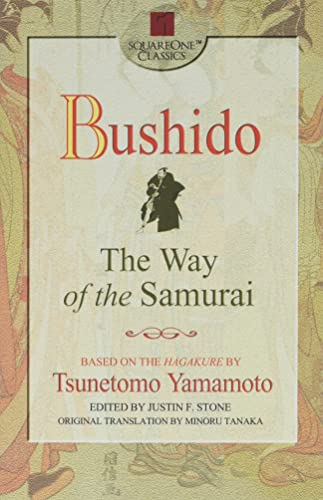
In eighteenth-century Japan, Tsunetomo Yamamoto created the Hagakure, a document that served as the basis for samurai warrior behavior. Its guiding principles greatly influenced the Japanese ruling class and shaped the underlying character of the Japanese psyche, from businessmen to soldiers. Bushido is the first English translation of this work. It provides a powerful message aimed at the mind and spirit of the samurai warrior. With Bushido, one can better put into perspective Japan's historical path.
"Sinopsis" puede pertenecer a otra edición de este libro.
Acerca del autor
Tsunetomo Yamamoto, a highly respected samurai warrior, renounced the world and retired to a hermitage in 1700. There, a disciple recorded Yamamoto's thoughts on what it meant to be a Japanese warrior. His work, the Hagakure, served as the basis of Bushido.
Fragmento. © Reproducción autorizada. Todos los derechos reservados.
Bushido
The Way of the SamuraiBy Tsunetomo YamamotoSquare One Publishers
Copyright © 2001 Square One PublishersAll right reserved.
ISBN: 978-0-7570-0026-3
Contents
Foreword........................................................ixHistorical Overview.............................................xiiiHAGAKURETranscriber's Preface...........................................3Author's Introduction...........................................5BOOK ONEThe Essence of Bushido..........................................13Two Ways of Thinking............................................14Two Methods of Criticism........................................15How to Stop Yawning.............................................16Foresight in Relationships......................................17Samurais of Satori and Non-Satori...............................18If the Water Is Clear No Fish Will Live.........................18The Marrow of Service...........................................19The Use of Onlookers............................................19High Upon High..................................................20Think Lightly on Serious Matters................................21People You Can Trust............................................22The Thinking Process............................................23Models to Imitate...............................................23The Puppet Show World...........................................24Conduct at the Wine Feast.......................................24The Use of the High Spirit......................................25Lesson From the Heavy Rain......................................25The Winner's Spirit.............................................26Bringing Up Samurai Children....................................26Arts and Crafts.................................................27Groundless Suffering............................................28Testing Your Friend's Loyalty...................................28Good and Evil...................................................29Discharging Servants............................................29On the Men of Learning..........................................29Burn With Mad Death.............................................30The Samurai Superintendent Officer..............................30Passing the First Barrier.......................................31"My Master Is Human and So Am I"................................32Making Important Decisions......................................32The Liked and the Disliked......................................33Conceal Your Wisdom.............................................33Fall Seven Times and Get Up Eight...............................34Talk to Your Inferiors..........................................34How to Excel Above Others.......................................35Bushido Alone Is the Way........................................35Honor and Wealth................................................36On Homosexuality................................................36How to Conduct Yourself.........................................37Spiritual Vigor.................................................37The "Death" of Yamamoto.........................................38The Samurai Ideal of the Handsome Man...........................38Consulting Others...............................................39Under Forty.....................................................40How to Acquire Talented People..................................40Expressing the Spirit...........................................41Giving and Receiving Advice.....................................41Accomplishment in the Arts and Crafts...........................42BOOK TWOPersuasion Tactics..............................................43"Yes" Men.......................................................43How to Treat Your Superiors.....................................44On Serious Thoughts.............................................45A Little Learning...............................................45How to Get Useful Ideas.........................................46Father's Favorite Sayings.......................................46A Samurai Esprit de Corps.......................................46The Present and the Past........................................47Make the Best of Each Occasion..................................48O What a Vain World.............................................48Handling Negative Feelings......................................48Samurai's Toilette..............................................49At the Conference...............................................49Deny the Gods if They Stand in Your Way.........................50Human Life Is Trivial...........................................50You Cannot Tell Your Own Ability................................51Dignity.........................................................51Don't Despise the "Upstarts"....................................51Keeping a Respectful Distance...................................52Weigh Your Words................................................52Two Kinds of People.............................................53Defeating Yourself by Victory...................................53On Visiting Others..............................................53Analogy of the Sword............................................54Talent and the Times............................................54Listening to Veterans...........................................55Drop Out Completely.............................................56Samurais: Men of Action.........................................56The Family Grant................................................57On Servants.....................................................58A Koan on the Art of Homosexuality..............................58The Connection Game.............................................59On the Spur of Madness..........................................60Handling Difficulties...........................................60On Dreams.......................................................60The Samurai Ideal of Love.......................................61BOOK THREECollapsing House................................................63Story of the Thwarted Ghosts....................................63BOOK FOURFour Kinds of Samurai...........................................65Saving Face.....................................................66BOOK FIVEHumility of the Lord............................................67BOOK SIXCompassion and Courage..........................................69BOOK SEVENTo Kill.........................................................73The Loyal Samurai Cook..........................................74To Win Is to Overcome Yourself..................................75The Essence of Service..........................................75A Story Concerning Lord Tsunashige..............................76BOOK EIGHTAbout Kichinosuke Shida.........................................79About the Promotion of Ichiemon Kuno............................82How to Restore the Clan After It Collapses......................83Cut Down the Gods if They Stand in Your Way.....................85Two Kinds of Samurais...........................................85BOOK NINEA Samurai and His Adulterous Wife...............................87BOOK TENHow Not to Get Nervous..........................................89How to Win in a Debate..........................................89BOOK ELEVENDo Not Turn Your Back on the Enemy..............................91Do Not Learn Strategy...........................................91Some Hints for Arguing..........................................92On Victory......................................................92How to Win in the Long Run......................................92Success and Failure.............................................93Die Every Morning in Advance....................................93To Be Taciturn..................................................94Social Appearance...............................................94A Story Concerning Family Honor.................................95On Governing....................................................95Footnotes.......................................................97Glossary........................................................99Index...........................................................103
Chapter One
BOOK ONE
The Essence of Bushido
I have found the essence of Bushido: to die! In other words, when you have a choice between life and death, then always choose death: this is all that you must remember. It is neither troublesome nor difficult. You have only to go on with a clenched stomach. Any other ideas are unnecessary and futile.
"If you die before you hit your target, then it will be the death of a dog." If you say this, then your attitude is the Kamigata of Bushido. It is a very vain and calculating attitude at its best.
But if you are forced, then it is impossible for you to make the right choice between life and death. It goes without saying that every person would prefer to live rather than to die. Accordingly, people will try to rationalize for the choice of life. If you make the choice of life and do not hit the target, you will be called a coward. Before you make the choice, realize what a critical position you are in. On the other hand, if you but make the choice of death and fail to hit the target, your body will eventually die but no shame will come to you. No shame will come to you even though you will be regarded as crazy and as dying like a dog.
This is the essence of Bushido. In order to master this essence, you must die anew, every morning and every night. If you continually preserve the state of death in everyday life, you will understand the essence of Bushido, and you will gain freedom in Bushido. Then you will be able to fulfill your duty to the offices of the household of the Lord without a mistake and for the rest of your life.
Two Ways of Thinking
There are some who can spontaneously come up with good ideas; this is done through natural gift. There are others who can form ideas only after pillow-breaking speculation in bed. There is a difference in speed according to individual natures. But if you refer to the four vows (in the introductory essay) and think freely from your own personal interest, then miraculously good ideas will occur to you.
We take it for granted that effective, problem-solving thinking requires deep thought. This is not necessarily true. The truth is, if you base your thinking upon your selfish desires, the working of your mind is reduced to the working of a malicious intellect. No wonder your ideas end up as being selfish and evil.
It is usual for the fool not to be able to transcend thinking based on "I." But after all, in the face of a big problem, you cannot be wide of the mark if you only set aside "I" and then press the four vows upon your heart.
Two Methods of Criticism
It is of utmost importance to admonish others with the intention of helping them overcome their faults. It is an act of compassion and the first requirement of your service. The way of advising others must be carried out with utmost care and caution. It is quite easy to see good and evil in others. It is equally as easy to criticize others. Most people think it is an act of kindness to say what others do not like or hesitate to hear. But they give up if their advice is not accepted; they stop here, but this is quite ineffective. The result is that they put others to shame, which is the same as abuse or insult. They speak only to relieve their own hearts.
In giving advice, you must recognize whether the other person is inclined to accept it or not. You must begin by getting on intimate terms with him; you must do this to the extent that he places his confidence in you, and you in him. Then he can put his trust in your words. Attract his attention by way of common interests. Devise appropriate ways of speaking and know the right season (time) to speak. Make the most of personal correspondence. Insinuate your point into the words you deliver at the time of farewell. Refer to your own weakness and failures. You would do well to let him discover your point without directly mentioning his weakness. First praise his merits or strong points and cheer up his mood. Devise means to bring about the circumstances in which he will accept your implied or intended advice. In other words, if you make him feel thirsty, he will want to drink. This way of admonition is advice in the true sense of the word. It is exceptionally difficult to practice.
Through my own experience, I have also learned that many faults and weakness have been so ingrained that it is not possible to break out of these bad habits by ordinary efforts.
It is quite in keeping with compassion that colleagues should unite together in the common cause of service. Then they can admonish each other from their own point of view. This should be done on a confidential basis. When all colleagues put their "souls" together and correct each other's disgressions, this leads to an act of compassion for all sentient beings.
How can you reform others if you disgrace them?
How to Stop Yawning
It is rude to yawn in the faces of other people. If by chance you begin to yawn, stroke your forehead and then your yawn should stop. If this does not work, then lap your lips with the tongue without opening your mouth. Or you might yawn behind your sleeve or apply your hand to your mouth so as to hide the yawning from view.
This is also true of sneezing, which makes you look silly and foolish.
Foresight in Relationships
On the previous night, make your plans for the next day and write them down. This is the method of disposing of affairs in advance of others.
Before making a visit, one should make inquiries about everything concerning the other party. Also, one should make a mental note of the ways of greeting and the topics of conversation.
When you are told to accompany the Lord, or when you visit others yourself for a talk, consider the character of the host before you begin. This is the way to bring about compatibility and good manners.
If you attend an exclusive samurai's party and feel timid, you cannot do your part in making it a successful party. You had first better prepare by convincing yourself that you will have a grand time. And you should feel grateful for the invitation.
At any rate, apart from business, you'd better not go where you are not invited. If you are invited, play the part of the finest guest. This is the thing! Come up with the previously calculated image of the party. To know what manners to use is most important.
You also have to choose the right time to leave. Leave before you bore others, but don't leave too early.
When you take part in a feast, don't be too modest about the food; this will displease the host. After saying "no thank you" once or twice, accept what is offered. This is the case when you pay a casual visit and are detained.
Samurais of Satori and Non-Satori
Samurais of satori and non-satori are referred to in a book on tactics. The former is one who, after going through a crisis, makes the most of his experience; he is also the one who can use his forethought to quickly settle problems in case of an emergency. Accordingly, we call samurais of satori those who can come to conclusions before meeting tens of thousands of matters.
Non-satori samurais might be able to come up with a make-shift solution, but this is achieved merely through good luck.
Those who do not scrutinize everything before the events occur may justly be called samurais of non-satori.
If the Water Is Clear No Fish Will Live
I hear that some samurai is preaching thrift. He is fussy and fastidious and feminine with his preaching. This is not desirable.
It sometimes happens that, if the water is too clear, then the fish will no longer dwell there. When there are algae and water plants, fish can safely grow by hiding behind the plants. As long as people overlook matters, then inferiors can, without any fear, lead an easy and peaceful life. You must know this as far as your personal conduct is concerned.
The Marrow of Service
Looking at today's samurais, they are all keeping their eyes on lower objectives. Their eyes are like the eyes of pickpockets. For the most part, they strive for their own mercenary aims or they merely display their cunning shrewdness; or, when it comes to those apparently self-composed samurais, they are just posers.
In order to deserve the name of samurai, you must offer your life to the service of your Lord. You must become a ghost after the completion of a frenzied death. You must always keep the Lord's affairs in mind. You also must report to the Lord about affairs that you have arranged. Then you can help to lay a firm foundation for the state.
There is no difference in the amount of service between high and low. So you ought to sit tightly on this understanding.
You must prepare yourself not to digress from this practice of constant service even if you are exhorted to do so by the oracles of the gods or of the Buddha.
The Use of Onlookers
While disliking injustice, it is very difficult to carry out acts of justice. Also, more mistakes arise if you think that to adhere to justice is always the best way. There is a higher way than mere justice. Indeed, it is difficult to find this way. We may call this way "the use of a higher, wiser intellect." Seen through this higher, wiser intellect, justice looks thinner and without much substance. Yet, you cannot attain this higher wisdom until you personally learn it through your own experience. But, if you cannot come across this way, there is a method to obtain this higher wisdom: to consult with others.
Even those who themselves have not achieved this way can still look at others' affairs from the side, objectively.
Thus people say "onlookers see more than players." They say you must find your own faults through speculation. But the best way, of course, is to consult others. To listen to others talk and to read books is necessary in order to keep close to the learning of the previous generation.
You must throw away your own judgment.
High Upon High
An old, retired swordsman once said, "There are levels in the course of mastery throughout your life. At the lowest level of skill and ability, one thinks of himself and others as poor. He thinks this because he has mastered only a little. Needless to say, a person at this level is not at all useful.
"At the middle level, one is still useless, but he can at least understand that he and others have mastered only a little.
"At a high level, since a person has made something his own, he is proud of his accomplishment. And he is also glad of the praise of others. He grieves over the shortcomings of others. This kind of person is at least useful."
At a higher level, one pretends to know nothing, yet others understand that he holds an upper hand. The majority of people cannot get beyond this level.
Beyond this higher level, there is one further step: the level of the trackless road. If you travel deeper into the trackless road, infinite secrets will finally appear. Then you can never see the end of your mastery. Then you truly realize how lacking you are. You have only to go ahead with your intention of mastery in mind. You go forward without pride and without humility.
Yagyu (a swordsman who taught the Shogun himself) once said, "I know nothing about how to win over others. I only know the way to win over myself."
Your life is something you build every day. You must convince yourself that you have surpassed yesterday. And tomorrow you must feel that you have surpassed today. In this way there is no end to your mastery.
Think Lightly on Serious Matters
A note by Naoshige reads, "Think of serious matters in a light manner." A footnote to this item by Ittei Ishida (a scholar attached to the Nabeshima clan) is as follows: "Think of trifles in an earnest and thoughtful way."
There are only a few considerations that are serious for you. You can make your decision about these few serious matters beforehand in ordinary circumstances. Accordingly, you previously think about these serious matters and then you have only to take out the previously arrived at conclusions when you need them. On the other hand, if you are not prepared, then it will be difficult to think lightly of grave matters when you meet with occasions on which you have to make an instant decision. At such a time you will be unable to hit the mark.
Therefore, to make your own ground firm is the basis for making your decisions.
The above is the basis of the saying "Think of grave matters in a light fashion."
People You Can Trust At an official inquiry about a certain samurai's advancement, it was about to be decided that he should not be promoted because he had been an alcoholic.
Before the decision was made, someone spoke up, "If you abandon those who have made blunders, you cannot hope to make great people out of them. And since they are sorry for their failures, they will try to make up for them. So they will prove more useful later on. Therefore, this man must be promoted."
Another samurai asked, "Do you sponsor him?"
"Of course I do," was the reply.
Everyone asked, "On what grounds do you sponsor him?"
"I sponsor him because he is one who once made a mistake. Those who have never made a mistake are in danger."
Eventually, the samurai was promoted to a higher post.
The Thinking Process
It is not good to keep your own house. After exerting a make-shift effort, it is a mistake to look wise on the level of a definite conclusion. First try to get hold of a seed of thought firmly and see to it that the seed will ripen to bear fruit; all your life, you must never stop. Yet it is out of the question to think of any one thought or pattern of thought that you have come across as coming up to the final level. You must try to reject every way as unsatisfactory. You must go on with your mastery; you must seek, as long as you live, to attain the right way. You must keep your mind from resting easy. Within such efforts is hidden the right way itself.
Models to Imitate
Ittei Ishida, a clan scholar, once remarked, "Even a bad calligraphy (handwriting) will be fairly improved if a good model is used for imitation."
This is true of servants, too. If you follow after good servants, you will naturally become a good one, too. But it is true that today there is not a good servant to model after. Since there is no individual who is perfect all by himself, you had better take one good, strong point from each person to use as your model. In other words, you decide to learn good manners from A; courage from B; oratory from C; good conduct from D; integrity from E; quick determination from F; etc. In this way, you can construct one good model out of individual merits.
As far as the tens of thousands of arts are concerned, students tend to imitate their master's weak points rather than his strong points. This is useless. There may be a person who has good manners but lacks honesty. You are likely to imitate and learn the lack of honesty and pay no attention to his good manners.
If your eye is able enough to see good qualities in others who are apparently inferior to you, then they can be your masters, even though they have their shortcomings as well.
The Puppet Show World
The Japanese word is "maboroshi," which means "vision" or "dream-like state." In India, they name masters of magic as vision-creators. In the world, everything is like a puppet. Therefore, we use "maboroshi."
Conduct at the Wine Feast
A great many samurais fall into disgrace due to heavy drinking. A thousand pities!
First measure your capacity, and keep yourself in check. But you may sometimes find yourself drinking too much. Above all, be on guard all the while that you are imbibing wine. Keep yourself prepared to cope with the settlement of unexpected accidents. Remember that the wine feast is a matter of the public world. There are too many eyes present at the feast. You must be cautious.
The Use of the High Spirit
When you go to look after one who has suffered misfortune, one word is of utmost importance because your inner person may be known by that single word.
At all events, samurais are not good when they are worn and dispirited. Samurais are useless unless they have the spirit to rise above the sea (of troubles and difficulties). This spirit can encourage other samurais.
(Continues...)
Excerpted from Bushidoby Tsunetomo Yamamoto Copyright © 2001 by Square One Publishers. Excerpted by permission.
All rights reserved. No part of this excerpt may be reproduced or reprinted without permission in writing from the publisher.
Excerpts are provided by Dial-A-Book Inc. solely for the personal use of visitors to this web site.
"Sobre este título" puede pertenecer a otra edición de este libro.
Resultados de la búsqueda para Bushido: The Way of the Samurai (Square One Classics)

Imagen de archivo
Bushido: The Way of the Samurai (Square One Classics)
Librería: HPB-Ruby, Dallas, TX, Estados Unidos de America
Calificación del vendedor: 5 de 5 estrellas

Paperback. Condición: Very Good. Connecting readers with great books since 1972! Used books may not include companion materials, and may have some shelf wear or limited writing. We ship orders daily and Customer Service is our top priority! Nº de ref. del artículo: S_448322199
Comprar usado
EUR 2,30
Envío por EUR 3,35
Se envía dentro de Estados Unidos de America
Se envía dentro de Estados Unidos de America
Cantidad disponible: 1 disponibles
Imagen de archivo
Bushido: The Way of the Samurai (Square One Classics)
Librería: HPB-Emerald, Dallas, TX, Estados Unidos de America
Calificación del vendedor: 5 de 5 estrellas
Paperback. Condición: Very Good. Connecting readers with great books since 1972! Used books may not include companion materials, and may have some shelf wear or limited writing. We ship orders daily and Customer Service is our top priority! Nº de ref. del artículo: S_475846436
Comprar usado
EUR 2,30
Envío por EUR 3,35
Se envía dentro de Estados Unidos de America
Se envía dentro de Estados Unidos de America
Cantidad disponible: 1 disponibles
Imagen de archivo
Bushido: The Way of the Samurai (Square One Classics)
Librería: HPB Inc., Dallas, TX, Estados Unidos de America
Calificación del vendedor: 5 de 5 estrellas
Paperback. Condición: Very Good. Connecting readers with great books since 1972! Used books may not include companion materials, and may have some shelf wear or limited writing. We ship orders daily and Customer Service is our top priority! Nº de ref. del artículo: S_469867884
Comprar usado
EUR 2,30
Envío por EUR 3,35
Se envía dentro de Estados Unidos de America
Se envía dentro de Estados Unidos de America
Cantidad disponible: 1 disponibles
Imagen de archivo
Bushido: The Way of the Samurai (Square One Classics)
Librería: Half Price Books Inc., Dallas, TX, Estados Unidos de America
Calificación del vendedor: 5 de 5 estrellas
Paperback. Condición: Very Good. Connecting readers with great books since 1972! Used books may not include companion materials, and may have some shelf wear or limited writing. We ship orders daily and Customer Service is our top priority! Nº de ref. del artículo: S_460879984
Comprar usado
EUR 2,30
Envío por EUR 3,35
Se envía dentro de Estados Unidos de America
Se envía dentro de Estados Unidos de America
Cantidad disponible: 1 disponibles
Imagen de archivo
Bushido: The Way of the Samurai (Square One Classics)
Librería: HPB-Movies, Dallas, TX, Estados Unidos de America
Calificación del vendedor: 4 de 5 estrellas

paperback. Condición: Very Good. Connecting readers with great books since 1972! Used books may not include companion materials, and may have some shelf wear or limited writing. We ship orders daily and Customer Service is our top priority! Nº de ref. del artículo: S_475317327
Comprar usado
EUR 2,51
Envío por EUR 3,35
Se envía dentro de Estados Unidos de America
Se envía dentro de Estados Unidos de America
Cantidad disponible: 1 disponibles
Imagen de archivo
Bushido: The Way of the Samurai
Publicado por
Square One Publishers, 2001
ISBN 10: 0757000266
ISBN 13: 9780757000263
Antiguo o usado
Paperback
Librería: ThriftBooks-Dallas, Dallas, TX, Estados Unidos de America
Calificación del vendedor: 5 de 5 estrellas
Paperback. Condición: Good. No Jacket. Pages can have notes/highlighting. Spine may show signs of wear. ~ ThriftBooks: Read More, Spend Less. Nº de ref. del artículo: G0757000266I3N00
Comprar usado
EUR 5,96
Gastos de envío gratis
Se envía dentro de Estados Unidos de America
Se envía dentro de Estados Unidos de America
Cantidad disponible: 1 disponibles
Imagen de archivo
Bushido: The Way of the Samurai
Publicado por
Square One Publishers, 2001
ISBN 10: 0757000266
ISBN 13: 9780757000263
Antiguo o usado
Paperback
Librería: ThriftBooks-Reno, Reno, NV, Estados Unidos de America
Calificación del vendedor: 5 de 5 estrellas
Paperback. Condición: Good. No Jacket. Pages can have notes/highlighting. Spine may show signs of wear. ~ ThriftBooks: Read More, Spend Less. Nº de ref. del artículo: G0757000266I3N00
Comprar usado
EUR 5,96
Gastos de envío gratis
Se envía dentro de Estados Unidos de America
Se envía dentro de Estados Unidos de America
Cantidad disponible: 1 disponibles
Imagen de archivo
Bushido: The Way of the Samurai
Publicado por
Square One Publishers, 2001
ISBN 10: 0757000266
ISBN 13: 9780757000263
Antiguo o usado
Paperback
Librería: ThriftBooks-Atlanta, AUSTELL, GA, Estados Unidos de America
Calificación del vendedor: 5 de 5 estrellas
Paperback. Condición: Good. No Jacket. Pages can have notes/highlighting. Spine may show signs of wear. ~ ThriftBooks: Read More, Spend Less. Nº de ref. del artículo: G0757000266I3N00
Comprar usado
EUR 5,96
Gastos de envío gratis
Se envía dentro de Estados Unidos de America
Se envía dentro de Estados Unidos de America
Cantidad disponible: 1 disponibles
Imagen de archivo
Bushido: The Way of the Samurai
Publicado por
Square One Publishers, 2001
ISBN 10: 0757000266
ISBN 13: 9780757000263
Antiguo o usado
Paperback
Librería: ThriftBooks-Phoenix, Phoenix, AZ, Estados Unidos de America
Calificación del vendedor: 5 de 5 estrellas
Paperback. Condición: Good. No Jacket. Pages can have notes/highlighting. Spine may show signs of wear. ~ ThriftBooks: Read More, Spend Less. Nº de ref. del artículo: G0757000266I3N00
Comprar usado
EUR 5,96
Gastos de envío gratis
Se envía dentro de Estados Unidos de America
Se envía dentro de Estados Unidos de America
Cantidad disponible: 1 disponibles
Imagen de archivo
Bushido: The Way of the Samurai
Publicado por
Square One Publishers, 2001
ISBN 10: 0757000266
ISBN 13: 9780757000263
Antiguo o usado
Paperback
Librería: ThriftBooks-Atlanta, AUSTELL, GA, Estados Unidos de America
Calificación del vendedor: 5 de 5 estrellas
Paperback. Condición: Good. No Jacket. Former library book; Pages can have notes/highlighting. Spine may show signs of wear. ~ ThriftBooks: Read More, Spend Less. Nº de ref. del artículo: G0757000266I3N10
Comprar usado
EUR 5,96
Gastos de envío gratis
Se envía dentro de Estados Unidos de America
Se envía dentro de Estados Unidos de America
Cantidad disponible: 1 disponibles