
Yesterday's Self: Nostalgia and the Immigrant Identity (Philosophy and the Global Context) - Tapa blanda
Sinopsis
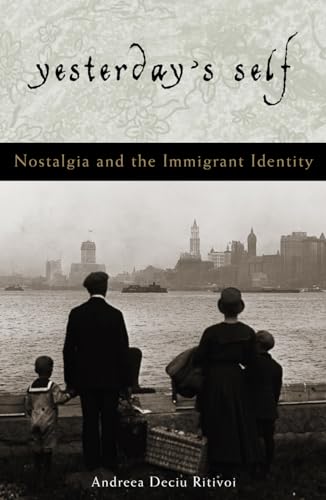
The state of being called nostalgia has a history fraught with ambiguity and poetical connotation. In the late 17th century, nostalgic reminiscences were thought to be the symptoms of a deadly disease that shook one's mind and body. Today, we view nostalgia not as a medical condition, but as a bittersweet recollection of one's past joys and sorrows―the memories and treasures of an earlier self. And yet, there remains a category of individuals for whom such recollection can be seriously problematic: immigrants.
In Yesterday's Self, Andreea Ritivoi explores the philosophical and historical dimensions of nostalgia in the lives of immigrants, forging a connection between current trends in the philosophy of identity and intercultural studies. The book considers such questions as, Does attachment to one's native culture preclude or merely influence adaptation into a new culture? Do we fashion our identity in interdependence with others, or do we shape it in a non-contingent frame? Is it possible to assimilate in an unfamiliar world without risking self-alienation? Ritivoi's response: nostalgia is both the poison and the cure in such situations.
Documenting the tribulations of sojourners and immigrants, Yesterday's Self illustrates how and why the cultural adjustment of immigrants can only happen when personal identity is understood as a quest for continuity in one's life story, even alongside the most radical cultural rupture. Ultimately, reflection on the nostalgic experience reveals insights into the nature of the self and its dynamic engagement with otherness and difference.
"Sinopsis" puede pertenecer a otra edición de este libro.
Acerca del autor
Andreea Deciu Ritivoi is assistant professor of English and rhetoric at Carnegie Mellon University. She has previously published The Tale of a Lost City: Demolished Homes in Bucharest and The Other as Myself: Essays on Personal Identity.
"Sobre este título" puede pertenecer a otra edición de este libro.
Otras ediciones populares con el mismo título

Resultados de la búsqueda para Yesterday's Self: Nostalgia and the Immigrant Identity...

Imagen de archivo
Yesterday's Self: Nostalgia and the Construction of Personal Identity
Publicado por
Rowman & Littlefield Publishers, Inc., Lanham, Md., 2002
ISBN 10: 0742513610
ISBN 13: 9780742513617
Antiguo o usado
Tapa blanda
Librería: Monroe Street Books, Middlebury, VT, Estados Unidos de America
Calificación del vendedor: 4 de 5 estrellas

Condición: Good. Estado de la sobrecubierta: None. 184 pages, corner and edge wear, otherwise, very clean and tight copy. Record # 456284. Nº de ref. del artículo: 456284
Comprar usado
EUR 19,87
Envío por EUR 4,38
Se envía dentro de Estados Unidos de America
Se envía dentro de Estados Unidos de America
Cantidad disponible: 1 disponibles
Imagen de archivo
Yesterday's Self : Nostalgia and the Immigrant Identity
Publicado por
Rowman & Littlefield Publishers, Incorporated, 2002
ISBN 10: 0742513610
ISBN 13: 9780742513617
Antiguo o usado
Tapa blanda
Librería: Better World Books: West, Reno, NV, Estados Unidos de America
Calificación del vendedor: 5 de 5 estrellas

Condición: Good. Pages intact with minimal writing/highlighting. The binding may be loose and creased. Dust jackets/supplements are not included. Stock photo provided. Product includes identifying sticker. Better World Books: Buy Books. Do Good. Nº de ref. del artículo: 16471596-6
Comprar usado
EUR 28,50
Gastos de envío gratis
Se envía dentro de Estados Unidos de America
Se envía dentro de Estados Unidos de America
Cantidad disponible: 1 disponibles
Imagen de archivo
Yesterday's Self: Nostalgia and the Immigrant Identity (Philosophy and the Global Context)
Publicado por
Rowman & Littlefield, 2002
ISBN 10: 0742513610
ISBN 13: 9780742513617
Antiguo o usado
paperback
Librería: Amazing Books Pittsburgh, Pittsburgh, PA, Estados Unidos de America
Calificación del vendedor: 5 de 5 estrellas
paperback. Condición: Good. Clean sturdy and unmarked mild curling to bottom of cover EP. Nº de ref. del artículo: Sq43398
Comprar usado
EUR 38,90
Envío por EUR 3,50
Se envía dentro de Estados Unidos de America
Se envía dentro de Estados Unidos de America
Cantidad disponible: 1 disponibles
Imagen de archivo
Yesterday's Self: Nostalgia and the Immigrant Identity (Philosophy and the Global Context)
Publicado por
Rowman & Littlefield Publishers, 2002
ISBN 10: 0742513610
ISBN 13: 9780742513617
Antiguo o usado
Tapa blanda
Librería: Mooney's bookstore, Den Helder, Holanda
Calificación del vendedor: 4 de 5 estrellas
Condición: Very good. Nº de ref. del artículo: E-9780742513617-4-2
Comprar usado
EUR 38,45
Envío por EUR 14,95
Se envía de Holanda a Estados Unidos de America
Se envía de Holanda a Estados Unidos de America
Cantidad disponible: 1 disponibles
Imagen del vendedor
Yesterday's Self : Nostalgia and the Immigrant Identity
Publicado por
Rowman & Littlefield, 2002
ISBN 10: 0742513610
ISBN 13: 9780742513617
Nuevo
Tapa blanda
Librería: GreatBookPrices, Columbia, MD, Estados Unidos de America
Calificación del vendedor: 5 de 5 estrellas
Condición: New. Nº de ref. del artículo: 938697-n
Comprar nuevo
EUR 55,66
Envío por EUR 2,31
Se envía dentro de Estados Unidos de America
Se envía dentro de Estados Unidos de America
Cantidad disponible: 15 disponibles
Imagen de archivo
Yesterday's Self (Paperback)
Publicado por
Bloomsbury Publishing Plc, Lanham, MD, 2002
ISBN 10: 0742513610
ISBN 13: 9780742513617
Nuevo
Paperback
Librería: Grand Eagle Retail, Bensenville, IL, Estados Unidos de America
Calificación del vendedor: 5 de 5 estrellas
Paperback. Condición: new. Paperback. The state of being called nostalgia has a history fraught with ambiguity and poetical connotation. In the late 17th century, nostalgic reminiscences were thought to be the symptoms of a deadly disease that shook one's mind and body. Today, we view nostalgia not as a medical condition, but as a bittersweet recollection of one's past joys and sorrowsthe memories and treasures of an earlier self. And yet, there remains a category of individuals for whom such recollection can be seriously problematic: immigrants. In Yesterday's Self, Andreea Ritivoi explores the philosophical and historical dimensions of nostalgia in the lives of immigrants, forging a connection between current trends in the philosophy of identity and intercultural studies. The book considers such questions as, Does attachment to one's native culture preclude or merely influence adaptation into a new culture? Do we fashion our identity in interdependence with others, or do we shape it in a non-contingent frame? Is it possible to assimilate in an unfamiliar world without risking self-alienation? Ritivoi's response: nostalgia is both the poison and the cure in such situations. Documenting the tribulations of sojourners and immigrants, Yesterday's Self illustrates how and why the cultural adjustment of immigrants can only happen when personal identity is understood as a quest for continuity in one's life story, even alongside the most radical cultural rupture. Ultimately, reflection on the nostalgic experience reveals insights into the nature of the self and its dynamic engagement with otherness and difference. A study of nostalgia in the lives of immigrants, forging a connection between the philosophy of identity and intercultural studies. It shows that the cultural adjustment of immigrants can only happen when personal identity is understood as a quest for continuity in one's life story. Shipping may be from multiple locations in the US or from the UK, depending on stock availability. Nº de ref. del artículo: 9780742513617
Comprar nuevo
EUR 58,05
Gastos de envío gratis
Se envía dentro de Estados Unidos de America
Se envía dentro de Estados Unidos de America
Cantidad disponible: 1 disponibles
Imagen de archivo
Yesterday's Self: Nostalgia and the Immigrant Identity (Philosophy and the Global Context)
Publicado por
Rowman & Littlefield, 2002
ISBN 10: 0742513610
ISBN 13: 9780742513617
Nuevo
Tapa blanda
Librería: INDOO, Avenel, NJ, Estados Unidos de America
Calificación del vendedor: 5 de 5 estrellas
Condición: New. Nº de ref. del artículo: 9780742513617
Comprar nuevo
EUR 58,07
Gastos de envío gratis
Se envía dentro de Estados Unidos de America
Se envía dentro de Estados Unidos de America
Cantidad disponible: 20 disponibles
Imagen del vendedor
Yesterday's Self : Nostalgia and the Immigrant Identity
Publicado por
Rowman & Littlefield, 2002
ISBN 10: 0742513610
ISBN 13: 9780742513617
Antiguo o usado
Tapa blanda
Librería: GreatBookPrices, Columbia, MD, Estados Unidos de America
Calificación del vendedor: 5 de 5 estrellas
Condición: As New. Unread book in perfect condition. Nº de ref. del artículo: 938697
Comprar usado
EUR 61,90
Envío por EUR 2,31
Se envía dentro de Estados Unidos de America
Se envía dentro de Estados Unidos de America
Cantidad disponible: 15 disponibles
Imagen de archivo
Yesterday's Self: Nostalgia and the Immigrant Identity (Philosophy and the Global Context)
Publicado por
Rowman & Littlefield Publishers, 2002
ISBN 10: 0742513610
ISBN 13: 9780742513617
Nuevo
Paperback
Librería: BennettBooksLtd, Los Angeles, CA, Estados Unidos de America
Calificación del vendedor: 5 de 5 estrellas
Paperback. Condición: New. In shrink wrap. Looks like an interesting title! Nº de ref. del artículo: Q-0742513610
Comprar nuevo
EUR 76,09
Envío por EUR 6,09
Se envía dentro de Estados Unidos de America
Se envía dentro de Estados Unidos de America
Cantidad disponible: 1 disponibles
Imagen del vendedor
Yesterday's Self (Paperback)
Publicado por
Bloomsbury Publishing Plc, Lanham, MD, 2002
ISBN 10: 0742513610
ISBN 13: 9780742513617
Nuevo
Paperback
Librería: CitiRetail, Stevenage, Reino Unido
Calificación del vendedor: 5 de 5 estrellas
Paperback. Condición: new. Paperback. The state of being called nostalgia has a history fraught with ambiguity and poetical connotation. In the late 17th century, nostalgic reminiscences were thought to be the symptoms of a deadly disease that shook one's mind and body. Today, we view nostalgia not as a medical condition, but as a bittersweet recollection of one's past joys and sorrowsthe memories and treasures of an earlier self. And yet, there remains a category of individuals for whom such recollection can be seriously problematic: immigrants. In Yesterday's Self, Andreea Ritivoi explores the philosophical and historical dimensions of nostalgia in the lives of immigrants, forging a connection between current trends in the philosophy of identity and intercultural studies. The book considers such questions as, Does attachment to one's native culture preclude or merely influence adaptation into a new culture? Do we fashion our identity in interdependence with others, or do we shape it in a non-contingent frame? Is it possible to assimilate in an unfamiliar world without risking self-alienation? Ritivoi's response: nostalgia is both the poison and the cure in such situations. Documenting the tribulations of sojourners and immigrants, Yesterday's Self illustrates how and why the cultural adjustment of immigrants can only happen when personal identity is understood as a quest for continuity in one's life story, even alongside the most radical cultural rupture. Ultimately, reflection on the nostalgic experience reveals insights into the nature of the self and its dynamic engagement with otherness and difference. A study of nostalgia in the lives of immigrants, forging a connection between the philosophy of identity and intercultural studies. It shows that the cultural adjustment of immigrants can only happen when personal identity is understood as a quest for continuity in one's life story. Shipping may be from our UK warehouse or from our Australian or US warehouses, depending on stock availability. Nº de ref. del artículo: 9780742513617
Comprar nuevo
EUR 70,11
Envío por EUR 43,43
Se envía de Reino Unido a Estados Unidos de America
Se envía de Reino Unido a Estados Unidos de America
Cantidad disponible: 1 disponibles