
Artículos relacionados a Old Shasta (Images of America)
Sinopsis
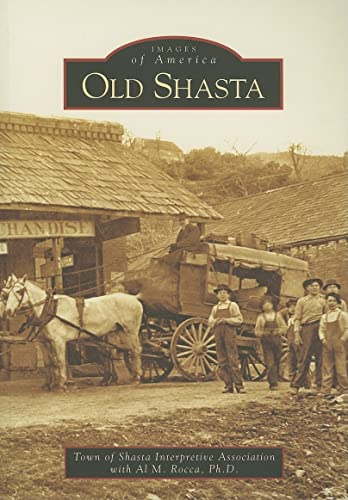
Shasta grew rapidly to be the "Queen City of the Northern Mines" after news of a second California gold strike reached the ears of fevered and footloose forty-niners. Miners swarmed into what became Shasta County, stopping to rest at Reading Springs, soon to be renamed Shasta. A few, more practical fortune-seekers gained their wealth by supplying the gold-hungry miners with the necessities of life. Stages and wagons rumbled back and forth to Red Bluff on deeply rutted trails bringing supplies. Frequent fires devastated early Shasta and "fireproof" brick structures rose from the ashes, some of which still stand today. Shasta was a thriving community in 1872, until the Central Pacific Railroad chose to bypass Shasta and build its terminus on a nearby site to be renamed Redding. Shasta slowly dwindled to a ghost town, its buildings vacant and crumbling by the 1920s. With the help of descendants of pioneer families who teamed up with state officials to preserve the remaining structures, Shasta State Historic Park opened to the public in 1950.
"Sinopsis" puede pertenecer a otra edición de este libro.
Acerca del autor
Authored by Prof. Al M. Rocca of Simpson University and a talented team of researchers and curatorial staff at the Courthouse Museum, this book and its images carry us back to a colorful era in California history, a time when tragedy and misfortune were common, but anything was possible.
"Sobre este título" puede pertenecer a otra edición de este libro.
Resultados de la búsqueda para Old Shasta (Images of America)

Imagen de archivo
Old Shasta
Publicado por
Arcadia Publishing (SC), 2006
ISBN 10: 0738530948
ISBN 13: 9780738530949
Antiguo o usado
Paperback
Librería: ThriftBooks-Atlanta, AUSTELL, GA, Estados Unidos de America
Calificación del vendedor: 5 de 5 estrellas

Paperback. Condición: As New. No Jacket. Pages are clean and are not marred by notes or folds of any kind. ~ ThriftBooks: Read More, Spend Less. Nº de ref. del artículo: G0738530948I2N00
Comprar usado
EUR 10,81
Gastos de envío gratis
Se envía dentro de Estados Unidos de America
Se envía dentro de Estados Unidos de America
Cantidad disponible: 1 disponibles
Imagen de archivo
Old Shasta
Publicado por
Arcadia Publishing, 2006
ISBN 10: 0738530948
ISBN 13: 9780738530949
Antiguo o usado
Tapa blanda
Librería: Better World Books: West, Reno, NV, Estados Unidos de America
Calificación del vendedor: 5 de 5 estrellas
Condición: Very Good. Pages intact with possible writing/highlighting. Binding strong with minor wear. Dust jackets/supplements may not be included. Stock photo provided. Product includes identifying sticker. Better World Books: Buy Books. Do Good. Nº de ref. del artículo: 52230757-6
Comprar usado
EUR 15,38
Gastos de envío gratis
Se envía dentro de Estados Unidos de America
Se envía dentro de Estados Unidos de America
Cantidad disponible: 1 disponibles
Imagen del vendedor
Old Shasta
Publicado por
Arcadia Publishing, 2006
ISBN 10: 0738530948
ISBN 13: 9780738530949
Antiguo o usado
Tapa blanda
Librería: GreatBookPrices, Columbia, MD, Estados Unidos de America
Calificación del vendedor: 5 de 5 estrellas
Condición: As New. Unread book in perfect condition. Nº de ref. del artículo: 4095772
Comprar usado
EUR 19,20
Envío por EUR 2,27
Se envía dentro de Estados Unidos de America
Se envía dentro de Estados Unidos de America
Cantidad disponible: Más de 20 disponibles
Imagen del vendedor
Old Shasta
Librería: GreatBookPrices, Columbia, MD, Estados Unidos de America
Calificación del vendedor: 5 de 5 estrellas
Condición: New. Nº de ref. del artículo: 4095772-n
Comprar nuevo
EUR 19,38
Envío por EUR 2,27
Se envía dentro de Estados Unidos de America
Se envía dentro de Estados Unidos de America
Cantidad disponible: Más de 20 disponibles
Imagen del vendedor
Old Shasta
Publicado por
Arcadia Publishing, US, 2006
ISBN 10: 0738530948
ISBN 13: 9780738530949
Nuevo
Paperback
Librería: Rarewaves USA, HEBRON, KY, Estados Unidos de America
Calificación del vendedor: 5 de 5 estrellas
Paperback. Condición: New. Nº de ref. del artículo: LU-9780738530949
Comprar nuevo
EUR 21,73
Gastos de envío gratis
Se envía dentro de Estados Unidos de America
Se envía dentro de Estados Unidos de America
Cantidad disponible: Más de 20 disponibles
Imagen del vendedor
Old Shasta
Publicado por
Arcadia Publishing, US, 2006
ISBN 10: 0738530948
ISBN 13: 9780738530949
Nuevo
Paperback
Librería: Rarewaves.com USA, London, LONDO, Reino Unido
Calificación del vendedor: 5 de 5 estrellas
Paperback. Condición: New. Nº de ref. del artículo: LU-9780738530949
Comprar nuevo
EUR 24,28
Gastos de envío gratis
Se envía de Reino Unido a Estados Unidos de America
Se envía de Reino Unido a Estados Unidos de America
Cantidad disponible: Más de 20 disponibles
Imagen de archivo
Old Shasta
Librería: Kennys Bookshop and Art Galleries Ltd., Galway, GY, Irlanda
Calificación del vendedor: 5 de 5 estrellas
Condición: New. 2006. Paperback. . . . . . Nº de ref. del artículo: V9780738530949
Comprar nuevo
EUR 25,82
Envío por EUR 9,50
Se envía de Irlanda a Estados Unidos de America
Se envía de Irlanda a Estados Unidos de America
Cantidad disponible: Más de 20 disponibles
Imagen de archivo
Old Shasta
Librería: Kennys Bookstore, Olney, MD, Estados Unidos de America
Calificación del vendedor: 5 de 5 estrellas
Condición: New. 2006. Paperback. . . . . . Books ship from the US and Ireland. Nº de ref. del artículo: V9780738530949
Comprar nuevo
EUR 31,17
Envío por EUR 9,03
Se envía dentro de Estados Unidos de America
Se envía dentro de Estados Unidos de America
Cantidad disponible: Más de 20 disponibles
Imagen de archivo
Old Shasta (Images of America)
Librería: Revaluation Books, Exeter, Reino Unido
Calificación del vendedor: 5 de 5 estrellas
Paperback. Condición: Brand New. 1st edition. 128 pages. 9.00x6.50x0.50 inches. In Stock. Nº de ref. del artículo: 0738530948
Comprar nuevo
EUR 42,89
Envío por EUR 11,65
Se envía de Reino Unido a Estados Unidos de America
Se envía de Reino Unido a Estados Unidos de America
Cantidad disponible: 1 disponibles
Imagen del vendedor
Old Shasta
Publicado por
Arcadia Publishing, US, 2006
ISBN 10: 0738530948
ISBN 13: 9780738530949
Nuevo
Paperback
Librería: Rarewaves USA United, HEBRON, KY, Estados Unidos de America
Calificación del vendedor: 5 de 5 estrellas
Paperback. Condición: New. Nº de ref. del artículo: LU-9780738530949
Comprar nuevo
EUR 29,43
Envío por EUR 43,00
Se envía dentro de Estados Unidos de America
Se envía dentro de Estados Unidos de America
Cantidad disponible: Más de 20 disponibles