
Artículos relacionados a Poverty Traps
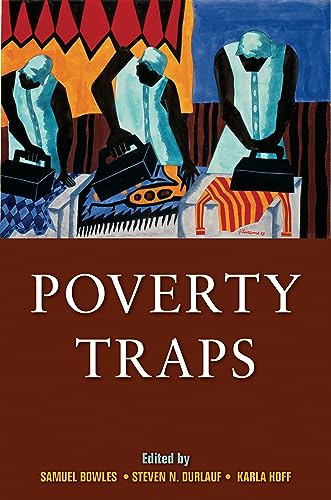
Sinopsis
Much popular belief--and public policy--rests on the idea that those born into poverty have it in their power to escape. But the persistence of poverty and ever-growing economic inequality around the world have led many economists to seriously question the model of individual economic self-determination when it comes to the poor. In Poverty Traps, Samuel Bowles, Steven Durlauf, Karla Hoff, and the book’s other contributors argue that there are many conditions that may trap individuals, groups, and whole economies in intractable poverty. For the first time the editors have brought together the perspectives of economics, economic history, and sociology to assess what we know--and don’t know--about such traps. Among the sources of the poverty of nations, the authors assign a primary role to social and political institutions, ranging from corruption to seemingly benign social customs such as kin systems. Many of the institutions that keep nations poor have deep roots in colonial history and persist long after their initial causes are gone. Neighborhood effects--influences such as networks, role models, and aspirations--can create hard-to-escape pockets of poverty even in rich countries. Similar individuals in dissimilar socioeconomic environments develop different preferences and beliefs that can transmit poverty or affluence from generation to generation. The book presents evidence of harmful neighborhood effects and discusses policies to overcome them, with attention to the uncertainty that exists in evaluating such policies.
"Sinopsis" puede pertenecer a otra edición de este libro.
Acerca del autor
Samuel Bowles is Research Professor and Director of the Behavioral Sciences Program at the Santa Fe Institute, and Professor of Economics at the University of Siena. Steven N. Durlauf is Kenneth J. Arrow Professor of Economics at the University of Wisconsin, Madison. Karla Hoff is a Senior Research Economist at the World Bank.
De la contraportada
"Much of traditional economics was based on the precept that poverty is largely the fault of the poor. But it is now recognized that an individual's economic success or failure depends to a great extent on the setting in which he or she is born. I believe that this topic will dominate the research agenda of economics in the coming years, and Poverty Traps is one of the best introductions to the subject. For lucid and critical evaluation of new ideas and models such as the 'membership theory' of an individual's economic well-being, the emergence of 'dysfunctional institutions,' and the role of 'kin systems' and 'neighborhood effects' in perpetuating poverty, it is hard to think of a better single reference."--Kaushik Basu, Carl Marks Professor of International Studies and Professor of Economics, Cornell University
"The sources and consequences of persistent inequality within and across countries have been at the center of public and academic debates for decades. In this thought-provoking book leading researchers in the field highlight some of the most significant mechanisms for the emergence of poverty traps. An outstanding contribution."--Oded Galor, Brown University and Hebrew University
"The book is fascinating and will be read. The editors do a delightful job of introducing and articulating the purpose of the book--to introduce the concept of poverty traps to the social sciences as a way to understand persistence economic inequality within and between countries. The volume makes numerous significant contributions, and all of the papers are likely to be recognized within and outside of their own fields."--Yannis Ioannides, Max and Herta Neubauer Chair and Professor of Economics, Tufts University
"Sobre este título" puede pertenecer a otra edición de este libro.
Resultados de la búsqueda para Poverty Traps

Imagen de archivo
Poverty Traps
Publicado por
Princeton University Press, 2016
ISBN 10: 0691170932
ISBN 13: 9780691170930
Antiguo o usado
Tapa blanda
Librería: Better World Books, Mishawaka, IN, Estados Unidos de America
Calificación del vendedor: 5 de 5 estrellas

Condición: Good. Former library copy. Pages intact with minimal writing/highlighting. The binding may be loose and creased. Dust jackets/supplements are not included. Includes library markings. Stock photo provided. Product includes identifying sticker. Better World Books: Buy Books. Do Good. Nº de ref. del artículo: 45162809-6
Comprar usado
EUR 26,69
Gastos de envío gratis
Se envía dentro de Estados Unidos de America
Se envía dentro de Estados Unidos de America
Cantidad disponible: 1 disponibles
Imagen del vendedor
Poverty Traps
Publicado por
Princeton University Press, 2016
ISBN 10: 0691170932
ISBN 13: 9780691170930
Antiguo o usado
Tapa blanda
Librería: GreatBookPrices, Columbia, MD, Estados Unidos de America
Calificación del vendedor: 5 de 5 estrellas
Condición: As New. Unread book in perfect condition. Nº de ref. del artículo: 24824702
Comprar usado
EUR 31,49
Envío por EUR 2,36
Se envía dentro de Estados Unidos de America
Se envía dentro de Estados Unidos de America
Cantidad disponible: 1 disponibles
Imagen de archivo
Poverty Traps
Librería: PBShop.store UK, Fairford, GLOS, Reino Unido
Calificación del vendedor: 5 de 5 estrellas
PAP. Condición: New. New Book. Shipped from UK. Established seller since 2000. Nº de ref. del artículo: WP-9780691170930
Comprar nuevo
EUR 29,19
Envío por EUR 4,97
Se envía de Reino Unido a Estados Unidos de America
Se envía de Reino Unido a Estados Unidos de America
Cantidad disponible: 1 disponibles
Imagen del vendedor
Poverty Traps
Publicado por
Princeton University Press, 2016
ISBN 10: 0691170932
ISBN 13: 9780691170930
Nuevo
Tapa blanda
Librería: GreatBookPrices, Columbia, MD, Estados Unidos de America
Calificación del vendedor: 5 de 5 estrellas
Condición: New. Nº de ref. del artículo: 24824702-n
Comprar nuevo
EUR 32,83
Envío por EUR 2,36
Se envía dentro de Estados Unidos de America
Se envía dentro de Estados Unidos de America
Cantidad disponible: 1 disponibles
Imagen de archivo
Poverty Traps
Librería: PBShop.store US, Wood Dale, IL, Estados Unidos de America
Calificación del vendedor: 5 de 5 estrellas
PAP. Condición: New. New Book. Shipped from UK. Established seller since 2000. Nº de ref. del artículo: WP-9780691170930
Comprar nuevo
EUR 35,70
Gastos de envío gratis
Se envía dentro de Estados Unidos de America
Se envía dentro de Estados Unidos de America
Cantidad disponible: 1 disponibles
Imagen del vendedor
Poverty Traps
Publicado por
Princeton University Press, US, 2016
ISBN 10: 0691170932
ISBN 13: 9780691170930
Nuevo
Paperback
Librería: Rarewaves USA, HEBRON, KY, Estados Unidos de America
Calificación del vendedor: 5 de 5 estrellas
Paperback. Condición: New. Much popular belief--and public policy--rests on the idea that those born into poverty have it in their power to escape. But the persistence of poverty and ever-growing economic inequality around the world have led many economists to seriously question the model of individual economic self-determination when it comes to the poor. In Poverty Traps, Samuel Bowles, Steven Durlauf, Karla Hoff, and the book's other contributors argue that there are many conditions that may trap individuals, groups, and whole economies in intractable poverty. For the first time the editors have brought together the perspectives of economics, economic history, and sociology to assess what we know--and don't know--about such traps. Among the sources of the poverty of nations, the authors assign a primary role to social and political institutions, ranging from corruption to seemingly benign social customs such as kin systems. Many of the institutions that keep nations poor have deep roots in colonial history and persist long after their initial causes are gone.Neighborhood effects--influences such as networks, role models, and aspirations--can create hard-to-escape pockets of poverty even in rich countries. Similar individuals in dissimilar socioeconomic environments develop different preferences and beliefs that can transmit poverty or affluence from generation to generation. The book presents evidence of harmful neighborhood effects and discusses policies to overcome them, with attention to the uncertainty that exists in evaluating such policies. Nº de ref. del artículo: LU-9780691170930
Comprar nuevo
EUR 37,77
Gastos de envío gratis
Se envía dentro de Estados Unidos de America
Se envía dentro de Estados Unidos de America
Cantidad disponible: Más de 20 disponibles
Imagen de archivo
Poverty Traps
Publicado por
Princeton University Press, 2016
ISBN 10: 0691170932
ISBN 13: 9780691170930
Nuevo
Tapa blanda
Librería: Kennys Bookshop and Art Galleries Ltd., Galway, GY, Irlanda
Calificación del vendedor: 5 de 5 estrellas
Condición: New. Editor(s): Bowles, Samuel; Durlauf, Steven N.; Hoff, Karla. Num Pages: 256 pages. BIC Classification: JFFA. Category: (P) Professional & Vocational; (U) Tertiary Education (US: College). Dimension: 235 x 155. . . 2016. Reprint. Paperback. . . . . Nº de ref. del artículo: V9780691170930
Comprar nuevo
EUR 28,37
Envío por EUR 9,50
Se envía de Irlanda a Estados Unidos de America
Se envía de Irlanda a Estados Unidos de America
Cantidad disponible: 1 disponibles
Imagen de archivo
Poverty Traps
Publicado por
Princeton University Press 2016-05-31, 2016
ISBN 10: 0691170932
ISBN 13: 9780691170930
Nuevo
Paperback
Librería: Chiron Media, Wallingford, Reino Unido
Calificación del vendedor: 5 de 5 estrellas
Paperback. Condición: New. Brand new book, sourced directly from publisher. Dispatch time is 3-4 days from our warehouse. Book will be sent in robust, secure packaging to ensure it reaches you securely. Nº de ref. del artículo: 6666-WLY-9780691170930
Comprar nuevo
EUR 32,39
Envío por EUR 5,96
Se envía de Reino Unido a Estados Unidos de America
Se envía de Reino Unido a Estados Unidos de America
Cantidad disponible: 1 disponibles
Imagen de archivo
Poverty Traps
Publicado por
Princeton University Press, 2016
ISBN 10: 0691170932
ISBN 13: 9780691170930
Nuevo
Tapa blanda
Librería: Kennys Bookstore, Olney, MD, Estados Unidos de America
Calificación del vendedor: 5 de 5 estrellas
Condición: New. Editor(s): Bowles, Samuel; Durlauf, Steven N.; Hoff, Karla. Num Pages: 256 pages. BIC Classification: JFFA. Category: (P) Professional & Vocational; (U) Tertiary Education (US: College). Dimension: 235 x 155. . . 2016. Reprint. Paperback. . . . . Books ship from the US and Ireland. Nº de ref. del artículo: V9780691170930
Comprar nuevo
EUR 35,88
Envío por EUR 9,40
Se envía dentro de Estados Unidos de America
Se envía dentro de Estados Unidos de America
Cantidad disponible: 1 disponibles
Imagen del vendedor
Poverty Traps
Publicado por
Princeton University Press, 2016
ISBN 10: 0691170932
ISBN 13: 9780691170930
Nuevo
Tapa blanda
Librería: GreatBookPricesUK, Woodford Green, Reino Unido
Calificación del vendedor: 5 de 5 estrellas
Condición: New. Nº de ref. del artículo: 24824702-n
Comprar nuevo
EUR 29,18
Envío por EUR 17,91
Se envía de Reino Unido a Estados Unidos de America
Se envía de Reino Unido a Estados Unidos de America
Cantidad disponible: 1 disponibles