
Artículos relacionados a Exploring the invisible : art, science and the spiritual:...
Exploring the invisible : art, science and the spiritual: Art, Science, and the Spiritual - Second Edition - Tapa dura
Sinopsis
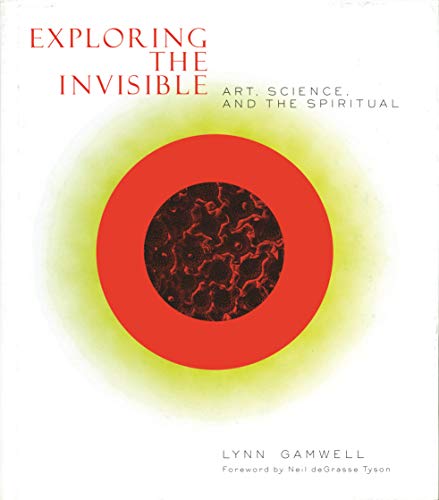
This sumptuous and stunningly illustrated book shows how directly, profoundly, and indisputably modem science has transformed modern art. Beginning in the mid-nineteenth century, a strange and exciting new world came into focus - a world of micro organisms in myriad shapes and colors, prehistoric fossils, bizarre undersea creatures, spectra of light and sound, and atomic parades. Exploring the Invisible reveals that the world beyond the naked eye - made visible by advances in science - has been a major inspiration for artists ever since, influencing the subjects they choose as well as their techniques and modes of representation. Lynn Gamwell traces the evolution of abstract art through several eras, beginning with Romanticism. She shows how new windows into telescopic and microscopic realms-combined with new definitions of beauty derived from science-broadly and profoundly influenced Western art. For example, a German physiologist's famous demonstration that color is not in the world but in the mind directly influenced Monet's revolutionary new approach to depicting light. As the first wave ofenthusiasm for science crested, abstract art emerged in Munich and Moscow. By 1914 it could be found from Paris to New York. Throughout this visually and intellectually stimulating book are beautiful images from both science and artsome well known, others rare-that reveal the scientific sources mined by Impressionist and Symbolist painters, Art Nouveau sculptors and architects, Cubists, and other nineteenth- and twentieth-century artists. Exploring the Invisible transforms our understanding of modem art.
"Sinopsis" puede pertenecer a otra edición de este libro.
Acerca del autor
Lynn Gamwell is Director of the Art Museum at Binghamton University; Curator of the Gallery of Art and Science at the New York Academy of Sciences; and Adjunct Professor of Science at the School of Visual Arts, New York. She is the coauthor of "Dreams 1900-2000: Art, Science, and the Unconscious Mind" and "Madness in America: Cultural and Medical Perceptions of Mental Illness Before 1914". Neil deGrasse Tyson is Director of the Hayden Planetarium at the American Museum of Natural History. His books include "The Sky Is Not the Limit" and "One Universe".
"Sobre este título" puede pertenecer a otra edición de este libro.
Resultados de la búsqueda para Exploring the invisible : art, science and the spiritual:...

Imagen del vendedor
Exploring the Invisible: Art, Science, and the Spiritual - Second Edition
Publicado por
Princeton University Press, 2002
ISBN 10: 0691089728
ISBN 13: 9780691089720
Antiguo o usado
Tapa dura
Librería: -OnTimeBooks-, Phoenix, AZ, Estados Unidos de America
Calificación del vendedor: 5 de 5 estrellas

Condición: good. A copy that has been read, remains in good condition. All pages are intact, and the cover is intact. The spine and cover show signs of wear. Pages can include notes and highlighting and show signs of wear, and the copy can include "From the library of" labels or previous owner inscriptions. 100% GUARANTEE! Shipped with delivery confirmation, if you're not satisfied with purchase please return item! Ships via media mail. Nº de ref. del artículo: OTV.0691089728.G
Comprar usado
EUR 6,43
Gastos de envío gratis
Se envía dentro de Estados Unidos de America
Se envía dentro de Estados Unidos de America
Cantidad disponible: 1 disponibles
Imagen de archivo
Exploring the Invisible : Art, Science, and the Spiritual - Second Edition
Publicado por
Princeton University Press, 2002
ISBN 10: 0691089728
ISBN 13: 9780691089720
Antiguo o usado
Tapa dura
Librería: Better World Books, Mishawaka, IN, Estados Unidos de America
Calificación del vendedor: 5 de 5 estrellas
Condición: Very Good. Pages intact with possible writing/highlighting. Binding strong with minor wear. Dust jackets/supplements may not be included. Stock photo provided. Product includes identifying sticker. Better World Books: Buy Books. Do Good. Nº de ref. del artículo: 6105506-75
Comprar usado
EUR 12,36
Gastos de envío gratis
Se envía dentro de Estados Unidos de America
Se envía dentro de Estados Unidos de America
Cantidad disponible: 1 disponibles
Imagen de archivo
Exploring the Invisible: Art, Science, and the Spiritual - Second Edition
Publicado por
Princeton University Press, Princeton, 2002
ISBN 10: 0691089728
ISBN 13: 9780691089720
Antiguo o usado
Tapa dura
Librería: Magers and Quinn Booksellers, Minneapolis, MN, Estados Unidos de America
Calificación del vendedor: 5 de 5 estrellas
hardcover. Condición: Acceptable. May have underlining, highlighting, margin notes, remainder marks, inscriptions, book plates, tears, significant wear, and/or a missing dust jacket, box, or discs. Damaged item. Nº de ref. del artículo: 1526146
Comprar usado
EUR 10,34
Envío por EUR 3,56
Se envía dentro de Estados Unidos de America
Se envía dentro de Estados Unidos de America
Cantidad disponible: 1 disponibles
Imagen de archivo
Exploring the Invisible: Art, Science, and the Spiritual - Second Edition Gamwell, Lynn and Tyson, Neil deGrasse
Publicado por
Princeton University Press, 2002
ISBN 10: 0691089728
ISBN 13: 9780691089720
Antiguo o usado
Tapa dura
Librería: Bibliomonster Books, Rancho Cucamonga, CA, Estados Unidos de America
Calificación del vendedor: 4 de 5 estrellas

hardcover. Condición: As New. Used, hardcover like new with original dust jacket. Sharp, square, clean, fresh & serviceable copy. No highlighting, marginalia or tears. Nº de ref. del artículo: PG-O5QG-HOZV
Comprar usado
EUR 26,66
Envío por EUR 4,47
Se envía dentro de Estados Unidos de America
Se envía dentro de Estados Unidos de America
Cantidad disponible: 1 disponibles
Imagen de archivo
Exploring the Invisible: Art, Science, and the Spiritual - Second Edition
Publicado por
Princeton University Press, 2002
ISBN 10: 0691089728
ISBN 13: 9780691089720
Antiguo o usado
Tapa dura
Librería: G.J. Askins Bookseller, New Lebanon, NY, Estados Unidos de America
Calificación del vendedor: 5 de 5 estrellas
Hardcover. Condición: Very Good. Estado de la sobrecubierta: Very Good. 344 page hardcover with many illustrations (156 color, 208 b/w). Foreword by Neil deGrasse Tyson. Text with illustrations, Chronology, Suggestions for Further Reading, Index. Book and dust jacket in very good condition - unmarked, tight and clean. Nº de ref. del artículo: 542891
Comprar usado
EUR 27,60
Envío por EUR 5,36
Se envía dentro de Estados Unidos de America
Se envía dentro de Estados Unidos de America
Cantidad disponible: 1 disponibles
Imagen de archivo
Exploring the Invisible: Art, Science, and the Spiritual - Second Edition
Publicado por
Princeton University Press, United States, New Jersey, 2002
ISBN 10: 0691089728
ISBN 13: 9780691089720
Antiguo o usado
Paperback
Librería: WorldofBooks, Goring-By-Sea, WS, Reino Unido
Calificación del vendedor: 5 de 5 estrellas
Paperback. Condición: Very Good. This sumptuous and stunningly illustrated book shows through words and images how directly, profoundly, and indisputably modern science has transformed modern art. Beginning in the mid-nineteenth century, a strange and exciting new world came into focus - a world of microorganisms in myriad shapes and colors, prehistoric fossils, bizarre undersea creatures, spectrums of light and sound, molecules of water; and atomic particles. Exploring the Invisible reveals that the world beyond the naked eye - made visible by advances in science - has been a major inspiration for artists ever since, influencing the subjects they choose as well as their techniques and modes of representation. Lynn Gamwell traces the evolution of abstract art through several waves, beginning with Romanticism. She shows how new windows into telescopic and microscopic realms - combined with the growing explanatory importance of mathematics and new definitions of beauty derived from science - broadly and profoundly influenced Western art. Art increasingly reflected our more complex understanding of reality through increasing abstraction. For example, a German physiologist's famous demonstration that color is not in the world but in the mind influenced Monet's revolutionary painting with light. As the first wave of enthusiasm for science crested, abstract art emerged in Brussels and Munich. By 1914, it could be found from Moscow to Paris. Throughout the book are beautiful images from both science and art - some well known, others rare - that reveal the scientific sources mined by Impressionist and Symbolist painters, Art Nouveau sculptors and architects, Cubists, and other nineteenth- and twentieth-century artists. With a foreword by astronomer Neil deGrasse Tyson, Exploring the invisible appears in an age when both artists and scientists are exploring the deepest meanings of life, consciousness, and the universe. The book has been read, but is in excellent condition. Pages are intact and not marred by notes or highlighting. The spine remains undamaged. Nº de ref. del artículo: GOR001936227
Comprar usado
EUR 29,97
Envío por EUR 6,62
Se envía de Reino Unido a Estados Unidos de America
Se envía de Reino Unido a Estados Unidos de America
Cantidad disponible: 2 disponibles
Imagen de archivo
Exploring the Invisible: Art, Science, and the Spiritual
Publicado por
Princeton University Press, 2002
ISBN 10: 0691089728
ISBN 13: 9780691089720
Antiguo o usado
Tapa dura
Librería: Artless Missals, DENVER, CO, Estados Unidos de America
Calificación del vendedor: 5 de 5 estrellas
HARDCOVER. Condición: Good. No dust jacket. Binding solid, pages crisp and clean, no markings found. Maroon and black illustrated covers bright and shiny with very light scuffs and dents. Extremities lightly bumped with minimal tip wear. No expedited or international shipping, oversize. Nº de ref. del artículo: SKU1014528
Comprar usado
EUR 57,04
Envío por EUR 5,36
Se envía dentro de Estados Unidos de America
Se envía dentro de Estados Unidos de America
Cantidad disponible: 1 disponibles
Imagen de archivo
Exploring the Invisible : Art, Science, & the Spiritual : Art, Science, and the Spiritual
Publicado por
Princeton University Press, Princeton & Oxford, 2002
ISBN 10: 0691089728
ISBN 13: 9780691089720
Antiguo o usado
Tapa dura
Librería: Barnaby, Oxford, Reino Unido
Calificación del vendedor: 4 de 5 estrellas
Hardcover. Condición: Good. Dust jacket is complete but rubbed and worn at edges and corners. Contents mostly clean and unmarked, with uncreased pages. A good used copy with no significant flaws. Publisher's note: This sumptuous and stunningly illustrated book reveals that the world beyond the naked eye-made visible by advances in science-has been a major inspiration for artists ever since, influencing the subjects they choose as well as their techniques and modes of representation. 135 color illustrations. 217 halftones. "Modern science since Darwin and Einstein has revolutionized our understanding of mind and cosmos, presenting a world as strange and paradoxical as it is wonderful, and challenging deeply held beliefs and values. That visual artists would be influenced by this still-continuing transformation is not surprising. Lynn Gamwell traces this response through the twists and turns of modern and postmodern art and aesthetics, providing fresh and interesting interpretations, and a treasury of visual images, to stimulate the thinking of both scientist and artist."--Torsten N. Wiesel, neuroscientist and Nobel Laureate. "This pathbreaking study is daring, innovative, and above all, clearly written. I suspect it will be the one book students will be able to consult in order to correlate what are usually considered the almost antagonistic fields of science and art; and I suspect, too, that thanks to its amazingly readable, lucid style, it will find its way into the libraries of post-collegiate readers. Nobody before has dared to tackle this huge topic. Art historians don't know enough about science; scientists don't know enough about art. Miraculously, probably uniquely, Lynn Gamwell seems equally at home in both areas."-Robert Rosenblum, New York University. "Exploring the Invisible is very stimulating and accessible to the nonexpert (in science or art). As a scientist, I found it enjoyable and highly informative. It provides many new and exciting insights. Dr. Gamwell receives my admiration for this fine connection between art and science."-Arthur Greenberg, University of New Hampshire. This sumptuous and stunningly illustrated book shows through words and images how directly, profoundly, and indisputably modern science has transformed modern art. Beginning in the mid-nineteenth century, a strange and exciting new world came into focus-a world of microorganisms in myriad shapes and colors, prehistoric fossils, bizarre undersea creatures, spectrums of light and sound, molecules of water, and atomic particles. Exploring the Invisible reveals that the world beyond the naked eye-made visible by advances in science-has been a major inspiration for artists ever since, influencing the subjects they choose as well as their techniques and modes of representation. Lynn Gamwell traces the evolution of abstract art through several waves, beginning with Romanticism. She shows how new windows into telescopic and microscopic realms-combined with the growing explanatory importance of mathematics and new definitions of beauty derived from science-broadly and profoundly influenced Western art. Art increasingly reflected our more complex understanding of reality through increasing abstraction. For example, a German physiologist's famous demonstration that color is not in the world but in the mind influenced Monet's revolutionary painting with light. As the first wave of enthusiasm for science crested, abstract art emerged in Brussels and Munich. By 1914, it could be found from Moscow to Paris. Throughout the book are beautiful images from both science and art-some well known, others rare-that reveal the scientific sources mined by Impressionist and Symbolist painters, Art Nouveau sculptors and architects, Cubists, and other nineteenth-and twentieth-century artists. With a foreword by astronomer Neil deGrasse Tyson, Exploring the Invisible appears in an age when both artists and scientists are exploring the deepest meanings of life, consciousness, and the universe. Size. Nº de ref. del artículo: 260215GTH012460
Comprar usado
EUR 33,36
Envío por EUR 35,45
Se envía de Reino Unido a Estados Unidos de America
Se envía de Reino Unido a Estados Unidos de America
Cantidad disponible: 1 disponibles
Imagen de archivo
Exploring the Invisible: Art, Science, and the Spiritual - Second Edition
Publicado por
Princeton University Press, 2002
ISBN 10: 0691089728
ISBN 13: 9780691089720
Nuevo
Tapa dura
Librería: SHIMEDIA, Brooklyn, NY, Estados Unidos de America
Calificación del vendedor: 4 de 5 estrellas
Condición: New. Satisfaction Guaranteed or your money back. Nº de ref. del artículo: 0691089728
Comprar nuevo
EUR 138,00
Gastos de envío gratis
Se envía dentro de Estados Unidos de America
Se envía dentro de Estados Unidos de America
Cantidad disponible: 1 disponibles