
Artículos relacionados a Levels of Selection in Evolution: 21 (Monographs in...
Levels of Selection in Evolution: 21 (Monographs in Behavior and Ecology) - Tapa blanda
Libro 13 de 23: Monographs in Behavior and Ecology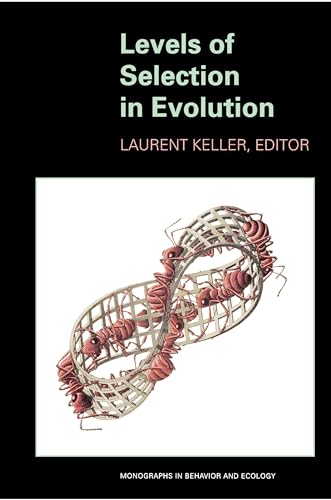
Sinopsis
Ever since the groundbreaking work of George Williams, W. D. Hamilton, and Richard Dawkins, evolutionary biologists have recognized that natural selection generally does not operate for the good of the group, but rather for the good of lower-level units such as the individual, the cell, even the gene. One of the fundamental problems of biology is: what keeps competition between these various levels of natural selection from destroying the common interests to be gained from cooperation? In this volume twelve prominent scientists explore this question, presenting a comprehensive survey of the current theoretical and empirical research in evolutionary biology. Recent studies show that at many levels of biological organization, mechanisms have evolved to prevent potential conflict in natural selection. Editor Laurent Keller's aim in this book is to bring together leading researchers from all biological disciplines to outline these potential conflicts and discuss how they are resolved. A multi-level approach of this kind allows important insights into the evolution of life, as well as bridging the long-standing conceptual chasm between molecular and organismal biologists. The chapters here follow a rigorous theoretical framework, giving the book an overall synergy that is unique to multi-authored books. The contributors, in addition to the editor, are H. Charles J. Godfray, Edward Allen Herre, Dawn M. Kitchen, Egbert Giles Leigh, Jr. Catherine M. Lessells, Richard E. Michod, Leonard Nunney, Craig Packer, Andrew Pomiankowski, H. Kern Reeve, John Maynard Smith, and Eörs Szathmáry.
"Sinopsis" puede pertenecer a otra edición de este libro.
Acerca del autor
Laurent Keller holds a START position (Swiss Talents for Academic Research and Teaching from the Swiss NSF) and is Associate Professor and Head of the Department of Ecology at the University of Lausanne, Switzerland. He is known for his work on the principles governing the evolution of animal societies and the ecological and evolutionary consequences of social life. He is the editor of Queen Number and Sociality in Insects.
De la contraportada
Ever since the groundbreaking work of George Williams, W. D. Hamilton, and Richard Dawkins, evolutionary biologists have recognized that natural selection generally does not operate for the good of the group, but rather for the good of lower-level units such as the individual, the cell, even the gene. One of the fundamental problems of biology is: what keeps competition between these various levels of natural selection from destroying the common interests to be gained from cooperation? In this volume, twelve prominent scientists explore this question, presenting a comprehensive survey of the current theoretical and empirical research in evolutionary biology.
Recent studies show that at many levels of biological organization, mechanisms have evolved to prevent potential conflict in natural selection. Editor Laurent Keller's aim in this book is to bring together leading researchers from all biological disciplines to outline these potential conflicts and discuss how they are resolved. A multi-level approach of this kind allows important insights into the evolution of life, as well as bridging the long-standing conceptual chasm between molecular and organismal biologists. The chapters here follow a rigorous theoretical framework, giving the book an overall synergy that is unique to multi-authored books.
The contributors, in addition to the editor, are H. Charles J. Godfray, Edward Allen Herre, Dawn M. Kitchen, Egbert Giles Leigh, Jr., Catherine M. Lessells, Richard E. Michod, Leonard Nunney, Craig Packer, Andrew Pomiankowski, H. Kern Reeve, John Maynard Smith, and Eors Szathmary.
"Sobre este título" puede pertenecer a otra edición de este libro.
Resultados de la búsqueda para Levels of Selection in Evolution: 21 (Monographs in...

Imagen del vendedor
Levels of Selection in Evolution
Publicado por
Princeton University Press, 1999
ISBN 10: 0691007047
ISBN 13: 9780691007045
Antiguo o usado
Tapa blanda
Librería: -OnTimeBooks-, Phoenix, AZ, Estados Unidos de America
Calificación del vendedor: 5 de 5 estrellas

Condición: good. A copy that has been read, remains in good condition. All pages are intact, and the cover is intact. The spine and cover show signs of wear. Pages can include notes and highlighting and show signs of wear, and the copy can include "From the library of" labels or previous owner inscriptions. 100% GUARANTEE! Shipped with delivery confirmation, if you're not satisfied with purchase please return item! Ships via media mail. Nº de ref. del artículo: OTV.0691007047.G
Comprar usado
EUR 8,29
Gastos de envío gratis
Se envía dentro de Estados Unidos de America
Se envía dentro de Estados Unidos de America
Cantidad disponible: 1 disponibles
Imagen de archivo
Levels of Selection in Evolution
Publicado por
Princeton University Press, 1999
ISBN 10: 0691007047
ISBN 13: 9780691007045
Antiguo o usado
Tapa blanda
Librería: Better World Books, Mishawaka, IN, Estados Unidos de America
Calificación del vendedor: 5 de 5 estrellas
Condición: Good. Pages intact with minimal writing/highlighting. The binding may be loose and creased. Dust jackets/supplements are not included. Stock photo provided. Product includes identifying sticker. Better World Books: Buy Books. Do Good. Nº de ref. del artículo: 10568597-6
Comprar usado
EUR 8,51
Gastos de envío gratis
Se envía dentro de Estados Unidos de America
Se envía dentro de Estados Unidos de America
Cantidad disponible: 2 disponibles
Imagen de archivo
Levels of Selection in Evolution
Publicado por
Princeton University Press, 1999
ISBN 10: 0691007047
ISBN 13: 9780691007045
Antiguo o usado
Tapa blanda
Librería: Better World Books, Mishawaka, IN, Estados Unidos de America
Calificación del vendedor: 5 de 5 estrellas
Condición: Good. Former library copy. Pages intact with minimal writing/highlighting. The binding may be loose and creased. Dust jackets/supplements are not included. Includes library markings. Stock photo provided. Product includes identifying sticker. Better World Books: Buy Books. Do Good. Nº de ref. del artículo: 4725350-6
Comprar usado
EUR 8,51
Gastos de envío gratis
Se envía dentro de Estados Unidos de America
Se envía dentro de Estados Unidos de America
Cantidad disponible: 1 disponibles
Imagen del vendedor
Levels of Selection in Evolution
Publicado por
Princeton University Press, 1999
ISBN 10: 0691007047
ISBN 13: 9780691007045
Antiguo o usado
Tapa dura
Original o primera edición
Librería: Paradou Books, Richmond, VA, Estados Unidos de America
Calificación del vendedor: 5 de 5 estrellas
Hardcover. Condición: Near Fine. 1st Edition. Hardcover, no dj (likely as issued). 318 pgs. Very minimal wear. Nº de ref. del artículo: ABE-1789311291968
Comprar usado
EUR 6,88
Envío por EUR 3,53
Se envía dentro de Estados Unidos de America
Se envía dentro de Estados Unidos de America
Cantidad disponible: 1 disponibles
Imagen de archivo
Levels of Selection in Evolution
Publicado por
Princeton University Press, 1999
ISBN 10: 0691007047
ISBN 13: 9780691007045
Antiguo o usado
paperback
Librería: Midtown Scholar Bookstore, Harrisburg, PA, Estados Unidos de America
Calificación del vendedor: 5 de 5 estrellas
paperback. Condición: Very Good. Very Good paperback with light shelfwear - NICE! Standard-sized. Nº de ref. del artículo: mon0000343167
Comprar usado
EUR 5,52
Envío por EUR 5,36
Se envía dentro de Estados Unidos de America
Se envía dentro de Estados Unidos de America
Cantidad disponible: 1 disponibles
Imagen de archivo
Levels of Selection in Evolution
Publicado por
Princeton University Press, 1999
ISBN 10: 0691007047
ISBN 13: 9780691007045
Antiguo o usado
Paperback
Librería: Affordable Collectibles, Columbia, MO, Estados Unidos de America
Calificación del vendedor: 5 de 5 estrellas
Paperback. Condición: Very Good. About excellent with no marks. Minimal wear present. Nº de ref. del artículo: 031514
Comprar usado
EUR 10,07
Envío por EUR 3,57
Se envía dentro de Estados Unidos de America
Se envía dentro de Estados Unidos de America
Cantidad disponible: 1 disponibles
Imagen de archivo
Levels of Selection in Evolution
Publicado por
Princeton University Press, 1999
ISBN 10: 0691007047
ISBN 13: 9780691007045
Antiguo o usado
Paperback
Librería: Daedalus Books, Portland, OR, Estados Unidos de America
Calificación del vendedor: 4 de 5 estrellas

Paperback. Condición: Very Good. A bright, clean copy. Light edgewear. ; B&W Illustrations; 9.1 X 6.4 X 0.8 inches; 272 pages. Nº de ref. del artículo: 284859
Comprar usado
EUR 12,37
Envío por EUR 5,80
Se envía dentro de Estados Unidos de America
Se envía dentro de Estados Unidos de America
Cantidad disponible: 1 disponibles
Imagen de archivo
Levels of Selection in Evolution
Publicado por
Princeton University Press, 1999
ISBN 10: 0691007047
ISBN 13: 9780691007045
Antiguo o usado
Tapa blanda
Librería: Phatpocket Limited, Waltham Abbey, HERTS, Reino Unido
Calificación del vendedor: 5 de 5 estrellas
Condición: Good. Your purchase helps support Sri Lankan Children's Charity 'The Rainbow Centre'. Ex-library, so some stamps and wear, but in good overall condition. Our donations to The Rainbow Centre have helped provide an education and a safe haven to hundreds of children who live in appalling conditions. Nº de ref. del artículo: Z1-V-021-02643
Comprar usado
EUR 21,86
Envío por EUR 12,55
Se envía de Reino Unido a Estados Unidos de America
Se envía de Reino Unido a Estados Unidos de America
Cantidad disponible: 4 disponibles
Imagen de archivo
Levels of Selection in Evolution: 21 (Monographs in Behavior and Ecology)
Publicado por
Princeton University Press, 1999
ISBN 10: 0691007047
ISBN 13: 9780691007045
Antiguo o usado
paperback
Librería: Sell Books, Elland, YORKS, Reino Unido
Calificación del vendedor: 5 de 5 estrellas
paperback. Condición: Acceptable. Please see the condition note after this for details, if this is missing please consider Acceptable to mean poor quality that could include major staining, water damage, writing, missing dustjacket, etc etc. Our books are dispatched from a Yorkshire former cotton mill. We list via barcode/ISBN so please note that the images are stock images and may not be the exact copy you receive, furthermore the details about edition and year might not be accurate as many publishers reuse the same ISBN for multiple editions and as we simply scan a barcode or enter an ISBN we do not check the validity of the edition data when listing. If you're looking for an exact edition please don't order (at least not without checking with us first, although we don't always have time to check). We aim to dispatch prompty, the service used will depend on order value and book size. We can ship to most countries, see our shipping policies. Payment is via Abe only. Nº de ref. del artículo: mon0000155077
Comprar usado
EUR 23,93
Envío por EUR 14,33
Se envía de Reino Unido a Estados Unidos de America
Se envía de Reino Unido a Estados Unidos de America
Cantidad disponible: 1 disponibles
Imagen del vendedor
Levels of Selection in Evolution
Publicado por
Princeton University Press, 1999
ISBN 10: 0691007047
ISBN 13: 9780691007045
Antiguo o usado
Soft cover
Original o primera edición
Librería: Reading Room Books, Kilmarnock, Reino Unido
Calificación del vendedor: 5 de 5 estrellas
Soft cover. Condición: Very Good. 1st Edition. Nº de ref. del artículo: 4825
Comprar usado
EUR 18,22
Envío por EUR 22,18
Se envía de Reino Unido a Estados Unidos de America
Se envía de Reino Unido a Estados Unidos de America
Cantidad disponible: 1 disponibles