
Artículos relacionados a Learning Xml
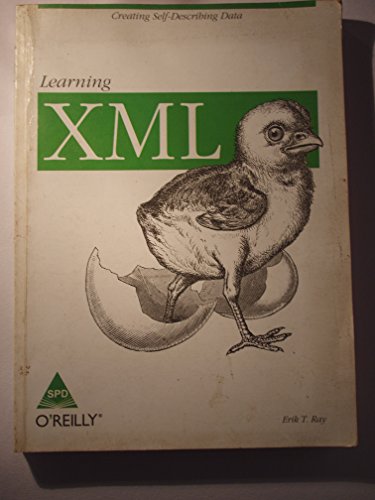
Sinopsis
An introduction to XML describes how to use Extensible Markup Language to manage both data and format on the World Wide Web, in intranets, or in other systems, combining real-life projects with detailed instruction to demonstrate the capabilities of XML, along with such related tools as CSS and XSL styling languages, XLink, XPointer, and more. Original. (Intermediate/Advanced)
"Sinopsis" puede pertenecer a otra edición de este libro.
Acerca del autor
Erik Ray is a software wrangler for the computer book publisher O'Reilly and Associates, helping to move production to an XML-based workflow. He lives with his wife Jeannine and 5 birds in Saugus, Massachusetts. When not writing, he can be found practicing kendo, watching Japanese animation, playing go, or stalking antiquarian book fairs to indulge his fetish for 19th-century children's books and machine bolt catalogs.
"Sobre este título" puede pertenecer a otra edición de este libro.
Resultados de la búsqueda para Learning Xml

Imagen de archivo
Learning XML
Publicado por
O'Reilly Media, 2001
ISBN 10: 0596000464
ISBN 13: 9780596000462
Antiguo o usado
Paperback
Librería: World of Books (was SecondSale), Montgomery, IL, Estados Unidos de America
Calificación del vendedor: 5 de 5 estrellas

Paperback. Condición: Good. The arrival of support for XML - the Extensible Markup Language - in browsers and authoring tools has followed a long period of intense hype. Major databases, authoring tools (including Microsoft's Office 2000), and browsers are committed to XML support. Many content creators and programmers for the Web and other media are left wondering, "What can XML and its associated standards really do for me?" Getting the most from XML requires being able to tag and transform XML documents so they can be processed by web browsers, databases, mobile phones, printers, XML processors, voice response systems, and LDAP directories, just to name a few targets. In "Learning XML", the author explains XML and its capabilities with references to real-life projects and other cogent examples. "Learning XML" shows the purpose of XML markup itself, the CSS and XSL styling languages, and the XLink and XPointer specifications for creating rich link structures. The basic advantages of XML over HTML are that XML lets a Web designer define tags that are meaningful for the particular documents or database output to be used, and that it enforces an unambiguous structure that supports error-checking. XML supports enhanced styling and linking standards (allowing, for instance, simultaneous linking to the same document in multiple languages) and a range of new applications. For writers producing XML documents, this book demystifies files and the process of creating them with the appropriate structure and format. Designers will learn what parts of XML are most helpful to their team and will get started on creating Document Type Descriptions. For programmers, the book makes syntax and structures clear. It also discusses the stylesheets needed for viewing documents in the next generation of browsers, databases, and other devices. Nº de ref. del artículo: 00102558819
Comprar usado
EUR 4,05
Gastos de envío gratis
Se envía dentro de Estados Unidos de America
Se envía dentro de Estados Unidos de America
Cantidad disponible: 4 disponibles
Imagen de archivo
Learning XML
Publicado por
O'Reilly Media, 2001
ISBN 10: 0596000464
ISBN 13: 9780596000462
Antiguo o usado
Paperback
Librería: World of Books (was SecondSale), Montgomery, IL, Estados Unidos de America
Calificación del vendedor: 5 de 5 estrellas
Paperback. Condición: Very Good. The arrival of support for XML - the Extensible Markup Language - in browsers and authoring tools has followed a long period of intense hype. Major databases, authoring tools (including Microsoft's Office 2000), and browsers are committed to XML support. Many content creators and programmers for the Web and other media are left wondering, "What can XML and its associated standards really do for me?" Getting the most from XML requires being able to tag and transform XML documents so they can be processed by web browsers, databases, mobile phones, printers, XML processors, voice response systems, and LDAP directories, just to name a few targets. In "Learning XML", the author explains XML and its capabilities with references to real-life projects and other cogent examples. "Learning XML" shows the purpose of XML markup itself, the CSS and XSL styling languages, and the XLink and XPointer specifications for creating rich link structures. The basic advantages of XML over HTML are that XML lets a Web designer define tags that are meaningful for the particular documents or database output to be used, and that it enforces an unambiguous structure that supports error-checking. XML supports enhanced styling and linking standards (allowing, for instance, simultaneous linking to the same document in multiple languages) and a range of new applications. For writers producing XML documents, this book demystifies files and the process of creating them with the appropriate structure and format. Designers will learn what parts of XML are most helpful to their team and will get started on creating Document Type Descriptions. For programmers, the book makes syntax and structures clear. It also discusses the stylesheets needed for viewing documents in the next generation of browsers, databases, and other devices. Nº de ref. del artículo: CIN0596000464VG
Comprar usado
EUR 4,05
Gastos de envío gratis
Se envía dentro de Estados Unidos de America
Se envía dentro de Estados Unidos de America
Cantidad disponible: 1 disponibles
Imagen del vendedor
Learning XML
Librería: Zoom Books Company, Lynden, WA, Estados Unidos de America
Calificación del vendedor: 5 de 5 estrellas
Condición: very_good. Book is in very good condition and may include minimal underlining highlighting. The book can also include "From the library of" labels. May not contain miscellaneous items toys, dvds, etc. . We offer 100% money back guarantee and 24 7 customer service. Nº de ref. del artículo: ZBV.0596000464.VG
Comprar usado
EUR 4,06
Gastos de envío gratis
Se envía dentro de Estados Unidos de America
Se envía dentro de Estados Unidos de America
Cantidad disponible: 1 disponibles
Imagen del vendedor
Learning XML
Librería: Greenworld Books, Arlington, TX, Estados Unidos de America
Calificación del vendedor: 5 de 5 estrellas
Condición: very_good. Fast Free Shipping â" Very Good condition book with a firm cover and clean pages. Shows normal use and some light wear or limited notes markings. A solid, nice copy to enjoy. Nº de ref. del artículo: GWV.0596000464.VG
Comprar usado
EUR 5,03
Gastos de envío gratis
Se envía dentro de Estados Unidos de America
Se envía dentro de Estados Unidos de America
Cantidad disponible: 2 disponibles
Imagen de archivo
Learning XML
Publicado por
O'Reilly Media, 2001
ISBN 10: 0596000464
ISBN 13: 9780596000462
Antiguo o usado
Paperback
Librería: World of Books Inc, Montgomery, IL, Estados Unidos de America
Calificación del vendedor: 4 de 5 estrellas

Paperback. Condición: Good. The arrival of support for XML - the Extensible Markup Language - in browsers and authoring tools has followed a long period of intense hype. Major databases, authoring tools (including Microsoft's Office 2000), and browsers are committed to XML support. Many content creators and programmers for the Web and other media are left wondering, "What can XML and its associated standards really do for me?" Getting the most from XML requires being able to tag and transform XML documents so they can be processed by web browsers, databases, mobile phones, printers, XML processors, voice response systems, and LDAP directories, just to name a few targets. In "Learning XML", the author explains XML and its capabilities with references to real-life projects and other cogent examples. "Learning XML" shows the purpose of XML markup itself, the CSS and XSL styling languages, and the XLink and XPointer specifications for creating rich link structures. The basic advantages of XML over HTML are that XML lets a Web designer define tags that are meaningful for the particular documents or database output to be used, and that it enforces an unambiguous structure that supports error-checking. XML supports enhanced styling and linking standards (allowing, for instance, simultaneous linking to the same document in multiple languages) and a range of new applications. For writers producing XML documents, this book demystifies files and the process of creating them with the appropriate structure and format. Designers will learn what parts of XML are most helpful to their team and will get started on creating Document Type Descriptions. For programmers, the book makes syntax and structures clear. It also discusses the stylesheets needed for viewing documents in the next generation of browsers, databases, and other devices. Nº de ref. del artículo: CIN0596000464G
Comprar usado
EUR 5,89
Gastos de envío gratis
Se envía dentro de Estados Unidos de America
Se envía dentro de Estados Unidos de America
Cantidad disponible: 4 disponibles
Imagen de archivo
Learning XML
Publicado por
O'Reilly Media, 2001
ISBN 10: 0596000464
ISBN 13: 9780596000462
Antiguo o usado
Paperback
Librería: World of Books Inc, Montgomery, IL, Estados Unidos de America
Calificación del vendedor: 4 de 5 estrellas
Paperback. Condición: Very Good. The arrival of support for XML - the Extensible Markup Language - in browsers and authoring tools has followed a long period of intense hype. Major databases, authoring tools (including Microsoft's Office 2000), and browsers are committed to XML support. Many content creators and programmers for the Web and other media are left wondering, "What can XML and its associated standards really do for me?" Getting the most from XML requires being able to tag and transform XML documents so they can be processed by web browsers, databases, mobile phones, printers, XML processors, voice response systems, and LDAP directories, just to name a few targets. In "Learning XML", the author explains XML and its capabilities with references to real-life projects and other cogent examples. "Learning XML" shows the purpose of XML markup itself, the CSS and XSL styling languages, and the XLink and XPointer specifications for creating rich link structures. The basic advantages of XML over HTML are that XML lets a Web designer define tags that are meaningful for the particular documents or database output to be used, and that it enforces an unambiguous structure that supports error-checking. XML supports enhanced styling and linking standards (allowing, for instance, simultaneous linking to the same document in multiple languages) and a range of new applications. For writers producing XML documents, this book demystifies files and the process of creating them with the appropriate structure and format. Designers will learn what parts of XML are most helpful to their team and will get started on creating Document Type Descriptions. For programmers, the book makes syntax and structures clear. It also discusses the stylesheets needed for viewing documents in the next generation of browsers, databases, and other devices. Nº de ref. del artículo: CIN0596000464VG
Comprar usado
EUR 5,89
Gastos de envío gratis
Se envía dentro de Estados Unidos de America
Se envía dentro de Estados Unidos de America
Cantidad disponible: 1 disponibles
Imagen del vendedor
Learning XML
Librería: -OnTimeBooks-, Phoenix, AZ, Estados Unidos de America
Calificación del vendedor: 5 de 5 estrellas
Condición: very_good. Gently read. May have name of previous ownership, or ex-library edition. Binding tight; spine straight and smooth, with no creasing; covers clean and crisp. Minimal signs of handling or shelving. 100% GUARANTEE! Shipped with delivery confirmation, if you're not satisfied with purchase please return item! Ships USPS Media Mail. Nº de ref. del artículo: OTV.0596000464.VG
Comprar usado
EUR 6,29
Gastos de envío gratis
Se envía dentro de Estados Unidos de America
Se envía dentro de Estados Unidos de America
Cantidad disponible: 1 disponibles
Imagen de archivo
Learning XML
Librería: Wonder Book, Frederick, MD, Estados Unidos de America
Calificación del vendedor: 5 de 5 estrellas
Condición: Very Good. Very Good condition. A copy that may have a few cosmetic defects. May also contain light spine creasing or a few markings such as an owner's name, short gifter's inscription or light stamp. Nº de ref. del artículo: L14A-01994
Comprar usado
EUR 6,42
Gastos de envío gratis
Se envía dentro de Estados Unidos de America
Se envía dentro de Estados Unidos de America
Cantidad disponible: 3 disponibles
Imagen del vendedor
Learning XML
Librería: Austin Goodwill 1101, Austin, TX, Estados Unidos de America
Calificación del vendedor: 5 de 5 estrellas
Condición: acceptable. Book shows noticeable wear from use. May include writing, highlighting, or other markings, but not excessive. Cover or edges may have visible wear. The book remains complete and fully readable. Nº de ref. del artículo: CTXV.0596000464.A
Comprar usado
EUR 3,67
Envío por EUR 2,94
Se envía dentro de Estados Unidos de America
Se envía dentro de Estados Unidos de America
Cantidad disponible: 1 disponibles
Imagen de archivo
Learning XML : Guide to Creating Self-Describing Data
Publicado por
O'Reilly Media, Incorporated, 2001
ISBN 10: 0596000464
ISBN 13: 9780596000462
Antiguo o usado
Tapa blanda
Original o primera edición
Librería: Better World Books, Mishawaka, IN, Estados Unidos de America
Calificación del vendedor: 5 de 5 estrellas
Condición: Very Good. 1st Edition. Pages intact with possible writing/highlighting. Binding strong with minor wear. Dust jackets/supplements may not be included. Stock photo provided. Product includes identifying sticker. Better World Books: Buy Books. Do Good. Nº de ref. del artículo: 3354766-6
Comprar usado
EUR 6,74
Gastos de envío gratis
Se envía dentro de Estados Unidos de America
Se envía dentro de Estados Unidos de America
Cantidad disponible: 2 disponibles