
Artículos relacionados a How to Talk to Your Boss About Race: Speaking Up Without...
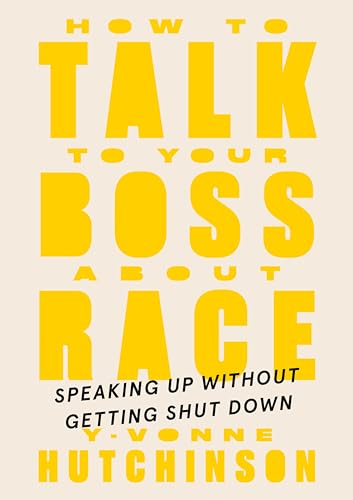
Sinopsis
An indispensable practical toolkit for dismantling racism in the workplace without fear
Reporting and personal testimonials have exposed racism in every institution in this country. But knowing that racism exists isn’t nearly enough. Social media posts about #BlackLivesMatter are nice, but how do you push leadership towards real anti-racist action?
Diversity and inclusion strategist Y-Vonne Hutchinson helps tech giants, political leaders, and Fortune 500 companies speak more productively about racism and bias and turn talk into action. In this clear and accessible guide, Hutchinson equips employees with a framework to think about race at work, prepares them to have frank and effective conversations with more powerful leaders, helps them center marginalized perspectives, and explains how to leverage power dynamics to get results while navigating backlash and gaslighting.
How to Talk To Your Boss About Race is a crucial handbook to moving beyond fear to push for change. No matter how much formal power you have, you can create antiracist change at work.
"Sinopsis" puede pertenecer a otra edición de este libro.
Acerca del autor
Y-Vonne Hutchinson is the CEO and founder of ReadySet, one of the country’s leading diversity, equity, and inclusion consulting firms. Through ReadySet, she partners with Fortune 500 companies, tech firms, universities, government bodies, political leaders, sports teams, and entertainment and media giants to increase representation, reimagine their culture, and optimize their impact. Prior to launching ReadySet, she worked as an international labor and human rights lawyer for nearly a decade. When she’s not thinking about racism, she can be found watching a bad action movie, planning her next trip, or struggling to bake the perfect Southern biscuit.
Fragmento. © Reproducción autorizada. Todos los derechos reservados.
1. Reading the Room
Spotting the Signs of Racism
Language is a challenge when it comes to the words we use to describe race and racism. It's constantly evolving to become more specific, expansive, and inclusive. It's also constantly being co-opted or weaponized to undermine its effectiveness.
Just look at what happened to the word "woke." The word comes from the phrase "Stay woke," a longtime rallying cry of the Black American civil rights movement. That cry was a reminder to Black Americans to remain aware of the injustices they faced and the dangers posed by White people. It was a warning against complacency during a time when complacency could mean death.
Consider the words of Dr. Martin Luther King Jr.:
There are all too many people who, in some great period of social change, fail to achieve the new mental outlooks that the new situation demands. There is nothing more tragic than to sleep through a revolution. There can be no gainsaying of the fact that a great revolution is taking place in our world today. It is a social revolution, sweeping away the old order of colonialism. And in our own nation it is sweeping away the old order of slavery and racial segregation. . . . And so we see in our own world a revolution of rising expectations. The great challenge facing every individual graduating today is to remain awake through this social revolution.
Appropriately, the phrase "Stay woke" reappeared in 2014 as Black death started to fill our Twitter timelines and Black citizens took to the streets in Ferguson, Missouri. It became a rallying cry for the Black Lives Matter movement, and the hashtag #staywoke encouraged people to pay attention to the atrocities happening in Ferguson and the larger specter of impunity for officers who killed Black people.
After being featured in popular music and film, the term eventually entered the mainstream and, of course, became the source of political backlash. "Woke" became a shorthand critique of performative allyship, or just of people who were annoyingly insistent about those pesky civil rights. Today, if we're not careful, we can be tricked into engaging with "wokeness" solely on those negative terms, instead of striving for it as Dr. King asked us to.
Language is fluid. It evolves, gets appropriated, gets weaponized, is reclaimed, and on and on. Nowhere is this more true than with words and ideas that have been politicized.
With that caveat, I thought it best to start with a primer, introducing language and clarifying some of the concepts I utilize when I talk about race today.
What Is Race?
Before we define racism, we should first define race.
It would be fair to say that when it comes to defining the word "race," I am not sure how exactly to do that. It would be fairer to say that I have been wrestling with this question most of my life and I still feel like I come up short.
I know race is the thing that made all of the difference. I know it is often the first aspect of my identity that people refer to when they describe me. I know it helps me create community with some and puts me in danger with others. It is my hair, my skin, my butt, my nose, the origins of my ancestors, our history. That much I know
I also know I learned I was Black in first grade.
That year, my mother pulled me out of my small Christian private school and put me into public school. Prior to that transition, I had been sheltered (though not in the way that you might think). My private school was incredibly diverse. My mother was a substitute teacher there. I never had cause to interrogate my identity or focus on my racial difference, because no one else did either. Not so in my all-White public school, where I both stuck out like a sore thumb and seemed invisible at the same time.
I struggled to understand why things at the school I was so excited to attend felt so different . . . so much worse.
A boy named Scott helped me solve that mystery. We were on the playground doing some activity that required us to hold hands. Scott refused to hold mine because I was Black. I tried not to cry. The teacher pretended not to see. And that was the day I learned what Blackness meant.
Today, I very much know I'm Black. I'm a girl who will never pass. I'm Blackity Black Black. Society told me I was Black. My parents made sure I never forgot it. But that knowledge wasn't inherent. I wasn't born knowing it. Sure, when I was younger, I knew I was different from my White classmates. I knew my skin was darker and my hair was kinkier, just as I knew some of us had brown eyes and some of us had blue eyes. I just didn't know it was a thing that couldn't be ignored. That race was the difference that mattered. It was something that I had to be taught to see. I had to be told I was Black. I had to be taught what that meant, told the ways in which it would impact my life. Schooled on how to survive it. Admonished when I wasn't performing it correctly.
I was born knowing my father, my mother, our family, our culture. But that's different from race. Race is in the eye of the beholder. My racial identity was constructed by those around me-their reaction to me and treatment of me, and my reaction to that. My Blackness isn't static. In some countries, like Ghana, Uganda, or Nigeria, where everyone is "Black," it doesn't exist at all, or at least not in the same way it does in the United States. Blackness is relative. Race is relative, which makes it hard for me to say definitively what it is.
Luckily, smarter, far more eloquent people than I have taken a stab at defining this elusive concept.
In How to Be an Antiracist, Ibram X. Kendi writes that race is "a power construct of blended difference that lives socially." According to Kendi, our science, policies, ideas, and cultures animate and solidify race. Reflecting back on its original function-to justify the trading of enslaved people-he argues that race leverages difference to categorize, elevate, and exclude, all in the pursuit of power.
The elusiveness and subjectivity of race is a powerful mirage, writes Kendi, made up of the images that we have of ourselves and the images that others have of us, but not actually rooted in what really is there.
Kendi and other thinkers are not alone in emphasizing the social construction of race. Geneticists agree; many insist that race is a poor marker for the relationship between ancestry and genetics. For instance, there are more genetic similarities between some West Africans and Europeans than between West Africans and East Africans. And there is no single genetic variant that separates all Africans from all Europeans.
Because racial difference isn't itself a fact rooted in biology, there is a school of avoidant thought that says it doesn't exist, and therefore we should all ignore it so it goes away. But this is too simplistic. Race is real because we feel its effects. It affects our economic security, our physical health, our psychological well-being, and even our life span. That difference, the difference of impact, can't be ignored.
A quick note on how to refer to your fellow human beings. For some people this may be the hardest part of the conversation. What do people like to be called these days? As I said earlier, language is a moving target, but here's where I land. Generally, I call people of African descent-whether descended from enslaved people or not-"Black" with a capital "B." "Black" is always used as an adjective ("Black people"), never a noun ("Blacks"). I usually refer to people of Latin American descent as "Latino," "Latina," or "Latinx" (a gender-neutral term) to avoid centering Spanish identity as "Hispanic" does. "Latinx" is not used as widely in Latin American communities as Latino/a terminology, but I agree with those who argue that the term's gender-neutral framing makes it more inclusive of those with nonbinary gender identities. Occasionally, I'll use the term "BIPOC" to refer to Black and Indigenous and other people of color (POC) to highlight the distinct experiences of Black and Native people of color.
What Is Racism?
"Racial bias," "racial divisiveness," "unconscious bias," "controversial opinions," "diversity of thought"-there are a lot of euphemisms that we use for racism at work.
It's sometimes a struggle to get my clients to even say the word "race." Until recently, for most of my clients, whether executives or heads of human resources, saying the actual word "racism" seemed almost impossible.
In our consultation calls, they would so eloquently tell me about the struggle that (White) women in their organization faced, the depths of their own unconscious bias that they had explored, their need for representation across the spectrum "in terms of gender, age, socioeconomic status, and. . . ." There was always a pause here. It's a pretty awkward pause-hard for me, necessary for them. Sometimes, I'd want to scream out the word, just so we could move on. But of course, I couldn't do that. Acknowledging a thing exists is the first step. In any case, there would be a pause. Then they would rush through or mumble the word "race." For the vast majority of these people, who were White and South or East Asian, highly educated, and predominantly liberal, and who tended to work in organizations where most people looked like them, race felt taboo to acknowledge, and racism seemed like much too serious an allegation to even name.
Of course, after we started working together, when I spoke to the other Black and Brown employees who worked at these companies about their experiences, they had no problem saying the word. For them, racism wasn't a taboo construct but a real aspect of their daily lives that impacted the way they navigated their workplaces.
This divergence is understandable. It can be hard to identify racism at work because we struggle to define it generally. There are those of us who know it because we experience it. There are some who still believe that racism is real only if it involves a burning cross, a white hood, or a "Whites only" sign. There are those who think of racism as a rare interpersonal issue caused by a few bad apples.
Like many popular theorists, for the purposes of this book, I define racism as prejudice against someone because of their race, reinforced by systems of power.
I'd also like to go one step further here and bring in elements of critical race theory. Critical race theory is the most recent antiracist concept to face demonization and backlash; as of June 2021, Idaho, Oklahoma, North Carolina, and Tennessee have all banned teachers from teaching critical race theory in their classrooms. It's a lightning rod.
But I don't just like critical race theory because it's edgy. I like it because it's accurate.
Developed in the 1970s and 1980s by legal academics as a way to examine from a legal and policy perspective the ways in which race and institutionalized racism perpetuate racial inequality, critical race theory recognizes that race is socially constructed, and that racism is an ordinary part of everyday life. It also reminds us that racism is codified into our laws and organizations, even the ones that may appear at first glance to be neutral.
Critical race theory scares people because it acknowledges not only that racism is structural, as the "prejudice plus power" framing indicates, it is also so endemic to our society that it is our default way of operating. It discourages blind faith in institutions and encourages us to deeply examine the rules and systems that we take for granted. It insists that we can ensure change only through race-conscious antiracist mechanisms.
So, ultimately, we can say that racism is the system of race-based preference, expressed interpersonally or institutionally, backed by political, social, cultural, and economic power, which is also embedded into our rules and institutions.
I find this definition of racism useful, especially in the workplace, because it acknowledges the historical racist influences embedded in our labor market and American corporate culture and connects it to our broader social condition. For example, the universities we graduate from (if we get the chance to go to college at all) and the degrees we earn greatly influence our job prospects. But university admissions are incredibly biased, determined by class, economic privilege, and access to good tertiary education-and all of these factors, of course, are greatly influenced by race. Those who are able to overcome the barriers go on to face bias within their own university programs, where they may be less likely to receive mentorship or may even be discouraged from pursuing their chosen area of study.
This definition identifies racism as both personal and institutional, something that until recently many of my clients have struggled to accept. Most importantly, it helps to explain why well-intentioned companies that aren't actively racist can still see racist outcomes, since racism is the default. It forces us to reckon with our history, and it doesn't leave room for acontextual analysis.
If you are a White person reading this ook and you have an urge to radically reimagine this definition of racism, on your own, and perhaps run that definition by the Black and Brown folks in your life, without doing any research, I implore you: Please do not do that. Instead ask yourself, Why? What makes you uncomfortable about this definition? What parts of it do you resist? What would you embrace instead? The work that you need to do may lie in the answers to these questions.
You see, White people have been defining racism for POC since before it became bad to be racist. They have also been resisting definitions of racism that might implicate them or their interests in maintaining (or ignoring) racist systems. We can't do that here-not if we're going to tackle the racism all around us. While no one is perfect, we can't start by being part of the problem.
Understanding the Spectrum of Racism
It's one thing to read a definition of racism in a book, and quite another to know if you currently work in an environment that is racist. Discriminating based on race at work is illegal, so most individuals at companies know to avoid overt, public acts of racial discrimination. And individuals personally invested in ignoring racism, maybe to make themselves feel better, engage in racial gaslighting, derail discussions about racism, and downplay the impact of racism, all of which can leave you doubting whether your experiences were actually the result of racism. So how can we be certain that the people and institutions we interact with are actually racist?
"Sobre este título" puede pertenecer a otra edición de este libro.
Resultados de la búsqueda para How to Talk to Your Boss About Race: Speaking Up Without...

Imagen de archivo
How to Talk to Your Boss About Race: Speaking Up Without Getting Shut Down
Librería: World of Books (was SecondSale), Montgomery, IL, Estados Unidos de America
Calificación del vendedor: 5 de 5 estrellas

Condición: Good. Item in good condition. Textbooks may not include supplemental items i.e. CDs, access codes etc. Nº de ref. del artículo: 00042097249
Comprar usado
EUR 3,11
Gastos de envío gratis
Se envía dentro de Estados Unidos de America
Se envía dentro de Estados Unidos de America
Cantidad disponible: 3 disponibles
Imagen del vendedor
How to Talk to Your Boss About Race: Speaking Up Without Getting Shut Down
Librería: Greenworld Books, Arlington, TX, Estados Unidos de America
Calificación del vendedor: 5 de 5 estrellas
Condición: very_good. Fast Free Shipping â" Very Good condition book with a firm cover and clean pages. Shows normal use and some light wear or limited notes markings. A solid, nice copy to enjoy. Nº de ref. del artículo: GWV.0593418093.VG
Comprar usado
EUR 4,40
Gastos de envío gratis
Se envía dentro de Estados Unidos de America
Se envía dentro de Estados Unidos de America
Cantidad disponible: 1 disponibles
Imagen de archivo
How to Talk to Your Boss About Race: Speaking Up Without Getting Shut Down
Publicado por
Penguin Putnam Inc, 2022
ISBN 10: 0593418093
ISBN 13: 9780593418093
Antiguo o usado
Tapa dura
Librería: World of Books Inc, Montgomery, IL, Estados Unidos de America
Calificación del vendedor: 2 de 5 estrellas

Hardback. Condición: Good. An indispensable practical toolkit for dismantling racism in the workplace without fear Reporting and personal testimonials have exposed racism in every institution in this country. But knowing that racism exists isn't nearly enough. Social media posts about #BlackLivesMatter are nice, but how do you push leadership towards real anti-racist action? Diversity and inclusion strategist Y-Vonne Hutchinson helps tech giants, political leaders, and Fortune 500 companies speak more productively about racism and bias and turn talk into action. In this clear and accessible guide, Hutchinson equips employees with a framework to think about race at work, prepares them to have frank and effective conversations with more powerful leaders, helps them center marginalized perspectives, and explains how to leverage power dynamics to get results while navigating backlash and gaslighting. How to Talk To Your Boss About Race is a crucial handbook to moving beyond fear to push for change. No matter how much formal power you have, you can create antiracist change at work. Nº de ref. del artículo: CIN0593418093G
Comprar usado
EUR 4,89
Gastos de envío gratis
Se envía dentro de Estados Unidos de America
Se envía dentro de Estados Unidos de America
Cantidad disponible: 2 disponibles
Imagen de archivo
How to Talk to Your Boss About Race: Speaking Up Without Getting Shut Down
Librería: The Maryland Book Bank, Baltimore, MD, Estados Unidos de America
Calificación del vendedor: 5 de 5 estrellas
hardcover. Condición: Very Good. Used - Very Good. Nº de ref. del artículo: 15-N-3-0091
Comprar usado
EUR 1,91
Envío por EUR 4,05
Se envía dentro de Estados Unidos de America
Se envía dentro de Estados Unidos de America
Cantidad disponible: 1 disponibles
Imagen de archivo
How to Talk to Your Boss about Race : Speaking up Without Getting Shut Down
Publicado por
Penguin Publishing Group, 2022
ISBN 10: 0593418093
ISBN 13: 9780593418093
Antiguo o usado
Tapa dura
Librería: Better World Books, Mishawaka, IN, Estados Unidos de America
Calificación del vendedor: 5 de 5 estrellas
Condición: Very Good. Former library copy. Pages intact with possible writing/highlighting. Binding strong with minor wear. Dust jackets/supplements may not be included. Includes library markings. Stock photo provided. Product includes identifying sticker. Better World Books: Buy Books. Do Good. Nº de ref. del artículo: 45207435-6
Comprar usado
EUR 5,98
Gastos de envío gratis
Se envía dentro de Estados Unidos de America
Se envía dentro de Estados Unidos de America
Cantidad disponible: 1 disponibles
Imagen de archivo
How to Talk to Your Boss about Race: Speaking Up Without Getting Shut Down
Librería: ThriftBooks-Dallas, Dallas, TX, Estados Unidos de America
Calificación del vendedor: 5 de 5 estrellas
Hardcover. Condición: Very Good. No Jacket. May have limited writing in cover pages. Pages are unmarked. ~ ThriftBooks: Read More, Spend Less. Nº de ref. del artículo: G0593418093I4N00
Comprar usado
EUR 6,11
Gastos de envío gratis
Se envía dentro de Estados Unidos de America
Se envía dentro de Estados Unidos de America
Cantidad disponible: 1 disponibles
Imagen de archivo
How to Talk to Your Boss about Race: Speaking Up Without Getting Shut Down
Librería: ThriftBooks-Dallas, Dallas, TX, Estados Unidos de America
Calificación del vendedor: 5 de 5 estrellas
Hardcover. Condición: Very Good. No Jacket. Former library book; May have limited writing in cover pages. Pages are unmarked. ~ ThriftBooks: Read More, Spend Less. Nº de ref. del artículo: G0593418093I4N10
Comprar usado
EUR 6,11
Gastos de envío gratis
Se envía dentro de Estados Unidos de America
Se envía dentro de Estados Unidos de America
Cantidad disponible: 1 disponibles
Imagen de archivo
How to Talk to Your Boss about Race: Speaking Up Without Getting Shut Down
Librería: ThriftBooks-Atlanta, AUSTELL, GA, Estados Unidos de America
Calificación del vendedor: 5 de 5 estrellas
Hardcover. Condición: Very Good. No Jacket. May have limited writing in cover pages. Pages are unmarked. ~ ThriftBooks: Read More, Spend Less. Nº de ref. del artículo: G0593418093I4N00
Comprar usado
EUR 6,11
Gastos de envío gratis
Se envía dentro de Estados Unidos de America
Se envía dentro de Estados Unidos de America
Cantidad disponible: 1 disponibles
Imagen de archivo
How to Talk to Your Boss About Race: Speaking Up Without Getting Shut Down
Publicado por
Portfolio (edition ), 2022
ISBN 10: 0593418093
ISBN 13: 9780593418093
Antiguo o usado
Tapa dura
Librería: BooksRun, Philadelphia, PA, Estados Unidos de America
Calificación del vendedor: 5 de 5 estrellas
Hardcover. Condición: Very Good. With dust jacket. It's a well-cared-for item that has seen limited use. The item may show minor signs of wear. All the text is legible, with all pages included. It may have slight markings and/or highlighting. Nº de ref. del artículo: 0593418093-8-1-29
Comprar usado
EUR 6,23
Gastos de envío gratis
Se envía dentro de Estados Unidos de America
Se envía dentro de Estados Unidos de America
Cantidad disponible: 1 disponibles
Imagen de archivo
How to Talk to Your Boss About Race: Speaking Up Without Getting Shut Down
Librería: HPB-Ruby, Dallas, TX, Estados Unidos de America
Calificación del vendedor: 5 de 5 estrellas
hardcover. Condición: Very Good. Connecting readers with great books since 1972! Used books may not include companion materials, and may have some shelf wear or limited writing. We ship orders daily and Customer Service is our top priority! Nº de ref. del artículo: S_413723301
Comprar usado
EUR 3,55
Envío por EUR 3,23
Se envía dentro de Estados Unidos de America
Se envía dentro de Estados Unidos de America
Cantidad disponible: 1 disponibles