
Artículos relacionados a Code: And Other Laws of Cyberspace
Sinopsis
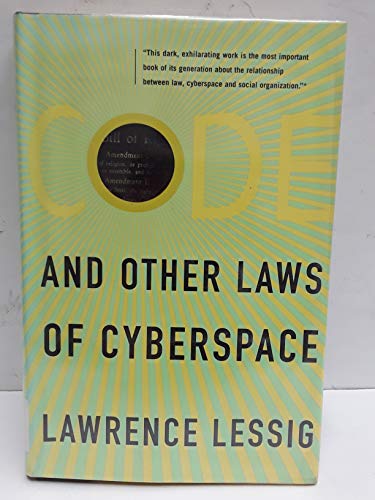
An expert on the legal aspects of the world of cyberspace explores such issues as free speech, intellectual property, and privacy within the world of computing and the Internet
"Sinopsis" puede pertenecer a otra edición de este libro.
Resultados de la búsqueda para Code: And Other Laws of Cyberspace

Imagen de archivo
Code: And Other Laws of Cyberspace
Publicado por
Basic Books, 1999
ISBN 10: 046503912X
ISBN 13: 9780465039128
Antiguo o usado
Tapa dura
Librería: World of Books (was SecondSale), Montgomery, IL, Estados Unidos de America
Calificación del vendedor: 5 de 5 estrellas

Hardback. Condición: Good. An exciting examination of the core values of cyberspace - intellectual property, free speech, and privacy - from one of Americas most brilliant young legal theorists. . How should we regulate cyberspace? Can we? Its a cherished belief of techies and net denizens everywhere that cyberspace is fundamentally, unalterably impossible to regulate. Thus the legendary freedom of the Net. Lawrence Lessig warns that, if were not careful, well wake up one day to discover that the character of cyberspace has changed out from under us. Commercial forces will dictate the change, and architecture - the very structure of cyberspace itself - will dictate the form our interactions can and cannot take. The author of the classic paper Reading the Constitution in Cyberspace, Lessig shows how code can make a domain, site, or network free or restrictive; how architectures influence peoples behavior and the values they adopt; and how changes in code affect the pressing issues of free speech, intellectual property, and privacy in cyberspace. Theres a common belief that cyberspace cannot be regulatedthat it is, in its very essence, immune from the governments (or anyone elses) control. Code argues that this belief is wrong. It is not in the nature of cyberspace to be unregulable; cyberspace has no nature. It only has codethe software and hardware that make cyberspace what it is. That code can create a place of freedomas the original architecture of the Net didor a place of exquisitely oppressive control. If we miss this point, then we will miss how cyberspace is changing. Under the influence of commerce, cyberpsace is becoming a highly regulable space, where our behavior is much more tightly controlled than in real space. But thats not inevitable either. We canwe mustchoose what kind of cyberspace we want and what freedoms we will guarantee. These choices are all about architecture: about what kind of code will govern cyberspace, and who will control it. In this realm, code is the most significant form of law, and it is up to lawyers, policymakers, and especially citizens to decide what values that code embodies. Nº de ref. del artículo: 00103696741
Comprar usado
EUR 3,93
Gastos de envío gratis
Se envía dentro de Estados Unidos de America
Se envía dentro de Estados Unidos de America
Cantidad disponible: 4 disponibles
Imagen de archivo
Code: And Other Laws of Cyberspace
Publicado por
Basic Books, 1999
ISBN 10: 046503912X
ISBN 13: 9780465039128
Antiguo o usado
Tapa dura
Librería: World of Books (was SecondSale), Montgomery, IL, Estados Unidos de America
Calificación del vendedor: 5 de 5 estrellas
Hardback. Condición: Very Good. An exciting examination of the core values of cyberspace - intellectual property, free speech, and privacy - from one of Americas most brilliant young legal theorists. . How should we regulate cyberspace? Can we? Its a cherished belief of techies and net denizens everywhere that cyberspace is fundamentally, unalterably impossible to regulate. Thus the legendary freedom of the Net. Lawrence Lessig warns that, if were not careful, well wake up one day to discover that the character of cyberspace has changed out from under us. Commercial forces will dictate the change, and architecture - the very structure of cyberspace itself - will dictate the form our interactions can and cannot take. The author of the classic paper Reading the Constitution in Cyberspace, Lessig shows how code can make a domain, site, or network free or restrictive; how architectures influence peoples behavior and the values they adopt; and how changes in code affect the pressing issues of free speech, intellectual property, and privacy in cyberspace. Theres a common belief that cyberspace cannot be regulatedthat it is, in its very essence, immune from the governments (or anyone elses) control. Code argues that this belief is wrong. It is not in the nature of cyberspace to be unregulable; cyberspace has no nature. It only has codethe software and hardware that make cyberspace what it is. That code can create a place of freedomas the original architecture of the Net didor a place of exquisitely oppressive control. If we miss this point, then we will miss how cyberspace is changing. Under the influence of commerce, cyberpsace is becoming a highly regulable space, where our behavior is much more tightly controlled than in real space. But thats not inevitable either. We canwe mustchoose what kind of cyberspace we want and what freedoms we will guarantee. These choices are all about architecture: about what kind of code will govern cyberspace, and who will control it. In this realm, code is the most significant form of law, and it is up to lawyers, policymakers, and especially citizens to decide what values that code embodies. Nº de ref. del artículo: 00106153327
Comprar usado
EUR 3,93
Gastos de envío gratis
Se envía dentro de Estados Unidos de America
Se envía dentro de Estados Unidos de America
Cantidad disponible: 1 disponibles
Imagen de archivo
Code: And Other Laws Of Cyberspace
Publicado por
Basic Books, 1999
ISBN 10: 046503912X
ISBN 13: 9780465039128
Antiguo o usado
Tapa dura
Librería: Orion Tech, Kingwood, TX, Estados Unidos de America
Calificación del vendedor: 5 de 5 estrellas
hardcover. Condición: Good. Nº de ref. del artículo: 046503912X-3-28034723
Comprar usado
EUR 3,94
Gastos de envío gratis
Se envía dentro de Estados Unidos de America
Se envía dentro de Estados Unidos de America
Cantidad disponible: 1 disponibles
Imagen de archivo
Code: And Other Laws Of Cyberspace
Publicado por
Basic Books, 1999
ISBN 10: 046503912X
ISBN 13: 9780465039128
Antiguo o usado
Tapa dura
Librería: Evergreen Goodwill, Seattle, WA, Estados Unidos de America
Calificación del vendedor: 5 de 5 estrellas
hardcover. Condición: Good. Nº de ref. del artículo: mon0000112161
Comprar usado
EUR 1,98
Envío por EUR 3,50
Se envía dentro de Estados Unidos de America
Se envía dentro de Estados Unidos de America
Cantidad disponible: 2 disponibles
Imagen de archivo
Code: And Other Laws of Cyberspace
Publicado por
Basic Books, 1999
ISBN 10: 046503912X
ISBN 13: 9780465039128
Antiguo o usado
Tapa dura
Librería: World of Books Inc, Montgomery, IL, Estados Unidos de America
Calificación del vendedor: 4 de 5 estrellas

Hardback. Condición: Good. An exciting examination of the core values of cyberspace - intellectual property, free speech, and privacy - from one of Americas most brilliant young legal theorists. . How should we regulate cyberspace? Can we? Its a cherished belief of techies and net denizens everywhere that cyberspace is fundamentally, unalterably impossible to regulate. Thus the legendary freedom of the Net. Lawrence Lessig warns that, if were not careful, well wake up one day to discover that the character of cyberspace has changed out from under us. Commercial forces will dictate the change, and architecture - the very structure of cyberspace itself - will dictate the form our interactions can and cannot take. The author of the classic paper Reading the Constitution in Cyberspace, Lessig shows how code can make a domain, site, or network free or restrictive; how architectures influence peoples behavior and the values they adopt; and how changes in code affect the pressing issues of free speech, intellectual property, and privacy in cyberspace. Theres a common belief that cyberspace cannot be regulatedthat it is, in its very essence, immune from the governments (or anyone elses) control. Code argues that this belief is wrong. It is not in the nature of cyberspace to be unregulable; cyberspace has no nature. It only has codethe software and hardware that make cyberspace what it is. That code can create a place of freedomas the original architecture of the Net didor a place of exquisitely oppressive control. If we miss this point, then we will miss how cyberspace is changing. Under the influence of commerce, cyberpsace is becoming a highly regulable space, where our behavior is much more tightly controlled than in real space. But thats not inevitable either. We canwe mustchoose what kind of cyberspace we want and what freedoms we will guarantee. These choices are all about architecture: about what kind of code will govern cyberspace, and who will control it. In this realm, code is the most significant form of law, and it is up to lawyers, policymakers, and especially citizens to decide what values that code embodies. Nº de ref. del artículo: CIN046503912XG
Comprar usado
EUR 5,74
Gastos de envío gratis
Se envía dentro de Estados Unidos de America
Se envía dentro de Estados Unidos de America
Cantidad disponible: 4 disponibles
Imagen de archivo
Code: And Other Laws of Cyberspace
Publicado por
Basic Books, 1999
ISBN 10: 046503912X
ISBN 13: 9780465039128
Antiguo o usado
Tapa dura
Librería: World of Books Inc, Montgomery, IL, Estados Unidos de America
Calificación del vendedor: 4 de 5 estrellas
Hardback. Condición: Very Good. An exciting examination of the core values of cyberspace - intellectual property, free speech, and privacy - from one of Americas most brilliant young legal theorists. . How should we regulate cyberspace? Can we? Its a cherished belief of techies and net denizens everywhere that cyberspace is fundamentally, unalterably impossible to regulate. Thus the legendary freedom of the Net. Lawrence Lessig warns that, if were not careful, well wake up one day to discover that the character of cyberspace has changed out from under us. Commercial forces will dictate the change, and architecture - the very structure of cyberspace itself - will dictate the form our interactions can and cannot take. The author of the classic paper Reading the Constitution in Cyberspace, Lessig shows how code can make a domain, site, or network free or restrictive; how architectures influence peoples behavior and the values they adopt; and how changes in code affect the pressing issues of free speech, intellectual property, and privacy in cyberspace. Theres a common belief that cyberspace cannot be regulatedthat it is, in its very essence, immune from the governments (or anyone elses) control. Code argues that this belief is wrong. It is not in the nature of cyberspace to be unregulable; cyberspace has no nature. It only has codethe software and hardware that make cyberspace what it is. That code can create a place of freedomas the original architecture of the Net didor a place of exquisitely oppressive control. If we miss this point, then we will miss how cyberspace is changing. Under the influence of commerce, cyberpsace is becoming a highly regulable space, where our behavior is much more tightly controlled than in real space. But thats not inevitable either. We canwe mustchoose what kind of cyberspace we want and what freedoms we will guarantee. These choices are all about architecture: about what kind of code will govern cyberspace, and who will control it. In this realm, code is the most significant form of law, and it is up to lawyers, policymakers, and especially citizens to decide what values that code embodies. Nº de ref. del artículo: CIN046503912XVG
Comprar usado
EUR 5,74
Gastos de envío gratis
Se envía dentro de Estados Unidos de America
Se envía dentro de Estados Unidos de America
Cantidad disponible: 1 disponibles
Imagen de archivo
Code: And Other Laws Of Cyberspace
Publicado por
Basic Books, 1999
ISBN 10: 046503912X
ISBN 13: 9780465039128
Antiguo o usado
Tapa dura
Librería: ThriftBooks-Dallas, Dallas, TX, Estados Unidos de America
Calificación del vendedor: 5 de 5 estrellas
Hardcover. Condición: Very Good. No Jacket. Former library book; May have limited writing in cover pages. Pages are unmarked. ~ ThriftBooks: Read More, Spend Less. Nº de ref. del artículo: G046503912XI4N10
Comprar usado
EUR 5,93
Gastos de envío gratis
Se envía dentro de Estados Unidos de America
Se envía dentro de Estados Unidos de America
Cantidad disponible: 1 disponibles
Imagen de archivo
Code: And Other Laws Of Cyberspace
Publicado por
Basic Books, 1999
ISBN 10: 046503912X
ISBN 13: 9780465039128
Antiguo o usado
Tapa dura
Librería: ThriftBooks-Dallas, Dallas, TX, Estados Unidos de America
Calificación del vendedor: 5 de 5 estrellas
Hardcover. Condición: Good. No Jacket. Pages can have notes/highlighting. Spine may show signs of wear. ~ ThriftBooks: Read More, Spend Less. Nº de ref. del artículo: G046503912XI3N00
Comprar usado
EUR 5,93
Gastos de envío gratis
Se envía dentro de Estados Unidos de America
Se envía dentro de Estados Unidos de America
Cantidad disponible: 1 disponibles
Imagen de archivo
Code: And Other Laws Of Cyberspace
Publicado por
Basic Books, 1999
ISBN 10: 046503912X
ISBN 13: 9780465039128
Antiguo o usado
Tapa dura
Librería: ThriftBooks-Dallas, Dallas, TX, Estados Unidos de America
Calificación del vendedor: 5 de 5 estrellas
Hardcover. Condición: Very Good. No Jacket. May have limited writing in cover pages. Pages are unmarked. ~ ThriftBooks: Read More, Spend Less. Nº de ref. del artículo: G046503912XI4N00
Comprar usado
EUR 5,93
Gastos de envío gratis
Se envía dentro de Estados Unidos de America
Se envía dentro de Estados Unidos de America
Cantidad disponible: 1 disponibles
Imagen de archivo
Code: And Other Laws Of Cyberspace
Publicado por
Basic Books, 1999
ISBN 10: 046503912X
ISBN 13: 9780465039128
Antiguo o usado
Tapa dura
Librería: ThriftBooks-Phoenix, Phoenix, AZ, Estados Unidos de America
Calificación del vendedor: 5 de 5 estrellas
Hardcover. Condición: Very Good. No Jacket. May have limited writing in cover pages. Pages are unmarked. ~ ThriftBooks: Read More, Spend Less. Nº de ref. del artículo: G046503912XI4N00
Comprar usado
EUR 5,93
Gastos de envío gratis
Se envía dentro de Estados Unidos de America
Se envía dentro de Estados Unidos de America
Cantidad disponible: 1 disponibles