
Artículos relacionados a Catching Fire: How Cooking Made Us Human
Sinopsis
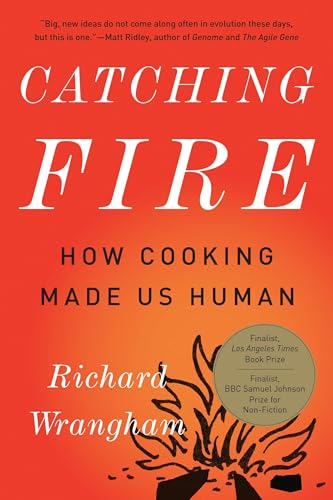
Ever since Darwin and The Descent of Man , the existence of humans has been attributed to our intelligence and adaptability. But in Catching Fire , renowned primatologist Richard Wrangham presents a startling alternative: our evolutionary success is the result of cooking. In a ground-breaking theory of our origins, Wrangham shows that the shift from raw to cooked foods was the key factor in human evolution. When our ancestors adapted to using fire, humanity began. Once our hominid ancestors began cooking their food, the human digestive tract shrank and the brain grew. Time once spent chewing tough raw food could be sued instead to hunt and to tend camp. Cooking became the basis for pair bonding and marriage, created the household, and even led to a sexual division of labour. Tracing the contemporary implications of our ancestors' diets, Catching Fire sheds new light on how we came to be the social, intelligent, and sexual species we are today. A pathbreaking new theory of human evolution, Catching Fire will provoke controversy and fascinate anyone interested in our ancient origins- or in our modern eating habits.
"Sinopsis" puede pertenecer a otra edición de este libro.
Acerca del autor
Richard Wrangham is the Ruth Moore Professor of Biological Anthropology at Harvard University and Curator of Primate behavioural Biology at the Peabody Museum. He is the co-author of Demonic Males and co-editor of Chimpanzee Cultures. He lives in Cambridge, Massachusetts.
"Sobre este título" puede pertenecer a otra edición de este libro.
Resultados de la búsqueda para Catching Fire: How Cooking Made Us Human

Imagen de archivo
Catching Fire: How Cooking Made Us Human
Publicado por
Basic Books, 2010
ISBN 10: 0465020410
ISBN 13: 9780465020416
Antiguo o usado
paperback
Librería: New Legacy Books, Annandale, NJ, Estados Unidos de America
Calificación del vendedor: 5 de 5 estrellas

paperback. Condición: Good. The cover shows normal wear. Fast shipping and order satisfaction guaranteed. A portion of your purchase benefits Non-Profit Organizations, First Aid and Fire Stations! Nº de ref. del artículo: mon-ug-0465020410
Comprar usado
EUR 2,83
Envío por EUR 2,22
Se envía dentro de Estados Unidos de America
Se envía dentro de Estados Unidos de America
Cantidad disponible: 1 disponibles
Imagen de archivo
Catching Fire: How Cooking Made Us Human
Publicado por
Basic Books, 2010
ISBN 10: 0465020410
ISBN 13: 9780465020416
Antiguo o usado
Paperback
Librería: World of Books (was SecondSale), Montgomery, IL, Estados Unidos de America
Calificación del vendedor: 5 de 5 estrellas
Paperback. Condición: Very Good. Ever since Darwin and The Descent of Man , the existence of humans has been attributed to our intelligence and adaptability. But in Catching Fire , renowned primatologist Richard Wrangham presents a startling alternative: our evolutionary success is the result of cooking. In a ground-breaking theory of our origins, Wrangham shows that the shift from raw to cooked foods was the key factor in human evolution. When our ancestors adapted to using fire, humanity began. Once our hominid ancestors began cooking their food, the human digestive tract shrank and the brain grew. Time once spent chewing tough raw food could be sued instead to hunt and to tend camp. Cooking became the basis for pair bonding and marriage, created the household, and even led to a sexual division of labour. Tracing the contemporary implications of our ancestors' diets, Catching Fire sheds new light on how we came to be the social, intelligent, and sexual species we are today. A pathbreaking new theory of human evolution, Catching Fire will provoke controversy and fascinate anyone interested in our ancient origins- or in our modern eating habits. Nº de ref. del artículo: 00110696169
Comprar usado
EUR 5,19
Gastos de envío gratis
Se envía dentro de Estados Unidos de America
Se envía dentro de Estados Unidos de America
Cantidad disponible: 1 disponibles
Imagen de archivo
Catching Fire: How Cooking Made Us Human
Publicado por
Basic Books, 2010
ISBN 10: 0465020410
ISBN 13: 9780465020416
Antiguo o usado
Paperback
Librería: World of Books (was SecondSale), Montgomery, IL, Estados Unidos de America
Calificación del vendedor: 5 de 5 estrellas
Paperback. Condición: Good. Ever since Darwin and The Descent of Man , the existence of humans has been attributed to our intelligence and adaptability. But in Catching Fire , renowned primatologist Richard Wrangham presents a startling alternative: our evolutionary success is the result of cooking. In a ground-breaking theory of our origins, Wrangham shows that the shift from raw to cooked foods was the key factor in human evolution. When our ancestors adapted to using fire, humanity began. Once our hominid ancestors began cooking their food, the human digestive tract shrank and the brain grew. Time once spent chewing tough raw food could be sued instead to hunt and to tend camp. Cooking became the basis for pair bonding and marriage, created the household, and even led to a sexual division of labour. Tracing the contemporary implications of our ancestors' diets, Catching Fire sheds new light on how we came to be the social, intelligent, and sexual species we are today. A pathbreaking new theory of human evolution, Catching Fire will provoke controversy and fascinate anyone interested in our ancient origins- or in our modern eating habits. Nº de ref. del artículo: 00103333125
Comprar usado
EUR 5,19
Gastos de envío gratis
Se envía dentro de Estados Unidos de America
Se envía dentro de Estados Unidos de America
Cantidad disponible: 12 disponibles
Imagen de archivo
Catching Fire: How Cooking Made Us Human
Publicado por
Basic Books, 2010
ISBN 10: 0465020410
ISBN 13: 9780465020416
Antiguo o usado
Paperback
Librería: World of Books (was SecondSale), Montgomery, IL, Estados Unidos de America
Calificación del vendedor: 5 de 5 estrellas
Paperback. Condición: Fair. Ever since Darwin and The Descent of Man , the existence of humans has been attributed to our intelligence and adaptability. But in Catching Fire , renowned primatologist Richard Wrangham presents a startling alternative: our evolutionary success is the result of cooking. In a ground-breaking theory of our origins, Wrangham shows that the shift from raw to cooked foods was the key factor in human evolution. When our ancestors adapted to using fire, humanity began. Once our hominid ancestors began cooking their food, the human digestive tract shrank and the brain grew. Time once spent chewing tough raw food could be sued instead to hunt and to tend camp. Cooking became the basis for pair bonding and marriage, created the household, and even led to a sexual division of labour. Tracing the contemporary implications of our ancestors' diets, Catching Fire sheds new light on how we came to be the social, intelligent, and sexual species we are today. A pathbreaking new theory of human evolution, Catching Fire will provoke controversy and fascinate anyone interested in our ancient origins- or in our modern eating habits. Nº de ref. del artículo: 00106445891
Comprar usado
EUR 5,19
Gastos de envío gratis
Se envía dentro de Estados Unidos de America
Se envía dentro de Estados Unidos de America
Cantidad disponible: 3 disponibles
Imagen del vendedor
Catching Fire: How Cooking Made Us Human
Publicado por
Basic Books, 2010
ISBN 10: 0465020410
ISBN 13: 9780465020416
Antiguo o usado
Tapa blanda
Librería: 2nd Life Books, Burlington, NJ, Estados Unidos de America
Calificación del vendedor: 5 de 5 estrellas
Condición: good. Fast Free Shipping â" Good condition. It may show normal signs of use, such as light writing, highlighting, or library markings, but all pages are intact and the book is fully readable. A solid, complete copy that's ready to enjoy. Nº de ref. del artículo: BXM.EUJN
Comprar usado
EUR 1,79
Envío por EUR 3,56
Se envía dentro de Estados Unidos de America
Se envía dentro de Estados Unidos de America
Cantidad disponible: 1 disponibles
Imagen de archivo
Catching Fire: How Cooking Made Us Human
Publicado por
Basic Books, 2010
ISBN 10: 0465020410
ISBN 13: 9780465020416
Antiguo o usado
Tapa blanda
Librería: Indiana Book Company, Marion, IN, Estados Unidos de America
Calificación del vendedor: 5 de 5 estrellas
Condición: Good. Ships same or next business day with delivery confirmation. Good condition. May or may not contain highlighting. Expedited shipping available. Nº de ref. del artículo: 1000009445231-622
Comprar usado
EUR 2,77
Envío por EUR 2,90
Se envía dentro de Estados Unidos de America
Se envía dentro de Estados Unidos de America
Cantidad disponible: 2 disponibles
Imagen del vendedor
Catching Fire: How Cooking Made Us Human
Publicado por
Basic Books, 2010
ISBN 10: 0465020410
ISBN 13: 9780465020416
Antiguo o usado
Tapa blanda
Librería: Greenworld Books, Arlington, TX, Estados Unidos de America
Calificación del vendedor: 5 de 5 estrellas
Condición: very_good. Fast Free Shipping â" Very Good condition book with a firm cover and clean pages. Shows normal use and some light wear or limited notes markings. A solid, nice copy to enjoy. Nº de ref. del artículo: GWV.0465020410.VG
Comprar usado
EUR 5,81
Gastos de envío gratis
Se envía dentro de Estados Unidos de America
Se envía dentro de Estados Unidos de America
Cantidad disponible: 1 disponibles
Imagen de archivo
Catching Fire: How Cooking Made Us Human
Publicado por
Basic Books, 2010
ISBN 10: 0465020410
ISBN 13: 9780465020416
Antiguo o usado
Paperback
Librería: Half Price Books Inc., Dallas, TX, Estados Unidos de America
Calificación del vendedor: 5 de 5 estrellas
Paperback. Condición: Very Good. Connecting readers with great books since 1972! Used books may not include companion materials, and may have some shelf wear or limited writing. We ship orders daily and Customer Service is our top priority! Nº de ref. del artículo: S_475683572
Comprar usado
EUR 2,78
Envío por EUR 3,34
Se envía dentro de Estados Unidos de America
Se envía dentro de Estados Unidos de America
Cantidad disponible: 1 disponibles
Imagen del vendedor
Catching Fire: How Cooking Made Us Human
Publicado por
Basic Books, 2010
ISBN 10: 0465020410
ISBN 13: 9780465020416
Antiguo o usado
Tapa blanda
Librería: Goodwill Books, Hillsboro, OR, Estados Unidos de America
Calificación del vendedor: 5 de 5 estrellas
Condición: good. Signs of wear and consistent use. Nº de ref. del artículo: GICWV.0465020410.G
Comprar usado
EUR 2,86
Envío por EUR 3,56
Se envía dentro de Estados Unidos de America
Se envía dentro de Estados Unidos de America
Cantidad disponible: 1 disponibles
Imagen del vendedor
Catching Fire: How Cooking Made Us Human
Publicado por
Basic Books, 2010
ISBN 10: 0465020410
ISBN 13: 9780465020416
Antiguo o usado
Tapa blanda
Librería: Goodwill, Brooklyn Park, MN, Estados Unidos de America
Calificación del vendedor: 4 de 5 estrellas

Condición: good. All pages and cover are intact including the dust cover, if applicable . Spine may show signs of wear. Pages may include limited notes and highlighting. May include "From the library of" labels. Shrink wrap, dust covers, or boxed set case may be missing. Item may be missing bundled media. Nº de ref. del artículo: 2Y6RUU0017JV_ns
Comprar usado
EUR 2,86
Envío por EUR 3,56
Se envía dentro de Estados Unidos de America
Se envía dentro de Estados Unidos de America
Cantidad disponible: 1 disponibles