Sinopsis
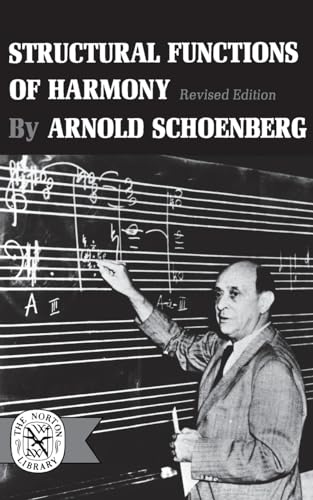
This book is Schoenberg's last completed theoretical work and represents his final thoughts on the subject of classical and romantic harmony. The earlier chapters recapitulate in condensed form the principles laid down in his Theory of Harmony; the later chapters break entirely new ground, for they analyze the system of key relationships within the structure of whole movements and affirm the principle of "monotonality," showing how all modulations within a movement are merely deviations from, and not negations of, its main tonality. Schoenberg's argument is supported by music examples, which range from entire development sections of classical symphonies to analyses of the experimental harmonic progressions of Strauss, Debussy, Reger, and Schoenberg's own early music. The final chapter, "Apollonian Evaluation of a Dionysian Epoch," discusses the music of our time, with particular reference to the possibility of new methods of harmonic analysis. Structural Functions of Harmony is a standard work on its subject and provides an invaluable key to the development of musical structure during the last two hundred and fifty years. This new edition, with corrections, a new preface, and an index of subject headings, has been prepared under the editorial supervision of Leonard Stein.
"Sinopsis" puede pertenecer a otra edición de este libro.
Acerca del autor
Charlotte y Peter Fiell son dos autoridades en historia, teoría y crítica del diseño y han escrito más de sesenta libros sobre la materia, muchos de los cuales se han convertido en éxitos de ventas. También han impartido conferencias y cursos como profesores invitados, han comisariado exposiciones y asesorado a fabricantes, museos, salas de subastas y grandes coleccionistas privados de todo el mundo. Los Fiell han escrito numerosos libros para TASCHEN, entre los que se incluyen 1000 Chairs, Diseño del siglo XX, El diseño industrial de la A a la Z, Scandinavian Design y Diseño del siglo XXI.
De la contraportada
This book is Schoenberg's last completed theoretical work and represents his final thoughts on the subject of classical and romantic harmony. The earlier chapters recapitulate in condensed form the principles laid down in his 'Theory of Harmony'; the later chapters break entirely new ground, for they analyze the system of key relationships within the structure of whole movements and affirm the principle of 'monotonality, ' showing how all modulations within a movement are merely deviations from, and not negations of, its main tonality.
"Sobre este título" puede pertenecer a otra edición de este libro.
Otras ediciones populares con el mismo título

Resultados de la búsqueda para Structural Functions of Harmony (Revised Edition)

Imagen del vendedor
Structural Functions of Harmony
Publicado por
W. W. Norton & Company, 1969
ISBN 10: 0393004783
ISBN 13: 9780393004786
Nuevo
Tapa blanda
Librería: GreatBookPrices, Columbia, MD, Estados Unidos de America
Calificación del vendedor: 5 de 5 estrellas

Condición: New. Nº de ref. del artículo: 957948-n
Comprar nuevo
EUR 16,11
Gastos de envío:
EUR 2,27
A Estados Unidos de America
Cantidad disponible: Más de 20 disponibles
Imagen del vendedor
Structural Functions of Harmony (Paperback or Softback)
Publicado por
W. W. Norton & Company 6/1/1969, 1969
ISBN 10: 0393004783
ISBN 13: 9780393004786
Nuevo
Paperback or Softback
Librería: BargainBookStores, Grand Rapids, MI, Estados Unidos de America
Calificación del vendedor: 5 de 5 estrellas
Paperback or Softback. Condición: New. Structural Functions of Harmony. Book. Nº de ref. del artículo: BBS-9780393004786
Comprar nuevo
EUR 18,45
Gastos de envío:
GRATIS
A Estados Unidos de America
Cantidad disponible: 5 disponibles
Imagen de archivo
Structural Functions of Harmony
Publicado por
W. W. Norton & Company, 1969
ISBN 10: 0393004783
ISBN 13: 9780393004786
Nuevo
Tapa blanda
Librería: Lucky's Textbooks, Dallas, TX, Estados Unidos de America
Calificación del vendedor: 5 de 5 estrellas
Condición: New. Nº de ref. del artículo: ABLIING23Feb2215580175755
Comprar nuevo
EUR 16,30
Gastos de envío:
EUR 3,43
A Estados Unidos de America
Cantidad disponible: Más de 20 disponibles
Imagen del vendedor
Structural Functions of Harmony
Publicado por
W. W. Norton & Company, 1969
ISBN 10: 0393004783
ISBN 13: 9780393004786
Antiguo o usado
Tapa blanda
Librería: GreatBookPrices, Columbia, MD, Estados Unidos de America
Calificación del vendedor: 5 de 5 estrellas
Condición: As New. Unread book in perfect condition. Nº de ref. del artículo: 957948
Comprar usado
EUR 17,77
Gastos de envío:
EUR 2,27
A Estados Unidos de America
Cantidad disponible: Más de 20 disponibles
Imagen de archivo
Structural Functions of Harmony
Publicado por
W. W. Norton & Company, 1969
ISBN 10: 0393004783
ISBN 13: 9780393004786
Nuevo
Tapa blanda
Librería: California Books, Miami, FL, Estados Unidos de America
Calificación del vendedor: 5 de 5 estrellas
Condición: New. Nº de ref. del artículo: I-9780393004786
Comprar nuevo
EUR 20,35
Gastos de envío:
GRATIS
A Estados Unidos de America
Cantidad disponible: Más de 20 disponibles
Imagen de archivo
Structural Functions of Harmony
Publicado por
W. W. Norton & Company, New York, NY, 1969
ISBN 10: 0393004783
ISBN 13: 9780393004786
Antiguo o usado
Paperback
Librería: M & M Books, ATHENS, GA, Estados Unidos de America
Calificación del vendedor: 3 de 5 estrellas

Paperback. Condición: Very Good. No Jacket. 1969 Revised. Nº de ref. del artículo: 130553
Comprar usado
EUR 17,70
Gastos de envío:
EUR 4,30
A Estados Unidos de America
Cantidad disponible: 1 disponibles
Imagen de archivo
Structural Functions of Harmony
Publicado por
W. W. Norton & Company, New York, 1969
ISBN 10: 0393004783
ISBN 13: 9780393004786
Antiguo o usado
Paperback
Librería: M & M Books, ATHENS, GA, Estados Unidos de America
Calificación del vendedor: 3 de 5 estrellas
Paperback. Condición: Good +. No Jacket. 1969 Revised. some water damage. Nº de ref. del artículo: 124917
Comprar usado
EUR 17,70
Gastos de envío:
EUR 4,30
A Estados Unidos de America
Cantidad disponible: 1 disponibles
Imagen del vendedor
Structural Functions of Harmony
Librería: Rarewaves USA, OSWEGO, IL, Estados Unidos de America
Calificación del vendedor: 5 de 5 estrellas
Paperback. Condición: New. Revised Edition. The earlier chapters recapitulate in condensed form the principles laid down in his Theory of Harmony; the later chapters break entirely new ground, for they analyze the system of key relationships within the structure of whole movements and affirm the principle of "monotonality," showing how all modulations within a movement are merely deviations from, and not negations of, its main tonality. Schoenberg's argument is supported by music examples, which range from entire development sections of classical symphonies to analyses of the experimental harmonic progressions of Strauss, Debussy, Reger, and Schoenberg's own early music. The final chapter, "Apollonian Evaluation of a Dionysian Epoch," discusses the music of our time, with particular reference to the possibility of new methods of harmonic analysis. Structural Functions of Harmony is a standard work on its subject and provides an invaluable key to the development of musical structure during the last two hundred and fifty years. This new edition, with corrections, a new preface, and an index of subject headings, has been prepared under the editorial supervision of Leonard Stein. Nº de ref. del artículo: LU-9780393004786
Comprar nuevo
EUR 22,35
Gastos de envío:
GRATIS
A Estados Unidos de America
Cantidad disponible: Más de 20 disponibles
Imagen del vendedor
Structural Functions of Harmony (Paperback)
Publicado por
WW Norton & Co, New York, 1969
ISBN 10: 0393004783
ISBN 13: 9780393004786
Nuevo
Paperback
Librería: Grand Eagle Retail, Bensenville, IL, Estados Unidos de America
Calificación del vendedor: 5 de 5 estrellas
Paperback. Condición: new. Paperback. The earlier chapters recapitulate in condensed form the principles laid down in his Theory of Harmony; the later chapters break entirely new ground, for they analyze the system of key relationships within the structure of whole movements and affirm the principle of "monotonality," showing how all modulations within a movement are merely deviations from, and not negations of, its main tonality. Schoenberg's argument is supported by music examples, which range from entire development sections of classical symphonies to analyses of the experimental harmonic progressions of Strauss, Debussy, Reger, and Schoenberg's own early music. The final chapter, "Apollonian Evaluation of a Dionysian Epoch," discusses the music of our time, with particular reference to the possibility of new methods of harmonic analysis. Structural Functions of Harmony is a standard work on its subject and provides an invaluable key to the development of musical structure during the last two hundred and fifty years. This new edition, with corrections, a new preface, and an index of subject headings, has been prepared under the editorial supervision of Leonard Stein. This book is Schoenberg's last completed theoretical work and represents his final thoughts on the subject of classical and romantic harmony. This item is printed on demand. Shipping may be from multiple locations in the US or from the UK, depending on stock availability. Nº de ref. del artículo: 9780393004786
Comprar nuevo
EUR 22,39
Gastos de envío:
GRATIS
A Estados Unidos de America
Cantidad disponible: 1 disponibles
Imagen del vendedor
Structural Functions of Harmony
Librería: Rarewaves.com USA, London, LONDO, Reino Unido
Calificación del vendedor: 5 de 5 estrellas
Paperback. Condición: New. Revised Edition. The earlier chapters recapitulate in condensed form the principles laid down in his Theory of Harmony; the later chapters break entirely new ground, for they analyze the system of key relationships within the structure of whole movements and affirm the principle of "monotonality," showing how all modulations within a movement are merely deviations from, and not negations of, its main tonality.Schoenberg's argument is supported by music examples, which range from entire development sections of classical symphonies to analyses of the experimental harmonic progressions of Strauss, Debussy, Reger, and Schoenberg's own early music. The final chapter, "Apollonian Evaluation of a Dionysian Epoch," discusses the music of our time, with particular reference to the possibility of new methods of harmonic analysis.Structural Functions of Harmony is a standard work on its subject and provides an invaluable key to the development of musical structure during the last two hundred and fifty years. This new edition, with corrections, a new preface, and an index of subject headings, has been prepared under the editorial supervision of Leonard Stein. Nº de ref. del artículo: LU-9780393004786
Comprar nuevo
EUR 25,92
Gastos de envío:
GRATIS
De Reino Unido a Estados Unidos de America
Cantidad disponible: Más de 20 disponibles