
Artículos relacionados a Oncogenes: An Introduction to the Concept of Cancer...
Sinopsis
"Cancer viruses" have played a paradoxical role in the history of cancer research.
"Sinopsis" puede pertenecer a otra edición de este libro.
Reseña del editor
"Cancer viruses" have played a paradoxical role in the history of cancer research. Discovered in 1911 by Peyton Rous (1) at the Rockefeller Institute, they were largely ignored for several decades. Witness his eventual recognition for a Nobel Prize, but not until 1966-setting an all time record for latency, and testimony to one more advantage of longevity. In the 1950s, another Rockefeller Nobelist, Wendell Stanley, spearheaded a campaign to focus attention on viruses as etiological agents in cancer, his plat form having been the chemical characterization of the tobacco mosaic virus as a pure protein-correction, ribonucleoprotein-in 1935 (2). This doctrine was a centerpiece of the U.S. National Cancer Crusade of 1971: if human cancers were caused by viruses, the central task was to isolate them and prepare vaccines for immunization. At that point, many observers felt that perhaps too much attention was being devoted to cancer viruses. It was problematic whether viruses played an etiological role in more than a handful of human cancers.
Reseña del editor
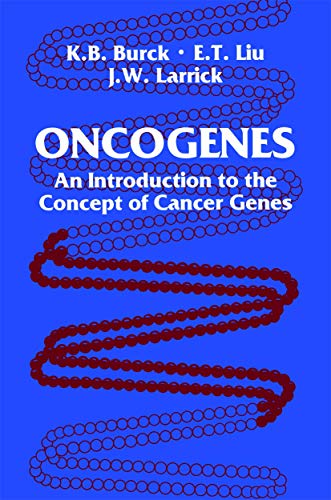
This topical, handy volume is the perfect guide for physicians or scientists not specializing in the field, but wishing to understand exciting recent developments in cellular and molecular biology relevant to oncogene research. The terminology used in discussing oncogenes and their products is straightforwardly defined, and the concepts crucial to an understanding of oncogene research are clearly presented. Key topics are explored, including assay techniques used in molecular biology; methods for assessing behavior of normal genes and oncogenes; DNA and RNA tumor viruses; viruses inducing immunodeficiency; cellular proto-oncogenes and their relation to retroviral oncogenes; and possible roles of gene amplification and mutation, chromosomal translocation, and cellular growth factors in human cancer. An up-to-date survey of research on the major oncogenes and a discussion of the possibilities for future diagnostic and therapeutic applications of oncogene research are provided. The presentation is enhanced through many original illustrations, an appendix on oncogenes and related genes, and an up-to-date bibliography.
"Sobre este título" puede pertenecer a otra edición de este libro.
Resultados de la búsqueda para Oncogenes: An Introduction to the Concept of Cancer...

Imagen del vendedor
Oncogenes An Introduction to the Concept of Cancer Genes
Librería: Lost Time Books, Brattleboro, VT, Estados Unidos de America
Calificación del vendedor: 5 de 5 estrellas

paperback. Condición: Near Fine. Nº de ref. del artículo: 062021-17
Comprar usado
EUR 15,54
Envío por EUR 6,22
Se envía dentro de Estados Unidos de America
Se envía dentro de Estados Unidos de America
Cantidad disponible: 1 disponibles
Imagen del vendedor
Oncogenes. an introduction to the concept of cancer genes.
Publicado por
Springer, New York, 1988
ISBN 10: 0387964231
ISBN 13: 9780387964232
Antiguo o usado
Tapa blanda
Librería: Emile Kerssemakers ILAB, Heerlen, Holanda
Calificación del vendedor: 5 de 5 estrellas
23 cm. original softcover. xvi,300 pp. ills, color plates. references. index. -(owner's name, otherwise good). 553g. Nº de ref. del artículo: 70482
Comprar usado
EUR 10,00
Envío por EUR 25,45
Se envía de Holanda a Estados Unidos de America
Se envía de Holanda a Estados Unidos de America
Cantidad disponible: 1 disponibles
Imagen de archivo
Oncogenes: An Introduction to the Concept of Cancer Genes
Publicado por
Springer, 1989
ISBN 10: 0387964231
ISBN 13: 9780387964232
Antiguo o usado
Paperback
Original o primera edición
Ejemplar firmado
Librería: MyLibraryMarket, Waynesville, OH, Estados Unidos de America
Calificación del vendedor: 5 de 5 estrellas
Paperback. Condición: As New. 1st ed. 1988. Corr. 2nd printing. ***please read*** signed copy - no marks on text -my shelf location we-c-22*. Signed by Author. Nº de ref. del artículo: 180525004
Comprar usado
EUR 40,33
Envío por EUR 4,89
Se envía dentro de Estados Unidos de America
Se envía dentro de Estados Unidos de America
Cantidad disponible: 1 disponibles
Imagen de archivo
Oncogenes - An Introduction To The Concept Of Cancer Genes
Librería: Basi6 International, Irving, TX, Estados Unidos de America
Calificación del vendedor: 5 de 5 estrellas
Condición: Brand New. New. US edition. Expediting shipping for all USA and Europe orders excluding PO Box. Excellent Customer Service. Nº de ref. del artículo: ABEOCT25-86367
Comprar nuevo
EUR 81,40
Gastos de envío gratis
Se envía dentro de Estados Unidos de America
Se envía dentro de Estados Unidos de America
Cantidad disponible: 1 disponibles
Imagen de archivo
Oncogenes - An Introduction To The Concept Of Cancer Genes
Librería: Romtrade Corp., STERLING HEIGHTS, MI, Estados Unidos de America
Calificación del vendedor: 5 de 5 estrellas
Condición: New. This is a Brand-new US Edition. This Item may be shipped from US or any other country as we have multiple locations worldwide. Nº de ref. del artículo: ABBB-158999
Comprar nuevo
EUR 82,48
Gastos de envío gratis
Se envía dentro de Estados Unidos de America
Se envía dentro de Estados Unidos de America
Cantidad disponible: 1 disponibles
Imagen de archivo
Oncogenes: An Introduction to the Concept of Cancer Genes
Publicado por
Springer New York, 1989
ISBN 10: 0387964231
ISBN 13: 9780387964232
Antiguo o usado
Paperback
Librería: Mispah books, Redhill, SURRE, Reino Unido
Calificación del vendedor: 4 de 5 estrellas

Paperback. Condición: Like New. Like NewLIKE NEW. book. Nº de ref. del artículo: ERICA85503879642313
Comprar usado
EUR 57,41
Envío por EUR 29,65
Se envía de Reino Unido a Estados Unidos de America
Se envía de Reino Unido a Estados Unidos de America
Cantidad disponible: 1 disponibles
Imagen de archivo
Oncogenes: An Introduction to the Concept of Cancer Genes
Publicado por
Springer New York, 1988
ISBN 10: 0387964231
ISBN 13: 9780387964232
Antiguo o usado
Tapa blanda
Librería: Buchmarie, Darmstadt, Alemania
Calificación del vendedor: 5 de 5 estrellas
Condición: Good. Nº de ref. del artículo: 3282702_71e_3x
Comprar usado
EUR 6,14
Envío por EUR 105,00
Se envía de Alemania a Estados Unidos de America
Se envía de Alemania a Estados Unidos de America
Cantidad disponible: 1 disponibles
Imagen del vendedor
Oncogenes
Publicado por
Springer New York Mai 1988, 1988
ISBN 10: 0387964231
ISBN 13: 9780387964232
Nuevo
Taschenbuch
Librería: BuchWeltWeit Ludwig Meier e.K., Bergisch Gladbach, Alemania
Calificación del vendedor: 5 de 5 estrellas
Taschenbuch. Condición: Neu. This item is printed on demand - it takes 3-4 days longer - Neuware -'Cancer viruses' have played a paradoxical role in the history of cancer research. Discovered in 1911 by Peyton Rous (1) at the Rockefeller Institute, they were largely ignored for several decades. Witness his eventual recognition for a Nobel Prize, but not until 1966-setting an all time record for latency, and testimony to one more advantage of longevity. In the 1950s, another Rockefeller Nobelist, Wendell Stanley, spearheaded a campaign to focus attention on viruses as etiological agents in cancer, his plat form having been the chemical characterization of the tobacco mosaic virus as a pure protein-correction, ribonucleoprotein-in 1935 (2). This doctrine was a centerpiece of the U.S. National Cancer Crusade of 1971: if human cancers were caused by viruses, the central task was to isolate them and prepare vaccines for immunization. At that point, many observers felt that perhaps too much attention was being devoted to cancer viruses. It was problematic whether viruses played an etiological role in more than a handful of human cancers. 320 pp. Englisch. Nº de ref. del artículo: 9780387964232
Comprar nuevo
EUR 96,29
Envío por EUR 23,00
Se envía de Alemania a Estados Unidos de America
Se envía de Alemania a Estados Unidos de America
Cantidad disponible: 2 disponibles
Imagen del vendedor
Oncogenes : An Introduction to the Concept of Cancer Genes
Librería: GreatBookPrices, Columbia, MD, Estados Unidos de America
Calificación del vendedor: 5 de 5 estrellas
Condición: New. Nº de ref. del artículo: 2339333-n
Comprar nuevo
EUR 123,13
Envío por EUR 2,35
Se envía dentro de Estados Unidos de America
Se envía dentro de Estados Unidos de America
Cantidad disponible: 15 disponibles
Imagen del vendedor
Oncogenes : An Introduction to the Concept of Cancer Genes
Librería: GreatBookPrices, Columbia, MD, Estados Unidos de America
Calificación del vendedor: 5 de 5 estrellas
Condición: As New. Unread book in perfect condition. Nº de ref. del artículo: 2339333
Comprar usado
EUR 126,57
Envío por EUR 2,35
Se envía dentro de Estados Unidos de America
Se envía dentro de Estados Unidos de America
Cantidad disponible: 15 disponibles