
Artículos relacionados a Introduction to Statistical Physics (Graduate Texts...
Introduction to Statistical Physics (Graduate Texts in Contemporary Physics) - Tapa dura
Libro 19 de 19: Graduate Texts in Contemporary Physics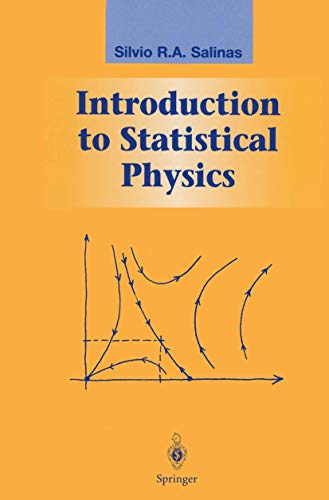
Sinopsis
This textbook covers the basic principles of statistical physics and thermodynamics. The text is pitched at the level equivalent to first-year graduate studies or advanced undergraduate studies. It presents the subject in a straightforward and lively manner. After reviewing the basic probability theory of classical thermodynamics, the author addresses the standard topics of statistical physics. The text demonstrates their relevance in other scientific fields using clear and explicit examples. Later chapters introduce phase transitions, critical phenomena and non-equilibrium phenomena.
"Sinopsis" puede pertenecer a otra edición de este libro.
De la contraportada
Intended for beginning graduate students or advanced undergraduates, this text covers the statistical basis of equilibrium thermodynamics, both classical and quantum, including examples from solid-state physics. It also treats some topics of more recent interest such as phase transitions and non-equilibrium phenomena. The approach to equilibrium statistical mechanics is based on the Gibbs microcanonical ensemble. The presentation introduces modern ideas, such as the thermodynamic limit and the equivalence of ensembles, and uses simple models (ideal gas, Einstein solid, ideal paramagnet) to make the mathematical ideas clear. Frequently used mathematical methods are reviewed in an appendix. The book begins with a review of statistical methods and classical thermodynamics, making it suitable for students from a variety of backgrounds. Classical thermodynamics is treated in the in the context of the classical ideal gas and the canonical and grand canonical ensembles. The discussion of quantum statistical mechanics includes Bose and Fermi gases. the Bose-Einstein condensation, phonons and magnons. Phase transitions are first treated classically (using the van der Waals and Curie-Weiss phenomenological models as examples), and then quantum mechanically (the Ising model, scaling theory and renormalization). The book concludes with two chapters on nonequilibrium phenomena: one using Boltzmann's approach, the other based on stochastic models. Exercises at the end of each chapter are an integral part of the course, clarifying and extending topics discussed in the text. Hints and solutions can be found on the author's web site.
"Sobre este título" puede pertenecer a otra edición de este libro.
Resultados de la búsqueda para Introduction to Statistical Physics (Graduate Texts...

Imagen de archivo
Introduction to Statistical Physics (Graduate Texts in Contemporary Physics)
Librería: Paper Oddities, Wantage, NJ, Estados Unidos de America
Calificación del vendedor: 2 de 5 estrellas

Condición: As New. Very fine copy, minimal wear. We take great pride in accurately describing the condition of our books and media, ship within 48 hours, and offer a 100% money back guarantee. Customers purchasing more than one item from us may be entitled to a shipping discount. Nº de ref. del artículo: 1M50000074IR_ns
Comprar usado
EUR 55,57
Envío por EUR 3,56
Se envía dentro de Estados Unidos de America
Se envía dentro de Estados Unidos de America
Cantidad disponible: 1 disponibles
Imagen del vendedor
INTRODUCTION TO STATISTICAL PHYSICS
Librería: LIBRERIA LEA+, Santiago, RM, Chile
Calificación del vendedor: 5 de 5 estrellas

Dura. Condición: New. Estado de la sobrecubierta: Nuevo. No Aplica Ilustrador. 0. Intended for beginning graduate students or advanced undergraduates, this text covers the statistical basis of equilibrium thermodynamics, both classical and quantum, including examples from solid-state physics. It also treats some topics of more recent interest such as phase transitions and non-equilibrium phenomena. The approach to equilibrium statistical mechanics is based on the Gibbs microcanonical ensemble. The presentation introduces modern ideas, such as the thermodynamic limit and the equivalence of ensembles, and uses simple models (ideal gas, Einstein solid, ideal paramagnet) to make the mathematical ideas clear. Frequently used mathematical methods are reviewed in an appendix. The book begins with a review of statistical methods and classical thermodynamics, making it suitable for students from a variety of backgrounds. Classical thermodynamics is treated in the in the context of the classical ideal gas and the canonical and grand canonical ensembles. The discussion of quantum statistical mechanics includes Bose and Fermi gases. the Bose-Einstein condensation, phonons and magnons. Phase transitions are first treated classically (using the van der Waals and Curie-Weiss phenomenological models as examples), and then quantum mechanically (the Ising model, scaling theory and renormalization). The book concludes with two chapters on nonequilibrium phenomena: one using Boltzmann's approach, the other based on stochastic models. Exercises at the end of each chapter are an integral part of the course, clarifying and extending topics discussed in the text. Hints and solutions can be found on the author's web site. 720 gr. Libro. Nº de ref. del artículo: 9780387951195LEA26381
Comprar nuevo
EUR 76,61
Envío por EUR 33,03
Se envía de Chile a Estados Unidos de America
Se envía de Chile a Estados Unidos de America
Cantidad disponible: 1 disponibles
Imagen del vendedor
Introduction to Statistical Physics
Publicado por
Springer New York Feb 2001, 2001
ISBN 10: 0387951199
ISBN 13: 9780387951195
Nuevo
Tapa dura
Librería: BuchWeltWeit Ludwig Meier e.K., Bergisch Gladbach, Alemania
Calificación del vendedor: 5 de 5 estrellas
Buch. Condición: Neu. This item is printed on demand - it takes 3-4 days longer - Neuware -Intended for beginning graduate students or advanced undergraduates, this text covers the statistical basis of equilibrium thermodynamics, both classical and quantum, including examples from solid-state physics. It also treats some topics of more recent interest such as phase transitions and non-equilibrium phenomena. The approach to equilibrium statistical mechanics is based on the Gibbs microcanonical ensemble. The presentation introduces modern ideas, such as the thermodynamic limit and the equivalence of ensembles, and uses simple models (ideal gas, Einstein solid, ideal paramagnet) to make the mathematical ideas clear. Frequently used mathematical methods are reviewed in an appendix. The book begins with a review of statistical methods and classical thermodynamics, making it suitable for students from a variety of backgrounds. Classical thermodynamics is treated in the context of the classical ideal gas and the canonical and grand canonical ensemble . The discussion of quantum statistical mechanics includes Bose and Fermi gases, the Bose-Einstein condensation, phonons and magnons. Phase transitions are first treated classically (using the van der Waals and Curie-Weiss phenomenological models as examples), and then quantum mechanically (the Ising model, scaling theory and renormalization). The book concludes with two chapters on non-equilibrium phenomena: one using Boltzmann's approach, the other based on stochastic models. Exercises at the end of each chapter are an integral part of the course, clarifying and extending topics discussed in the text. Hints and solutions can be found on the author's web site. 396 pp. Englisch. Nº de ref. del artículo: 9780387951195
Comprar nuevo
EUR 106,99
Envío por EUR 23,00
Se envía de Alemania a Estados Unidos de America
Se envía de Alemania a Estados Unidos de America
Cantidad disponible: 2 disponibles
Imagen de archivo
Introduction to Statistical Physics (Graduate Texts in Contemporary Physics)
Librería: California Books, Miami, FL, Estados Unidos de America
Calificación del vendedor: 5 de 5 estrellas
Condición: New. Nº de ref. del artículo: I-9780387951195
Comprar nuevo
EUR 129,63
Envío por EUR 2,68
Se envía dentro de Estados Unidos de America
Se envía dentro de Estados Unidos de America
Cantidad disponible: Más de 20 disponibles
Imagen del vendedor
Introduction to Statistical Physics
Impresión bajo demandaLibrería: moluna, Greven, Alemania
Calificación del vendedor: 5 de 5 estrellas
Gebunden. Condición: New. Dieser Artikel ist ein Print on Demand Artikel und wird nach Ihrer Bestellung fuer Sie gedruckt. This textbook covers the basic principles of statistical physics and thermodynamics. The text is pitched at the level equivalent to first-year graduate studies or advanced undergraduate studies. It presents the subject in a straightforward and lively manner. Nº de ref. del artículo: 5912344
Comprar nuevo
EUR 89,99
Envío por EUR 48,99
Se envía de Alemania a Estados Unidos de America
Se envía de Alemania a Estados Unidos de America
Cantidad disponible: Más de 20 disponibles
Imagen de archivo
Introduction to Statistical Physics (Graduate Texts in Contemporary Physics)
Librería: Ria Christie Collections, Uxbridge, Reino Unido
Calificación del vendedor: 5 de 5 estrellas
Condición: New. In English. Nº de ref. del artículo: ria9780387951195_new
Comprar nuevo
EUR 131,17
Envío por EUR 13,48
Se envía de Reino Unido a Estados Unidos de America
Se envía de Reino Unido a Estados Unidos de America
Cantidad disponible: Más de 20 disponibles
Imagen de archivo
Introduction to Statistical Physics
Librería: Books Puddle, Woodside, NY, Estados Unidos de America
Calificación del vendedor: 4 de 5 estrellas

Condición: New. pp. 396. Nº de ref. del artículo: 26290674
Comprar nuevo
EUR 145,80
Envío por EUR 3,56
Se envía dentro de Estados Unidos de America
Se envía dentro de Estados Unidos de America
Cantidad disponible: 1 disponibles
Imagen del vendedor
Introduction to Statistical Physics
Librería: AHA-BUCH GmbH, Einbeck, Alemania
Calificación del vendedor: 5 de 5 estrellas
Buch. Condición: Neu. Druck auf Anfrage Neuware - Printed after ordering - This textbook covers the basic prinples of statistical physics and thermodynamics at the level of first-year graduate students or advanced undergraduates; it presents the subject in a straightforward and lively manner. After reviewing the basics probability theory classical thermodynamics, the author addresses the standard topics of statistical physics, and demonstrates their relevance in other scientific fields using clear and explicit examples. Later chapters introduce phase transitions, critical phenomena and non-equilibrium phenomena. Nº de ref. del artículo: 9780387951195
Comprar nuevo
EUR 121,81
Envío por EUR 35,00
Se envía de Alemania a Estados Unidos de America
Se envía de Alemania a Estados Unidos de America
Cantidad disponible: 1 disponibles
Imagen de archivo
Introduction to Statistical Physics
Librería: Majestic Books, Hounslow, Reino Unido
Calificación del vendedor: 4 de 5 estrellas
Condición: New. pp. 396 Illus. Nº de ref. del artículo: 7590061
Comprar nuevo
EUR 151,18
Envío por EUR 7,76
Se envía de Reino Unido a Estados Unidos de America
Se envía de Reino Unido a Estados Unidos de America
Cantidad disponible: 1 disponibles
Imagen del vendedor
Introduction to Statistical Physics
Publicado por
Springer New York, Springer Feb 2001, 2001
ISBN 10: 0387951199
ISBN 13: 9780387951195
Nuevo
Tapa dura
Librería: buchversandmimpf2000, Emtmannsberg, BAYE, Alemania
Calificación del vendedor: 5 de 5 estrellas
Buch. Condición: Neu. This item is printed on demand - Print on Demand Titel. Neuware -Intended for beginning graduate students or advanced undergraduates, this text covers the statistical basis of equilibrium thermodynamics, both classical and quantum, including examples from solid-state physics. It also treats some topics of more recent interest such as phase transitions and non-equilibrium phenomena. The approach to equilibrium statistical mechanics is based on the Gibbs microcanonical ensemble. The presentation introduces modern ideas, such as the thermodynamic limit and the equivalence of ensembles, and uses simple models (ideal gas, Einstein solid, ideal paramagnet) to make the mathematical ideas clear. Frequently used mathematical methods are reviewed in an appendix. The book begins with a review of statistical methods and classical thermodynamics, making it suitable for students from a variety of backgrounds. Classical thermodynamics is treated in the in the context of the classical ideal gas and the canonical and grand canonical ensembles. The discussion of quantum statistical mechanics includes Bose and Fermi gases. the Bose-Einstein condensation, phonons and magnons. Phase transitions are first treated classically (using the van der Waals and Curie-Weiss phenomenological models as examples), and then quantum mechanically (the Ising model, scaling theory and renormalization). The book concludes with two chapters on nonequilibrium phenomena: one using Boltzmann's approach, the other based on stochastic models. Exercises at the end of each chapter are an integral part of the course, clarifying and extending topics discussed in the text. Hints and solutions can be found on the author's web site.Springer-Verlag GmbH, Tiergartenstr. 17, 69121 Heidelberg 396 pp. Englisch. Nº de ref. del artículo: 9780387951195
Comprar nuevo
EUR 106,99
Envío por EUR 60,00
Se envía de Alemania a Estados Unidos de America
Se envía de Alemania a Estados Unidos de America
Cantidad disponible: 1 disponibles