
Artículos relacionados a Trees: Structure and Function
Resultados de la búsqueda para Trees: Structure and Function

Imagen de archivo
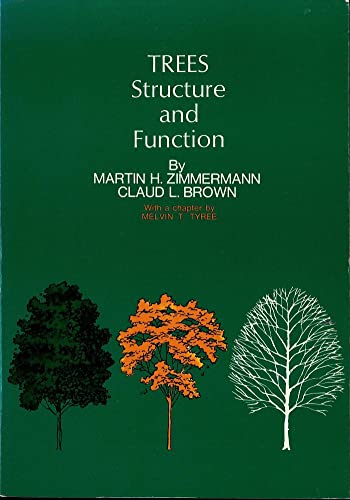
Trees: Structure and Function
Publicado por
Springer-Verlag (edition First Edition), 1975
ISBN 10: 038707063X
ISBN 13: 9780387070636
Antiguo o usado
Paperback
Original o primera edición
Librería: BooksRun, Philadelphia, PA, Estados Unidos de America
Calificación del vendedor: 5 de 5 estrellas

Paperback. Condición: Very Good. First Edition. It's a well-cared-for item that has seen limited use. The item may show minor signs of wear. All the text is legible, with all pages included. It may have slight markings and/or highlighting. Nº de ref. del artículo: 038707063X-11-1
Comprar usado
EUR 10,57
Gastos de envío gratis
Se envía dentro de Estados Unidos de America
Se envía dentro de Estados Unidos de America
Cantidad disponible: 1 disponibles
Imagen de archivo
Trees: Structure and Function
Publicado por
Springer-Verlag, 1975
ISBN 10: 038707063X
ISBN 13: 9780387070636
Antiguo o usado
paperback
Librería: Half Price Books Inc., Dallas, TX, Estados Unidos de America
Calificación del vendedor: 5 de 5 estrellas
paperback. Condición: Very Good. Connecting readers with great books since 1972! Used books may not include companion materials, and may have some shelf wear or limited writing. We ship orders daily and Customer Service is our top priority! Nº de ref. del artículo: S_488577292
Comprar usado
EUR 9,10
Envío por EUR 3,36
Se envía dentro de Estados Unidos de America
Se envía dentro de Estados Unidos de America
Cantidad disponible: 1 disponibles
Imagen de archivo
Trees: Structure and Function
Publicado por
Springer-Verlag, 1975
ISBN 10: 038707063X
ISBN 13: 9780387070636
Antiguo o usado
Paperback
Librería: ThriftBooks-Dallas, Dallas, TX, Estados Unidos de America
Calificación del vendedor: 5 de 5 estrellas
Paperback. Condición: Good. No Jacket. Pages can have notes/highlighting. Spine may show signs of wear. ~ ThriftBooks: Read More, Spend Less. Nº de ref. del artículo: G038707063XI3N00
Comprar usado
EUR 12,65
Gastos de envío gratis
Se envía dentro de Estados Unidos de America
Se envía dentro de Estados Unidos de America
Cantidad disponible: 1 disponibles
Imagen de archivo
Trees : Structure and Function - with a Chapter on Irreversible Thermodynamics of Transport Phenomena by M. T. Tyree
Publicado por
Springer, 1985
ISBN 10: 038707063X
ISBN 13: 9780387070636
Antiguo o usado
Tapa blanda
Original o primera edición
Librería: Better World Books, Mishawaka, IN, Estados Unidos de America
Calificación del vendedor: 5 de 5 estrellas
Condición: Good. First Edition. Former library copy. Pages intact with minimal writing/highlighting. The binding may be loose and creased. Dust jackets/supplements are not included. Includes library markings. Stock photo provided. Product includes identifying sticker. Better World Books: Buy Books. Do Good. Nº de ref. del artículo: 9059422-75
Comprar usado
EUR 18,23
Gastos de envío gratis
Se envía dentro de Estados Unidos de America
Se envía dentro de Estados Unidos de America
Cantidad disponible: 1 disponibles
Imagen del vendedor
Trees: Structure and Function
Publicado por
Springer, New York, NY, U.S.A., 1974
ISBN 10: 038707063X
ISBN 13: 9780387070636
Antiguo o usado
Soft cover
Librería: Book Dispensary, Concord, ON, Canada
Calificación del vendedor: 5 de 5 estrellas
Soft cover. Condición: Very Good. VERY GOOD softcover, no marks in text, clean exterior. Book. Nº de ref. del artículo: 044123
Comprar usado
EUR 18,46
Envío por EUR 6,26
Se envía de Canada a Estados Unidos de America
Se envía de Canada a Estados Unidos de America
Cantidad disponible: 1 disponibles
Imagen del vendedor
Trees: Structure and Function
Publicado por
Springer-Verlag, 1975
ISBN 10: 038707063X
ISBN 13: 9780387070636
Antiguo o usado
Paperback
Librería: Southampton Books, Sag Harbor, NY, Estados Unidos de America
Calificación del vendedor: 5 de 5 estrellas
Paperback. Condición: Like New. FIRST THUS. First Edition Thus, First Printing. Published by Springer-Verlag, 1975. Octavo. Paperback. Book is like new. Nº de ref. del artículo: 513840
Comprar usado
EUR 32,31
Envío por EUR 4,47
Se envía dentro de Estados Unidos de America
Se envía dentro de Estados Unidos de America
Cantidad disponible: 1 disponibles
Imagen de archivo
Trees: Structure and Function
Librería: World of Books (was SecondSale), Montgomery, IL, Estados Unidos de America
Calificación del vendedor: 5 de 5 estrellas
Hardback. Condición: Good. Trees have the distinction of being the largest and oldest living organisms on earth. Although the herbaceous habit has made unprecedented evolutionary gains since the middle and late Cenozoic, trees still are the most conspicuous plants covering the habitable land surface of the earth. Man has long sought their shelter and protection, utilized their food and fiber, and often exploited them to his own detriment. Trees have always been of much interest to botanists, and many of the early investigations concerning the structure and function of plants were conducted with trees. At the beginning of the present century the use of trees for basic investigations began to decline. The reasons for this are obvious. Investigations of structure and function began to shift from whole organisms to tissues, then to individual cells, and finally to cellular organelles and subcellular particles. Physiological research became increasingly more detailed and complex, requiring more and more precisely controlled laboratory conditions. Hence, a relatively small number of herbaceous plants, various unicellular algae, fungi, and bacteria have become standard research material in most laboratories. Nº de ref. del artículo: CIN038707063XG
Comprar usado
EUR 147,67
Gastos de envío gratis
Se envía dentro de Estados Unidos de America
Se envía dentro de Estados Unidos de America
Cantidad disponible: 1 disponibles
Imagen de archivo
Trees: Structure and Function
Librería: World of Books Inc, Montgomery, IL, Estados Unidos de America
Calificación del vendedor: 4 de 5 estrellas

Hardback. Condición: Good. Trees have the distinction of being the largest and oldest living organisms on earth. Although the herbaceous habit has made unprecedented evolutionary gains since the middle and late Cenozoic, trees still are the most conspicuous plants covering the habitable land surface of the earth. Man has long sought their shelter and protection, utilized their food and fiber, and often exploited them to his own detriment. Trees have always been of much interest to botanists, and many of the early investigations concerning the structure and function of plants were conducted with trees. At the beginning of the present century the use of trees for basic investigations began to decline. The reasons for this are obvious. Investigations of structure and function began to shift from whole organisms to tissues, then to individual cells, and finally to cellular organelles and subcellular particles. Physiological research became increasingly more detailed and complex, requiring more and more precisely controlled laboratory conditions. Hence, a relatively small number of herbaceous plants, various unicellular algae, fungi, and bacteria have become standard research material in most laboratories. Nº de ref. del artículo: CIN038707063XG
Comprar usado
EUR 147,67
Gastos de envío gratis
Se envía dentro de Estados Unidos de America
Se envía dentro de Estados Unidos de America
Cantidad disponible: 1 disponibles
Imagen de archivo
Trees., Structure and Function. Zimmermann, Martin H. u. Claud L. Brown
Librería: BUCHSERVICE / ANTIQUARIAT Lars Lutzer, Wahlstedt, Alemania
Calificación del vendedor: 5 de 5 estrellas
Softcover. Condición: gut. 1974. Trees., Structure and Function. In englischer Sprache. pages. Nº de ref. del artículo: BN546800
Comprar usado
EUR 179,95
Envío por EUR 39,95
Se envía de Alemania a Estados Unidos de America
Se envía de Alemania a Estados Unidos de America
Cantidad disponible: 1 disponibles